Quick Verdict: The Lexus UX 250h Hybrid at a Glance
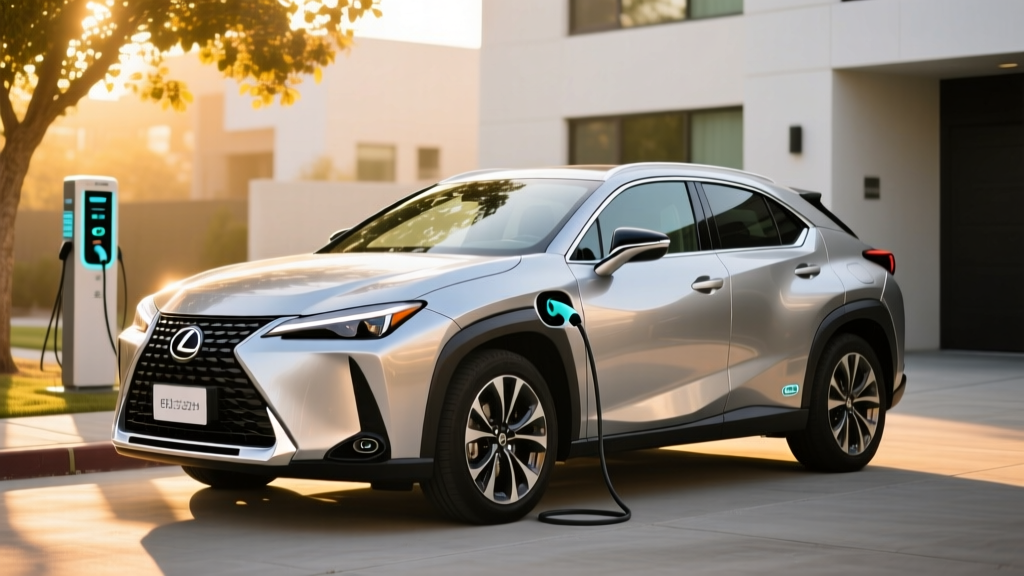
The 2026 Lexus UX 250h occupies a specific niche: a luxury subcompact crossover that prioritizes fuel efficiency and urban refinement over cargo space and outright performance. As a conventional hybrid (HEV) — not a plug-in — it requires no charging infrastructure, making it ideal for apartment dwellers and drivers without home charging access. With an EPA-estimated 42 MPG combined, it sips fuel at a rate that undercuts nearly every rival in the luxury compact crossover segment, while delivering the quiet cabin and build quality Lexus is known for.
But the UX 250h isn't for everyone. Its rear seat and cargo area are tight by class standards, and its 181 combined horsepower means highway merging requires planning rather than confidence. This guide covers every number that matters — from real-world MPG to battery warranty — so you can decide if the UX 250h fits your driving life.
Spec Table: 2026 Lexus UX 250h Key Numbers
| Specification | Value |
|---|---|
| Powertrain | 2.0L 4-cyl + 2 electric motors (AWD) |
| Combined Horsepower | 181 hp |
| Drivetrain | AWD (E-Four electric rear axle) |
| EPA MPG (City / Hwy / Combined) | 43 / 41 / 42 MPG |
| Hybrid Battery | ~1.4 kWh NiMH (self-charging) |
| 0–60 mph | ~8.0 seconds |
| Cargo Volume (rear seats up/down) | 17.1 / 36.4 cu ft |
| Fuel Tank | 10.6 gallons |
| Total Driving Range | ~445 miles |
| Base MSRP (Premium trim) | ~$38,450 |
| Hybrid Battery Warranty | 10 years / 150,000 miles |
| Federal Tax Credit | Not eligible (§30D is BEV/PHEV only) |
Fuel Economy: EPA Numbers vs Real-World MPG
The EPA rates the 2026 Lexus UX 250h AWD at 43 MPG city, 41 MPG highway, and 42 MPG combined, according to fueleconomy.gov. These are segment-leading figures for a luxury-branded crossover with all-wheel drive.
| Driving Scenario | EPA Estimate | Real-World Expectation |
|---|---|---|
| City (stop-and-go) | 43 MPG | 44–48 MPG |
| Highway (70 mph cruise) | 41 MPG | 37–40 MPG |
| Combined (mixed driving) | 42 MPG | 40–45 MPG |
| Cold weather (below 30°F) | — | 35–39 MPG |
Why real-world city MPG often beats the EPA sticker: Toyota/Lexus hybrid systems excel in urban driving because regenerative braking recovers energy at every stop, and the engine shuts off frequently at low speeds. In warm-weather city driving, owners routinely report 45+ MPG. Highway driving is the opposite story — at sustained 70–80 mph speeds, the gasoline engine carries the full load with less hybrid assistance, and aerodynamic drag rises sharply. Expect 37–40 MPG on long interstate trips.
Cold-weather impact: Below freezing, the engine runs more often to maintain cabin heat and battery temperature, reducing the hybrid system's ability to shut off the engine. Plan for a 10–15% fuel economy drop in winter months if you live in a cold climate. This is far less severe than the 20–40% range loss a battery-electric vehicle experiences, but it's still noticeable.
Powertrain Deep Dive: How the UX 250h Hybrid System Works
The UX 250h pairs a 2.0-liter Atkinson-cycle four-cylinder engine with two front-mounted electric motor-generators and a third motor driving the rear axle (Lexus calls this E-Four AWD). The combined system output is 181 horsepower. Unlike traditional AWD systems with a mechanical driveshaft, the rear axle is powered entirely by electricity — the rear motor engages when the system detects front-wheel slip or during hard acceleration from a stop.
The hybrid battery is a nickel-metal hydride (NiMH) pack with approximately 1.4 kWh of capacity. This is intentionally small: conventional hybrids use the battery as a buffer for recaptured braking energy and brief electric-only assist at low speeds, not for sustained electric driving. You'll see an EV indicator on the dashboard, and the UX 250h can creep short distances (under a mile, typically under 25 mph) on electric power alone — but this is not a usable electric-only range in the way a PHEV offers. Think of it as a fuel-saving assist, not an electric car mode.
Performance reality check: The 0–60 mph time of approximately 8.0 seconds is adequate for daily driving but noticeably slower than competitors like the BMW X1 xDrive28i (6.3 seconds) or the Mercedes-Benz GLA 250 (6.8 seconds). Highway passing at 55–75 mph requires a deliberate press of the accelerator and some patience. The CVT (continuously variable transmission) keeps the engine in its most efficient range, which means acceleration builds linearly rather than surging. If performance is a priority, this isn't the crossover for you — but if fuel cost savings and refinement matter more, the trade-off is worthwhile.
Pricing, Trims, and Tax Credit Eligibility
The 2026 Lexus UX 250h is offered in several trims. Pricing is approximate and subject to destination charges:
| Trim | MSRP (est.) | Key Features |
|---|---|---|
| Premium | $38,450 | 8-inch display, wireless CarPlay/Android Auto, Lexus Safety System+ 3.0 |
| Premium Plus | $41,250 | Sunroof, heated/ventilated front seats, power liftgate |
| F SPORT Handling | $43,950 | Adaptive suspension, sport seats, unique styling |
| Luxury | $46,500 | Semi-aniline leather, heated steering wheel, premium audio |
Reliability and Hybrid Battery Longevity
Lexus consistently ranks at or near the top of J.D. Power and Consumer Reports reliability surveys, and the UX 250h benefits from the mature fourth-generation Toyota Hybrid Synergy Drive system. This powertrain architecture has been in production across millions of Toyota and Lexus vehicles since the late 1990s — there are very few unknowns remaining.
How long do Toyota/Lexus hybrid batteries actually last? Real-world data from Prius and Camry Hybrid fleets shows NiMH hybrid batteries routinely lasting 150,000–200,000+ miles before significant degradation. Because the battery is small (~1.4 kWh) and the system never fully charges or fully depletes it (operating in a narrow state-of-charge window between roughly 40–80%), cycle wear is minimal. The battery isn't asked to do the heavy lifting — it buffers energy, not stores it for long drives.
Replacement cost if out of warranty: A hybrid battery replacement for the UX 250h, should it be needed after the warranty period, typically runs $2,500–$4,000 including labor at a Lexus dealer. Independent hybrid specialists can sometimes perform the replacement for $1,500–$2,500 using refurbished or new aftermarket cells. This is dramatically less than a BEV traction battery replacement ($10,000–$20,000+), because the hybrid battery is physically small and uses mature NiMH chemistry.
Who Should Buy the UX 250h — And Who Should Look Elsewhere
✅ Choose the UX 250h If:
- You want luxury-badge refinement with 40+ MPG and no plug-in requirement
- You live in an apartment or lack home charging access
- Your driving is primarily urban/suburban with frequent stops
- You value long-term reliability and low maintenance costs
- You want AWD for rain/snow without the fuel penalty of a gas-only AWD
- You prioritize a quiet, comfortable cabin over sporty handling
❌ Look Elsewhere If:
- You regularly carry rear-seat passengers or need cargo space (cargo: only 17.1 cu ft)
- You want brisk acceleration for highway merging (8.0 sec 0–60)
- You want electric-only driving — consider a PHEV like the RAV4 Prime or Lexus NX 450h+
- You want the federal $7,500 tax credit (requires a BEV or qualifying PHEV)
- You take frequent long road trips where the small 10.6-gal tank means more fuel stops
- You want the latest large-screen infotainment (UX uses an 8-inch display)
UX 250h vs the Alternatives: Hybrid, PHEV, or Full EV?
Deciding between a conventional hybrid, a plug-in hybrid, and a battery-electric vehicle comes down to three questions: Can you charge at home? How far do you drive daily? And how important is the federal tax credit?
| Factor | HEV (UX 250h) | PHEV (e.g., NX 450h+) | BEV (e.g., Tesla Model Y) |
|---|---|---|---|
| Plug-in required? | No | Yes (for full benefit) | Yes (always) |
| Electric-only range | ~0.5 mi (creep only) | 37 mi (NX 450h+) | 260–330 mi |
| Fuel/energy cost per mile | ~$0.09 | ~$0.04 (electric) / $0.09 (gas) | ~$0.04 |
| Federal tax credit (§30D) | None | Up to $7,500* | Up to $7,500* |
| Home charging needed? | No | Highly recommended | Essential |
| Best for | No-charging-access drivers | Home chargers with short commutes | Home chargers wanting lowest cost |
* §30D credit subject to MSRP caps, buyer income limits, and battery-sourcing requirements. Verify eligibility at irs.gov before purchase.
The decision framework is straightforward: If you can install a Level 2 charger at home and your daily commute is under 35 miles round-trip, a PHEV like the Lexus NX 450h+ lets you drive on electricity most days while keeping a gas engine for road trips — and you may qualify for the $7,500 credit. If you have reliable home charging and want the lowest operating cost, a BEV is the long-term winner. But if you rent, live in a condo without charging, or simply want zero lifestyle change with major fuel savings, the UX 250h HEV is the pragmatic choice that asks nothing of you except filling up less often.
Ownership Costs: 5-Year Fuel Savings
At 42 MPG combined and an assumed $3.50/gallon regular unleaded, the UX 250h costs approximately $0.083 per mile in fuel. Compare this to a gas-only luxury competitor like the BMW X1 xDrive28i (28 MPG combined): at the same fuel price, the BMW costs $0.125 per mile. Over 15,000 miles per year, the UX 250h saves roughly $630 annually in fuel — or about $3,150 over five years.
Factor in Lexus's included maintenance program (2 years/20,000 miles of complimentary scheduled maintenance), lower brake wear (regenerative braking extends pad life significantly), and no transmission fluid changes (the e-CVT has no traditional transmission fluid service interval), and the total cost of ownership advantage widens further against turbocharged gas rivals.
Frequently Asked Questions
How many MPG does the Lexus UX 250h hybrid get?
The 2026 Lexus UX 250h is EPA-rated at 43 MPG city, 41 MPG highway, and 42 MPG combined. In real-world city driving, owners frequently see 44–48 MPG thanks to aggressive regenerative braking. Highway driving at 70+ mph typically yields 37–40 MPG. Cold weather (below 30°F) can drop combined figures to 35–39 MPG.
Can the Lexus UX 250h drive on electric power only?
Only in very limited circumstances. The UX 250h can creep short distances (under a mile, at speeds below ~25 mph) on electric power in stop-and-go traffic or parking lots. However, this is not a usable electric-only range — it's a fuel-saving assist feature. The UX 250h is a conventional hybrid, not a plug-in, and has no charge port. If you want meaningful electric-only driving, you need a PHEV or BEV.
Is the Lexus UX 250h hybrid reliable?
Yes. The UX 250h uses Toyota's fourth-generation hybrid system, which has been refined over 25+ years and millions of vehicles. Lexus consistently ranks at the top of J.D. Power dependability studies. The hybrid battery is warranted for 10 years/150,000 miles, and real-world data shows these NiMH packs routinely lasting 150,000–200,000+ miles. The main reliability risk is the same as any modern car: electronics and infotainment glitches, not the hybrid powertrain.
How much does it cost to replace the UX 250h hybrid battery?
If replacement is needed after the 10-year/150,000-mile warranty expires, expect to pay $2,500–$4,000 at a Lexus dealer, or $1,500–$2,500 at an independent hybrid specialist using refurbished cells. This is a fraction of what a BEV battery replacement costs, because the hybrid battery is small (~1.4 kWh) and uses mature NiMH chemistry.
Does the Lexus UX 250h qualify for any tax credit?
No. The federal §30D Clean Vehicle Credit (up to $7,500) applies only to battery-electric vehicles and plug-in hybrids that meet specific battery-sourcing, critical-mineral, MSRP, and buyer-income requirements. The UX 250h is a conventional hybrid and is not eligible. Some states offer separate hybrid incentives — check the Alternative Fuels Data Center for your state's programs.
Is the UX 250h too small for a family?
For a single person or couple, the UX 250h works well. For families with children or frequent rear-seat passengers, it's tight. Rear legroom is 33.1 inches (competitive with the BMW X1 but less than the Mercedes GLB), and cargo space behind the rear seats is just 17.1 cubic feet — enough for a week's groceries or two carry-on bags, but not much more. If cargo and rear space are priorities, the Lexus NX 350h (a midsize hybrid crossover) offers significantly more room at a higher price.
Does the UX 250h require premium fuel?
The 2026 UX 250h is designed to run on regular 87-octane unleaded gasoline. This is a meaningful cost advantage over some luxury competitors that require premium fuel. Using premium will not improve performance or efficiency in this engine.