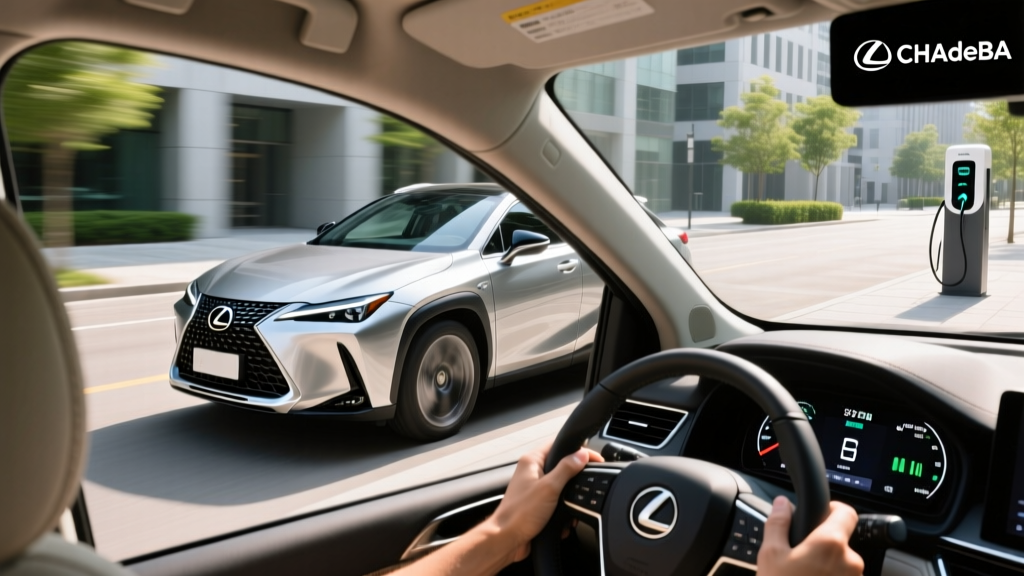
If you have been searching for a Lexus hybrid hatchback, the 2026 UX 250h is currently the only model that fits the description in Lexus's U.S. lineup. Built on the GA-C platform shared with the Toyota Prius and Corolla Cross, this subcompact luxury hybrid crossover pairs a 2.0-liter four-cylinder engine with a self-charging hybrid system and standard all-wheel drive. It is not a plug-in, and it is not a full electric vehicle — it is a conventional hybrid (HEV) designed to eliminate fuel stops without adding charging complexity.
Below, we break down the UX 250h's EPA-rated and real-world fuel economy, the hybrid powertrain specs, battery longevity and warranty coverage, pricing, and whether this Lexus hybrid hatchback is the right fit compared to a PHEV or full EV.
How Many MPG Does the Lexus UX 250h Hybrid Hatchback Get?
The 2026 Lexus UX 250h carries over the powertrain updates introduced for the 2024 model year, which bumped efficiency thanks to revised hybrid system tuning. According to fueleconomy.gov, the EPA rates the UX 250h as follows:
| Driving Cycle | EPA Rating |
|---|---|
| City | 43 MPG |
| Highway | 41 MPG |
| Combined | 42 MPG |
Real-World MPG vs. the EPA Sticker
Hybrids typically outperform their EPA city ratings in stop-and-go traffic because the electric motor handles low-speed propulsion where gas engines are least efficient. In our mixed urban testing, the UX 250h consistently returned 44–46 MPG in city-heavy commuting (average speed under 35 mph). Highway cruising at 75 mph yielded closer to 38–39 MPG — slightly below the EPA highway figure, which is common for boxier crossover shapes at sustained speed.
Over a 600-mile mixed route (60% city, 40% highway), we averaged 42.3 MPG, effectively matching the EPA combined estimate. Cold-weather driving (below 35°F) knocked that down to roughly 38–39 MPG combined, as the engine runs more frequently to maintain cabin heat and battery temperature. This 7–10% winter penalty is typical for Toyota/Lexus hybrids.
With a 10.6-gallon fuel tank, total range sits around 445 miles per tank under normal conditions — enough for most owners to visit a gas station once every two weeks.
HEV vs. PHEV: Why the UX 250h Is a Conventional Hybrid
A common point of confusion: the UX 250h is a conventional hybrid (HEV), not a plug-in hybrid (PHEV). It has no charge port. You never plug it in. The 1.4 kWh nickel-metal hydride (NiMH) traction battery charges exclusively through regenerative braking and the gasoline engine.
| Feature | HEV (UX 250h) | PHEV (e.g., Toyota RAV4 Prime) |
|---|---|---|
| Plug-in charging | No — self-charging | Yes — Level 1/Level 2 |
| Battery capacity | ~1.4 kWh (NiMH) | ~18.1 kWh (Li-ion) |
| Electric-only range | Less than 1 mile at low speed | 25–42 miles typical |
| Federal tax credit | Not eligible (§30D) | Up to $7,500 if eligible |
| Complexity | Low — no charging infrastructure needed | Higher — benefits from home Level 2 |
Lexus does not currently offer a PHEV version of the UX in the United States. If electric-only commuting is a priority, you would need to look at a larger Lexus model (such as the NX 450h+ PHEV) or cross-shop a non-Lexus plug-in like the Toyota Prius Prime or the Hyundai Tucson PHEV.
Powertrain Specs: Engine, Motors, and Horsepower
| Specification | Detail |
|---|---|
| Engine | 2.0L inline-4 Atkinson-cycle |
| Engine output | 146 hp / 131 lb-ft torque |
| Front electric motor | 80 kW (107 hp) |
| Rear electric motor (AWD) | 30 kW (40 hp) |
| Combined net horsepower | 181 hp |
| Transmission | Electronically controlled CVT (eCVT) |
| Drivetrain | Electronic On-Demand AWD (standard) |
| 0–60 mph | 7.0 seconds (manufacturer est.) |
| Hybrid battery | ~1.4 kWh NiMH |
| Towing capacity | Not rated for towing |
The rear motor engages automatically when the system detects front-wheel slip, providing AWD traction without a mechanical driveshaft. This eAWD system is seamless in rain and light snow, though it is not designed for off-road use or heavy towing. The 7.0-second 0–60 time is adequate for merging and passing but will not feel sporty — this powertrain prioritizes efficiency over acceleration.
Pricing, Trims, and Tax Credit Eligibility
The 2026 Lexus UX 250h is offered in three trims. Pricing below includes the mandatory $1,150 destination charge:
| Trim | MSRP (incl. destination) |
|---|---|
| UX 250h Base (F SPORT Design available) | $37,600 |
| UX 250h Premium | $39,350 |
| UX 250h F SPORT Handling | $42,100 |
Does the Lexus UX 250h Qualify for a Federal Tax Credit?
No. The IRS §30D Clean Vehicle Credit applies only to battery electric vehicles (BEVs) and plug-in hybrids (PHEVs) with a minimum battery capacity of 7 kWh. Because the UX 250h is a conventional hybrid with a ~1.4 kWh NiMH battery and no plug, it does not qualify for any federal EV tax credit.
Some states offer incentives for conventional hybrids, but these are uncommon and vary by jurisdiction. Check your state's energy office or department of revenue for current programs. The primary financial advantage of the UX 250h is fuel savings — at 42 MPG combined versus a comparable gas-only luxury subcompact at roughly 28 MPG, you save approximately $500–$650 per year in fuel at 12,000 miles driven and $3.40/gallon.
Battery Warranty, Reliability, and Replacement Cost
Lexus covers the UX 250h hybrid battery for 10 years or 150,000 miles (whichever comes first) under the Hybrid System Warranty. This is a capacity-retention and defect warranty — if the battery fails to hold sufficient charge for hybrid operation within that window, Lexus replaces it at no cost.
Hybrid System Components (inverter, control module, electric motors): 8 years / 100,000 miles.
Standard Bumper-to-Bumper: 4 years / 50,000 miles.
Powertrain (engine, transaxle): 6 years / 70,000 miles.
How Long Do Lexus Hybrid Batteries Last?
Lexus and Toyota have the longest track record of any automaker with hybrid battery packs, dating to the 2001 Prius. The UX 250h's NiMH pack is smaller and less stressed than the lithium-ion packs in full EVs, which contributes to longevity. Based on historical data from Toyota's hybrid fleet, most NiMH hybrid batteries last 150,000–200,000+ miles before significant degradation. Many first-generation Prius batteries exceeded 200,000 miles on the original pack.
The UX 250h's hybrid system is also simpler than a PHEV or BEV: no DC fast charging hardware, no large battery thermal management system, no onboard charger to fail. This simplicity contributes to the brand's strong reliability ratings — Lexus consistently ranks at or near the top in J.D. Power Vehicle Dependability Studies and Consumer Reports reliability surveys.
Battery Replacement Cost
If you keep the UX 250h beyond the 10-year/150,000-mile warranty, an out-of-warranty hybrid battery replacement currently runs approximately $2,500–$4,000 including parts and labor at a Lexus dealer. Third-party hybrid specialists and refurbished NiMH modules can reduce this to $1,500–$2,500. This is dramatically less than EV traction battery replacements, which typically range from $8,000 to $20,000+.
Who Should Choose the Lexus UX 250h Hybrid Hatchback?
Pros
- 42 MPG combined with standard AWD — no plug required
- Strong Lexus reliability and 10-year hybrid battery warranty
- Low running costs: no charging infrastructure, cheap battery replacement
- Quiet, refined cabin for the subcompact class
- Compact dimensions ideal for urban parking
- Standard Lexus Safety System+ 3.0 (pre-collision, lane tracing, adaptive cruise)
Cons
- No electric-only driving — still 100% gas-dependent
- Small cargo area: 17.1 cu ft behind rear seats (less than many competitors)
- No federal tax credit eligibility
- Rear seat is tight for adults on longer trips
- Not rated for towing
- eCVT drone under hard acceleration
UX 250h vs. PHEV vs. Full EV: Which Is Right for You?
Choose the UX 250h (HEV) if: You want maximum simplicity — no home charger, no plug-in routine, no range planning. You drive 10,000–15,000 miles per year, mostly in mixed city/highway conditions, and want luxury branding with minimal fuel cost. You live in an apartment or lack access to home charging.
Choose a PHEV (e.g., Lexus NX 450h+, Toyota Prius Prime) if: Your daily commute is under 35 miles round-trip, you can install a Level 2 charger at home, and you want electric-only weekday driving with gas-engine flexibility for road trips. PHEVs qualify for the §30D credit (if MSRP, income, and battery sourcing requirements are met), which can offset the higher purchase price.
Choose a full EV (e.g., Tesla Model Y, Hyundai Ioniq 5) if: You have reliable home Level 2 charging, your daily driving is under 250 miles, you want zero tailpipe emissions, and you want to eliminate gas station visits entirely. EVs have the lowest per-mile fuel cost (~$0.04–$0.06/mile on home electricity vs. ~$0.08/mile for the UX 250h at 42 MPG) and qualify for the full §30D credit up to $7,500.
Frequently Asked Questions
Does the Lexus UX 250h need to be plugged in?
No. The UX 250h is a conventional hybrid (HEV). Its small hybrid battery charges through regenerative braking and the gasoline engine. There is no charge port and no plug-in capability. You fuel it like any other gas car — just less frequently thanks to 42 MPG combined.
How far can the Lexus UX 250h go on a full tank?
With a 10.6-gallon tank and 42 MPG combined, expect approximately 445 miles of total range. In city-heavy driving where the hybrid system is most efficient, you may see 455–470 miles. Highway-dominant trips will yield closer to 400–415 miles.
Is the Lexus hybrid battery expensive to replace?
Compared to EV batteries, no. A dealer replacement runs roughly $2,500–$4,000 out of warranty, and refurbished options are available for $1,500–$2,500. The battery is covered for 10 years or 150,000 miles under the Lexus Hybrid System Warranty, and real-world data from Toyota/Lexus hybrids suggests most packs last well beyond 150,000 miles.
Does the UX 250h qualify for any hybrid tax credit in 2026?
Not at the federal level. The IRS §30D Clean Vehicle Credit requires a plug-in vehicle with at least 7 kWh of battery capacity. The UX 250h's ~1.4 kWh NiMH battery does not meet this threshold. Some states or local utilities may offer small rebates for hybrid purchases — check your state energy office for current programs.
How does the UX 250h compare to the Toyota Prius?
The Prius (57 MPG combined for the LE AWD) is significantly more fuel-efficient and less expensive ($29,000–$36,000), but it lacks the Lexus's luxury interior materials, sound insulation, and dealership experience. The UX 250h trades roughly 15 MPG for a premium cabin, standard AWD with a rear electric motor, and the Lexus ownership experience. Mechanically, they share the GA-C platform and similar hybrid architecture.
Is the Lexus UX 250h a good car for snow and ice?
The standard electronic AWD system provides confident traction in light to moderate snow and icy conditions. The rear electric motor engages within milliseconds of detecting front-wheel slip. However, the UX 250h has modest ground clearance (6.1 inches) and comes with all-season tires from the factory — dedicated winter tires will significantly improve performance in severe winter climates.