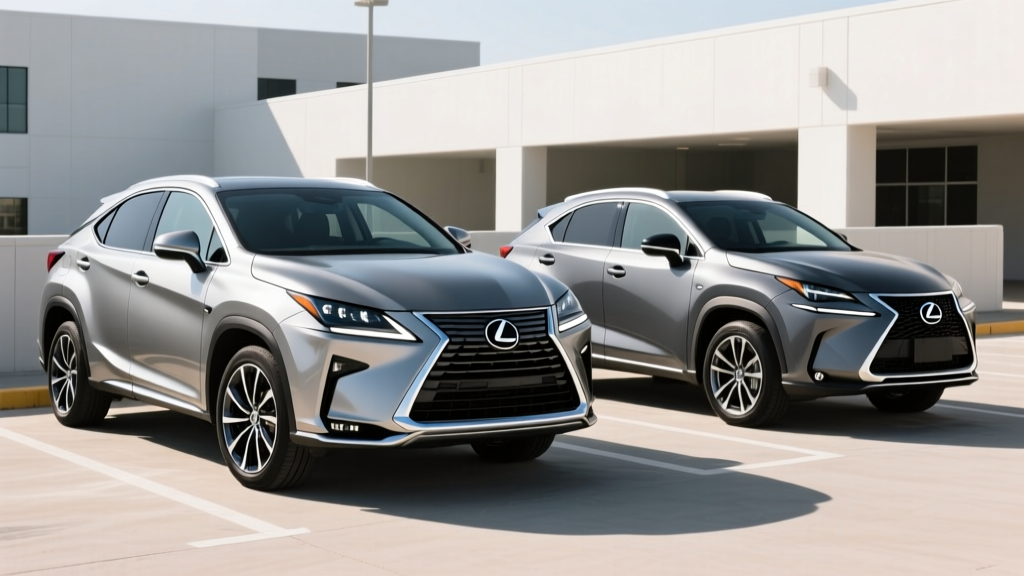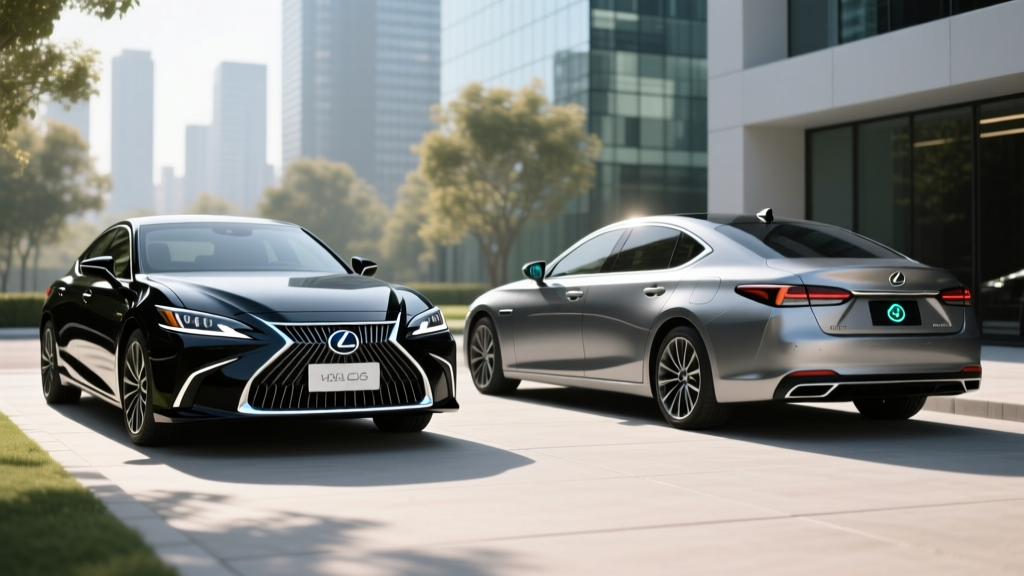
If you're shopping for a luxury sedan that sips fuel without requiring a lifestyle change around charging stations, the Lexus sedan hybrid lineup deserves a close look. Lexus has quietly maintained one of the most consistent hybrid strategies in the luxury segment, offering conventional hybrid electric vehicles (HEVs) across its sedan range — models that need no plug, no range estimation, and no charging infrastructure. For the 2026 model year, three core sedans carry hybrid powertrains: the mainstream ES 350h, the performance-oriented IS 500h, and the flagship LS 500h.
This guide breaks down each model's EPA fuel economy, real-world efficiency expectations, powertrain specs, battery warranty coverage, pricing, and tax credit eligibility — giving you the exact data needed to choose the right Lexus sedan hybrid for your driving pattern.
HEV vs. PHEV: What Lexus Sedan Hybrids Actually Are
Before evaluating specific models, it's critical to understand what you're buying. Every current Lexus sedan hybrid is a conventional hybrid (HEV), not a plug-in hybrid (PHEV). Here's the difference:
| Feature | HEV (Conventional Hybrid) | PHEV (Plug-In Hybrid) |
|---|---|---|
| Plug-in charging | No — self-charging via engine + regen | Yes — plug in to charge battery |
| Electric-only range | ~1 mile at low speed | 20–45 miles typical |
| Battery size | 1.0–2.0 kWh (small) | 13–25 kWh (larger) |
| Federal tax credit (§30D) | Not eligible | Up to $7,500 (if eligible) |
| Driving experience | Seamless gas+electric blend | EV mode until battery depletes, then hybrid |
Lexus does offer PHEV versions on its SUVs (notably the NX 450h+ and RX 500h+), but as of 2026, no Lexus sedan is sold as a PHEV in the U.S. market. Every sedan hybrid below is a conventional HEV — you fuel it with gas and the hybrid system handles the rest.
2026 Lexus Sedan Hybrid Lineup: EPA MPG & Specs
Here's the complete data on the three Lexus sedan hybrids available for 2026, sourced from fueleconomy.gov and Lexus official specifications.
| Model | Powertrain | Combined HP | EPA City | EPA Hwy | EPA Combined | Base MSRP |
|---|---|---|---|---|---|---|
| ES 350h | 2.5L I4 + 2 electric motors (AWD) | 215 hp | 43 MPG | 44 MPG | 44 MPG | $47,990 |
| ES 350h FWD | 2.5L I4 + electric motor (FWD) | 215 hp | 43 MPG | 44 MPG | 44 MPG | $45,990 |
| IS 500h | 3.5L V6 + electric motor (RWD) | 340 hp | 25 MPG | 33 MPG | 28 MPG | $56,500 |
| LS 500h | 3.5L V6 + 2 electric motors (AWD) | 354 hp | 25 MPG | 33 MPG | 28 MPG | $83,160 |
| LS 500h RWD | 3.5L V6 + 2 electric motors (RWD) | 354 hp | 26 MPG | 34 MPG | 29 MPG | $80,160 |
The ES 350h is the standout efficiency performer. Its 44 MPG combined rating places it among the most fuel-efficient luxury sedans on the market — rivaling compact economy cars while delivering a quiet, well-appointed cabin.
Real-World MPG: What Owners Actually See
Lexus hybrids consistently deliver real-world results that track closely with — or even exceed — EPA estimates, particularly in city driving. Here's why and what to expect:
ES 350h Real-World Expectation: Owners frequently report 44–48 MPG in mixed city/suburban driving thanks to aggressive regenerative braking and frequent electric-motor assist at low speeds. Highway cruising at 75+ MPH may drop to 38–41 MPG as aerodynamic drag reduces hybrid advantage.
IS 500h / LS 500h Real-World Expectation: Expect 26–30 MPG combined in normal driving. These V6 hybrids prioritize power delivery over maximum efficiency. City stop-and-go still yields a measurable improvement over their gas-only counterparts (which rate around 20–22 MPG combined).
Hybrids thrive in stop-and-go traffic where the electric motor handles low-speed propulsion and regenerative braking recaptures energy. If your commute is heavily urban, the ES 350h will likely exceed its EPA sticker. If you drive predominantly highway miles at high speeds, expect a 5–10% shortfall from the combined number.
Powertrain Deep Dive: How Each Lexus Hybrid Works
ES 350h — Efficiency-First Architecture
The ES 350h pairs a 2.5-liter Atkinson-cycle four-cylinder engine with Lexus's fourth-generation hybrid transaxle. The AWD variant adds a rear-mounted electric motor (no mechanical driveshaft) for all-weather traction. Total system output is 215 horsepower. The hybrid battery is a 1.6 kWh nickel-metal hydride (NiMH) pack located beneath the rear seat, preserving trunk space.
IS 500h — Performance Hybrid
The IS 500h uses a 3.5-liter V6 combined with an electric motor integrated into the transmission housing, sending 340 hp to the rear wheels. This is a performance-oriented hybrid system — the electric motor fills torque gaps during acceleration rather than maximizing fuel savings. The lithium-ion battery pack is approximately 1.1 kWh.
LS 500h — Flagship Multi-Stage Hybrid
The LS 500h employs Lexus's Multi Stage Hybrid System, which pairs a 3.5-liter V6 with two electric motors and a unique four-speed automatic transmission integrated with the hybrid transaxle. This creates the simulation of a 10-speed gearbox, delivering both smooth low-speed electric driving and aggressive highway passing. System output is 354 hp, with AWD available.
Battery Warranty, Lifespan & Replacement Cost
Battery longevity is the number one concern hybrid buyers raise. Here's what Lexus provides:
Lexus Hybrid Battery Warranty: 10 years / 150,000 miles (whichever comes first) for all 2020 and newer models. This covers capacity loss below a defined threshold and defects.
Expected Lifespan: Lexus hybrid batteries routinely last 150,000–200,000+ miles based on long-term ownership data. Toyota/Lexus hybrid systems have the deepest reliability track record in the industry, with many original Prius and ES hybrid batteries exceeding 200,000 miles without replacement.
Replacement Cost: If replacement is needed out of warranty, expect $2,500–$4,000 for an ES 350h battery and $3,500–$5,500 for an LS 500h battery, including labor. Refurbished units are available for less. These are far smaller and less expensive than full EV battery packs.
The small battery sizes in these HEVs (1.1–1.6 kWh) mean replacement is a fraction of what a full EV battery swap would cost. The hybrid system's power electronics and motor-generators carry the same 10-year/150,000-mile warranty. According to Lexus's official hybrid page, all hybrid-specific components are covered under this extended warranty.
Pricing, Tax Credits & Ownership Economics
Here's where conventional hybrids differ sharply from EVs and PHEVs on incentives:
- Federal §30D Tax Credit: Conventional hybrids (HEVs) do not qualify for the federal EV tax credit. The IRS §30D credit applies only to plug-in electric vehicles (BEVs and PHEVs) meeting battery capacity, sourcing, MSRP, and buyer income requirements. See IRS clean vehicle credits for current rules.
- State Incentives: A handful of states offer modest rebates for hybrids (typically $250–$1,000), but most state incentive programs prioritize BEVs and PHEVs. Check your state energy office for current programs.
- Fuel Savings: The ES 350h at 44 MPG vs. a comparable gas luxury sedan at 26 MPG saves approximately $700–$900 per year at 15,000 miles/year and $3.40/gallon gas, depending on your local fuel prices.
| Model | Base MSRP | Federal Tax Credit | Annual Fuel Cost (15k mi) | 5-Year Fuel Cost |
|---|---|---|---|---|
| ES 350h | $45,990 | $0 (HEV) | ~$1,160 | ~$5,800 |
| IS 500h | $56,500 | $0 (HEV) | ~$1,820 | ~$9,100 |
| LS 500h | $80,160 | $0 (HEV) | ~$1,820 | ~$9,100 |
While you won't receive a federal tax credit, the ES 350h's lower fuel cost and strong resale value (Lexus consistently tops residual-value rankings) offset the lack of incentive. The total cost of ownership for an ES 350h over five years often undercuts comparable German luxury sedans significantly when factoring fuel, maintenance, and depreciation.
Lexus Sedan Hybrid vs. Full EV vs. Gas: Which Fits You?
The right choice depends on your charging access, driving pattern, and ownership preferences:
Choose a Lexus sedan hybrid (HEV) if:
- You cannot install a home Level 2 charger (apartment, street parking, no garage)
- You take frequent long road trips and don't want to plan around DC fast chargers
- You want luxury-car comfort with minimal fuel cost and zero charging hassle
- You plan to keep the car 8–12 years and value proven long-term reliability
- You live in an area with sparse public charging infrastructure
Choose a PHEV (like the BMW 330e or Mercedes C 350e) if:
- You can charge at home and want 20–40 miles of electric-only commuting
- Most daily trips are under 30 miles but you need gas flexibility for weekends
- You want partial federal tax credit eligibility (PHEVs may qualify under §30D)
Choose a full EV (like the Tesla Model 3, BMW i4, or Genesis Electrified G80) if:
- You have reliable home Level 2 charging
- You want the lowest per-mile fuel cost (~$0.04–0.06/mi vs. $0.08–0.12/mi for hybrid)
- You qualify for the full $7,500 federal tax credit (income, MSRP, and sourcing rules apply)
- Your daily driving is within the vehicle's range and you rarely exceed 300 miles without stopping
Pros and Cons of the Lexus Sedan Hybrid Lineup
Pros
- ES 350h delivers 44 MPG combined — best-in-class for luxury sedans
- No plug-in required — zero charging infrastructure dependency
- 10-year/150,000-mile hybrid battery warranty provides peace of mind
- Lexus reliability and resale value are industry-leading
- Smooth, quiet hybrid operation with seamless engine/motor transitions
- AWD available on ES 350h and LS 500h for all-weather capability
Cons
- No federal tax credit eligibility (HEV, not PHEV/BEV)
- No electric-only driving range for zero-emission commuting
- IS 500h and LS 500h MPG gains are modest vs. gas V6 counterparts
- ES 350h's 215 hp may feel underpowered for some luxury sedan buyers
- No Lexus sedan PHEV option available in the U.S. as of 2026
- Infotainment system lag behind German competitors (improving but still a gap)
Frequently Asked Questions
How many MPG does the Lexus ES 350h hybrid get?
The 2026 Lexus ES 350h is EPA-rated at 43 MPG city, 44 MPG highway, and 44 MPG combined for both FWD and AWD configurations. Real-world city driving often yields 44–48 MPG, while sustained highway driving above 75 MPH may return 38–41 MPG.
Does any Lexus sedan hybrid offer electric-only range?
No. All current Lexus sedan hybrids are conventional HEVs, not plug-in hybrids. They can operate on electric power alone for roughly one mile at very low speeds (parking lots, traffic creep), but they are not designed for meaningful electric-only commuting. For EV-only driving, you'd need a PHEV or BEV.
Is the Lexus hybrid system reliable?
Yes. Lexus (and parent company Toyota) has the longest track record in hybrid technology, dating to the 1997 Prius. The hybrid battery is warranted for 10 years/150,000 miles, and real-world data shows these batteries routinely lasting 150,000–200,000+ miles. The hybrid powertrain has fewer wear components than a conventional gas-only powertrain — no alternator, no starter motor, no traditional transmission in the conventional sense.
What does a Lexus hybrid battery replacement cost?
Out-of-warranty replacement costs range from approximately $2,500–$4,000 for the ES 350h and $3,500–$5,500 for the LS 500h, including labor. These are far less expensive than EV battery replacements because HEV batteries are small (1.1–1.6 kWh). Refurbished and aftermarket options are available at lower cost.
Does a Lexus sedan hybrid qualify for any tax credit?
Conventional hybrids do not qualify for the federal §30D clean vehicle tax credit, which is reserved for plug-in vehicles (BEVs and PHEVs) meeting specific battery sourcing, MSRP, and buyer income requirements. Some states may offer small rebates for hybrids — check your state's energy or environmental agency for current programs.
Should I buy a Lexus hybrid or a full EV?
If you have home charging access, drive under 300 miles daily, and qualify for the $7,500 federal tax credit, a full EV like the Tesla Model 3 or BMW i4 offers lower per-mile fuel costs and zero tailpipe emissions. If you lack home charging, take frequent long trips, live in an area with limited public chargers, or simply want zero behavior change, the Lexus ES 350h hybrid delivers excellent fuel economy with no compromises.