Quick Verdict: The Lexus NX 450h+ Bridges Gas and Electric
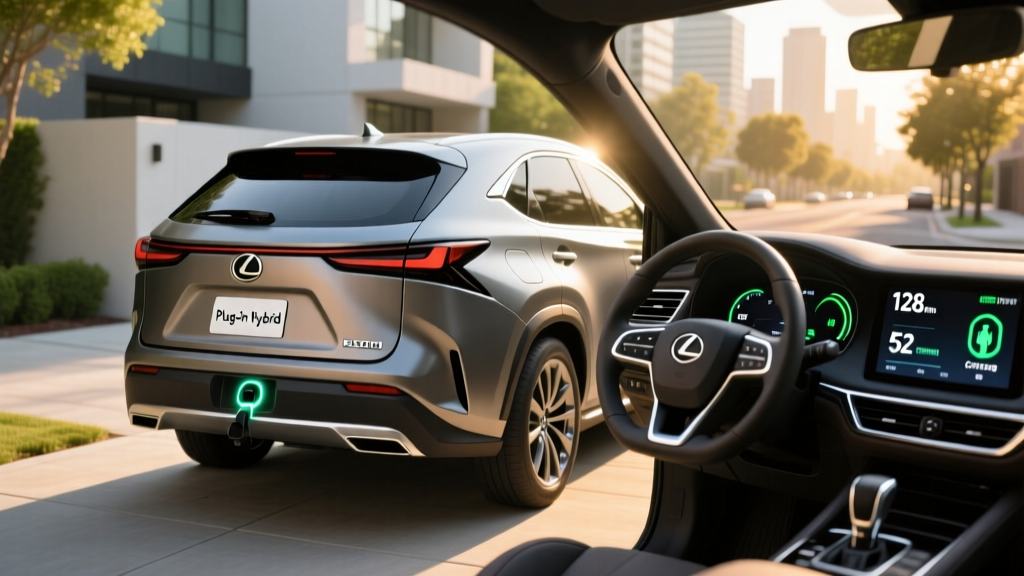
The 2026 Lexus NX 450h+ plug-in hybrid occupies a precise niche: buyers who want genuine electric-only commuting capability without surrendering the freedom to road-trip without charging stops. With an EPA-rated 37 miles of electric-only range and 84 MPGe combined when operating in EV mode, the NX 450h+ handles most daily driving on electrons alone. Once the battery depletes, it reverts to a conventional hybrid delivering 36 MPG combined — competitive with the non-plug-in NX 350h.
Starting at $59,965 MSRP (before destination), the NX 450h+ commands a premium over the NX 350h, but it delivers 304 combined horsepower, standard all-wheel drive, and a cabin that punches above its class in materials and quietness. The critical question isn't whether it's a good vehicle — it is — but whether its specific blend of electric range, hybrid fallback, and price aligns with your driving pattern.
| Specification | Value |
|---|---|
| EPA Electric-Only Range | 37 miles |
| EPA Combined MPGe (EV mode) | 84 MPGe |
| EPA Combined MPG (hybrid mode) | 36 MPG (38 city / 33 highway) |
| Total Combined Range | ~470 miles |
| Battery Capacity (usable) | 18.1 kWh (lithium-ion) |
| Combined Horsepower | 304 hp |
| 0–60 mph | 6.0 seconds |
| Level 2 Charge Time (0–100%) | ~4 hours (3.3 kW onboard) |
| DC Fast Charging | Not available |
| Drivetrain | AWD (eAxle rear motor) |
| Base MSRP | $59,965 |
| Hybrid Battery Warranty | 10 years / 150,000 miles |
HEV vs PHEV: Why the NX 450h+ Is Not the NX 350h
Lexus sells two hybrid versions of the NX, and the distinction matters for both your fuel budget and your charging setup.
| Attribute | NX 350h (Conventional Hybrid) | NX 450h+ (Plug-In Hybrid) |
|---|---|---|
| Plug-in capable? | No — self-charging only | Yes — plug in to charge battery |
| Electric-only range | None (EV mode at low speed only) | 37 miles EPA |
| Combined MPG | 39 MPG (41 city / 37 hwy) | 36 MPG hybrid mode / 84 MPGe EV mode |
| Combined HP | 244 hp | 304 hp |
| Battery (usable) | ~1.6 kWh | 18.1 kWh |
| Base MSRP | $43,565 | $59,965 |
| Federal tax credit eligible? | No | No (see tax credit section below) |
The NX 350h is the better fuel-economy pick if you cannot charge at home or work — its 39 MPG combined is excellent and requires zero lifestyle change. The NX 450h+ justifies its $16,400 premium only if you can plug in regularly. Charge nightly, and most weekday commutes under 37 miles burn zero gasoline. Skip charging, and you're carrying 300+ pounds of battery you never use, getting slightly worse MPG than the cheaper NX 350h.
Electric-Only Range and Real-World Efficiency
EPA Electric-Only Range: 37 miles
Real-World Expectation: 30–35 miles in mixed driving; 25–28 miles in sustained highway or cold weather (below 40°F)
The NX 450h+ uses its 18.1 kWh battery (approximately 14.5 kWh usable to protect longevity) to deliver 37 miles of electric-only driving per the EPA's testing. In real-world commuting at speeds under 45 mph with moderate climate control use, consistently hitting 33–36 miles is achievable. Highway driving at 70+ mph depletes the battery faster — expect closer to 28 miles.
Cold weather is the PHEV's enemy. Lithium-ion batteries lose efficiency below 40°F, and cabin heating draws significant energy. In winter testing, expect electric range to drop to 25–28 miles. The NX 450h+ uses a heat pump for cabin heating in EV mode, which mitigates some of this loss compared to resistive heating, but the physics of cold chemistry are unavoidable.
Hybrid-Mode MPG After the Battery Depletes
Once the battery is exhausted, the 2.5-liter inline-4 engine and hybrid system take over. The EPA rates this at 36 MPG combined (38 city / 33 highway). In real-world city driving with frequent stops, regenerative braking recovers energy effectively, and owners commonly report 37–40 MPG. Highway cruising at 75 mph yields closer to 31–33 MPG. This is slightly below the NX 350h's 39 MPG combined, a consequence of the PHEV's additional weight (roughly 350 lbs more than the 350h).
| Driving Mode | EPA Rating | Real-World Expectation |
|---|---|---|
| EV Mode (combined) | 84 MPGe | 75–90 MPGe (varies by speed/climate) |
| Hybrid Mode – City | 38 MPG | 37–40 MPG |
| Hybrid Mode – Highway | 33 MPG | 31–33 MPG |
| Hybrid Mode – Combined | 36 MPG | 34–37 MPG |
Charging: Level 1, Level 2, and the No-DC-Fast-Charge Limitation
The NX 450h+ charges exclusively via AC — Level 1 (120V household outlet) or Level 2 (240V). There is no DC fast charging capability, which is standard for PHEVs in this class but worth understanding.
| Charging Level | Power | Time (0–100%) | Practical Use |
|---|---|---|---|
| Level 1 (120V / 12A) | ~1.4 kW | ~11 hours | Overnight top-up if no L2 available |
| Level 2 (240V / 16A) | 3.3 kW (onboard max) | ~4 hours | Full charge overnight; home or work |
| DC Fast Charge | Not supported | N/A | N/A |
The onboard charger maxes out at 3.3 kW. This means even if you plug into a 48-amp Level 2 station capable of 11.5 kW, the NX 450h+ will only draw 3.3 kW. For a PHEV with 18.1 kWh of battery, this is adequate — a full charge in roughly 4 hours means plugging in when you get home and waking up to a full battery every morning. The lack of DC fast charging is irrelevant for daily use; you'll never sit at a highway charger waiting for a PHEV battery to fill.
Home charging setup: A standard 120V outlet in your garage will replenish the battery in about 11 hours — tight but feasible if you drive less than the full 37-mile EV range daily. For the full experience, a 240V Level 2 outlet (NEMA 14-50 or hardwired station) is recommended. Installation costs range from $500–$2,000 depending on panel proximity and local electrical codes. A licensed electrician should assess your panel capacity before installation.
Powertrain and Performance
The NX 450h+ pairs a 2.5-liter Atkinson-cycle inline-4 engine with two electric motors — one integrated into the transaxle driving the front wheels, and a rear-mounted eAxle motor providing all-wheel drive. Combined system output is 304 horsepower, making this the quickest NX variant outside the F Sport Handling trim's turbocharged 4-cylinder.
The 0–60 mph sprint takes 6.0 seconds per Lexus. More importantly for daily driving, the electric motors deliver instant torque from a stop, making the NX 450h+ feel quicker in city traffic than its 0–60 time suggests. The transition from EV to hybrid mode is nearly imperceptible — the engine starts smoothly and the hybrid system blends power sources without the lurching some competitors exhibit.
Driving dynamics are comfort-oriented. The suspension absorbs road imperfections well, and the cabin remains quiet at highway speeds. This is not a sport-utility in the performance sense — it's a luxury commuter that happens to have ample power for merging and passing.
Pricing, Trims, and Tax Credit Reality
The 2026 Lexus NX 450h+ is offered in two trims:
- NX 450h+ Premium: $59,965 MSRP (+ $1,350 destination = $61,315)
- NX 450h+ Luxury: $64,265 MSRP (+ $1,350 destination = $65,615)
Federal Tax Credit Eligibility
Does the 2026 Lexus NX 450h+ qualify for the §30D federal tax credit? No. Under current IRS rules, the §30D Clean Vehicle Credit requires vehicles to meet battery component and critical mineral sourcing thresholds. The NX 450h+ does not meet these requirements and is not listed as an eligible vehicle. This means the full purchase price stands as-is — there is no $7,500 federal credit to offset the premium over the NX 350h.
Some states offer their own PHEV incentives — California's CVRP program, for example, has offered rebates for qualifying PHEVs, though funding and eligibility change frequently. Check your state energy office or DMV for current programs. Always verify incentive status before purchasing, as programs can expire or exhaust funding.
Reliability, Battery Warranty, and Long-Term Ownership
Hybrid Battery Warranty: 10 years / 150,000 miles (whichever comes first), covering defects and capacity loss below a defined threshold. This applies in all 50 states under current Lexus policy.
Replacement Cost (out of warranty): Estimated $6,000–$9,000 for the hybrid battery pack, based on current Lexus hybrid battery pricing and labor. This figure may decrease as the battery supply chain matures.
Lexus (and parent company Toyota) has the deepest track record in hybrid technology of any automaker, with over 25 years of production hybrid experience. The NX 450h+ uses a proven hybrid architecture shared across Toyota's PHEV lineup. Historically, Toyota/Lexus hybrid batteries have demonstrated strong longevity — many Prius and Camry Hybrid batteries exceed 150,000 miles without significant degradation.
The 18.1 kWh battery in the NX 450h+ is conservatively managed — Lexus uses only a portion of total capacity (the buffer protects against deep cycling, which accelerates degradation). Expect 10–15% range loss over the first 100,000 miles based on data from Toyota's RAV4 Prime, which shares a similar powertrain architecture. This means your 37-mile EV range might become 31–33 miles after a decade of use — still functional for most commutes.
Overall vehicle reliability ratings are strong. Lexus consistently ranks at or near the top in J.D. Power Vehicle Dependability Studies and Consumer Reports reliability surveys. The NX specifically carries strong predicted reliability scores.
Pros
- 37 miles of electric range covers most commutes gas-free
- 304 hp with seamless EV-to-hybrid transition
- Standard AWD with eAxle rear motor
- 36 MPG in hybrid mode when battery depletes
- 10-year / 150,000-mile hybrid battery warranty
- Quiet, well-built luxury cabin
- No range anxiety — gas engine covers long trips
Cons
- No federal tax credit eligibility
- 3.3 kW max charge rate (slow for public L2 stations)
- No DC fast charging
- $16,400 premium over NX 350h with only modest MPG gain if you don't plug in
- Cargo space reduced slightly vs non-hybrid NX (battery under floor)
- Real-world EV range drops significantly in cold weather
Who Should Buy the NX 450h+ vs a Full EV or Gas Car?
Choose the Lexus NX 450h+ PHEV if:
- Your daily commute is under 35 miles round-trip and you can charge at home
- You take road trips 3+ times per year and don't want to plan around charging infrastructure
- You live in an area with unreliable public charging or extreme cold
- You want a luxury compact SUV with strong reliability ratings and don't want full EV commitment
Choose a full EV (like the Tesla Model Y or Genesis GV60) if:
- You can charge at home and your daily driving stays under 250 miles
- You want the lowest per-mile fuel cost and minimal maintenance
- You want to qualify for the $7,500 federal tax credit (eligible EVs only)
- You rarely take trips exceeding 250 miles or are comfortable with DC fast-charging stops
Choose the NX 350h conventional hybrid if:
- You cannot charge at home or work
- You want hybrid fuel economy without the PHEV price premium
- Your daily driving regularly exceeds 40 miles (the PHEV advantage diminishes)
Choose a gas-only vehicle if:
- Your annual mileage is very low (under 8,000 miles) — the fuel savings won't offset a hybrid premium
- Upfront cost is your primary constraint
Frequently Asked Questions
How many MPG does the Lexus NX 450h+ get?
The EPA rates the NX 450h+ at 84 MPGe when operating in electric mode and 36 MPG combined (38 city / 33 highway) in hybrid mode after the battery depletes. In real-world city driving, owners commonly see 37–40 MPG in hybrid mode thanks to regenerative braking. Highway driving yields 31–33 MPG.
How far can the NX 450h+ go on electric only?
The EPA rates the NX 450h+ at 37 miles of electric-only range. In real-world conditions, expect 30–35 miles in moderate weather at city and suburban speeds, and 25–28 miles in cold weather or at sustained highway speeds above 65 mph.
Does the Lexus NX 450h+ qualify for a federal tax credit?
No. Under current IRS §30D rules, the NX 450h+ does not meet the battery sourcing and critical mineral requirements for the $7,500 federal Clean Vehicle Credit. Some state-level incentives may apply — check your state's energy office for current programs.
Is the NX 450h+ reliable, and what does battery replacement cost?
Lexus has an industry-leading reliability track record, and the hybrid system shares proven Toyota architecture. The hybrid battery is warrantied for 10 years / 150,000 miles. Out-of-warranty replacement is estimated at $6,000–$9,000, though historical data from Toyota/Lexus hybrids suggests many batteries exceed 150,000 miles without needing replacement.
Do I have to plug in the NX 450h+?
You don't have to, but you should. If you never plug in, the NX 450h+ operates as a conventional hybrid getting 36 MPG combined — slightly worse than the cheaper NX 350h (39 MPG) due to the extra battery weight. The entire value proposition of the 450h+ depends on regularly charging to use the 37-mile electric range.
Can the NX 450h+ DC fast charge?
No. The NX 450h+ supports only AC charging: Level 1 (120V, ~11 hours) and Level 2 (240V, ~4 hours) at a maximum of 3.3 kW. This is typical for PHEVs — the battery is small enough that overnight Level 2 charging fully replenishes it.
Hybrid vs PHEV vs EV — which should I choose?
A conventional hybrid (HEV) like the NX 350h requires no plug and delivers strong MPG — best for drivers who can't charge at home. A PHEV like the NX 450h+ adds 37 miles of electric range for gas-free commuting while keeping a gas engine for long trips — ideal if you can charge at home but take regular road trips. A full EV (BEV) offers the lowest running costs and zero tailpipe emissions but requires charging infrastructure for longer trips. Your answer depends on home charging access, daily mileage, and road-trip frequency.