The 2010 Ford Fusion Hybrid: America's First 40-MPG Midsize Sedan
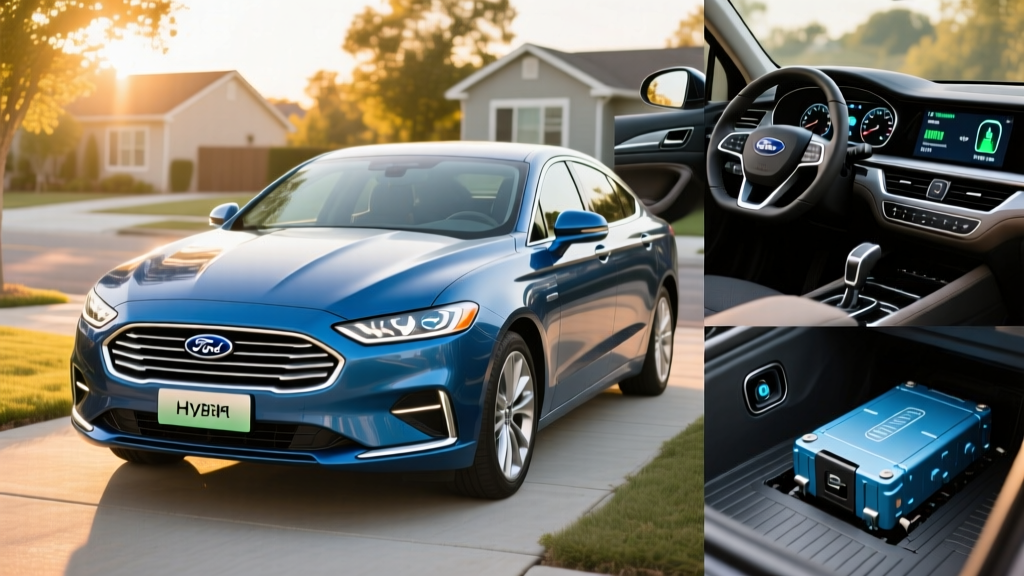
When Ford launched the 2010 Fusion Hybrid, it was a statement: a mainstream midsize sedan that cracked 40 MPG in city driving without plugging in, sacrificing cargo space, or demanding a Prius-like silhouette. More than a decade and a half later, this first-generation hybrid remains a popular search for budget-conscious commuters and used-car shoppers who want hybrid efficiency without EV charging complexity.
This guide breaks down everything a prospective buyer in 2026 needs to know — EPA fuel economy versus real-world results, the hybrid battery's expected lifespan and replacement cost, powertrain specs, and how the 2010 Fusion Hybrid stacks up against modern HEVs, PHEVs, and full EVs.
HEV vs. PHEV: What the 2010 Fusion Hybrid Actually Is
The 2010 Ford Fusion Hybrid is a conventional hybrid electric vehicle (HEV). It has no plug, no charging port, and no electric-only driving range to speak of. It recovers energy through regenerative braking and its gasoline engine, storing that energy in a small nickel-metal-hydride (NiMH) battery pack. The electric motor assists the gas engine and can propel the car at very low speeds (under ~25 mph) for brief distances, but it cannot sustain highway driving on electricity alone.
HEV vs. PHEV vs. BEV — Quick Reference
| Feature | HEV (this car) | PHEV | BEV (full EV) |
|---|---|---|---|
| Plug-in charging? | No | Yes | Yes |
| Electric-only range | ~0.5 mi at low speed | 20–50 mi typical | 200–400+ mi |
| Gas engine? | Yes (primary) | Yes (backup) | No |
| Battery size | ~1.4 kWh (NiMH) | 10–25 kWh (Li-ion) | 60–100+ kWh (Li-ion) |
| Fuel cost savings | Moderate | High (if charging daily) | Highest |
| Tailpipe emissions | Reduced | Reduced–zero (on EV mode) | Zero |
Ford did later introduce a Fusion Energi (PHEV) for the 2013 model year with a plug and roughly 20 miles of electric-only range. But the 2010 model discussed here is strictly a self-charging HEV. You fuel it with gasoline and let the hybrid system do the rest.
Fuel Economy: EPA Ratings vs. Real-World MPG
The 2010 Fusion Hybrid's headline number was 41 MPG city — a figure that turned heads in a midsize sedan segment dominated by V6 Camrys and Accords getting half that in stop-and-go traffic.
| Driving Cycle | EPA Rating | Real-World Expectation |
|---|---|---|
| City | 41 MPG | 38–44 MPG (hybrids often beat EPA city) |
| Highway | 36 MPG | 33–38 MPG (less regen benefit at steady speed) |
| Combined | 39 MPG | 36–41 MPG |
Why hybrids often exceed EPA city estimates: The EPA city cycle includes frequent stops, which is exactly where regenerative braking recovers the most energy and where the electric motor shoulders the most load. Many Fusion Hybrid owners report 42–45 MPG in warm-weather urban commuting. Conversely, sustained highway driving at 75+ MPH reduces the hybrid system's advantage — expect numbers closer to 33–35 MPG on long road trips.
Cold-weather penalty: In sub-40°F conditions, the engine runs more frequently to maintain cabin heat and battery temperature. Expect a 5–10% fuel economy drop in winter, landing around 34–37 MPG combined in cold climates.
According to fueleconomy.gov, the 2010 Fusion Hybrid's combined 39 MPG rated it among the most efficient midsize sedans of its era, trailing only the smaller Toyota Prius and Honda Insight.
Powertrain Specs: Engine, Motor, and Combined Output
| Specification | 2010 Ford Fusion Hybrid |
|---|---|
| Engine | 2.5L Atkinson-cycle inline-4 |
| Engine power | 156 HP @ 6,000 RPM |
| Electric motor | AC synchronous permanent-magnet |
| Motor power | 106 HP (79 kW) |
| Combined net output | 191 HP |
| Transmission | eCVT (planetary gearset, not belt-driven) |
| Battery type | Nickel-metal-hydride (NiMH) |
| Battery capacity | ~1.4 kWh (usable ~0.5 kWh) |
| 0–60 MPH | ~8.4 seconds |
| Drivetrain | Front-wheel drive |
| Curb weight | ~3,720 lbs |
The Atkinson-cycle 2.5L engine trades low-end torque for thermal efficiency, while the electric motor fills in the torque gap off the line. Ford's eCVT is a power-split device using a planetary gearset — not the rubber-belt CVT found in some competitors — which gives it excellent durability and a smoother feel than belt-type CVTs.
The 191 combined horsepower was competitive for 2010 midsize sedans and gives the Fusion Hybrid adequate passing power. It won't feel quick by modern EV standards, but it merges onto highways without drama.
Hybrid Battery: Lifespan, Warranty, and Replacement Cost
Original Battery Warranty
Coverage: 8 years / 100,000 miles (10 years / 150,000 miles in CARB states including CA, CT, MA, ME, NJ, NY, OR, RI, VT, WA)
Capacity threshold: Ford warranted the battery against failure or significant capacity loss. Unlike modern EV batteries with defined degradation thresholds (e.g., 70% retention), Ford's warranty covered outright malfunction.
Status in 2026: All original factory battery warranties have expired for 2010 model-year vehicles.
Real-world battery longevity: The NiMH pack in the 2010 Fusion Hybrid has proven remarkably durable. NiMH chemistry is less prone to the calendar degradation seen in early lithium-ion packs. Many first-generation Fusion Hybrids have surpassed 200,000 miles on the original battery. That said, a 16-year-old NiMH pack is living on borrowed time, and individual cell imbalance becomes more likely with age and high mileage.
Battery replacement cost (2026 estimates):
- OEM new battery (Ford dealer): $2,500–$3,500 including labor
- Remanufactured battery: $1,200–$2,000 including labor
- Individual cell/module replacement: $500–$1,000 at a hybrid specialist shop (replaces only failed modules rather than the full pack)
- Junkyard/salvage pack: $400–$800 (risky — unknown remaining life)
For a used car likely purchased for $4,000–$8,000, a full OEM battery replacement can represent a significant percentage of the vehicle's value. Many owners opt for remanufactured packs or module-level repairs at independent hybrid shops.
Pricing, Tax Credits, and Used-Buyer Economics
The 2010 Fusion Hybrid originally stickered at approximately $27,950 (base) to $33,000+ (loaded with leather, navigation, and the sunroof package). In 2026, used examples typically trade between $4,000 and $8,500 depending on mileage, condition, and battery health.
Tax credit status: The 2010 Fusion Hybrid does not qualify for the federal §30D new clean vehicle credit — that credit applies only to new vehicle purchases. It also does not qualify for the used clean vehicle credit (up to $4,000 or 30% of sale price, whichever is less), because that credit requires the vehicle to be a plug-in EV or fuel-cell vehicle with a minimum battery capacity of 7 kWh. Conventional hybrids like the Fusion Hybrid are excluded.
Some states offer registration incentives or HOV lane access for hybrids, but most of these programs have sunset or shifted to plug-in vehicles. Check your state's DMV or energy office for current programs.
Reliability and Common Issues
The 2010 Fusion Hybrid's powertrain — particularly the eCVT and hybrid system — has been one of its strongest suits. The planetary gearset eCVT has no belts, clutches, or friction bands to wear out, and failures are rare. The 2.5L Atkinson-cycle engine is under-stressed relative to its displacement, contributing to longevity.
Known issues to check on a used example:
- Hybrid battery health: Request a battery diagnostic scan. Look for voltage imbalance between modules. A dashboard "check hybrid system" warning is a red flag.
- Brake actuator recall: Ford issued recalls related to the regenerative braking system's transition to friction brakes. Verify recall work was completed via NHTSA's recall lookup.
- 12V battery: Like all hybrids, the Fusion has a conventional 12V battery that can fail independently of the hybrid pack. A dead 12V battery can prevent the car from starting even with a healthy hybrid battery.
- A/C compressor: The electric A/C compressor is hybrid-specific and more expensive to replace than a belt-driven unit. Verify cold A/C output during a test drive.
- Inverter coolant pump: Check for coolant leaks around the hybrid inverter assembly. Pump failure can trigger reduced-power limp mode.
Who Should Buy the 2010 Fusion Hybrid in 2026?
Pros
- 39 MPG combined EPA — still competitive with many new non-hybrid sedans
- Spacious midsize cabin with 16.5 cu-ft trunk (no battery intrusion vs. non-hybrid)
- Proven, durable eCVT powertrain
- No plug-in charging required — works for apartment dwellers
- Low purchase price on the used market ($4K–$8.5K)
- Comfortable ride quality and composed handling
Cons
- 16-year-old hybrid battery is a financial risk
- No plug, no electric-only range — cannot eliminate gasoline use
- Dated infotainment (no Apple CarPlay/Android Auto, small screen)
- No eligibility for federal used-EV tax credit
- NiMH battery is heavier and less energy-dense than modern Li-ion
- Safety tech is basic by 2026 standards (no AEB, no lane-keep assist)
Decision Framework: Is the 2010 Fusion Hybrid Right for You?
Choose the 2010 Fusion Hybrid if: You need an affordable commuter that sips gas in city traffic, you can't install a home charger, you want a midsize sedan with a real trunk, and you're comfortable budgeting $1,500–$2,500 for a potential hybrid battery replacement.
Choose a newer PHEV (e.g., Toyota Prius Prime, Hyundai Tucson PHEV) if: You have home charging access, want 25–40 miles of electric-only commuting, and want modern safety tech and infotainment. Expect to pay $28,000–$40,000 new.
Choose a full EV (e.g., Chevy Equinox EV, Tesla Model 3) if: You want zero tailpipe emissions, have reliable home or workplace charging, drive under 300 miles daily, and want to eliminate gasoline entirely. The §30D federal tax credit may reduce the effective price by up to $7,500 on eligible new models.
Choose a newer conventional hybrid (e.g., Toyota Camry Hybrid, Honda Accord Hybrid) if: You want HEV simplicity without plug-in hassle but demand modern reliability, safety features, and a fresh battery warranty. Expect $28,000–$35,000 new.
Frequently Asked Questions
How many MPG does the 2010 Ford Fusion Hybrid get?
The EPA rates it at 41 MPG city, 36 MPG highway, and 39 MPG combined. Real-world results vary: city commuters in warm weather often see 42–45 MPG, while highway-heavy drivers and cold-weather conditions can drop the combined figure to 33–37 MPG.
Does the 2010 Fusion Hybrid need to be plugged in?
No. It is a conventional hybrid (HEV) with no charging port. The battery recharges through regenerative braking and the gasoline engine. You simply fill it with gas like any other car.
How far can the 2010 Fusion Hybrid drive on electric power alone?
Less than one mile, and only at speeds under roughly 25 MPH. The small NiMH battery and 106-HP motor are designed to assist the gas engine, not replace it. For meaningful electric-only range (20–50 miles), you'd need a PHEV like the later Fusion Energi or a current Toyota Prius Prime.
Is the 2010 Fusion Hybrid reliable?
The hybrid powertrain — especially the eCVT — has a strong reliability record. The main risk on a 2026 purchase is the age of the original NiMH battery. Many units have exceeded 200,000 miles, but a 16-year-old pack may need module-level repairs or full replacement. Get a pre-purchase hybrid diagnostic before buying.
What does it cost to replace the hybrid battery?
An OEM replacement runs $2,500–$3,500 at a Ford dealer. Remanufactured packs cost $1,200–$2,000 installed, and module-level repairs at hybrid specialists can be as low as $500–$1,000. The original 8-year/100,000-mile warranty expired years ago for all 2010 models.
Does the 2010 Fusion Hybrid qualify for any tax credit?
Not in 2026. It is not eligible for the federal §30D new vehicle credit (applies only to new purchases) or the used clean vehicle credit (requires a plug-in vehicle with at least 7 kWh of battery capacity). Conventional hybrids are excluded from both programs. Some state or local incentives may apply — check your jurisdiction.
Hybrid vs. PHEV vs. EV — which should I choose?
If you can't charge at home and want maximum simplicity, a conventional hybrid like this Fusion is the pragmatic choice. If you have Level 2 home charging and a short commute, a PHEV lets you drive most days on electricity while keeping a gas engine for road trips. If you want the lowest running costs, have charging access, and your daily driving is under 250–300 miles, a full EV offers the deepest savings — especially with available tax credits on new and qualifying used models.