Is There a Lexus Hatchback Hybrid? Understanding the Lineup
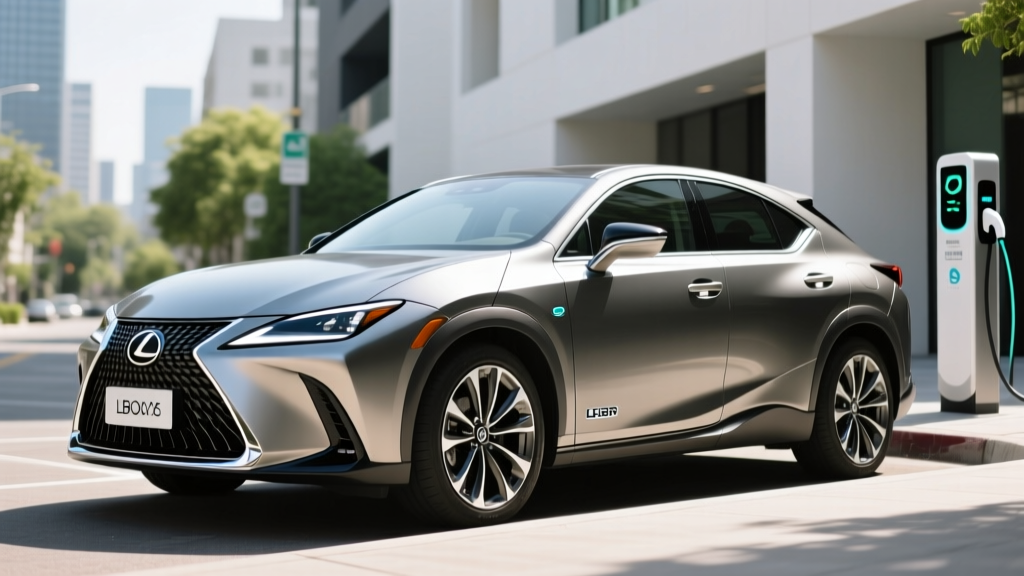
When shoppers search for a "Lexus hatchback hybrid," they're usually picturing something like the discontinued CT 200h — a compact, fuel-sipping premium hatch with a liftgate. As of 2026, Lexus does not sell a traditional hatchback hybrid in the United States. What they do offer is the Lexus LBx, a subcompact luxury crossover with a hatchback-style rear liftgate, available in global markets with a conventional hybrid (HEV) powertrain. For US buyers, the closest Lexus hybrid with hatchback-like cargo utility is the Lexus UX 300h, a subcompact luxury crossover that blends HEV efficiency with a practical rear hatch.
This guide breaks down the specs, real-world MPG, battery longevity, and ownership economics for these Lexus hybrid models — and helps you decide whether a Lexus hybrid, a plug-in hybrid from a rival brand, or a full battery-electric vehicle (BEV) best fits your driving needs.
HEV vs. PHEV: What's the Difference?
Conventional Hybrid (HEV): Uses a small battery (typically 1–2 kWh) charged by the engine and regenerative braking. You never plug it in. It boosts fuel economy by letting the electric motor assist at low speeds and during acceleration. Example: Lexus UX 300h.
Plug-in Hybrid (PHEV): Carries a larger battery (10–20 kWh) that you charge via a wall outlet or charger, giving 20–40 miles of electric-only driving before the gas engine kicks in. Lexus does not currently offer a PHEV hatchback in the US; the Lexus NX 450h+ is a PHEV, but it's an SUV, not a hatchback.
Lexus UX 300h: The Closest Thing to a Lexus Hatchback Hybrid in the US
The UX 300h is the most practical answer for American buyers seeking a Lexus hatchback hybrid. It pairs a 2.0-liter four-cylinder engine with two electric motors and an electronically controlled CVT, delivering all-wheel drive (AWD) as standard. The rear liftgate provides hatchback-style cargo access, even though the body style is technically a subcompact crossover.
| Spec | Value |
|---|---|
| Powertrain | 2.0L I4 + 2 electric motors (AWD) |
| Combined Horsepower | 181 hp |
| Transmission | eCVT |
| Battery Type | Nickel-metal hydride (NiMH), ~1.4 kWh |
| EPA MPG (City / Hwy / Combined) | 43 / 41 / 42 MPG |
| 0–60 mph | 7.8 seconds |
| Cargo Volume (rear seats up / down) | 17.1 / 36.4 cu ft |
| Base MSRP (UX 300h Premium) | ~$38,500 |
| Hybrid Battery Warranty | 10 years / 150,000 miles |
Source: fueleconomy.gov and Lexus USA.
Real-World MPG: What Owners Actually See
The EPA rates the UX 300h at 42 MPG combined, but real-world results depend heavily on driving style and conditions. Lexus hybrids, like their Toyota siblings, tend to exceed their EPA city rating in stop-and-go traffic because the electric motor handles low-speed propulsion while regenerative braking recovers energy. On the highway, the gas engine carries more of the load, so highway MPG often falls slightly below the city figure — the opposite of a conventional gas car.
Real-World MPG Expectations: Lexus UX 300h
EPA Combined: 42 MPG
City commuting (stop-and-go, under 40 mph): 44–48 MPG (regenerative braking maximizes electric assist)
Highway cruising (70+ mph): 37–40 MPG (engine-dominant, higher aerodynamic drag)
Cold weather (below 30°F): 35–39 MPG (engine runs more to heat cabin and warm the hybrid system)
Observed owner average (mixed driving): 40–44 MPG
For comparison, a similarly sized gas-only subcompact luxury crossover like the Audi Q3 returns around 25 MPG combined. The UX 300h's hybrid system saves roughly 250–300 gallons of fuel per year at 12,000 miles driven annually — translating to roughly $800–$1,000 in annual fuel savings at $3.40/gallon.
Lexus LBx: The Global Hatchback Hybrid (Not US-Bound)
The Lexus LBx is the closest Lexus has come to a true hatchback hybrid. Built on Toyota's GA-B platform (shared with the Yaris Cross), it's a B-segment premium crossover with a conventional 1.5-liter three-cylinder hybrid powertrain producing 136 hp. It's available in Europe, Japan, and Australia, but Lexus has confirmed no US launch as of 2026.
| Spec | Value |
|---|---|
| Powertrain | 1.5L I3 hybrid (FWD) |
| Combined Output | 136 hp |
| WLTP Combined Fuel Economy | ~61 MPG (4.4 L/100km) |
| 0–100 km/h | 9.2 seconds |
| Battery | Bipolar NiMH, ~1.0 kWh |
| Base Price (Europe) | €35,000–€42,000 (~$38,000–$46,000) |
If you're reading this from outside the US and have access to the LBx, it's a compelling premium city car with exceptional urban efficiency. US buyers looking for something similar should consider the UX 300h or cross-shop the Toyota Prius (a true hatchback hybrid, though not a luxury brand) which achieves up to 57 MPG combined.
Hybrid Battery Longevity: Warranty, Degradation, and Replacement Cost
Battery longevity is the single most common concern among first-time hybrid buyers. Here's what the data shows:
Lexus Hybrid Battery Warranty
Coverage: 10 years or 150,000 miles (whichever comes first), transferable to subsequent owners.
What's covered: Defects and capacity loss below a functional threshold. Lexus covers repair or replacement of the hybrid battery pack and related control modules.
Real-world lifespan: Toyota/Lexus hybrid batteries (NiMH) in vehicles like the Prius and CT 200h routinely last 150,000–200,000+ miles with minimal degradation. NiMH chemistry degrades more gracefully than lithium-ion, losing capacity slowly rather than experiencing sudden drop-off.
| Component | Cost Range |
|---|---|
| New OEM hybrid battery (UX 300h) | $3,000–$4,500 |
| Refurbished/remanufactured battery | $1,500–$2,500 |
| Individual cell/module replacement | $500–$1,200 |
| Labor (2–4 hours) | $300–$600 |
In practice, most Lexus hybrid owners will sell or trade the vehicle before the hybrid battery needs replacement. The 10-year/150,000-mile warranty covers the vast majority of ownership periods, and out-of-warranty replacement costs are a fraction of what a BEV battery replacement would run ($10,000–$20,000+).
Tax Credits and Incentives: What's Available?
This is where many buyers get confused. Under current IRS §30D rules for 2026:
- Conventional hybrids (HEVs) like the UX 300h do NOT qualify for the federal §30D tax credit. The credit is reserved for plug-in vehicles (PHEVs and BEVs) with battery capacity of at least 7 kWh.
- Plug-in hybrids (PHEVs) may qualify for up to $7,500, subject to MSRP caps ($80,000 for SUVs, $55,000 for sedans/hatchbacks), buyer income limits ($150K single / $300K joint AGI), and critical mineral + battery component sourcing requirements.
- Point-of-sale transfer: Eligible PHEV and BEV buyers can transfer the credit to the dealer at purchase, reducing the sticker price immediately rather than waiting for a tax refund.
- State incentives vary: Some states (California, Colorado, New York) offer additional rebates for hybrids or PHEVs. Check your state's energy or DMV website for current programs.
Source: IRS Clean Vehicle Credits.
The UX 300h's lack of a federal credit is offset by its lower base price, exceptional fuel economy, and Lexus reliability. A buyer in the 22% federal tax bracket saving ~$900/year in fuel recoups the price premium over a gas-only competitor within 3–4 years.
Hybrid vs. PHEV vs. Full EV: Which Fits You?
Choosing between a Lexus hybrid, a competitor's PHEV, or a full BEV depends on your charging access, commute, and risk tolerance.
| Factor | HEV (e.g., Lexus UX 300h) | PHEV (e.g., Toyota RAV4 Prime) | BEV (e.g., Tesla Model Y) |
|---|---|---|---|
| Plug-in required? | No | Yes (for EV range) | Yes |
| Electric-only range | 0 miles (EV assist only) | 25–42 miles | 250–330 miles |
| Home charging needed? | No | Recommended | Essential |
| Federal tax credit | No | Up to $7,500 (if eligible) | Up to $7,500 (if eligible) |
| Annual fuel cost (12K mi) | ~$1,000 | ~$500–$800 | ~$400–$600 (electricity) |
| Maintenance complexity | Low (proven Toyota/Lexus system) | Moderate (two full powertrains) | Low (no engine, fewer fluids) |
| Best for | No home charging, long trips, simplicity | Short commute + home charging, road trips | Home charging, daily commute, lowest running cost |
Choose a Lexus Hybrid (HEV) If:
- You can't install a home charger (apartment, street parking)
- You take frequent long road trips and don't want to plan around charging stops
- You want premium build quality with Toyota-grade reliability
- You want lower fuel costs without changing your refueling habits
Choose a PHEV If:
- Your commute is under 30 miles and you can charge at home
- You want electric-only daily driving but need gas flexibility for weekend trips
- You qualify for the $7,500 federal tax credit
Choose a Full EV If:
- You have reliable home Level 2 charging
- Your daily driving is under 200 miles
- You want the lowest per-mile energy cost and minimal maintenance
Pros and Cons: Lexus UX 300h at a Glance
Pros
- 42 MPG combined — best-in-class for luxury subcompact crossovers
- Standard AWD with no fuel-economy penalty
- Proven Toyota/Lexus hybrid reliability with 10-year battery warranty
- No plug-in required — zero lifestyle change from a gas car
- Quiet, refined cabin with Lexus build quality
- Hatchback-style liftgate for practical cargo loading
Cons
- No federal tax credit (HEV, not PHEV/BEV)
- Cargo space (17.1 cu ft) trails some competitors
- CVT can feel rubbery under hard acceleration
- Infotainment interface improved but still trails BMW/Audi UX
- Rear seat legroom is tight for taller passengers
- No PHEV variant available in the US market
Reliability and Safety Ratings
Lexus consistently ranks at or near the top of J.D. Power and Consumer Reports reliability surveys, and the hybrid powertrain is one of the most proven in the industry — Toyota has sold over 25 million hybrid vehicles globally since 1997. The UX 300h benefits from this legacy.
On the safety front, the UX has earned strong marks from the IIHS and a 5-star overall rating from NHTSA. Standard Lexus Safety System+ 3.0 includes adaptive cruise control, lane-keeping assist, pre-collision braking, and road-sign assist — a comprehensive Level 2 driver-assist suite (note: the driver must remain engaged at all times).
Frequently Asked Questions
How many MPG does the Lexus UX 300h hybrid get?
The EPA rates the 2026 Lexus UX 300h at 43 city / 41 highway / 42 combined MPG. Real-world city driving often yields 44–48 MPG thanks to heavy regenerative braking, while sustained highway driving at 70+ mph typically returns 37–40 MPG.
Does Lexus make a plug-in hybrid hatchback?
Not in the US market as of 2026. The Lexus NX 450h+ is a PHEV SUV with 37 miles of electric-only range, but it's larger and pricier (~$60,000+). The LBx hybrid is a conventional HEV and is not sold in the US. If you want a premium PHEV hatchback, the closest alternatives are the Audi A3 e-tron (discontinued) or the non-luxury Toyota Prius Prime (44 miles EV range, ~$33,000).
Is the Lexus hybrid battery expensive to replace?
A new OEM hybrid battery for the UX 300h costs approximately $3,000–$4,500 installed. Refurbished options run $1,500–$2,500. However, Lexus NiMH hybrid batteries routinely last 150,000–200,000+ miles, and the 10-year/150,000-mile warranty covers most ownership periods.
Does the Lexus UX 300h qualify for any tax credit?
No. The federal §30D Clean Vehicle Credit applies only to plug-in vehicles (PHEVs and BEVs) with at least 7 kWh of battery capacity. The UX 300h is a conventional hybrid with a ~1.4 kWh battery and does not qualify. Some states may offer small hybrid incentives — check your state energy office for details.
Should I buy the Lexus UX 300h or a full EV?
If you have home charging and a daily commute under 200 miles, a BEV like the Tesla Model Y or Hyundai Ioniq 5 will offer lower per-mile energy costs and access to the $7,500 federal credit. If you lack home charging, frequently drive long distances, or want zero refueling hassle, the UX 300h delivers excellent efficiency with no lifestyle change. It's also the better choice if you plan to keep the vehicle 10+ years and value proven long-term reliability over cutting-edge tech.
How does the Lexus UX 300h compare to the Toyota Prius?
The Prius achieves up to 57 MPG combined (vs. 42 for the UX 300h) and starts around $28,000 — roughly $10,000 less. The UX 300h trades some efficiency for a premium interior, standard AWD, a quieter cabin, and the Lexus dealership experience. If fuel economy is your top priority, the Prius wins. If luxury feel and brand prestige matter, the UX 300h fills that niche.