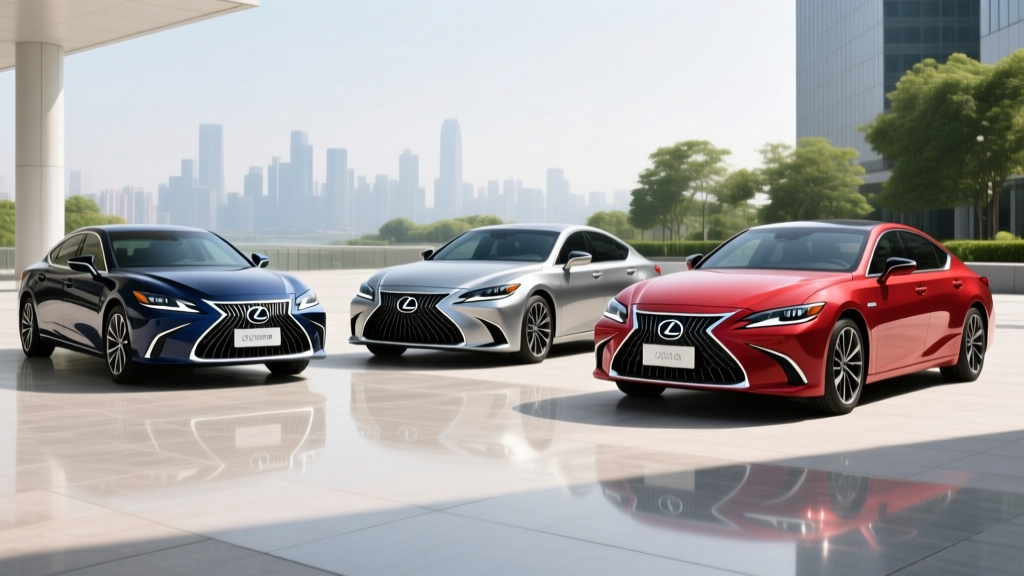
If you've searched for a Lexus hybrid sedan in 2026, you've found a lineup that prioritizes fuel efficiency, proven reliability, and luxury without demanding you plug in. Lexus offers three core hybrid sedans in the US market — the midsize ES 350h, the flagship LS 500h, and the compact IS 300h — all conventional hybrids (HEVs) that recharge their own batteries through regenerative braking and engine power. No charging cords required.
This guide breaks down every current Lexus hybrid sedan with exact EPA figures, real-world MPG expectations, powertrain specs, battery warranty details, and tax-credit eligibility so you can decide which model — or whether a PHEV or full EV — actually fits your driving life.
Lexus Hybrid Sedans at a Glance: HEV vs PHEV vs EV
Before we get to specific models, let's clear up a common confusion. Every Lexus hybrid sedan sold in the US for 2026 is a conventional hybrid (HEV), not a plug-in hybrid (PHEV). That distinction matters for your daily routine and your wallet.
| Feature | HEV (Lexus Hybrids) | PHEV | BEV (Full Electric) |
|---|---|---|---|
| Plugs in? | No — self-charging | Yes — Level 1/2 | Yes — Level 1/2/DC |
| Electric-only driving | Very short, low-speed only (~1 mi) | 20–50 miles typical | 200–400+ miles |
| Fuel / Energy | Gasoline + regen | Gasoline + grid electricity | Grid electricity only |
| Federal tax credit (§30D) | Not eligible | Up to $7,500 (if eligible) | Up to $7,500 (if eligible) |
| Best for | No home charging, long trips | Home charging + short commutes | Home charging, lower running costs |
Lexus does not currently sell a plug-in hybrid sedan in the US. The NX 450h+ and RX 450h+ are PHEV SUVs. If you specifically want a plug-in Lexus sedan with electric-only range, you'll need to look at competitors like the BMW 550e xDrive or Mercedes-Benz S 580e — or wait for Lexus to expand its PHEV sedan offerings.
2026 Lexus ES 350h: The Volume Leader
The ES 350h is the bestselling Lexus hybrid sedan by a wide margin, and for good reason. It pairs a 2.5-liter four-cylinder engine with Lexus's fourth-generation hybrid system for exceptional fuel economy in a spacious, comfortable package.
| Spec | 2026 Lexus ES 350h |
|---|---|
| Powertrain | 2.5L I4 + electric motor (HEV) |
| Combined Horsepower | 215 hp |
| Drivetrain | FWD (AWD available) |
| EPA MPG (City / Hwy / Combined) | 43 / 44 / 44 (FWD) |
| Hybrid Battery | ~1.6 kWh lithium-ion |
| 0–60 mph | ~8.1 seconds |
| Starting MSRP | ~$44,590 |
| Battery Warranty | 10 years / 150,000 miles |
How Many MPG Does the Lexus ES 350h Actually Get?
The EPA rates the FWD ES 350h at 43 city / 44 highway / 44 combined MPG. AWD models drop slightly to 41/38/40 MPG. According to fueleconomy.gov, these figures place the ES 350h among the most efficient luxury midsize sedans available.
Real-world expectation: Lexus hybrids tend to meet or slightly exceed their EPA city ratings thanks to aggressive regenerative braking in stop-and-go traffic. Owners commonly report 42–46 MPG in mixed suburban driving. Highway-only trips at 75+ mph may yield 38–41 MPG as the gasoline engine carries more of the load. In cold weather (below 30°F), expect a 3–5 MPG drop during warm-up cycles as the engine runs longer to heat the cabin and bring the hybrid battery to optimal temperature.
2026 Lexus LS 500h: The Flagship Hybrid
The LS 500h occupies a different space entirely. This is Lexus's full-size luxury flagship, competing with the Mercedes S-Class and BMW 7 Series, but with a hybrid powertrain that returns dramatically better fuel economy than its German rivals.
| Spec | 2026 Lexus LS 500h |
|---|---|
| Powertrain | 3.5L V6 + 2 electric motors (Multi-Stage Hybrid) |
| Combined Horsepower | 354 hp |
| Drivetrain | RWD (AWD available) |
| EPA MPG (City / Hwy / Combined) | 25 / 33 / 28 (RWD) |
| Hybrid Battery | ~1.1 kWh lithium-ion |
| 0–60 mph | ~5.2 seconds |
| Starting MSRP | ~$82,000 |
| Battery Warranty | 10 years / 150,000 miles |
The LS 500h uses Lexus's Multi-Stage Hybrid System, which pairs the V6 with two motor-generators and a unique four-speed automatic transmission integrated into the hybrid transaxle. The result is more direct acceleration feel than typical CVT-based hybrids. The trade-off: 28 combined MPG is excellent for a 4,700-pound luxury flagship, but it doesn't match the ES 350h's thriftiness.
Real-world expectation: Expect 26–30 MPG in mixed driving. The LS 500h's larger battery buffer and V6 displacement mean city MPG holds up well (24–27 MPG observed), while highway cruising at moderate speeds can push toward the low 30s.
2026 Lexus IS 300h: The Sport Compact Option
The IS 300h continues as Lexus's compact sport sedan hybrid offering, primarily sold in select markets. Where available for 2026, it pairs a 2.5L four-cylinder hybrid system with a sportier chassis tune than the ES.
| Spec | 2026 Lexus IS 300h |
|---|---|
| Powertrain | 2.5L I4 + electric motor (HEV) |
| Combined Horsepower | ~215 hp |
| Drivetrain | RWD |
| EPA MPG (City / Hwy / Combined) | ~33 / 38 / 35 (estimated) |
| Hybrid Battery | ~1.6 kWh nickel-metal hydride or lithium-ion |
| 0–60 mph | ~8.4 seconds |
| Starting MSRP | ~$43,000 (where available) |
| Battery Warranty | 10 years / 150,000 miles |
The IS 300h's lower MPG versus the ES 350h comes down to aerodynamics, weight distribution, and a less efficiency-optimized drivetrain calibration that prioritizes throttle response. If the IS 300h is available in your market for 2026, it offers a sportier driving experience at the cost of roughly 9 MPG combined versus the ES.
Fuel Economy Compared: All Lexus Hybrid Sedans
| Model | City MPG | Highway MPG | Combined MPG | Annual Fuel Cost* |
|---|---|---|---|---|
| ES 350h (FWD) | 43 | 44 | 44 | ~$1,350 |
| ES 350h (AWD) | 41 | 38 | 40 | ~$1,500 |
| LS 500h (RWD) | 25 | 33 | 28 | ~$2,100 |
| LS 500h (AWD) | 22 | 31 | 25 | ~$2,350 |
| IS 300h (RWD) | 33 | 38 | 35 | ~$1,700 |
*Based on 15,000 miles/year, $3.50/gallon premium unleaded. Source: fueleconomy.gov methodology.
Hybrid Battery Reliability, Warranty, and Replacement Cost
This is the number-one concern hybrid buyers raise, and it's where Lexus's track record is genuinely strong. Toyota and Lexus have been building hybrids since the 1997 Prius, and their hybrid battery longevity data is the most extensive in the industry.
Lexus Hybrid Battery Warranty (2026 Models)
- Coverage: 10 years or 150,000 miles (whichever comes first)
- What's covered: Hybrid battery pack, hybrid control module, inverter
- Capacity threshold: Lexus warrants against defects and abnormal degradation; there is no published minimum capacity retention percentage (unlike EV warranties at 70%)
- Transferable: Yes — warranty follows the vehicle, not the owner
How Long Do Lexus Hybrid Batteries Actually Last?
Based on long-term fleet data and owner reports aggregated by hybrid specialists, Lexus hybrid batteries typically last 150,000 to 200,000+ miles before requiring replacement. Many first-generation ES 300h and CT 200h models have surpassed 200,000 miles on their original battery packs. The key factors affecting lifespan are:
- Climate: Extreme heat (consistently above 95°F) accelerates lithium-ion degradation faster than moderate climates
- Driving pattern: Frequent short trips where the battery cycles rapidly between charge and discharge cause more wear than steady highway driving
- Storage: Leaving a hybrid unused for weeks at a time can deep-discharge the 12V auxiliary battery and stress the hybrid system
Hybrid Battery Replacement Cost
If your Lexus hybrid battery fails outside warranty, replacement costs typically range from $2,000 to $4,500 depending on the model, including parts and labor at a dealership. Independent hybrid specialists often offer refurbished battery packs for $1,500–$2,500. For context, that's roughly equivalent to two or three years of fuel savings versus a non-hybrid equivalent — meaning the hybrid still pays for itself even with an out-of-warranty battery swap.
Tax Credits and Incentives for Lexus Hybrid Sedans
Here's where conventional hybrids differ sharply from PHEVs and EVs: Lexus hybrid sedans (HEVs) do not qualify for the federal §30D clean vehicle tax credit. The IRS restricts the §30D credit — up to $7,500 — to plug-in electric vehicles and fuel-cell vehicles that meet battery sourcing, critical mineral, MSRP cap, and buyer income requirements. Since the ES 350h, LS 500h, and IS 300h cannot plug in, they are ineligible.
For the most current §30D rules, always check IRS.gov clean vehicle credits.
Are There Any Incentives at All?
- Some state programs offer modest rebates or reduced registration fees for high-MPG hybrids — check your state's energy office or DMV
- Employer commuter benefits sometimes include hybrid purchase incentives
- Insurance discounts: Several insurers (Geico, Liberty Mutual) offer 5–10% green-vehicle discounts for hybrids
- HOV lane access: A handful of states still grant hybrid vehicles access to carpool lanes, though most have restricted this to PHEVs and EVs
If a federal tax credit is a priority, you'd need to look at PHEV sedans like the BMW 550e or plug-in alternatives — or consider a full EV like the Tesla Model S or Lucid Air, though both come at significantly higher price points.
Lexus Hybrid vs Plug-In Hybrid vs Full EV: Which Should You Choose?
The decision between a Lexus HEV, a competitor's PHEV sedan, or a full battery-electric vehicle depends almost entirely on your charging access and driving patterns.
Choose a Lexus Hybrid Sedan (HEV) If:
- You don't have access to home or workplace charging
- You take frequent long road trips and don't want to plan around chargers
- You want maximum reliability with minimal maintenance complexity
- You drive 12,000–20,000+ miles per year and want consistent 40+ MPG
- You live in an apartment or street-park and can't install a charger
Choose a PHEV Sedan If:
- You can charge at home (Level 2) and your commute is under 30–40 miles
- You want electric-only daily driving but gas flexibility for road trips
- You want to qualify for the §30D federal tax credit (up to $7,500)
- You're willing to manage two energy systems (gas + plug-in charging)
Choose a Full EV If:
- You have reliable home Level 2 charging
- You want the lowest per-mile energy cost (~$0.04–0.06/mi vs $0.10–0.12/mi hybrid)
- You want instant torque, zero tailpipe emissions, and minimal drivetrain maintenance
- Your daily driving is under 250 miles and you're comfortable with road-trip charging planning
Lexus ES 350h Pros & Cons
- Pros: 44 MPG combined, no plug-in needed, 10-year battery warranty, proven reliability, quiet cabin, strong resale value
- Cons: No federal tax credit, CVT-like acceleration feel, no electric-only commuting, 215 hp is adequate but not quick
Ownership Costs: Lexus ES 350h vs Gas and EV Alternatives
To put the ES 350h's value in context, here's a 5-year cost comparison at 15,000 miles per year against a gas-only luxury sedan and a comparable EV.
| 5-Year Cost | ES 350h ($44,590) | Gas Sedan (~27 MPG) | EV (~$50,000) |
|---|---|---|---|
| Fuel / Energy | ~$6,750 | ~$11,100 | ~$3,600 |
| Maintenance | ~$2,800 | ~$3,500 | ~$1,800 |
| Federal Tax Credit | $0 | $0 | Up to $7,500* |
| Estimated Insurance | ~$9,500 | ~$8,800 | ~$10,500 |
| 5-Year Depreciation | ~$18,000 | ~$20,000 | ~$22,000 |
*EV credit subject to §30D eligibility: MSRP cap, buyer income limits, battery sourcing rules. Verify at IRS.gov.
The ES 350h's total 5-year operating cost (fuel + maintenance) runs roughly $9,550 — about $5,050 less than a comparable gas sedan but about $4,150 more than an EV. However, the EV's higher purchase price and depreciation can offset that gap depending on the model.
Frequently Asked Questions
How many MPG does a Lexus hybrid sedan get?
The 2026 Lexus ES 350h achieves an EPA-estimated 43 city / 44 highway / 44 combined MPG in FWD form. The flagship LS 500h returns 25/33/28 MPG. Real-world mixed driving in the ES 350h typically yields 42–46 MPG.
Do Lexus hybrid sedans need to be plugged in?
No. All current Lexus hybrid sedans are conventional hybrids (HEVs). The hybrid battery recharges through regenerative braking and the gasoline engine. You never plug them in — just fill up with gas as normal.
How far can a Lexus hybrid drive on electric only?
Conventional Lexus hybrids can creep on electric power alone for roughly 0.5–1 mile at very low speeds (under 25 mph), such as in a parking lot or heavy traffic. They are not designed for electric-only commuting. For meaningful electric-only range (20–50 miles), you'd need a plug-in hybrid (PHEV).
Is the Lexus hybrid system reliable?
Lexus and Toyota have the longest production history of any hybrid manufacturer, dating to 1997. Hybrid battery packs routinely last 150,000–200,000+ miles. The hybrid system has fewer moving parts than a conventional automatic transmission (no torque converter, fewer gear sets), and Lexus's hybrid components carry a 10-year/150,000-mile warranty.
How much does it cost to replace a Lexus hybrid battery?
Out-of-warranty hybrid battery replacement for a Lexus sedan typically costs $2,000–$4,500 at a dealership, or $1,500–$2,500 through independent hybrid specialists using refurbished packs. Given the 10-year/150,000-mile warranty, most owners never pay for a replacement.
Does the Lexus ES 350h qualify for a federal tax credit?
No. The federal §30D clean vehicle credit applies only to plug-in electric vehicles (PHEVs and BEVs) and fuel-cell vehicles. Since the ES 350h is a conventional hybrid with no plug-in capability, it does not qualify. Some states may offer minor incentives for high-MPG hybrids — check your state energy office.
Should I buy a Lexus hybrid or a full EV?
If you can charge at home and your daily driving is under 250 miles, a full EV offers lower per-mile energy costs and less maintenance. If you lack home charging, drive long distances regularly, or want zero range-planning hassle, the Lexus ES 350h hybrid delivers 44 MPG with no lifestyle changes required.