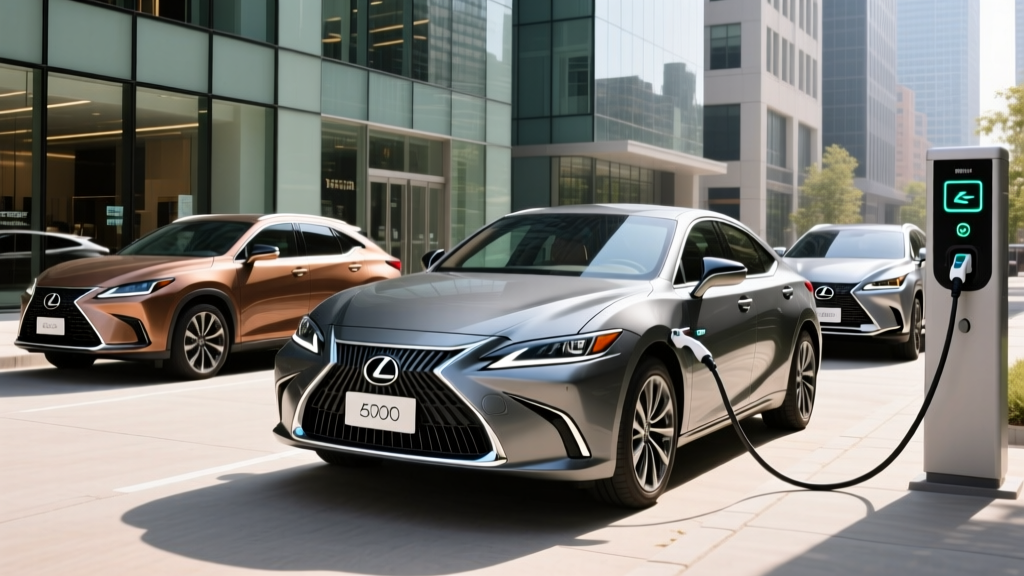
Lexus has built its reputation on refinement and reliability, and its hybrid lineup is where those traits shine brightest. Unlike brands pivoting hard to full battery-electric vehicles, Lexus continues to invest heavily in hybrid technology — offering both conventional hybrids (HEVs) and plug-in hybrids (PHEVs) across most of its lineup for 2026. For buyers who want electrified efficiency without range anxiety or home-charging dependency, Lexus hybrid cars represent one of the most mature, proven options on the market.
This guide covers every current Lexus hybrid and plug-in hybrid, with exact EPA fuel economy figures, PHEV electric-only range, powertrain specs, pricing, battery warranty details, and federal tax credit eligibility. Whether you're cross-shopping a UX Hybrid against a Tesla Model Y or deciding between a Lexus HEV and PHEV, you'll find the data you need here.
HEV vs. PHEV: Understanding the Two Lexus Hybrid Types
Before diving into specific models, it's critical to understand the fundamental difference between Lexus's two hybrid architectures — because they serve very different use cases and come with different price tags.
Conventional Hybrid (HEV)
- No plug required — the battery charges via regenerative braking and the gasoline engine
- Small battery — typically 1.0–2.0 kWh, not designed for extended electric-only driving
- Seamless operation — the car manages gas/electric blending automatically
- Lower upfront cost — typically $1,000–$3,000 less than a comparable PHEV
- No federal tax credit — HEVs do not qualify for the §30D clean vehicle credit
Plug-in Hybrid (PHEV)
- Plugs in to charge — Level 1 (120V) or Level 2 (240V) charging at home or public stations
- Larger battery — 13.6–18.1 kWh in current Lexus PHEVs, enabling 37–42 miles electric-only
- Best of both worlds — short commutes on electricity, gas engine for longer trips
- Higher upfront cost — but potential federal/state incentives offset the premium
- May qualify for §30D tax credit — up to $7,500, subject to income, MSRP caps, and battery sourcing rules
Key rule: A conventional Lexus HEV never needs to be plugged in. If you see "Lexus Hybrid" without "Plug-in" or "PHEV" in the name, it's a self-charging hybrid. Claiming otherwise is a common misconception we want to correct upfront.
2026 Lexus Hybrid Lineup: EPA MPG, Range & Specs
Lexus offers hybrid powertrains across six core nameplates for 2026, spanning subcompact crossovers to full-size luxury SUVs. Below is the complete spec breakdown with EPA figures sourced from fueleconomy.gov.
| Model | Type | Powertrain | Combined HP | EPA City / Hwy / Combined MPG | PHEV EV Range | Battery | Starting MSRP |
|---|---|---|---|---|---|---|---|
| UX 250h | HEV | 2.0L I4 + 2 motors (AWD) | 181 hp | 43 / 41 / 42 MPG | N/A | ~1.4 kWh NiMH | $38,450 |
| NX 350h | HEV | 2.5L I4 + 2 motors (AWD) | 240 hp | 41 / 37 / 39 MPG | N/A | ~1.6 kWh NiMH | $42,900 |
| NX 450h+ | PHEV | 2.5L I4 + 2 motors (AWD) | 304 hp | 84 MPGe (combined) / 36 MPG gas-only | 37 miles | 18.1 kWh Li-ion | $51,500 |
| TX 500h | HEV | 2.4L turbo I4 + hybrid (AWD) | 366 hp | 27 / 28 / 27 MPG | N/A | ~1.4 kWh NiMH | $63,500 |
| TX 550h+ | PHEV | 3.5L V6 + 2 motors (AWD) | 406 hp | 65 MPGe (combined) / 27 MPG gas-only | 33 miles | 18.1 kWh Li-ion | $72,500 |
| RX 350h | HEV | 2.5L I4 + 2 motors (AWD) | 246 hp | 37 / 34 / 36 MPG | N/A | ~1.6 kWh NiMH | $52,800 |
| RX 450h+ | PHEV | 2.5L I4 + 2 motors (AWD) | 304 hp | 83 MPGe (combined) / 35 MPG gas-only | 37 miles | 18.1 kWh Li-ion | $63,500 |
| ES 300h | HEV | 2.5L I4 + 1 motor (FWD) | 215 hp | 43 / 44 / 44 MPG | N/A | ~1.6 kWh NiMH | $44,800 |
| LC 500h | HEV | 3.5L V6 + electric motors (RWD) | 354 hp | 26 / 32 / 28 MPG | N/A | ~1.1 kWh Li-ion | $102,000 |
Source: EPA estimates via fueleconomy.gov. Actual mileage varies with driving conditions, temperature, and terrain.
Real-World MPG: What Owners Actually See
One of the most pleasant surprises with Lexus hybrid cars is that real-world fuel economy often exceeds EPA estimates in city driving — the opposite of what happens with most gasoline-only vehicles. Here's why and what to expect:
Real-World MPG Expectations
City driving: Lexus hybrids frequently beat their EPA city estimates by 1–3 MPG. The UX 250h, rated at 43 MPG city, routinely delivers 44–46 MPG in stop-and-go traffic where regenerative braking recaptures the most energy.
Highway driving: Expect to see 2–4 MPG below EPA highway estimates at sustained 75–80 mph speeds. Hybrids benefit less from regen at constant velocity, and aerodynamic drag dominates. The NX 350h, rated at 37 MPG highway, typically delivers 34–36 MPG on the interstate.
Cold weather (below 35°F): Budget a 5–10% fuel economy reduction. The engine runs more often to provide cabin heat and warm the catalytic converter, reducing electric-only operation time.
PHEV gas-only mode: Once the battery is depleted, PHEVs operate as conventional hybrids. The NX 450h+ delivers 34–37 MPG in gas-only mode — slightly less than the NX 350h due to the extra battery weight (~350 lbs).
Lexus PHEV Electric-Only Range & Charging
For 2026, Lexus offers three plug-in hybrid models: the NX 450h+, RX 450h+, and TX 550h+. All share Toyota's fourth-generation plug-in hybrid architecture with an 18.1 kWh lithium-ion battery pack.
| PHEV Model | EPA Electric-Only Range | Total Range (EV + Gas) | Level 1 Charge (120V) | Level 2 Charge (240V) | DC Fast Charge |
|---|---|---|---|---|---|
| NX 450h+ | 37 miles | ~540 miles | ~12 hours (0–100%) | ~4.5 hours (0–100%) | Not supported |
| RX 450h+ | 37 miles | ~520 miles | ~12 hours (0–100%) | ~4.5 hours (0–100%) | Not supported |
| TX 550h+ | 33 miles | ~470 miles | ~12 hours (0–100%) | ~4.5 hours (0–100%) | Not supported |
Critical charging note: None of the current Lexus PHEVs support DC fast charging. They use a J1772 connector for Level 1 and Level 2 AC charging, with an onboard charger rated at approximately 3.3 kW. This means a full charge from empty takes roughly 4.5 hours on a 240V Level 2 home charger — perfectly adequate for overnight charging, but don't expect quick top-ups at public fast-charging stations.
Preconditioning tip: Use the Lexus app to schedule cabin preconditioning while the car is still plugged in. This uses grid electricity rather than battery power, preserving your full 37-mile EV range for actual driving — especially valuable in winter.
Battery Warranty, Lifespan & Replacement Cost
Hybrid battery longevity is the number-one concern we hear from prospective Lexus hybrid buyers. Here's what the data shows:
Lexus Hybrid Battery Warranty
Hybrid Battery Coverage: 10 years / 150,000 miles (whichever comes first) for all 2020 and newer Lexus hybrids and PHEVs. This covers the hybrid traction battery against defects and capacity loss below a specified threshold.
Hybrid System Components: 8 years / 100,000 miles for related components including the inverter, converter, and electric motors.
Transferability: The hybrid battery warranty is fully transferable to subsequent owners at no cost, which supports strong resale values.
Real-world lifespan data: Toyota/Lexus hybrid batteries have an exceptional track record. Independent fleet data and owner reports consistently show NiMH hybrid batteries lasting 150,000–200,000+ miles with minimal degradation (typically 10–15% capacity loss over 10 years). The Prius taxi fleet in New York City famously accumulated 300,000+ miles on original hybrid batteries.
Replacement cost if out of warranty:
- HEV battery replacement: $2,500–$4,000 (refurbished) or $4,000–$6,000 (new OEM)
- PHEV battery replacement: $6,000–$9,000 (new OEM) due to larger capacity
- Individual cell module replacement (HEV): $500–$1,500 at specialized hybrid repair shops
The honest take: Battery replacement is a legitimate but low-probability expense. With a 10-year/150,000-mile warranty and demonstrated longevity beyond 200,000 miles, most Lexus hybrid owners will sell or trade the vehicle before facing a battery replacement cost. This is not the financial landmine that some fear-mongering suggests.
Federal Tax Credit & Incentive Eligibility
Tax credit rules for hybrids and PHEVs are nuanced. Here's the current landscape for 2026:
- Conventional HEVs (UX 250h, NX 350h, RX 350h, ES 300h, TX 500h, LC 500h): Do NOT qualify for the federal §30D Clean Vehicle Credit. This credit is reserved for plug-in vehicles with a minimum battery capacity of 7 kWh.
- PHEVs (NX 450h+, RX 450h+, TX 550h+): May qualify for up to $3,750–$7,500 under §30D, but eligibility depends on multiple factors including battery critical-mineral sourcing, buyer income caps ($150K single / $300K joint AGI), and MSRP limits ($80,000 for SUVs/vans/pickups, $55,000 for sedans).
- Point-of-sale transfer: As of 2024, eligible buyers can transfer the §30D credit to the dealer at purchase, reducing the purchase price directly rather than waiting for a tax refund.
- State incentives: Vary significantly by jurisdiction. California, Colorado, New York, and several other states offer additional rebates for PHEVs. Check your state's energy office or the AFDC state incentive database for specifics.
Current Lexus PHEV credit status (2026): The NX 450h+ and RX 450h+ may qualify for a partial or full credit depending on battery-sourcing compliance, which has tightened significantly since 2024. The TX 550h+ (MSRP $72,500) falls under the $80,000 SUV cap but must still meet sourcing requirements. Always verify current eligibility on irs.gov or with your tax professional before purchase — these rules change frequently.
Lexus Hybrid vs. PHEV vs. Full EV: Which Fits You?
Choose a Lexus HEV (UX 250h, NX 350h, RX 350h, ES 300h) if:
- You cannot install a home charger (apartment, street parking, landlord restrictions)
- You want maximum simplicity — no plugs, no apps, no charging planning
- Your priority is fuel cost reduction with zero lifestyle change
- You drive 12,000–15,000 miles/year and want 35–44 MPG combined
- You want the lowest upfront price in the Lexus lineup
Choose a Lexus PHEV (NX 450h+, RX 450h+, TX 550h+) if:
- You can install a Level 2 home charger and your daily commute is under 35 miles
- You want to drive mostly on electricity for daily errands but need gas flexibility for road trips
- You want the 304–406 hp performance advantage that PHEV powertrains deliver
- You may qualify for the §30D tax credit, narrowing the price gap with the HEV
- You're not ready to commit to a full EV but want meaningful electrification
Choose a full BEV (Tesla Model Y, BMW iX, Hyundai Ioniq 5) instead if:
- You have reliable home charging and your typical trips are under 250 miles
- You want zero tailpipe emissions and the lowest per-mile energy cost (~$0.04/mile vs. ~$0.08/mile for PHEV gas mode)
- You want minimal maintenance (no oil changes, no spark plugs, fewer moving parts)
- You qualify for the full $7,500 federal credit on an eligible BEV
Pros and Cons of the Lexus Hybrid Approach
Pros
- Class-leading reliability — Lexus consistently tops J.D. Power and Consumer Reports dependability rankings
- No range anxiety — HEVs refuel in 3 minutes at any gas station
- Strong real-world MPG that often beats EPA estimates in city driving
- 10-year/150,000-mile hybrid battery warranty provides long-term peace of mind
- Excellent resale value — Lexus hybrids depreciate slower than most competitors
- Refined, quiet powertrain transitions — Lexus's hybrid system is among the smoothest in the industry
- No home charging infrastructure required for HEVs
Cons
- HEV models do not qualify for any federal tax credit
- PHEV electric-only range (33–37 miles) trails some competitors (e.g., Toyota RAV4 Prime at 42 miles)
- PHEVs do not support DC fast charging — a notable omission for public charging convenience
- Hybrid premium adds $1,500–$5,000 over equivalent gas-only trims (where offered)
- Performance-oriented buyers may find HEV acceleration modest (UX 250h: ~8.0 sec 0–60)
- Infotainment and driver-assist tech, while improved, still trails Tesla and BMW in some UX metrics
- Limited PHEV availability — only three models offer plug-in capability
Frequently Asked Questions
How many MPG does a Lexus hybrid get?
It depends on the model. The most efficient Lexus hybrid is the ES 300h sedan at 44 MPG combined (43 city / 44 highway). The UX 250h crossover achieves 42 MPG combined. The larger RX 350h returns 36 MPG combined, while the three-row TX 500h delivers 27 MPG combined. PHEV models achieve 65–84 MPGe when operating on combined electric and gas power.
How far can a Lexus PHEV go on electric only?
The NX 450h+ and RX 450h+ each deliver an EPA-rated 37 miles of electric-only range. The larger TX 550h+ achieves 33 miles. In real-world conditions with moderate temperatures and mixed driving, expect 32–36 miles from the NX/RX and 28–32 miles from the TX. Cold weather (below freezing) can reduce EV range by 15–25%.
Do Lexus hybrids need to be plugged in?
No. Conventional Lexus hybrids (HEVs) like the UX 250h, NX 350h, RX 350h, and ES 300h never need to be plugged in. They generate electricity through regenerative braking and the gasoline engine. Only the plug-in hybrid (PHEV) models — NX 450h+, RX 450h+, and TX 550h+ — benefit from being plugged in to charge their larger batteries for electric-only driving.
Is the Lexus hybrid battery reliable and what does replacement cost?
Lexus hybrid batteries are among the most reliable in the industry, with documented lifespans exceeding 200,000 miles. All 2020+ models carry a 10-year/150,000-mile hybrid battery warranty. If replacement is needed out of warranty, expect $2,500–$6,000 for HEV batteries and $6,000–$9,000 for PHEV batteries, though the vast majority of owners never face this expense.
Does any Lexus hybrid qualify for a federal tax credit?
Conventional Lexus HEVs do not qualify for the federal §30D Clean Vehicle Credit. Lexus PHEVs (NX 450h+, RX 450h+, TX 550h+) may qualify for up to $7,500, but eligibility depends on the buyer's adjusted gross income (caps at $150K single / $300K joint), the vehicle's MSRP relative to the cap ($80K for SUVs), and battery critical-mineral sourcing compliance. Verify current eligibility at irs.gov before purchasing.
How does Lexus hybrid reliability compare to full EVs?
Lexus hybrids have a 25+ year track record (since the 2004 RX 400h) with exceptional reliability data. Full EVs have fewer moving parts but less long-term historical data at scale. For buyers prioritizing proven reliability above all else, a Lexus HEV is arguably the lowest-risk electrified vehicle purchase available today.
Can I tow with a Lexus hybrid?
Yes, with limitations. The TX 500h and TX 550h+ offer up to 5,000 lbs towing capacity — adequate for small boats and utility trailers. The RX 350h and RX 450h+ are rated for 3,500 lbs. The NX 350h and NX 450h+ are limited to 2,000 lbs. The UX 250h is not rated for towing. Note that towing significantly reduces fuel economy — expect a 30–50% MPG reduction under load.
All pricing, specifications, and tax credit information reflect 2026 model-year data available at time of publication. Federal and state incentives are subject to change. Consult irs.gov and a qualified tax professional for personalized credit eligibility guidance.