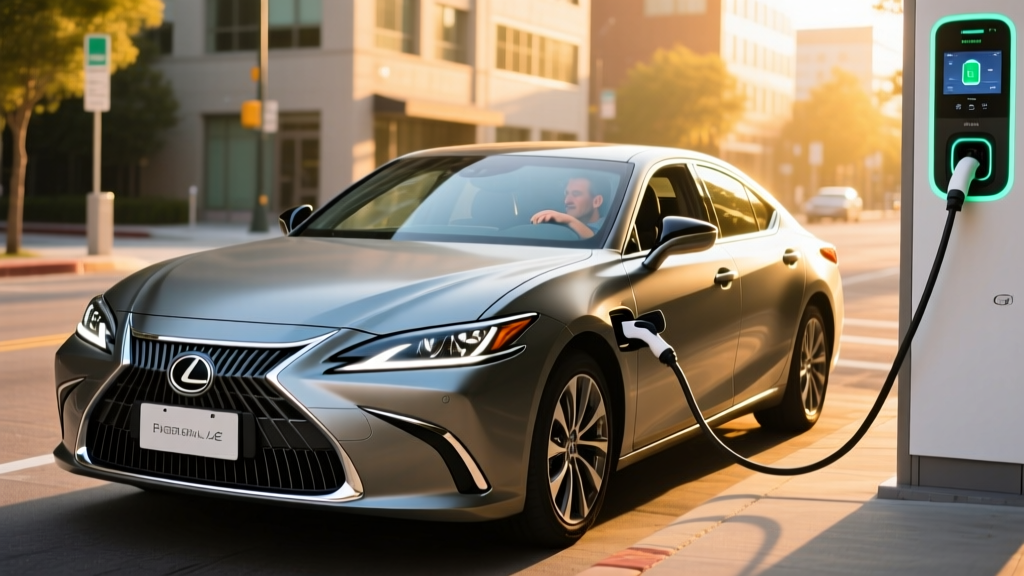
The 2026 Lexus ES 300h occupies a rare position in the luxury midsize sedan segment: it delivers genuine fuel efficiency without requiring a plug, a lifestyle change, or a learning curve. For buyers researching the Lexus ES hybrid, the appeal is straightforward — premium comfort, Lexus reliability, and EPA-rated fuel economy that undercuts most four-cylinder gas sedans. But how does it stack up against plug-in hybrids and full EVs in 2026, and what does long-term battery ownership actually cost?
This guide covers the ES 300h powertrain, real-world MPG expectations, battery longevity, pricing, and a decision framework to help you determine whether this conventional hybrid, a PHEV alternative, or a battery-electric vehicle best fits your driving profile.
2026 Lexus ES 300h Powertrain and Efficiency Specs
The ES 300h pairs a 2.5-liter inline-four Atkinson-cycle engine with an electric motor and a compact nickel-metal hydride (NiMH) traction battery. The system prioritizes smoothness and efficiency over raw performance — a deliberate choice that defines the ES driving character.
| Attribute | Specification |
|---|---|
| Powertrain | 2.5L I4 Atkinson-cycle + electric motor (HEV) |
| Combined Horsepower | 215 hp |
| Transmission | Electronically controlled CVT (eCVT) |
| Traction Battery | ~1.6 kWh NiMH (self-charging, no plug) |
| EPA City MPG | 43 MPG |
| EPA Highway MPG | 44 MPG |
| EPA Combined MPG | 44 MPG |
| 0–60 mph | ~8.1 seconds |
| Drivetrain | Front-wheel drive |
| Fuel Tank | 13.2 gallons |
| Total Driving Range | ~580 miles |
| Base MSRP (ES 300h) | ~$44,590 |
| Federal Tax Credit | Not eligible (§30D requires plug-in) |
Source: EPA Fuel Economy — Lexus ES 300h
Real-World MPG: What Owners Actually See
The ES 300h's EPA rating of 44 MPG combined is one of the highest in the luxury segment. Unlike full EVs, where real-world range often falls below the EPA sticker, Toyota/Lexus hybrids frequently exceed their EPA estimates in city driving. The Atkinson-cycle engine shuts off frequently at low speeds, letting the electric motor handle stop-and-go traffic silently.
- City driving: 44–48 MPG (hybrids excel here; motor handles low-speed loads)
- Highway cruising (70–80 mph): 38–42 MPG (aerodynamic drag reduces hybrid advantage)
- Cold weather (below 32°F): 36–40 MPG (engine runs more often for cabin heat)
- Mixed daily commute: 42–46 MPG typical
Unlike EVs, the ES 300h loses relatively little efficiency in cold weather since the gasoline engine provides waste heat for the cabin — no range-destroying resistive heating required.
On a 300-mile highway road trip at 75 mph, expect roughly 40 MPG and one fuel stop. Around town, the hybrid system's regenerative braking and engine-off coasting push numbers toward the upper 40s. This city-highway inversion — where the hybrid does better in traffic than on the freeway — is the opposite of a gas car and a key advantage over EVs for urban drivers.
HEV vs. PHEV: Why the ES 300h Is a Conventional Hybrid
A common source of confusion: the ES 300h is a conventional hybrid (HEV), not a plug-in hybrid (PHEV). It has no charging port, no electric-only driving mode of meaningful distance, and requires zero behavioral change from a gas-car owner. You fuel it at a gas station; the hybrid system recovers energy through regenerative braking and engine optimization.
| Feature | HEV (ES 300h) | PHEV (e.g., BMW 330e) | BEV (e.g., Tesla Model 3) |
|---|---|---|---|
| Plug-in charging? | No — gas only | Yes — Level 1/2 | Yes — Level 1/2/DC |
| Electric-only range | ~1 mile (low speed) | 20–40 miles typical | 250–350+ miles |
| Battery size | ~1.6 kWh | 12–20 kWh | 60–82 kWh |
| Fueling/charging | Gas station | Gas + plug | Plug only |
| Federal tax credit (§30D) | Not eligible | Up to $7,500 (if eligible) | Up to $7,500 (if eligible) |
| Maintenance complexity | Low (proven system) | Moderate (two full systems) | Low (fewer moving parts) |
| Best for | No home charging, long highway trips | Short commutes + road trips | Home charging, daily commuting |
If you're considering a plug-in alternative in the luxury midsize segment, the BMW 330e or the Lexus NX 450h+ (a PHEV SUV, not a sedan) offer 20–37 miles of electric-only range — but at higher MSRP and with the requirement that you install a Level 2 home charger to capture the benefit.
Pricing, Trims, and Tax Credit Reality
The 2026 Lexus ES 300h starts around $44,590 (including destination) for the base trim. The popular Luxury trim adds roughly $3,500, while the F Sport Handling and Ultra Luxury trims push toward $52,000–$54,000 fully loaded.
The ES 300h does not qualify for the IRS §30D Clean Vehicle Credit. That credit — up to $7,500 — is reserved for plug-in electric vehicles (PHEVs and BEVs) with battery capacities of at least 7 kWh and meeting critical-mineral and battery-component sourcing requirements. The ES 300h's ~1.6 kWh NiMH battery falls well below this threshold.
Some states offer separate hybrid incentives or reduced registration fees, but these vary widely. Check your state's energy office or AFDC state incentive database for current local programs.
Without the federal credit, the ES 300h competes on total cost of ownership rather than upfront subsidy. Here's the math that matters:
| Vehicle | MPG Combined | Annual Fuel Cost | 5-Year Fuel Cost |
|---|---|---|---|
| Lexus ES 300h | 44 | ~$1,193 | ~$5,966 |
| BMW 530i (gas) | 27 | ~$1,944 | ~$9,722 |
| Mercedes E 350 (gas) | 25 | ~$2,100 | ~$10,500 |
| Tesla Model 3 LR (BEV) | 132 MPGe | ~$660* | ~$3,300* |
*EV electricity cost assumes $0.14/kWh national average. Home charging costs vary significantly by utility rate.
The ES 300h saves roughly $3,700–$4,500 in fuel over five years compared to a gas-only German rival. A BEV saves more, but requires home charging infrastructure and accepts range and charging-time trade-offs on road trips.
Battery Longevity, Warranty, and Replacement Cost
Hybrid battery anxiety is the single most common concern for first-time hybrid buyers. The ES 300h uses a proven NiMH battery pack — the same chemistry Toyota has deployed across millions of Prius and Camry Hybrid vehicles over two decades. This is not experimental technology.
| Item | Detail |
|---|---|
| Hybrid Battery Warranty | 10 years / 150,000 miles (whichever comes first) |
| Hybrid System Components Warranty | 8 years / 100,000 miles |
| Basic Vehicle Warranty | 4 years / 50,000 miles |
| Powertrain Warranty | 6 years / 70,000 miles |
| Expected Battery Lifespan | 150,000–200,000+ miles (based on fleet data) |
| Battery Replacement Cost (out of warranty) | $2,500–$4,000 (dealer); $1,500–$2,500 (refurbished) |
Lexus's 10-year/150,000-mile hybrid battery warranty is among the strongest in the industry and applies nationwide regardless of state emissions regulations. For context, most original owners will sell or trade the vehicle well before this warranty expires.
NiMH chemistry degrades more gracefully than early lithium-ion packs. Rather than sudden capacity cliff failure, NiMH batteries lose capacity gradually — typically 10–15% over 100,000 miles, which translates to a 2–4 MPG reduction, not a catastrophic loss. Many Prius taxis have exceeded 300,000 miles on the original hybrid battery.
If replacement is needed out of warranty, a refurbished NiMH pack from a reputable supplier runs $1,500–$2,500 installed — far less than a BEV battery replacement ($8,000–$20,000+). This cost predictability is a significant ownership advantage.
Driving Experience and Technology
The ES 300h prioritizes ride comfort and cabin quietness over sporty dynamics. The eCVT is seamless — there are no gear shifts to feel, just a smooth, linear acceleration curve. At 215 hp and roughly 8.1 seconds to 60 mph, it's adequate for merging and passing but won't satisfy enthusiasts seeking the punch of a turbocharged gas sedan or the instant torque of an EV.
Standard technology includes:
- 12.3-inch touchscreen with wireless Apple CarPlay and Android Auto
- Lexus Safety System+ 3.0 (adaptive cruise, lane-keeping, pre-collision, road-sign assist)
- 10-speaker audio (Mark Levinson 17-speaker optional)
- Wireless charging pad, heated/ventilated front seats (trim-dependent)
- Head-up display (available on upper trims)
The Lexus Safety System+ 3.0 is a Level 2 driver-assistance system per SAE classification — it provides steering and speed support but requires the driver to remain fully engaged at all times. It is not autonomous or self-driving.
Who Should Buy the Lexus ES Hybrid — and Who Shouldn't
- 44 MPG combined — class-leading for luxury midsize sedans
- No plug required; zero lifestyle change from a gas car
- 10-year/150,000-mile hybrid battery warranty
- 580+ mile total range; no range anxiety on road trips
- Proven reliability; low long-term maintenance cost
- Quiet, comfortable ride quality
- No federal tax credit (HEV, not PHEV/BEV)
- Modest 215 hp — not a performance sedan
- FWD only — no AWD option (unlike some competitors)
- Infotainment still uses touchpad on some trims
- Cannot drive on electric-only power for meaningful distances
- Higher starting price than a Camry Hybrid (~$30K less)
- Choose the ES 300h if: You want luxury sedan comfort and 44 MPG without installing a home charger, changing your fueling habits, or accepting range limitations on road trips.
- Choose a PHEV (e.g., BMW 330e) if: You have a short commute (under 30 miles), can install a Level 2 charger at home, and want electric-only daily driving with gas backup for longer trips — plus potential §30D tax credit eligibility.
- Choose a BEV (e.g., Tesla Model 3, BMW i4) if: You have reliable home charging, mostly drive under 250 miles daily, want the lowest per-mile energy cost, and are comfortable planning DC fast-charge stops on road trips.
- Stick with a gas sedan if: You drive under 8,000 miles annually, where the hybrid fuel savings won't offset the higher MSRP within your ownership period.
Frequently Asked Questions
How many MPG does the Lexus ES 300h hybrid get?
The 2026 Lexus ES 300h is EPA-rated at 43 MPG city, 44 MPG highway, and 44 MPG combined. In real-world city driving, many owners report 45–48 MPG thanks to the hybrid system's regenerative braking and engine-off operation at low speeds. Highway driving at 75+ mph typically yields 38–42 MPG.
Does the Lexus ES hybrid need to be plugged in?
No. The ES 300h is a conventional hybrid (HEV), not a plug-in hybrid. It has no charging port. The small traction battery recharges through regenerative braking and the gasoline engine. You fuel it exclusively at a gas station, exactly like a traditional car.
How far can the Lexus ES 300h drive on electric power alone?
Only about one mile at very low speeds (under 25 mph) in EV mode. This is not a meaningful electric-only driving range — it's designed for quiet, zero-emission maneuvering in parking lots or residential streets, not commuting. If electric-only driving is a priority, you need a PHEV or BEV.
Is the Lexus ES hybrid reliable, and what does battery replacement cost?
Yes. The Lexus/Toyota hybrid system is among the most proven electrified powertrains in production, with over 20 years of fleet data. The hybrid battery is warranted for 10 years/150,000 miles. Out-of-warranty replacement costs $2,500–$4,000 at a dealer, or $1,500–$2,500 with a refurbished pack. Most owners will never need a replacement during their ownership.
Does the Lexus ES 300h qualify for any federal tax credit?
No. The IRS §30D Clean Vehicle Credit requires a plug-in vehicle with a battery capacity of at least 7 kWh, meeting critical-mineral and battery-component sourcing rules, MSRP caps, and buyer income limits. The ES 300h's ~1.6 kWh NiMH battery does not meet this threshold. Check the AFDC database for any state-level hybrid incentives in your area.
How does the ES 300h compare to the Toyota Camry Hybrid?
Both share Toyota's hybrid synergy drive architecture, but the ES 300h uses a 2.5L engine tuned for refinement (215 hp combined) versus the Camry Hybrid's more efficiency-focused tune (up to 51 MPG combined on the LE trim). The ES 300h offers a significantly quieter cabin, more premium materials, Lexus Safety System+ 3.0, and a luxury dealership experience — at roughly $14,000–$16,000 more than a well-equipped Camry Hybrid.
Is the Lexus ES hybrid good for long road trips?
Excellent. With a 13.2-gallon fuel tank and 44 MPG combined, the ES 300h delivers approximately 580 miles of total range — more than most BEVs and comparable to or exceeding gas sedans. There's no charging planning, no DC fast-charger dependency, and no cold-weather range loss to worry about. You stop for gas for five minutes and continue.
Sources: EPA Fuel Economy, IRS §30D Clean Vehicle Credit, Lexus USA — ES 300h