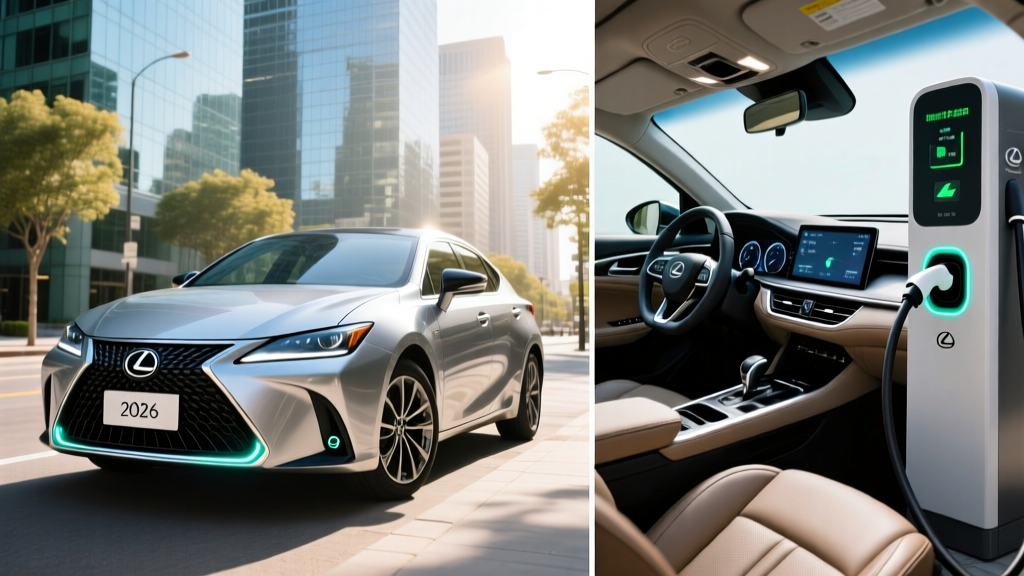
If you've searched for lexus ct200h hybrid mpg while hunting for a premium fuel-sipper on the used market, you're not alone. The Lexus CT 200h — sold in the U.S. from the 2011 through 2017 model years — remains one of the most affordable entry points into luxury hybrid ownership. Built on Toyota's proven third-generation Prius powertrain, it delivers exceptional fuel economy with Lexus refinement, though not without trade-offs in power and interior space.
This guide covers the CT 200h's real-world MPG, powertrain specs, hybrid battery longevity, ownership costs, and how it stacks up against modern hybrids, plug-in hybrids (PHEVs), and full battery-electric vehicles (BEVs) available today.
Lexus CT 200h Hybrid MPG: The Numbers That Matter
The EPA rates the Lexus CT 200h at 43 MPG city / 40 MPG highway / 42 MPG combined. These figures apply to the 2011–2017 model years with the 1.8-liter inline-four hybrid powertrain. For context, this puts the CT 200h within 1–2 MPG of the third-gen Toyota Prius on which it's based.
| Driving Cycle | EPA MPG | Real-World Expectation |
|---|---|---|
| City | 43 MPG | 44–48 MPG (hybrids excel in stop-and-go) |
| Highway | 40 MPG | 36–39 MPG (aero drag at 70+ mph) |
| Combined | 42 MPG | 40–45 MPG depending on driving mix |
Real-world note: Like most conventional hybrids (HEVs), the CT 200h often exceeds its EPA city rating in actual urban driving. The regenerative braking system recovers energy during frequent stops, and the engine shuts off at idle — conditions the EPA city cycle captures but real stop-and-go traffic amplifies. Highway driving tells a different story: at sustained 75–80 MPH speeds, expect fuel economy to dip into the mid-to-upper 30s. Source: fueleconomy.gov.
HEV vs PHEV vs BEV: Where the CT 200h Fits
The Lexus CT 200h is a conventional hybrid (HEV), not a plug-in hybrid (PHEV). This is a critical distinction many shoppers confuse:
| Feature | HEV (CT 200h) | PHEV (e.g., Prius Prime) | BEV (e.g., Tesla Model 3) |
|---|---|---|---|
| Plug-in required? | No — self-charging via engine + regen | Yes — plug in for electric-only range | Yes — plug in for all driving |
| Electric-only range | ~1 mile at low speed | 25–44 miles (model dependent) | 250–360+ miles |
| Total range | ~450 miles (11.9-gal tank) | ~600+ miles combined | 250–360+ miles |
| Federal tax credit | No | Up to $7,500 (§30D, if eligible) | Up to $7,500 (§30D, if eligible) |
| Home charging needed | No | Recommended (Level 2) | Essential (Level 2) |
| Maintenance | Low (hybrid-specific) | Low (EV mode reduces engine wear) | Minimal (no engine) |
The CT 200h never plugs in. Its 1.3 kWh nickel-metal hydride (NiMH) traction battery charges exclusively through regenerative braking and the gasoline engine. If you want electric-only commuting, you need a PHEV like the current Toyota Prius Prime (44 miles EV range, EPA-rated) or a full BEV.
Powertrain Specs: Prius Hardware in Lexus Clothing
| Engine | 1.8L inline-4 (2ZR-FXE) Atkinson-cycle |
| Engine power | 98 HP @ 5,200 RPM |
| Electric motor | Permanent-magnet synchronous, 80 HP (60 kW) |
| Combined system output | 134 HP |
| Transmission | eCVT (planetary gearset, no belts) |
| Traction battery | 1.3 kWh NiMH (27 modules) |
| 0–60 MPH | 9.8 seconds |
| Fuel tank | 11.9 gallons (regular unleaded) |
| Drivetrain | Front-wheel drive |
| Curb weight | ~3,130 lbs |
The CT 200h's powertrain is essentially the third-generation Prius system with Lexus-specific tuning for slightly firmer damping and more aggressive throttle mapping in Sport mode. The eCVT is Toyota's planetary gearset design — there are no belts or pulleys to wear out, which contributes significantly to long-term reliability.
Performance is the trade-off: 134 combined horsepower and a 9.8-second 0–60 time mean highway merging requires planning. This is a fuel-economy-first vehicle, and the powertrain makes that priority clear.
Hybrid Battery Longevity and Replacement Cost
Lexus CT 200h Hybrid Battery Warranty
Original coverage: 8 years / 100,000 miles (10 years / 150,000 miles in CARB states including CA, NY, MA, and others).
Battery chemistry: Nickel-metal hydride (NiMH) — proven, thermally stable, less energy-dense than modern lithium-ion.
Capacity retention threshold: Lexus/Toyota defines failure as falling below ~60% of original capacity or exhibiting a voltage imbalance across modules.
The CT 200h's NiMH battery pack is among the most durable in the hybrid segment. Toyota's hybrid synergy drive system keeps the battery in a narrow state-of-charge window (roughly 40–80%), which dramatically reduces degradation compared to fully cycling the pack. Real-world data from Prius and CT 200h owners shows many original batteries lasting 150,000–200,000+ miles before requiring service.
Battery replacement cost (2026):
- New OEM battery (Lexus dealer): $2,500–$3,500 including labor
- Refurbished/remanufactured pack: $1,000–$1,800 including labor
- Single-module replacement (independent hybrid shop): $300–$600 if only 1–2 of 27 modules are weak
Pro tip: Before buying a used CT 200h, have a hybrid-specialist shop run a battery health check using Toyota's Techstream diagnostic software. This reveals module voltage delta and internal resistance — far more informative than a simple OBD-II scan.
Used Market Pricing and Tax Credit Eligibility
Because Lexus discontinued the CT 200h after the 2017 model year, all U.S. examples are now purchased used. As of early 2026, here's what the market looks like:
| Model Year | Mileage Range | Typical Price |
| 2011–2012 | 100k–140k miles | $7,500–$10,500 |
| 2013–2015 (refresh) | 70k–110k miles | $10,000–$14,500 |
| 2016–2017 (final years) | 50k–90k miles | $13,000–$18,000 |
Federal tax credit: The CT 200h does not qualify for the §30D federal clean vehicle tax credit. That credit applies only to new plug-in vehicles (PHEVs and BEVs) meeting battery sourcing, MSRP, and buyer income requirements per IRS guidelines. However, some states and local utilities offer rebates for used hybrid purchases — check your state's energy office for current programs.
For buyers specifically wanting a tax credit, a new PHEV like the Toyota Prius Prime (starting ~$33,445 MSRP, up to $3,750 federal credit depending on sourcing compliance) or the Chrysler Pacifica PHEV (up to $7,500 if eligible) would be alternatives, though at a significantly higher purchase price.
Reliability and Common Issues
The CT 200h inherits Toyota's hybrid reliability pedigree. The powertrain — shared with the Prius — has been in continuous production since 2009 and is among the most thoroughly proven hybrid systems ever built. Key reliability notes:
- eCVT transmission: Virtually failure-proof. The planetary gearset has no belts, clutches, or bands to wear.
- Inverter/coolant pump: Some 2011 models had a recall for the hybrid inverter coolant pump. Verify recall completion on any used example via NHTSA.gov.
- 12V auxiliary battery: Like all hybrids, the CT 200h has a conventional 12V battery that can die if the car sits unused. This is separate from the hybrid traction battery and is a $150–$200 replacement.
- Brake actuator: The electronically controlled brake system (ECB) can develop issues around 120k–150k miles. Replacement runs $1,200–$1,800. Listen for unusual brake pedal feel or ABS pump cycling.
- Oil consumption: Some 2ZR-FXE engines consume oil between changes after 100k miles. Check oil level monthly.
Who Should Buy the CT 200h — and Who Shouldn't
Choose the CT 200h if:
- You want luxury-badge fuel economy under $15,000 used
- Your commute is city-heavy (stop-and-go maximizes hybrid MPG)
- You can't install a home charger (no plug needed)
- You value proven Toyota hybrid reliability
- You want low insurance and registration costs
Look elsewhere if:
- You need quick highway merging (134 HP is modest)
- You want electric-only driving or a federal tax credit
- Cargo space is a priority (14.3 cu ft trunk; no frunk)
- You want modern ADAS (pre-2017 models lack auto emergency braking)
- You want Apple CarPlay/Android Auto (not available)
The bottom line: The Lexus CT 200h is a rational used-car buy for fuel-conscious urban drivers who want Lexus build quality without new-car depreciation. At 42 MPG combined EPA — and often better in real city driving — it still outperforms most non-hybrid compacts in 2026. But if you need modern safety tech, more power, or plug-in electric range, newer options like the Toyota Prius (57 MPG combined), Prius Prime (PHEV), or a used Tesla Model 3 may serve you better.
Frequently Asked Questions
How many MPG does the Lexus CT 200h get?
The EPA rates the CT 200h at 43 city / 40 highway / 42 combined MPG. In real-world city driving, many owners report 44–48 MPG thanks to regenerative braking. Highway driving at 75+ MPH typically yields 36–39 MPG.
Is the Lexus CT 200h a plug-in hybrid?
No. The CT 200h is a conventional hybrid (HEV). It charges its battery through regenerative braking and the gasoline engine — you never plug it in. If you want plug-in electric-only range, consider a PHEV like the Toyota Prius Prime.
How long does the CT 200h hybrid battery last?
Toyota/Lexus NiMH hybrid batteries commonly last 150,000–200,000+ miles. The original warranty was 8 years/100,000 miles (10/150,000 in CARB states). A replacement costs $1,000–$3,500 depending on whether you choose refurbished or new OEM.
Does the Lexus CT 200h qualify for a tax credit?
No. The §30D federal clean vehicle credit applies only to qualifying new plug-in vehicles (PHEVs and BEVs). The CT 200h is a conventional hybrid and was never eligible. Some state or utility programs may offer used-hybrid incentives — check your local programs.
Is the CT 200h just a fancy Prius?
Mechanically, yes — the CT 200h shares its 1.8L hybrid powertrain, eCVT, and battery with the third-gen Prius. The differences are Lexus-tuned suspension, premium interior materials, better sound insulation, and a more rigid chassis. You trade a bit of fuel economy (1–2 MPG) and cargo space for refinement.
Should I buy a used CT 200h or a new Toyota Prius?
If your budget is under $18,000, the CT 200h offers luxury features and 42 MPG at a fraction of a new Prius's ~$28,545 starting price. But the 2025+ Prius delivers 57 MPG combined, modern safety tech (TSS 3.0), Apple CarPlay, and a full factory warranty. It depends on your budget and how much modern tech matters to you.