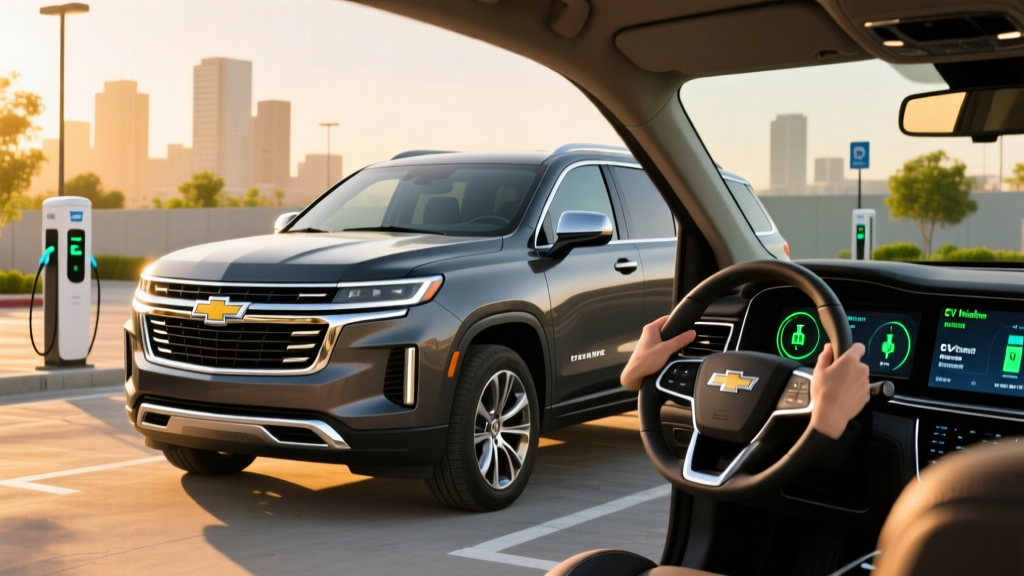
The Chevrolet Tahoe Hybrid: What's Actually Available in 2026?
If you've been searching for a Chevrolet Tahoe hybrid, you've likely noticed a frustrating gap: as of the 2026 model year, General Motors does not offer a factory hybrid version of the Tahoe. The current fourth-generation Tahoe (refreshed for 2025) continues with its lineup of gasoline V8 engines and a 3.0L Duramax turbodiesel inline-six — but no hybrid (HEV) or plug-in hybrid (PHEV) powertrain is in the lineup.
This stands in sharp contrast to competitors. The Toyota Sequoia comes exclusively as a hybrid (the i-FORCE MAX powertrain), and the Ford Explorer offers a 3.3L V6 hybrid variant. So what's a fuel-conscious full-size SUV buyer to do? This guide covers the current Tahoe powertrain reality, the hybrid alternatives in the segment, GM's hybrid roadmap, and whether a Tahoe PHEV or full EV is worth waiting for.
| Engine | Horsepower | Torque (lb-ft) | EPA Combined MPG | EPA City | EPA Highway | Max Towing |
|---|---|---|---|---|---|---|
| 5.3L V8 (EcoTec3) | 355 hp | 383 | 17 mpg | 15 | 20 | 8,200 lbs |
| 6.2L V8 (EcoTec3) | 420 hp | 460 | 16 mpg | 14 | 19 | 8,100 lbs |
| 3.0L Duramax I6 Turbo-Diesel | 277 hp | 460 | 24 mpg | 21 | 28 | 8,200 lbs |
| High-Output 3.0L Duramax I6 | 305 hp | 495 | 22 mpg | 20 | 26 | 8,100 lbs |
Source: EPA fueleconomy.gov, 2025–2026 model year data. 4WD models rated ~1 mpg lower. Actual mileage varies with driving conditions.
Why Isn't There a Chevy Tahoe Hybrid Yet?
GM previously offered a two-mode hybrid system on the Tahoe (and its GMC Yukon sibling) from 2008 to 2013. That system paired a 6.0L V8 with two electric motors inside the transmission, delivering roughly 21 mpg combined — a meaningful improvement over the gas-only V8's ~14 mpg at the time. However, the hybrid carried a significant price premium, added weight, and suffered from complexity issues. GM discontinued it when the platform was redesigned.
Since then, GM's electrification strategy has largely leapfrogged traditional hybrids in favor of battery-electric vehicles (BEVs) on the Ultium platform — the Chevrolet Silverado EV, Blazer EV, and Equinox EV. The company has been slower than Toyota or Ford to offer conventional hybrid or PHEV options in its truck and large SUV lineup.
That said, GM CEO Mary Barra confirmed in 2024 that the company is developing next-generation hybrid and PHEV powertrains for North America, with production expected later in the decade. Industry analysts expect a Tahoe PHEV could arrive around the 2028–2029 model year, potentially using a turbocharged engine paired with a larger electric motor and a battery pack in the 15–25 kWh range. Until then, buyers must choose from the current gas and diesel options or look at competitors.
The Hybrid Alternative: Toyota Sequoia Comparison
If a hybrid full-size SUV is a priority today, the 2026 Toyota Sequoia is the only direct competitor offering a standard hybrid powertrain. Here's how it compares to the Tahoe's most efficient option:
| Specification | Chevy Tahoe 3.0L Duramax Diesel | Toyota Sequoia i-FORCE MAX Hybrid |
|---|---|---|
| Powertrain Type | Turbodiesel I6 (no hybrid) | Twin-Turbo V6 Hybrid (HEV) |
| Combined Horsepower | 277 hp (305 hp HO) | 437 hp |
| Combined Torque | 460 lb-ft (495 HO) | 583 lb-ft |
| EPA Combined MPG | 24 mpg (22 HO) | 22 mpg (4WD) |
| EPA City MPG | 21 mpg | 19 mpg |
| EPA Highway MPG | 28 mpg | 24 mpg |
| Hybrid Battery | N/A | 1.87 kWh (NiMH, sealed) |
| Max Towing | 8,200 lbs | 9,520 lbs |
| Starting MSRP | ~$60,500 (LS Diesel) | ~$62,900 (SR5) |
Source: fueleconomy.gov, manufacturer specifications. Sequoia is a conventional hybrid (HEV) — it does not plug in.
The Sequoia's hybrid system delivers substantially more power (437 hp vs 277 hp) with comparable combined fuel economy to the Tahoe's diesel. However, the Tahoe diesel edges ahead on highway driving (28 vs 24 mpg) thanks to the diesel engine's efficiency at sustained speeds. City drivers will see a bigger benefit from the Sequoia's hybrid system, which uses electric motor assist at low speeds where conventional engines are least efficient.
HEV vs PHEV vs EV: Which Full-Size SUV Fits Your Needs?
Understanding the three electrification levels is essential before making a purchase decision:
- Conventional Hybrid (HEV): A small battery (typically 1–2 kWh) recharged by regenerative braking and the gas engine. No plug required. Improves fuel economy 20–35% over a gas-only vehicle. Example: Toyota Sequoia Hybrid.
- Plug-In Hybrid (PHEV): A larger battery (typically 15–30 kWh) that charges via plug and provides 25–50 miles of electric-only driving before the gas engine takes over. Qualifies for partial or full federal tax credits depending on battery size and sourcing. No current full-size SUV PHEV exists in the US market as of 2026.
- Battery Electric (BEV): No gas engine. Runs entirely on a large battery (80–200+ kWh). Zero tailpipe emissions. Requires home or public charging infrastructure. Examples in the large SUV space are limited — the Rivian R1S and upcoming electric Tahoe on the Ultium platform (announced, not yet available).
Decision Framework — Which Should You Choose?
- Choose a gas/diesel Tahoe if: You need maximum towing (8,000+ lbs), want the lowest purchase price, have no access to charging, or drive primarily highway miles where the diesel excels.
- Choose the Sequoia Hybrid (HEV) if: You want better city MPG and more power without any change to your fueling habits — no plug, no range anxiety, just fill up at any gas station.
- Wait for a Tahoe PHEV if: You have home charging access, your daily driving is under 40 miles, and you want electric commuting with gas-engine flexibility for road trips and towing. Expected arrival: ~2028–2029.
- Go full EV (Rivian R1S or future electric Tahoe) if: You have reliable Level 2 home charging, want the lowest per-mile fuel cost (~$0.04–0.06/mile vs ~$0.18–0.22/mile for gas), and are ready to plan around DC fast charging on road trips.
Real-World MPG: What Tahoe Owners Actually Report
EPA estimates are a starting point, but real-world results depend heavily on driving style, terrain, climate, and payload. Here's what Tahoe owners typically experience:
| Powertrain | EPA Combined | Real-World City | Real-World Highway | Real-World Towing |
|---|---|---|---|---|
| 5.3L V8 | 17 mpg | 13–15 mpg | 19–21 mpg | 9–11 mpg |
| 6.2L V8 | 16 mpg | 12–14 mpg | 18–20 mpg | 8–10 mpg |
| 3.0L Duramax Diesel | 24 mpg | 19–22 mpg | 26–30 mpg | 13–16 mpg |
| HO 3.0L Duramax | 22 mpg | 18–20 mpg | 24–27 mpg | 12–15 mpg |
Based on owner-reported data from Fuelly and real-world testing. Towing figures assume 5,000–7,000 lb trailer. Highway figures assume 70–75 mph cruising.
The Duramax diesel consistently exceeds its EPA highway estimate by 2–3 mpg in real-world cruising — a common trait of diesel engines at steady speeds. The V8s tend to fall slightly below EPA city estimates in stop-and-go traffic. If a Tahoe hybrid were available, you'd expect the opposite pattern: hybrids typically beat EPA city estimates (thanks to regenerative braking and electric assist at low speeds) while matching or slightly falling short on the highway.
Hybrid Battery Warranty, Lifespan & Replacement Cost
One of the most common concerns among hybrid shoppers is battery longevity. While the Tahoe doesn't currently offer a hybrid, understanding hybrid battery economics is important if you're cross-shopping the Sequoia or planning for a future Tahoe PHEV.
Hybrid Battery Warranty Standards
Federal law mandates that hybrid and EV battery packs carry a minimum warranty of 8 years / 100,000 miles (extended to 10 years / 150,000 miles in California Air Resources Board (CARB) states including CA, CO, CT, ME, MD, MA, NJ, NY, OR, RI, VT, WA). Toyota covers the Sequoia's hybrid battery for 10 years/150,000 miles nationwide.
In practice, conventional hybrid batteries (like the Sequoia's 1.87 kWh NiMH pack) rarely need full replacement within the warranty period. The small battery undergoes shallow charge/discharge cycles — it never fully depletes or fully charges — which dramatically extends its lifespan. Data from Toyota Prius fleets shows hybrid batteries commonly lasting 150,000–200,000+ miles before significant degradation.
If replacement is needed out of warranty:
- Conventional hybrid (HEV) battery replacement: $2,000–$4,000 for a Toyota Sequoia-class pack (small NiMH or Li-ion, 1–2 kWh)
- PHEV battery replacement (future Tahoe PHEV estimate): $6,000–$12,000 for a 15–25 kWh pack, depending on chemistry and sourcing
- Full EV battery replacement: $12,000–$25,000+ for large packs (80+ kWh)
The smaller the battery, the lower the replacement cost — one reason conventional hybrids carry far less long-term battery risk than full EVs.
Tax Credits: Do Hybrids Qualify?
This is where many buyers get confused. Under current IRS §30D Clean Vehicle Credit rules for 2026:
- Conventional hybrids (HEV): Do NOT qualify for the federal §30D tax credit. The Sequoia Hybrid, for example, receives $0 in federal EV incentives.
- Plug-in hybrids (PHEV): May qualify for up to $7,500, but only if the vehicle meets ALL of the following: battery capacity ≥ 7 kWh, MSRP under $80,000 (SUVs/vans/pickups), buyer AGI under $300,000 (joint) / $150,000 (single), and critical mineral + battery component sourcing requirements are satisfied.
- Full EVs (BEV): Same $7,500 maximum with the same eligibility requirements. The credit can now be transferred to the dealer at point of sale, reducing the purchase price directly.
Since no Tahoe hybrid exists, there is no credit to claim. If GM introduces a Tahoe PHEV in the future, it would likely qualify for a partial or full credit — assuming it meets the battery sourcing rules, which have tightened significantly since 2024. Always verify current eligibility on the IRS Clean Vehicle Credit page before purchasing, as the qualified vehicle list updates regularly.
Some states offer additional incentives for PHEVs and EVs (but almost never for conventional hybrids). Check your state's energy office or DMV for current programs.
Should You Wait for a Tahoe Hybrid or Buy Now?
Reasons to Buy a Tahoe Now (Gas/Diesel)
- Immediate availability — no waiting for unannounced models
- Diesel delivers 24 mpg combined, competitive with most hybrids in this size class
- Best-in-class towing (8,200 lbs) without hybrid complexity
- Proven powertrain reliability; no high-voltage battery concerns
- Strong resale value and established dealer service network
Reasons to Wait or Look Elsewhere
- V8 fuel costs add up: ~$2,800–$3,400/year at 15,000 miles (vs ~$1,800 for a hybrid)
- No electric-only commuting capability for short trips
- Competitors (Sequoia Hybrid) already offer hybrid efficiency today
- Future Tahoe PHEV could offer 30–40 miles of electric range plus gas flexibility
- GM's hybrid roadmap suggests meaningful options arriving later this decade
Frequently Asked Questions
Does the 2026 Chevrolet Tahoe have a hybrid option?
No. As of the 2026 model year, the Chevrolet Tahoe is available with two V8 gasoline engines (5.3L and 6.2L) and two versions of a 3.0L Duramax turbodiesel inline-six. GM does not currently offer a hybrid (HEV) or plug-in hybrid (PHEV) Tahoe. A hybrid variant is expected later this decade, potentially around 2028–2029.
How many MPG does the most efficient Tahoe get?
The most fuel-efficient 2026 Tahoe is equipped with the standard-output 3.0L Duramax diesel, rated at 24 mpg combined (21 city / 28 highway) by the EPA. Real-world highway driving often yields 26–30 mpg. The gasoline V8s return 16–17 mpg combined.
What full-size SUV hybrid can I buy instead?
The 2026 Toyota Sequoia is the only full-size SUV sold in the US with a standard hybrid powertrain, rated at 22 mpg combined (4WD) with 437 hp. It does not plug in and does not qualify for federal EV tax credits. There is currently no full-size PHEV SUV available in the US market.
Is a hybrid battery expensive to replace?
Conventional hybrid batteries (1–2 kWh, as in the Sequoia) typically cost $2,000–$4,000 to replace out of warranty, and real-world data shows they commonly last 150,000–200,000+ miles. Federal law requires at least 8 years/100,000 miles of hybrid battery warranty coverage (10 years/150,000 miles in CARB states). The risk of premature hybrid battery failure is low based on two decades of industry data.
Will a future Tahoe PHEV qualify for the $7,500 tax credit?
It's possible but not guaranteed. Under current IRS §30D rules, a PHEV must have at least 7 kWh of battery capacity, meet MSRP caps ($80,000 for SUVs), satisfy buyer income limits, and pass critical mineral and battery component sourcing requirements. GM's future PHEVs will need to meet all these criteria to qualify. Always check the IRS qualified vehicle list before purchasing.
Does the Tahoe diesel count as a hybrid?
No. The 3.0L Duramax is a conventional turbodiesel engine with no electric motor assist or hybrid battery. It achieves strong fuel economy through diesel combustion efficiency and a 10-speed automatic transmission, not through electrification. It does not qualify for any EV or hybrid tax incentives.