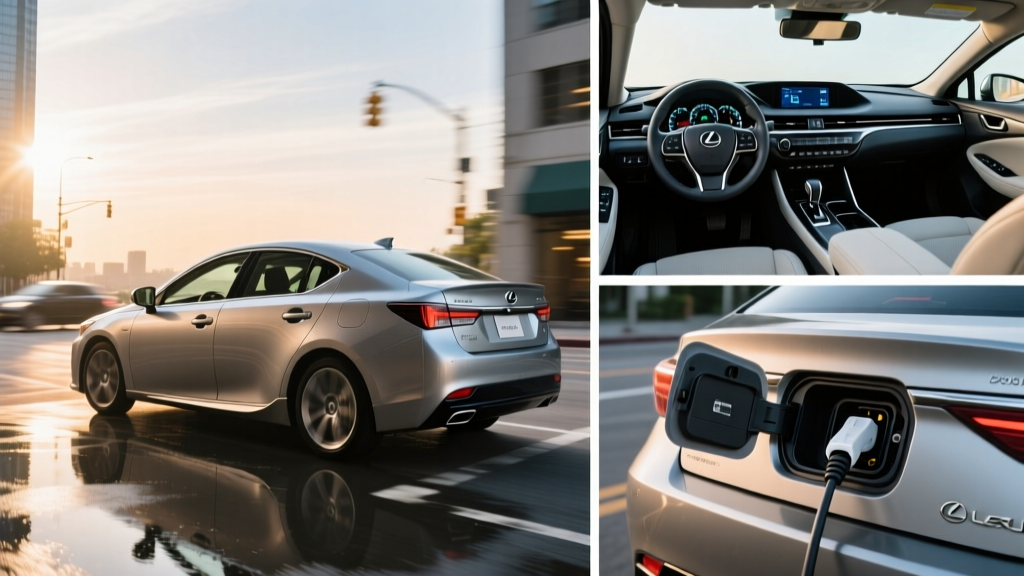
Quick Verdict: The Lexus CT200h Hybrid at a Glance
The Lexus CT200h was one of the first luxury-badged compact hybrids to reach the U.S. market, running from the 2011 through 2017 model years before Lexus discontinued it. Built on the same Toyota Prius-derived powertrain architecture, it paired a 1.8-liter Atkinson-cycle four-cylinder engine with an electric motor for a combined 134 horsepower. Today, it survives exclusively on the used market — and that's precisely where its value proposition becomes interesting.
With an EPA-rated 43 MPG combined and a reputation for bulletproof Toyota Hybrid Synergy Drive reliability, the CT200h remains one of the most fuel-efficient luxury-branded vehicles you can buy secondhand. But how does it stack up against modern plug-in hybrids (PHEVs) and battery-electric vehicles (BEVs)? This guide breaks down every number that matters.
| Specification | Lexus CT200h (2011–2017) |
|---|---|
| Powertrain Type | Conventional Hybrid (HEV) — no plug |
| Engine | 1.8L Atkinson-cycle 4-cylinder |
| Electric Motor | 60 kW (80 hp) AC synchronous |
| Combined System Output | 134 hp |
| Hybrid Battery | 1.3 kWh Nickel-Metal Hydride (NiMH) |
| Transmission | eCVT (planetary gearset) |
| EPA MPG (City / Hwy / Combined) | 43 / 40 / 42 |
| 0–60 mph | 9.8 seconds |
| Drivetrain | Front-wheel drive |
| Cargo Volume | 14.3 cu ft (rear seats up) |
| Original MSRP (2017 base) | $31,250 |
| Used Price Range (2026) | $10,000 – $18,000 |
Lexus CT200h Fuel Economy: EPA vs. Real-World MPG
The EPA rated the CT200h at 43 MPG city, 40 MPG highway, and 42 MPG combined across all model years. (Note: minor variations exist by model year and wheel size — the F Sport package with 17-inch wheels dropped ratings slightly.) These figures come from fueleconomy.gov, the official EPA database.
| Driving Scenario | EPA Rating | Real-World Expectation |
|---|---|---|
| City | 43 MPG | 44–48 MPG (regenerative braking excels in stop-and-go) |
| Highway | 40 MPG | 36–39 MPG (aerodynamic drag, less regen benefit) |
| Combined | 42 MPG | 39–44 MPG (depends on driving mix) |
| Cold Weather (below 32°F) | — | 34–38 MPG (engine runs more for cabin heat) |
Like most Toyota/Lexus hybrids, the CT200h tends to exceed its EPA city rating in real-world urban driving. Regenerative braking recaptures energy at every stoplight, and the engine shuts off frequently at low speeds. Highway driving is where it falls slightly short — the 1.8L engine works harder at sustained 70+ mph speeds, and the older NiMH battery offers less electric assist than modern lithium-ion packs.
In mixed suburban commuting with moderate temperatures, owners consistently report 41–45 MPG on forums and fuel-tracking apps. That puts annual fuel cost at roughly $1,100–$1,300 for 12,000 miles at $3.40/gallon — competitive even with some modern PHEVs operating in hybrid mode.
HEV vs. PHEV vs. EV: Where the CT200h Fits
The CT200h is a conventional hybrid electric vehicle (HEV). It has no plug, no electric-only driving range to speak of, and cannot be charged from an external source. The small 1.3 kWh NiMH battery charges exclusively through regenerative braking and the gasoline engine. This is fundamentally different from a plug-in hybrid (PHEV) or a battery-electric vehicle (BEV).
| Feature | HEV (CT200h) | PHEV (e.g., Toyota Prius Prime) | BEV (e.g., Tesla Model 3) |
|---|---|---|---|
| Plug Required? | No | Yes (for EV range) | Yes (always) |
| Electric-Only Range | ~1 mile at low speed | 39–44 miles (2025 Prius Prime) | 272–363 miles |
| Total Range | ~440 miles | ~600+ miles combined | 272–363 miles |
| Home Charging Needed? | No | Recommended (Level 1 or 2) | Essential (Level 2) |
| Federal Tax Credit (§30D) | Not eligible | Up to $3,750 (varies) | Up to $7,500 (varies) |
| Maintenance | Low (oil changes, no plug wear) | Moderate (engine + EV systems) | Minimal (no engine) |
| Best For | No home charging access | Short commutes + road trips | Home charging + daily driving |
Choose the CT200h (HEV) if: You don't have access to home or workplace charging, you want minimal behavioral change from a gas car, and your priority is low fuel cost without range planning.
Choose a PHEV if: You can install a Level 2 charger at home, your daily commute is under 40 miles (covering it on electricity alone), but you also take regular road trips where gas-engine range matters.
Choose a BEV if: You have reliable home charging, want the lowest per-mile energy cost, and are ready to plan around DC fast charging for longer trips.
Powertrain Deep Dive: How the CT200h Drives
The CT200h uses Toyota's third-generation Hybrid Synergy Drive — the same system found in the 2010–2015 Prius. The 1.8-liter 2ZR-FXE engine produces 98 hp and 105 lb-ft of torque on its own, but the combined system output with the electric motor reaches 134 hp. The eCVT transmission is not a traditional belt-driven CVT; it uses a planetary gearset that seamlessly blends power from the engine and motor with no fixed gear ratios and no rubber bands to break.
The result is smooth, quiet acceleration from a stop (where the electric motor provides instant torque), but performance is modest by modern standards. The 0–60 mph time of 9.8 seconds trails virtually every new hybrid and PHEV on the market. Highway merging requires planning, and the CT200h is tuned firmly for efficiency over sportiness despite its "F Sport" trim option.
Four driving modes are available: EV (electric-only at very low speeds for short distances), Eco (throttles throttle response and climate control for maximum MPG), Normal, and Sport (sharpens throttle response and steering weight). In practice, most owners leave it in Normal or Eco and enjoy the fuel savings.
Battery Health, Warranty, and Replacement Costs
Original Hybrid Battery Warranty: 8 years / 100,000 miles (10 years / 150,000 miles in California Air Resources Board states including CA, CT, ME, MA, NJ, NY, OR, RI, VT, WA)
Battery Type: 1.3 kWh Nickel-Metal Hydride (NiMH), 28 modules
Typical Lifespan: 150,000–200,000+ miles with normal use
The CT200h's NiMH hybrid battery is one of its strongest ownership advantages. Unlike the lithium-ion packs in modern EVs, NiMH batteries degrade slowly and predictably. Toyota/Lexus hybrid batteries from this generation routinely exceed 150,000 miles before showing meaningful capacity loss, and many reach 200,000+ miles with the original pack.
When replacement is needed, costs have come down significantly:
- New OEM battery from Lexus: $2,200–$3,000 installed
- Refurbished/remanufactured battery: $1,000–$1,800 installed
- Individual module replacement: $300–$600 (only failed modules replaced — requires a knowledgeable independent shop)
For a used CT200h buyer, the key check is battery health. A dealership or qualified hybrid specialist can read the battery's State of Health (SoH) via OBD-II diagnostics. Look for less than 15% capacity degradation. Warning signs of a failing pack include: dramatically reduced fuel economy, the engine running constantly, or a "Check Hybrid System" dashboard warning.
The NiMH chemistry also means the battery is far less sensitive to extreme temperatures than lithium-ion. Hot-weather degradation (a concern for early Nissan Leaf owners) is rarely an issue with the CT200h's hybrid pack, which stays at relatively low charge/discharge rates and never cycles to full empty or full charge.
Pricing and Tax Credit Reality for Used Buyers
Since the CT200h was discontinued after 2017, every example on the market is used. As of early 2026, pricing breaks down roughly as follows:
| Model Year Range | Mileage Range | Typical Used Price |
|---|---|---|
| 2011–2013 | 100,000–150,000 mi | $8,000–$12,000 |
| 2014–2015 (refresh) | 70,000–110,000 mi | $11,000–$15,000 |
| 2016–2017 | 40,000–80,000 mi | $14,000–$18,000 |
Federal tax credit eligibility: The CT200h does not qualify for the IRS §30D Clean Vehicle Credit. That credit applies only to new plug-in electric vehicles (PHEVs and BEVs) meeting battery-sourcing, MSRP, and buyer-income requirements. Conventional hybrids like the CT200h have never been eligible.
However, the Used Clean Vehicle Credit (§25E) also does not apply — it requires the vehicle to be a plug-in EV or fuel-cell vehicle with at least 7 kWh of battery capacity. The CT200h's 1.3 kWh NiMH pack falls far short of that threshold.
The trade-off is straightforward: no tax credit, but you're paying $10,000–$18,000 for a vehicle that costs roughly $1,200/year to fuel and has minimal maintenance needs. Total cost of ownership over five years is often lower than a new $30,000+ PHEV even after that PHEV's tax credit.
Reliability and Long-Term Ownership Costs
The CT200h inherits Toyota's hybrid reliability pedigree, which is among the strongest in the industry. Key ownership data points:
- J.D. Power dependability: Lexus consistently ranks in the top 3 brands; the CT200h specifically scores above average for its compact premium segment.
- Consumer Reports: The CT200h earned "Above Average" reliability ratings in most model years, with the 2014–2017 refresh models performing best.
- Common issues: Water pump failure (around 80,000–120,000 miles, $400–$700 repair), 12V auxiliary battery drain if left unused for weeks, and brake actuator recalls on 2011–2012 models (check NHTSA for open recalls at nhtsa.gov/recalls).
- Brake pad life: Regenerative braking means brake pads often last 80,000–100,000+ miles — a significant cost saving over conventional cars.
- No timing belt: The 2ZR-FXE uses a timing chain, eliminating a $600–$1,000 service interval that plagues many non-hybrid vehicles.
Estimated annual maintenance costs run $350–$550 at an independent shop familiar with Toyota hybrids — roughly half what a comparable BMW or Audi would cost. Dealership maintenance is higher ($500–$800/year) but still below luxury-brand averages.
Pros
- 43 MPG combined EPA; often exceeds city rating in real driving
- Exceptional hybrid battery longevity (150K–200K+ miles)
- Low maintenance costs for a luxury-badged vehicle
- No plug required — works for apartment dwellers and street parkers
- Smooth, quiet ride quality typical of Lexus
- Strong resale value retention relative to non-hybrid compacts
Cons
- Slow acceleration (9.8 sec 0–60) — noticeable on highway merges
- Discontinued — only available used, no modern tech features
- Small cargo area (14.3 cu ft) and tight rear seats
- No Apple CarPlay / Android Auto in any model year
- NiMH battery limits electric-only assist to low-speed creep
- No federal or state tax credit eligibility
Who Should Buy the Lexus CT200h — And Who Shouldn't
The CT200h is ideal for:
- Urban and suburban commuters who want luxury comfort with 40+ MPG and no charging hassle
- Buyers without access to home or workplace charging (apartments, street parking, condos)
- Second-car households wanting a reliable, ultra-efficient daily driver
- Cost-conscious buyers who want Lexus build quality at a used-economy-car price
- High-mileage drivers (20,000+ miles/year) where fuel savings compound rapidly
Look elsewhere if:
- You want electric-only driving for short commutes — a PHEV like the 2025 Toyota Prius Prime (44 miles EV range) is a better fit
- You need modern infotainment, driver-assistance features, or fast acceleration
- You have home charging access and want the lowest possible per-mile energy cost — a used BEV like the Chevrolet Bolt EV offers 259 miles of range and ~$0.04/mile electricity cost
- You need cargo space for a family — the CT200h's hatchback is compact
Frequently Asked Questions
How many MPG does the Lexus CT200h hybrid get?
The EPA rates the CT200h at 43 MPG city, 40 MPG highway, and 42 MPG combined. Real-world city driving often returns 44–48 MPG thanks to regenerative braking, while sustained highway driving at 70+ mph typically yields 36–39 MPG.
Does the Lexus CT200h need to be plugged in?
No. The CT200h is a conventional hybrid (HEV), not a plug-in hybrid. Its small battery charges through regenerative braking and the gasoline engine. You never plug it in — you simply fill it with gasoline like any other car.
How long does the CT200h hybrid battery last?
The NiMH hybrid battery typically lasts 150,000 to 200,000+ miles with normal use. Lexus originally warranted it for 8 years/100,000 miles (10 years/150,000 miles in CARB states). Replacement costs $1,000–$3,000 depending on whether you choose refurbished or new OEM.
Does the Lexus CT200h qualify for a tax credit?
No. The CT200h does not qualify for the federal §30D Clean Vehicle Credit or the §25E Used Clean Vehicle Credit. Both credits require plug-in electric vehicles with minimum battery capacities. The CT200h is a conventional hybrid with a 1.3 kWh battery.
Is the CT200h the same as a Prius?
Mechanically, the CT200h shares its powertrain with the third-generation Toyota Prius (2010–2015). However, the CT200h has a different chassis tuning, more sound insulation, Lexus interior materials, and a sportier exterior. Fuel economy is nearly identical, but the driving feel is more refined.
Hybrid vs. PHEV vs. EV — which should I choose?
If you lack home charging access, a conventional hybrid like the CT200h is the simplest path to 40+ MPG. If you can charge at home and commute under 40 miles daily, a PHEV gives you electric-only commuting plus gas-engine road-trip range. If you have reliable home charging and want the lowest operating cost, a BEV eliminates gasoline entirely but requires charging infrastructure planning.
What are the most common CT200h problems?
The most reported issues are water pump failure (80K–120K miles), 12V battery drain from infrequent driving, and brake actuator concerns on early 2011–2012 models. The hybrid system itself is notably trouble-free. Always check for open recalls at nhtsa.gov before purchasing.