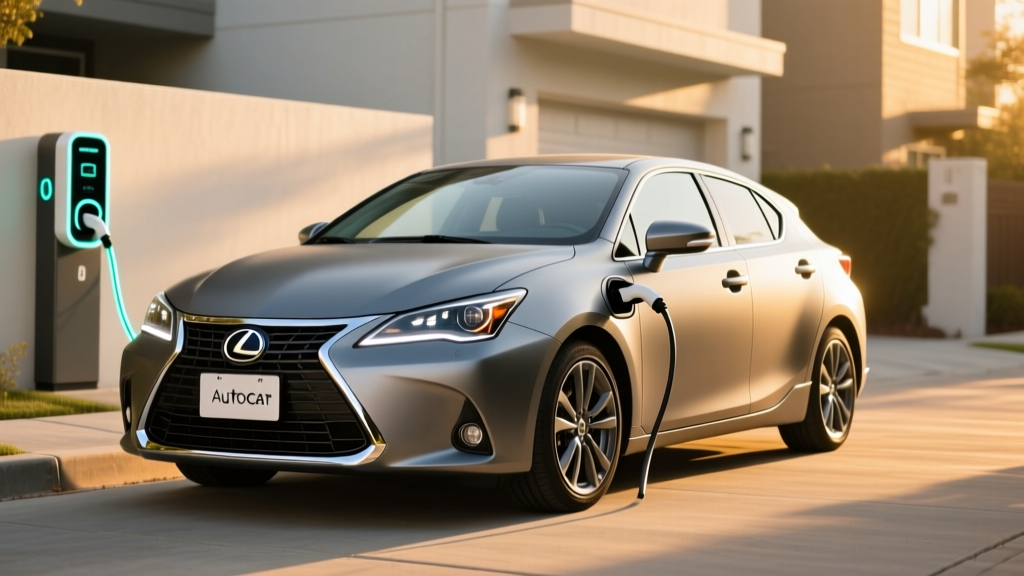
Quick Verdict: The Lexus Hybrid CT200h in 2026
The Lexus CT200h is a conventional hybrid (HEV) — not a plug-in — that Lexus sold in the U.S. from the 2011 through 2017 model years. Built on the same Toyota MC platform as the third-generation Prius, it pairs a 1.8-liter Atkinson-cycle four-cylinder with a nickel-metal hydride (NiMH) traction battery and two motor-generators to deliver a combined 134 horsepower and an EPA-rated 42 MPG combined. Discontinued after 2017, the CT200h now lives exclusively on the used market, where well-maintained examples with 80,000–140,000 miles typically sell between $11,000 and $18,000 depending on condition, trim, and region.
If you're searching for a lexus hybrid ct200h in 2026, you're likely weighing this compact luxury hatchback against newer hybrids, plug-in hybrids, and full battery-electric vehicles. This guide covers every number that matters — EPA and real-world MPG, battery longevity, replacement costs, reliability track record, and a clear framework for deciding whether the CT200h, a modern PHEV, or a BEV is the right move for your commute and budget.
HEV vs. PHEV vs. EV: Where the CT200h Fits
Before diving into specs, it's essential to distinguish the three electrified powertrain types, because the CT200h is frequently — and incorrectly — assumed to be a plug-in.
| Attribute | HEV (CT200h) | PHEV (e.g., Toyota Prius Prime) | BEV (e.g., Tesla Model 3) |
|---|---|---|---|
| Plug-in required? | No — never plugs in | Yes — Level 1 or Level 2 | Yes — Level 2 or DC fast charge |
| Electric-only range | ~1 mile at low speed | 25–44 miles (model dependent) | 250–360+ miles |
| Battery size | 1.3 kWh (NiMH) | 8.8–13.6 kWh (Li-ion) | 50–82+ kWh (Li-ion) |
| Refueling / Recharging | Gas station only | Gas + plug-in | Plug-in only |
| Federal tax credit (§30D) | Not eligible | Up to $7,500 (if eligible) | Up to $7,500 (if eligible) |
| Best for | No home charging access | Short commute + road trips | Home charging + daily driving |
The CT200h captures regenerative braking energy and uses its small battery to assist the gas engine and enable brief low-speed electric-only creeping. You never plug it in. The gasoline engine and regenerative braking handle all battery charging. This makes it ideal for drivers who lack access to home or workplace charging but still want meaningful fuel savings over a conventional gas car.
Fuel Economy: EPA Ratings and Real-World MPG
The EPA rates the Lexus CT200h at the following figures across all model years (2011–2017):
| Driving Cycle | EPA Rating | Real-World Expectation |
|---|---|---|
| City | 43 MPG | 44–48 MPG (hybrids excel in stop-and-go) |
| Highway | 40 MPG | 36–39 MPG (aero drag + less regen benefit) |
| Combined | 42 MPG | 40–44 MPG (mixed driving) |
Why real-world city MPG often exceeds the EPA sticker: Hybrid powertrains recover kinetic energy during braking and low-speed driving, which is precisely what city commutes involve. Many CT200h owners report 45–48 MPG on urban routes with moderate traffic. Conversely, sustained highway speeds above 70 mph reduce the hybrid system's advantage, and you'll see figures closer to 36–38 MPG on long interstate trips.
Cold-weather impact: Expect a 5–10% fuel economy drop in freezing temperatures. The engine runs longer to heat the cabin and bring the catalytic converter to operating temperature, reducing the time the car spends in electric-only mode. In our experience, a CT200h that returns 42 MPG combined in mild weather will dip to roughly 37–39 MPG combined during sustained sub-30°F winters.
With a 11.9-gallon fuel tank, total range sits between 475 and 500 miles per fill-up in mixed driving — competitive with many modern compact cars and sufficient for most road trips with a single fuel stop.
Powertrain and Performance Specifications
| Specification | Detail |
|---|---|
| Engine | 1.8L Atkinson-cycle inline-4 (2ZR-FXE) |
| Engine output | 98 hp @ 5,200 rpm / 105 lb-ft torque |
| Electric motor-generators | MG1 (starter/generator) + MG2 (drive motor, 80 hp / 153 lb-ft) |
| Combined system output | 134 hp |
| Traction battery | 1.3 kWh NiMH (nickel-metal hydride), 201.6V nominal |
| Transmission | eCVT (planetary gearset, no traditional belt CVT) |
| 0–60 mph | 9.8 seconds (EPA / manufacturer estimate) |
| Drivetrain | Front-wheel drive |
| Curb weight | ~3,130 lbs |
| Cargo volume | 14.3 cu ft (rear seats up) / 37.4 cu ft (seats folded) |
The CT200h uses Toyota's Hybrid Synergy Drive (HSD) system, which is fundamentally a power-split device — not a rubber-belt CVT. The planetary gearset blends engine and motor torque seamlessly. Acceleration is adequate for merging and city driving but leisurely by modern standards; the 9.8-second 0–60 time means you'll want to plan highway on-ramps accordingly.
Driving modes include Normal, Eco, Sport, and EV. EV mode forces electric-only operation at speeds below approximately 25 mph for roughly one mile, useful in parking garages or quiet residential streets. Sport mode sharpens throttle response and increases regenerative braking aggressiveness but does not add horsepower.
Battery Lifespan, Warranty, and Replacement Cost
Original Hybrid Battery Warranty
Duration: 8 years / 100,000 miles (10 years / 150,000 miles in California and states adopting CARB emissions standards)
Coverage: Defects and capacity loss below a defined threshold (typically ~60% of original capacity)
Current status for most 2026 buyers: Original warranty has expired for all 2011–2015 models and most 2016–2017 models based on mileage. Verify with a Lexus dealer using the VIN.
How long do CT200h NiMH batteries actually last? The NiMH pack in the CT200h shares its fundamental cell design with the third-generation Prius, one of the most extensively documented hybrid batteries in existence. Fleet data and owner surveys consistently show these packs lasting 150,000–200,000 miles before significant degradation triggers a check-engine light or noticeable fuel economy decline. Many examples exceed 200,000 miles with the original pack, particularly in moderate climates.
Failure modes: NiMH batteries degrade primarily through heat exposure and cell imbalance. Vehicles parked long-term in hot climates (Arizona, Texas, Southern California) tend to see earlier degradation than those in temperate regions. A failing pack typically triggers a "Check Hybrid System" warning and a P0A80 diagnostic code.
Replacement cost breakdown (2026 estimates):
- Remanufactured NiMH pack (e.g., Dorman, Green Bean Battery): $1,500–$2,500 installed at an independent hybrid specialist
- New OEM Lexus pack: $3,000–$4,000 installed at a dealership
- Individual module replacement: $300–$800 if only 1–2 modules are weak (a hybrid specialist can test and swap individual modules rather than the full pack)
Compared to BEV battery replacements ($5,000–$20,000+), the CT200h's NiMH pack is remarkably affordable to replace — and it rarely needs replacement before 150,000 miles.
Pricing, Tax Credits, and Total Ownership Cost
Because the CT200h was discontinued after 2017, every example on the market in 2026 is a used vehicle. Here's what to expect:
| Model Year Range | Mileage Range | Typical Asking Price (2026) |
|---|---|---|
| 2011–2013 | 100,000–150,000 mi | $9,000–$13,000 |
| 2014–2015 (refresh) | 80,000–120,000 mi | $12,000–$16,000 |
| 2016–2017 (final years) | 60,000–100,000 mi | $14,000–$18,000 |
Federal tax credit: The CT200h does not qualify for the IRS §30D Clean Vehicle Credit. That credit applies only to plug-in electric vehicles (BEVs and PHEVs) meeting battery-capacity, MSRP, income, and critical-mineral sourcing requirements. Conventional hybrids like the CT200h are excluded. Some states offer modest rebates for used hybrid purchases — check your state energy office or the AFDC state incentive database for current programs.
5-year estimated cost of ownership (used CT200h at ~$14,000 purchase):
- Fuel: ~$1,100/year at 12,000 miles/year and $3.20/gallon = ~$5,500 over 5 years
- Insurance: ~$1,200–$1,500/year = ~$6,500 over 5 years
- Maintenance: ~$400–$600/year (Toyota/Lexus parts are widely available and affordable) = ~$2,500 over 5 years
- Depreciation: Minimal — CT200h values have stabilized, and a well-maintained example will hold most of its value over the next 5 years
- Potential battery replacement: Budget $1,500–$2,500 as a contingency if the pack has not been replaced and the vehicle exceeds 140,000 miles
Total estimated 5-year cost: approximately $15,000–$17,000 in operating expenses on top of the purchase price — significantly lower than most gas-only luxury compacts and competitive with many new economy cars when you factor in the low purchase price.
Reliability and Known Issues
The CT200h benefits from one of the most proven hybrid powertrains ever built. The 2ZR-FXE engine and HSD system are shared with the Prius, which consistently ranks at the top of long-term reliability studies. Consumer Reports and J.D. Power have historically rated the CT200h as above-average or excellent for reliability.
Common issues to inspect before buying:
- Hybrid battery health: Request a hybrid battery health report from a Lexus dealer or independent hybrid shop. A scan tool can read individual module voltages — any module more than 0.2V lower than the rest signals imbalance and impending failure.
- Brake actuator recall: Certain 2011–2012 CT200h models were included in a brake actuator assembly recall. Verify recall completion via the NHTSA recall lookup using the VIN.
- Water pump (electric): The electric water pump on the inverter cooling circuit can fail around 100,000–130,000 miles. Replacement is approximately $400–$600.
- EGR valve and intake carbon buildup: Atkinson-cycle engines are less prone to carbon buildup than direct-injection engines, but the EGR system can clog past 120,000 miles, causing rough idle. An EGR cleaning runs $150–$300.
- 12V auxiliary battery: Like all hybrids, the CT200h has a standard 12V battery (located in the rear cargo area) that can fail independently of the hybrid pack. A dead 12V battery will prevent the car from starting even if the traction battery is fully charged. Replacement: ~$200–$280 for an AGM-spec unit.
CT200h vs. Modern Alternatives: Which Should You Choose?
Pros
- 42 MPG combined with no plug-in requirement
- Low purchase price ($9K–$18K used)
- Proven, affordable-to-repair hybrid system
- Lexus build quality, quiet cabin, premium materials
- Low annual maintenance costs
- Hatchback practicality with 37.4 cu ft cargo space
Cons
- Slow acceleration (9.8s 0–60)
- Dated infotainment (no Apple CarPlay / Android Auto)
- Firm ride quality over rough pavement
- Small rear seat relative to modern compacts
- No federal tax credit eligibility
- NiMH battery less energy-dense than modern Li-ion
Decision Framework: Is the CT200h Right for You?
Choose the Lexus CT200h if:
- You cannot charge at home or work (apartment, street parking)
- Your budget is under $18,000 and you want luxury-brand quality
- Your commute is primarily city/suburban stop-and-go driving
- You want minimal ownership complexity — no charging cables, no plug-in learning curve
- You value a hatchback body style with good cargo flexibility
Choose a modern PHEV (e.g., Toyota Prius Prime, Hyundai Tucson PHEV) if:
- You have access to Level 2 charging at home or work
- Your daily commute is under 40 miles round-trip (PHEVs cover this on electricity alone)
- You want to qualify for the federal §30D tax credit (up to $7,500 on eligible new PHEVs)
- You want modern safety tech (automatic emergency braking, lane-keeping, adaptive cruise)
Choose a full BEV (e.g., Chevrolet Equinox EV, Tesla Model 3) if:
- You have reliable home Level 2 charging
- You want to eliminate gasoline costs entirely
- Your daily driving is under 250 miles and you road-trip infrequently
- You want the lowest per-mile energy cost (~$0.04/mile on home electricity vs. ~$0.08/mile in the CT200h at $3.20/gal)
Frequently Asked Questions
How many MPG does the Lexus hybrid CT200h get?
The EPA rates the CT200h at 43 MPG city, 40 MPG highway, and 42 MPG combined. Real-world city driving often yields 44–48 MPG thanks to regenerative braking, while sustained highway driving above 70 mph may return 36–39 MPG. Cold weather reduces these figures by roughly 5–10%.
Does the Lexus CT200h need to be plugged in?
No. The CT200h is a conventional hybrid (HEV), not a plug-in hybrid. It charges its 1.3 kWh NiMH battery entirely through regenerative braking and the gasoline engine. You will never need a charging cable or outlet.
How far can the CT200h drive on electric power alone?
Approximately 1 mile at speeds below 25 mph in EV mode. This is not a meaningful electric-only commuting vehicle — the electric motor exists to assist the gas engine and improve fuel economy, not to replace it.
Is the Lexus CT200h hybrid reliable?
Yes. The CT200h uses the same Toyota Hybrid Synergy Drive system as the third-generation Prius, which has an extensive track record of lasting 150,000–200,000+ miles with basic maintenance. The NiMH battery is the primary wear item and is affordable to replace ($1,500–$2,500 remanufactured) if it fails outside warranty.
What does a CT200h hybrid battery replacement cost?
A remanufactured NiMH pack costs $1,500–$2,500 installed at an independent hybrid specialist. A new OEM Lexus battery runs $3,000–$4,000 at a dealership. Individual module replacement (if only one or two cells are weak) can cost as little as $300–$800.
Does the Lexus CT200h qualify for a federal tax credit?
No. The IRS §30D Clean Vehicle Credit applies only to plug-in electric vehicles (BEVs and PHEVs) with sufficient battery capacity. The CT200h's 1.3 kWh NiMH pack does not meet the threshold, and as a conventional hybrid, it is ineligible regardless. Some states may offer used-vehicle hybrid incentives — check the AFDC state incentive database for your area.
Is the CT200h better than a Prius?
They share the same powertrain, so fuel economy is nearly identical (Prius: 50 MPG combined for the 2010–2015 generation vs. CT200h: 42 MPG — the difference is due to the CT200h's additional weight, sound insulation, and luxury equipment). The CT200h offers a quieter cabin, higher-quality interior materials, and Lexus dealership service. The Prius offers more rear-seat space, better cargo room, and a lower price. Choose the CT200h for refinement; choose the Prius for practicality and efficiency.
What should I check before buying a used CT200h?
Prioritize a pre-purchase inspection at a Lexus dealer or hybrid specialist that includes: hybrid battery module voltage balance, brake actuator recall verification (via NHTSA VIN lookup), inverter coolant pump operation, and a full diagnostic scan for stored hybrid system codes. Also confirm the 12V auxiliary battery age and condition.