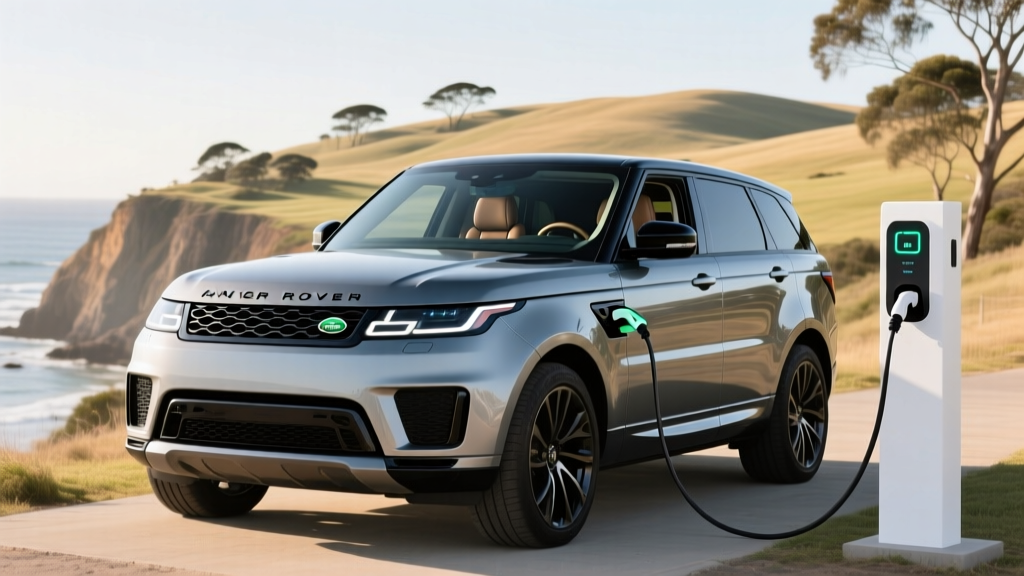
Luxury SUV buyers eyeing a Land Rover plug-in hybrid face a specific calculus: can a two-ton-plus British SUV deliver meaningful electric-only commuting while retaining the off-road and towing capability the badge promises? The short answer, based on the current Range Rover Sport PHEV and the flagship Range Rover PHEV, is yes — with caveats around charging infrastructure, real-world efficiency, and tax-credit eligibility that every buyer should understand before signing.
This guide covers the 2026 Land Rover plug-in hybrid lineup with exact EPA figures, battery specs, charging realities, and ownership economics. We'll also clarify where a PHEV fits against a conventional hybrid (HEV) and a full battery-electric vehicle (BEV) so you can match the powertrain to your actual driving pattern.
HEV vs PHEV: What Land Rover Actually Offers
Land Rover does not sell a conventional hybrid (HEV) in the U.S. market. Every electrified Land Rover uses a plug-in hybrid (PHEV) architecture — meaning a larger battery you charge from a wall outlet or public charger, paired with a gasoline engine. Understanding this distinction is critical:
| Feature | Conventional Hybrid (HEV) | Plug-In Hybrid (PHEV) |
|---|---|---|
| Plug in to charge? | No — charges via regen & engine | Yes — wall outlet or public charger |
| Electric-only range | 0–2 miles at low speed | 20–51 miles (Land Rover models) |
| Battery size | 1–2 kWh | 23–38 kWh usable |
| Gas engine role | Primary propulsion, motor assists | Backup after battery depletes; highway cruising |
| Federal tax credit | None | Up to $7,500 if eligible (§30D) |
If you see "Land Rover hybrid" in marketing materials, it refers to a PHEV. There is no non-plug-in hybrid variant available stateside for the 2026 model year.
2026 Land Rover Plug-In Hybrid Lineup: Specs at a Glance
Land Rover's PHEV strategy centers on two models built on the MLA-Flex platform: the flagship Range Rover and the sportier Range Rover Sport. Both use a longitudinally mounted inline-six gasoline engine paired with an electric motor integrated into the ZF 8-speed automatic transmission. Here are the key numbers:
| Specification | Range Rover P550e | Range Rover Sport P460e |
|---|---|---|
| Combined horsepower | 542 hp | 454 hp |
| Engine | 3.0L turbo I6 + electric motor | 3.0L turbo I6 + electric motor |
| Battery (usable) | 31.8 kWh (NMC) | 31.8 kWh (NMC) |
| EPA electric-only range | 51 miles | 48 miles |
| Total combined range | ~530 miles | ~510 miles |
| EPA MPGe (electric+gas) | 54 MPGe | 51 MPGe |
| Gas-only MPG (combined) | 20 MPG | 20 MPG |
| EPA city / highway MPG (gas) | 19 / 22 | 19 / 21 |
| Max AC charging (Level 2) | 7.4 kW | 7.4 kW |
| DC fast charging | Not available | Not available |
| Level 2 charge time (0–100%) | ~5 hours | ~5 hours |
| 0–60 mph | 4.7 seconds | 5.2 seconds |
| Base MSRP | $115,600 | $91,300 |
| Battery warranty | 8 yr / 100,000 mi | 8 yr / 100,000 mi |
Sources: fueleconomy.gov, Land Rover USA
Electric-Only Range: Real-World Expectations vs. EPA Sticker
EPA sticker: 48–51 miles electric-only
Real-world expectation: 36–44 miles in mixed driving; 30–35 miles at sustained 70+ mph highway speeds; 25–32 miles in freezing temperatures with cabin heat on.
The Range Rover Sport P460e's 48-mile EPA electric range is generous for a luxury PHEV, rivaling the BMW X5 xDrive50e (38 miles) and exceeding the Porsche Cayenne E-Hybrid (32 miles). But EPA range tests include low-speed urban segments that favor EVs. On a 75-mph highway commute, expect the electric motor to deplete the 31.8 kWh battery roughly 25–30% faster than the sticker suggests.
Cold weather compounds this. Lithium-ion NMC batteries lose efficiency below 40°F, and cabin heating in a large SUV draws significant power from the traction battery. Northern-climate owners should budget for 60–70% of the EPA electric range in winter — roughly 29–34 miles for the Range Rover Sport.
The practical upshot: if your daily round-trip commute is under 35 miles and you can charge at home overnight, you may go weeks without visiting a gas station. Exceed that distance and the inline-six takes over seamlessly, though fuel economy drops to the 20 MPG combined figure.
Charging the Land Rover PHEV: What You Need at Home
Both Land Rover PHEVs accept up to 7.4 kW on Level 2 AC charging — adequate for overnight replenishment but slower than competitors like the BMW X5 PHEV (which supports up to 7.4 kW as well) or the Toyota RAV4 Prime (6.6 kW). Critically, neither Land Rover PHEV supports DC fast charging. This is a deliberate engineering choice: the battery is sized for daily commuting, not road-trip fast-charging, and the gas engine covers long-distance travel.
| Charging Level | Power | Miles of EV Range Added Per Hour | Time for Full Charge (0–100%) |
|---|---|---|---|
| Level 1 (120V household) | ~1.4 kW | ~5 miles | ~22 hours |
| Level 2 (240V, 32A) | 7.4 kW | ~26 miles | ~5 hours |
| DC Fast Charge | N/A — not supported | N/A | N/A |
Home charging setup: A Level 2 wallbox (such as a ChargePoint Home Flex or Emporia Vue) on a 40-amp circuit will fully replenish the battery overnight. Expect to pay $600–$1,200 for the charger hardware and $800–$2,500 for electrician installation, depending on whether your electrical panel needs an upgrade. Land Rover includes a portable Level 1/Level 2 charging cable with the vehicle, but dedicated wallbox installation is strongly recommended for daily PHEV use.
One ownership nuance: because there's no DC fast-charging capability, public charging infrastructure is largely irrelevant for Land Rover PHEV owners. Your home garage is your fueling station. If you cannot install a Level 2 charger at home (apartment dwellers, street parkers), a PHEV's advantages diminish significantly — you'll be running a heavy SUV on gasoline with a dead battery, getting 20 MPG.
Fuel Economy: EPA Numbers and Real-World MPG
| Metric | Range Rover P550e | Range Rover Sport P460e |
|---|---|---|
| EPA combined MPG (gas only) | 20 | 20 |
| EPA city MPG (gas only) | 19 | 19 |
| EPA highway MPG (gas only) | 22 | 21 |
| MPGe (combined electric+gas) | 54 | 51 |
| Real-world gas MPG (highway, 75 mph) | ~18–19 | ~18–19 |
| Real-world gas MPG (city, charge-depleted) | ~17–19 | ~17–19 |
Once the battery depletes, you're moving 5,400+ pounds of luxury SUV with a 3.0-liter inline-six. The 20 MPG combined figure is reasonable for the segment — the gas-only Range Rover Sport with the P400 mild-hybrid I6 achieves 19 MPG combined — but it's not Prius territory. PHEVs shine when you use their electric range daily and charge nightly. Run the battery flat and keep it there, and you're carrying 700+ pounds of dead battery weight for no efficiency gain.
For buyers comparing to a conventional hybrid like the Toyota Highlander Hybrid (35 MPG combined), the Land Rover PHEV is not an efficiency play once the battery is spent. The value proposition is electric commuting, luxury, and capability — not maximum MPG.
Pricing, Tax Credits, and Ownership Economics
The 2026 Range Rover Sport P460e starts at $91,300 (SE Dynamic trim), while the flagship Range Rover P550e begins at $115,600. Both exceed the IRS §30D MSRP cap for SUVs, which is $80,000 for new clean vehicles. This means neither Land Rover PHEV qualifies for the federal $7,500 new-vehicle tax credit based on current pricing.
§30D Federal Tax Credit Requirements (2026):
- MSRP cap: $80,000 for SUVs, $55,000 for sedans — Land Rover PHEVs exceed this
- Buyer income cap: $300,000 joint / $225,000 head of household / $150,000 individual
- Battery critical-mineral and component sourcing requirements
- Point-of-sale transfer available for eligible vehicles
- Final assembly in North America required
Source: IRS §30D Clean Vehicle Credit
However, some state-level incentives may apply. California's CVRP program, Colorado's state EV credit, and various utility rebates occasionally cover PHEVs above the federal MSRP cap. Check your state's energy office and local utility for current programs.
Five-year ownership cost estimate (Range Rover Sport P460e):
- Purchase price: $91,300 (before options; typical as-tested ~$102,000)
- Federal tax credit: $0 (exceeds MSRP cap)
- Estimated fuel cost (50% electric / 50% gas driving): ~$7,200 over 5 years
- Insurance: ~$18,000–$22,000 over 5 years (luxury SUV premiums)
- Maintenance: ~$4,500–$6,000 (Land Rover prepaid plans available)
- Depreciation: ~$42,000–$48,000 (luxury SUV depreciation is steep)
Total cost of ownership is high. The PHEV powertrain saves roughly $2,000–$3,500 in fuel versus the gas-only P400 over five years if you charge daily — a modest offset against the premium purchase price.
Battery Warranty, Reliability, and Replacement Costs
Land Rover PHEV Battery Warranty: 8 years / 100,000 miles (whichever comes first), covering defects and capacity loss below 70% of original capacity. This aligns with federal requirements for PHEV battery coverage and matches BMW, Mercedes-Benz, and Volvo PHEV warranties.
The 31.8 kWh NMC (nickel manganese cobalt) battery pack is liquid-cooled, which helps manage thermal degradation — a critical factor in PHEV longevity. NMC chemistry offers high energy density (necessary to fit 48 miles of range in a limited underfloor space) but is more susceptible to calendar aging than LFP chemistry. Expect 8–12% capacity loss over 8 years under normal use, based on industry-wide NMC PHEV data.
Reliability considerations: Land Rover's historical reliability ratings remain below the luxury segment average. J.D. Power and Consumer Reports consistently rank Land Rover in the lower third of brands. The PHEV powertrain adds complexity — a high-voltage battery, electric motor, power electronics, and a turbocharged inline-six all working in concert. While the MLA-Flex platform is newer and more robust than previous architectures, buyers should factor in the likelihood of above-average maintenance costs post-warranty.
Battery replacement cost: If the traction battery fails outside warranty, expect $12,000–$18,000 for a replacement pack plus labor. This is a worst-case scenario and rare within the first 10 years, but it's a number every PHEV buyer should know. The 8-year/100,000-mile warranty provides substantial coverage during typical ownership.
Land Rover PHEV vs. Full EV vs. Gas: Which Fits You?
Choose the Land Rover PHEV if:
- Your daily commute is under 40 miles round-trip and you can charge at home
- You want luxury SUV refinement with some electric driving but need 500+ mile total range for road trips
- You tow (up to 5,500 lbs) and don't want to manage EV range while hauling
- You value the Range Rover badge, interior quality, and off-road capability
Choose a full EV (like the BMW iX or Rivian R1S) if:
- You have reliable home charging and access to DC fast chargers for road trips
- You want zero tailpipe emissions and lower per-mile fuel costs
- You're willing to plan charging stops on long drives
Choose the gas-only Range Rover (P400) if:
- You cannot install a home charger
- Your daily driving is unpredictable and frequently exceeds 50 miles
- You want lower upfront cost and simpler mechanicals
The Land Rover plug-in hybrid occupies a narrow but real niche: luxury SUV buyers who want genuine electric commuting for school runs and office commutes, but who refuse to compromise on range, towing, or the go-anywhere capability Land Rover promises. It is not the most efficient PHEV on the market, and it does not qualify for federal tax credits. But as a bridge between the gas-only Range Rover and a future all-electric Land Rover, it delivers a compelling — if expensive — ownership experience.
Pros
- 48–51 miles of real electric range covers most daily commutes
- Seamless gas-engine handoff for road trips — no range anxiety
- 542 hp (P550e) delivers genuine performance SUV acceleration
- Luxury interior, air suspension, and genuine off-road capability
- 8-year/100,000-mile battery warranty
Cons
- No DC fast charging — home Level 2 is mandatory
- Exceeds $80K MSRP cap — no federal tax credit
- 20 MPG gas-only is unimpressive when battery is depleted
- Land Rover reliability ratings trail German and Japanese rivals
- $91K+ starting price; options push well past $110K
Frequently Asked Questions
How many MPG does the Land Rover plug-in hybrid get?
The Range Rover Sport P460e achieves 20 MPG combined (19 city / 21 highway) when running on gasoline alone after the battery is depleted. When factoring in electric driving, it earns 51 MPGe combined. Real-world gas-only MPG on the highway at 75 mph tends to be 18–19 MPG.
How far can the Land Rover PHEV go on electric only?
The Range Rover P550e achieves an EPA-rated 51 miles on electric power; the Range Rover Sport P460e gets 48 miles. In real-world highway driving at 70+ mph, expect 35–40 miles. In freezing weather with cabin heat, expect 28–34 miles.
Does the Land Rover PHEV qualify for a tax credit?
No. Both the Range Rover P550e ($115,600) and Range Rover Sport P460e ($91,300) exceed the IRS §30D MSRP cap of $80,000 for SUVs, making them ineligible for the federal $7,500 clean vehicle credit. Some state incentives may still apply — check your state energy office.
Is the Land Rover PHEV reliable?
Land Rover's brand-wide reliability scores rank below the luxury segment average. The PHEV powertrain adds complexity (high-voltage battery, electric motor, turbocharged engine). The 8-year/100,000-mile battery warranty provides substantial coverage, but buyers should budget for higher-than-average maintenance costs post-warranty.
What is the battery replacement cost?
Out-of-warranty traction battery replacement for the Land Rover PHEV is estimated at $12,000–$18,000 including labor. Battery failures within the 8-year/100,000-mile warranty period are covered if capacity drops below 70% of original.
Can the Land Rover PHEV DC fast charge?
No. Both Land Rover PHEVs support only AC charging at up to 7.4 kW (Level 2). A full charge takes approximately 5 hours on a 240V Level 2 wallbox. DC fast charging is not available on the MLA-Flex PHEV platform.
Hybrid vs PHEV vs EV — which Land Rover should I buy?
Land Rover only offers PHEVs (no conventional HEVs). Choose the PHEV if you can charge at home and want electric commuting plus gas-engine range for road trips. Choose a full EV competitor (BMW iX, Rivian R1S) if you want maximum efficiency and have fast-charger access. Choose the gas-only Range Rover P400 if home charging isn't possible.