Land Rover's Electrified Lineup: What Buyers Need to Know
Land Rover has committed to plug-in hybrid (PHEV) powertrains across its core lineup for 2026, offering electric-only commuting paired with the brand's signature off-road capability and long-distance range. Unlike conventional hybrids (HEVs) that you simply fuel with gasoline, Land Rover's current hybrid offerings are all plug-in hybrids — meaning they carry a sizable battery you charge from a wall outlet or public charger, delivering 30+ miles of pure electric driving before the gasoline engine engages.
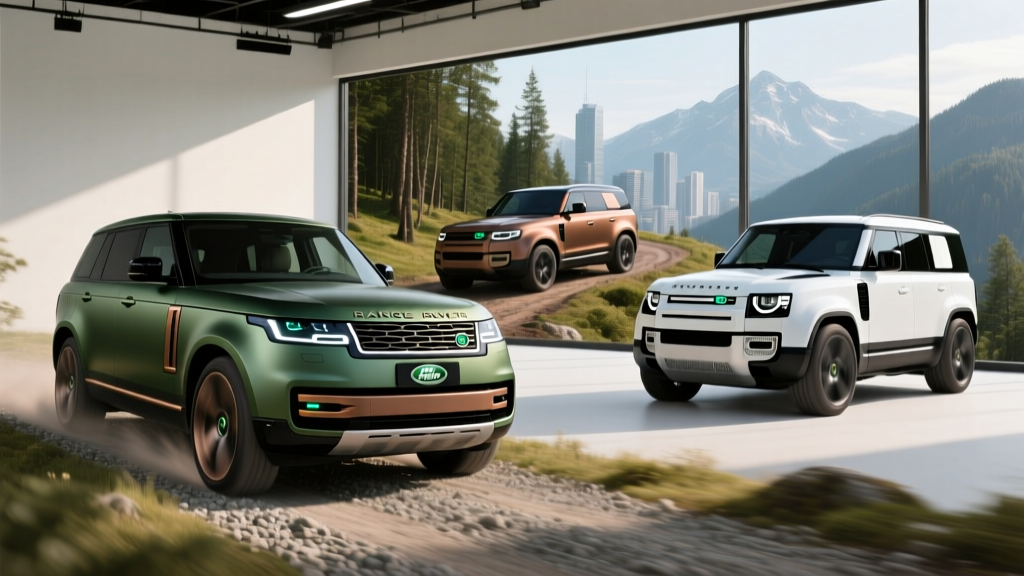
If you've been searching for Land Rover hybrids, the three models that matter in 2026 are the Range Rover PHEV, Range Rover Sport PHEV, Defender 110 PHEV, and Discovery PHEV. This guide breaks down exactly what each delivers in EPA-estimated efficiency, real-world electric range, charging logistics, and ownership economics — with the hard numbers you need to decide.
HEV vs PHEV: Why Land Rover Went Plug-In
Conventional Hybrid (HEV)
Uses a small battery (typically 1-2 kWh) charged only by regenerative braking and the engine. No plug. Improves fuel economy by 10-30% over a gas-only vehicle. Examples: Toyota RAV4 Hybrid, Honda CR-V Hybrid.
Plug-In Hybrid (PHEV)
Uses a larger battery (19-31 kWh in Land Rovers) charged via plug. Delivers 30-50 miles of electric-only driving, then operates as a hybrid. Requires access to charging (home Level 2 ideal) to maximize value. All current Land Rover hybrids are PHEVs.
Land Rover does not currently sell a conventional HEV in the U.S. market. Every electrified Land Rover uses a plug-in architecture, which means your ownership experience — and your fuel savings — depend heavily on whether you can charge at home or work. If you cannot plug in regularly, a PHEV becomes an expensive, heavy gasoline vehicle that will underperform its EPA combined rating.
2026 Land Rover PHEV Specs: Side-by-Side Comparison
| Specification | Range Rover P550e | Range Rover Sport PHEV | Defender 110 P400e | Discovery PHEV |
|---|---|---|---|---|
| Powertrain | 3.0L I6 + electric motor | 3.0L I6 + electric motor | 3.0L I6 + electric motor | 3.0L I6 + electric motor |
| Combined Horsepower | 542 hp | 510 hp | 404 hp | 375 hp |
| Battery Capacity (usable) | 31.8 kWh | 31.8 kWh | 19.2 kWh | 19.2 kWh |
| EPA Electric-Only Range | 51 miles | 48 miles | 32 miles | 30 miles |
| Total Combined Range | ~530 miles | ~500 miles | ~440 miles | ~430 miles |
| EPA Combined (hybrid mode) | 22 MPG | 22 MPG | 19 MPG | 19 MPG |
| MPGe (electric + gas) | 50 MPGe | 48 MPGe | 40 MPGe | 38 MPGe |
| Level 2 Charging (0-100%) | ~2.5 hours @ 7.2 kW | ~2.5 hours @ 7.2 kW | ~2 hours @ 7.2 kW | ~2 hours @ 7.2 kW |
| DC Fast Charging | Not available | Not available | Not available | Not available |
| 0-60 mph | 4.8 sec | 5.2 sec | 6.4 sec | 6.7 sec |
| Starting MSRP | $133,000 | $112,000 | $86,000 | $72,000 |
Source: fueleconomy.gov and Land Rover USA specifications, 2026 model year. Pricing includes destination charge. Specs may vary by trim.
Real-World MPG and Electric Range: What to Expect
EPA Electric Range vs Reality: The Range Rover P550e's 51-mile EPA electric estimate holds up reasonably well in mild conditions (60-75°F, flat terrain, under 70 mph). In real-world testing, expect 42-48 miles on a full charge in mixed suburban driving. Cold weather (below 32°F) reduces electric range by 25-35%, dropping usable electric miles to 33-38 for the P550e and 21-24 for the Defender P400e. Highway speeds above 75 mph also erode electric range significantly — plan for 60-70% of EPA electric range in sustained interstate driving.
Once the battery depletes, these PHEVs operate as conventional hybrids, but they are heavy vehicles with boxy aerodynamics. The Range Rover P550e's 22 MPG combined hybrid-mode rating is respectable for a 5,600-pound luxury SUV, but real-world highway driving typically returns 19-20 MPG. The Defender P400e, with its upright profile and all-terrain tires, often delivers 16-18 MPG on the highway in hybrid mode.
City driving is where PHEVs shine. If your daily commute falls within the electric range and you charge nightly, you may use zero gasoline for weeks. The EPA city rating in hybrid mode (when the battery is depleted) tends to be conservative — expect to match or slightly exceed it in stop-and-go traffic thanks to regenerative braking recapturing energy.
| Model | EPA City | EPA Highway | EPA Combined | Real-World Highway (depleted battery) |
|---|---|---|---|---|
| Range Rover P550e | 23 MPG | 21 MPG | 22 MPG | 19-20 MPG |
| Range Rover Sport PHEV | 23 MPG | 21 MPG | 22 MPG | 19-20 MPG |
| Defender 110 P400e | 20 MPG | 18 MPG | 19 MPG | 16-18 MPG |
| Discovery PHEV | 20 MPG | 18 MPG | 19 MPG | 16-18 MPG |
Charging Logistics: Level 2 Only, No DC Fast Charging
Every 2026 Land Rover PHEV uses a J1772 connector for Level 2 AC charging at a maximum rate of 7.2 kW. This is a critical limitation buyers must understand: none of these vehicles support DC fast charging. You cannot pull up to an Electrify America or Tesla Supercharger station and top off in 20 minutes.
Here's what charging looks like in practice:
| Charging Level | Power (kW) | Range Rover P550e (0-100%) | Defender P400e (0-100%) | Miles Added Per Hour |
|---|---|---|---|---|
| Level 1 (120V outlet) | 1.4 kW | ~22 hours | ~14 hours | ~4-5 miles (electric) |
| Level 2 (240V home charger) | 7.2 kW | ~2.5 hours | ~2 hours | ~18-20 miles (electric) |
| DC Fast Charging | N/A | Not supported | Not supported | N/A |
A home Level 2 charger is essentially mandatory for Land Rover PHEV ownership. Without one, you're relying on a standard 120V outlet that takes 14-22 hours for a full charge — impractical for daily use. Budget $800-$2,500 for a quality Level 2 home charger installation (equipment plus licensed electrician), depending on whether your electrical panel needs an upgrade. Consult a licensed electrician for your specific situation.
Public Level 2 chargers (ChargePoint, EVgo Level 2 stations, workplace chargers) can supplement home charging, but at 7.2 kW peak, you'll need 2-3 hours parked to fully replenish the larger Range Rover battery.
Federal Tax Credit Eligibility for Land Rover PHEVs
IRS §30D Federal Tax Credit Requirements (2026):
- Vehicle MSRP Cap: SUVs must have an MSRP under $80,000 to qualify. This eliminates the Range Rover P550e ($133,000) and Range Rover Sport PHEV ($112,000) from eligibility.
- Buyer Income Cap: Modified adjusted gross income must not exceed $150,000 (single), $225,000 (head of household), or $300,000 (joint filers).
- Battery Sourcing: A percentage of critical minerals and battery components must be sourced from the U.S. or free-trade-agreement countries. Land Rover's supply chain compliance varies by model year — verify current eligibility at IRS.gov.
- Point-of-Sale Transfer: Eligible buyers can transfer the credit to the dealer at purchase, reducing the purchase price directly rather than waiting for a tax refund.
- Maximum Credit: Up to $7,500 for qualifying PHEVs with sufficient battery capacity.
Which Land Rover PHEVs qualify? The Defender 110 P400e ($86,000 MSRP) sits above the $80,000 SUV cap, making it ineligible for the federal credit in most configurations. The Discovery PHEV, starting at $72,000, is the strongest candidate for the §30D credit — potentially bringing its effective price to ~$64,500 for income-eligible buyers. However, battery sourcing requirements are the wildcard. Always verify current eligibility on fueleconomy.gov before purchasing, as IRS rules and manufacturer compliance can shift.
State-level incentives may also apply. California, Colorado, and several other states offer additional rebates for PHEVs. Check your state energy office or the Alternative Fuels Data Center for local programs.
Battery Warranty, Longevity, and Replacement Costs
Land Rover PHEV Battery Warranty: All 2026 Land Rover PHEVs include a high-voltage battery warranty of 8 years or 100,000 miles (whichever comes first), covering defects and capacity loss below a specified threshold (typically 70% of original capacity). The conventional powertrain warranty covers 4 years or 50,000 miles.
PHEV batteries experience less stress than full EV batteries because they operate in a narrower state-of-charge window — the vehicle's software maintains a buffer, never fully depleting or fully charging the cells. This extends longevity. Based on industry data from similar PHEV platforms, expect 10-15 years of usable battery life before capacity degrades to a point where electric range becomes noticeably reduced (perhaps 70-80% of original).
Battery replacement cost: If your Land Rover PHEV battery requires replacement outside warranty, expect $8,000-$15,000 for the battery pack alone, plus $1,500-$3,000 in labor. The Range Rover's 31.8 kWh pack will be at the higher end; the Defender's 19.2 kWh pack at the lower end. This is a significant expense, but the 8-year/100,000-mile warranty provides substantial coverage. Most owners will sell or trade the vehicle before battery replacement becomes necessary.
For reliability context, Land Rover as a brand consistently scores below average in IIHS and J.D. Power dependability studies. The PHEV powertrain adds complexity — an internal combustion engine, electric motor, high-voltage battery, and power electronics all require maintenance. Factor in higher-than-average maintenance costs compared to a full BEV (which has no engine, no oil changes, and fewer moving parts) or a conventional hybrid from Toyota or Honda.
Land Rover PHEV vs Full EV vs Gas: Which Fits Your Life?
Choose a Land Rover PHEV if:
- You can charge at home every night (Level 2 strongly recommended)
- Your daily commute is under 40 miles round-trip (you'll drive electric most days)
- You need serious off-road capability or towing (up to 8,200 lbs for the Defender)
- You regularly take long road trips and don't want to plan around DC fast chargers
- You want a luxury SUV with electric commuting but aren't ready to commit to a full EV
Choose a Full EV (BEV) if:
- You want zero gasoline use and zero oil changes
- You have reliable home and/or workplace charging
- You want the lowest per-mile fuel cost (electricity is typically $0.04-$0.06/mile vs $0.12-$0.18/mile for gas in these SUVs)
- You prefer fewer mechanical components and lower long-term maintenance
- You're considering a Rivian R1S, BMW iX, or Mercedes EQS SUV in this price range
Choose a Gas-Only SUV if:
- You cannot charge at home or work
- You drive more than 300 miles daily on a regular basis
- You want the lowest upfront purchase price
- You live in an extreme cold climate where PHEV electric range drops 30%+ in winter
Pros and Cons: The Honest Assessment
Pros
- 30-51 miles of electric-only range covers most daily commutes gasoline-free
- 530+ miles total range eliminates road-trip charging anxiety
- Combined horsepower (404-542 hp) delivers effortless acceleration
- Retains full off-road capability (wading depth, terrain response, low-range gearing)
- No dependence on public DC fast-charging infrastructure
- Discovery PHEV may qualify for up to $7,500 federal tax credit
Cons
- No DC fast charging — Level 2 only, limiting on-the-go replenishment
- Heavy vehicles with mediocre hybrid-mode MPG (16-22 real-world)
- High starting prices ($72,000-$133,000); most models exceed $80,000 tax-credit cap
- Below-average brand reliability ratings
- Expensive out-of-warranty battery replacement ($8,000-$15,000)
- Must charge nightly to capture value; uncharged PHEV is a heavy, thirsty SUV
Frequently Asked Questions
How many MPG do Land Rover hybrids get?
Land Rover's 2026 PHEVs deliver 19-22 MPG combined in hybrid mode (battery depleted), depending on the model. The Range Rover P550e and Range Rover Sport PHEV lead at 22 MPG combined (23 city / 21 highway EPA). The Defender 110 P400e and Discovery PHEV achieve 19 MPG combined (20 city / 18 highway). In electric-only mode, they use zero gasoline and are rated at 38-50 MPGe.
How far can a Land Rover PHEV go on electric only?
The Range Rover P550e leads at 51 miles EPA electric-only range, followed by the Range Rover Sport at 48 miles, the Defender 110 at 32 miles, and the Discovery at 30 miles. Real-world electric range is typically 10-15% lower in mixed driving, and 25-35% lower in freezing temperatures. With a full gas tank and full battery, total combined range reaches 430-530 miles.
Do Land Rover hybrids need to be plugged in?
Yes — all current Land Rover hybrids are plug-in hybrids (PHEVs), not conventional hybrids. To capture the electric-only range and fuel savings, you must plug them into a Level 2 (240V) charger. Without regular charging, a PHEV operates as a heavy gasoline vehicle and will deliver below-average fuel economy for its class. If you cannot plug in, a conventional hybrid from another brand or a diesel/gas Land Rover is a better fit.
Is the Land Rover PHEV reliable, and what does battery replacement cost?
Land Rover's brand reliability scores below average in industry surveys, and the PHEV powertrain adds complexity over a gas-only vehicle. The high-voltage battery is warrantied for 8 years or 100,000 miles. Out-of-warranty battery replacement runs $8,000-$15,000 depending on the model. Plan for higher maintenance costs than a Toyota or Honda hybrid, and consider an extended warranty if you plan to keep the vehicle beyond the factory coverage period.
Does the Land Rover PHEV qualify for the federal tax credit?
Possibly, but it depends on the model and your income. The IRS §30D credit caps SUV eligibility at $80,000 MSRP, which eliminates the Range Rover P550e ($133,000), Range Rover Sport PHEV ($112,000), and most Defender 110 P400e trims ($86,000+). The Discovery PHEV ($72,000 base) is the strongest candidate, but buyer income limits ($150K single / $300K joint) and battery-sourcing requirements also apply. Always verify current eligibility at IRS.gov and fueleconomy.gov before purchasing. A tax professional can confirm your personal eligibility.
Can I DC fast charge a Land Rover PHEV on a road trip?
No. None of the 2026 Land Rover PHEVs support DC fast charging. They accept only AC charging (Level 1 at 120V or Level 2 at 240V) through a J1772 connector, with a maximum charge rate of 7.2 kW. On a road trip, you'll rely on the gasoline engine once the battery is depleted — which is the point of a PHEV. You won't need to stop at charging stations, but you also can't quickly replenish the battery en route.