Quick Verdict: The Telluride Finally Goes Electrified
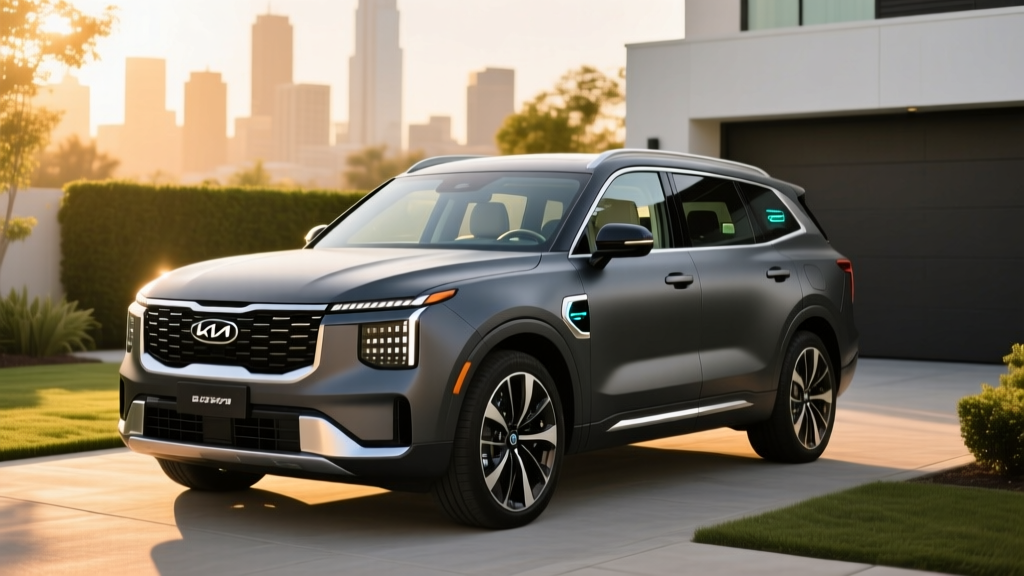
After years of dominating the three-row SUV segment with a gasoline-only V6, Kia is expected to introduce a hybrid variant of the Telluride for the 2027 model year. Based on Kia's current hybrid architecture — the same turbo-hybrid system found in the Sorento Hybrid and Sportage Hybrid — the 2027 Kia Telluride Hybrid should deliver a meaningful MPG improvement over the current 3.8L V6 (rated at 20 city / 26 highway / 23 combined) while retaining the towing and cargo capabilities buyers expect.
This guide covers what we know from Kia's announced powertrain strategy, projected specifications based on existing Kia hybrid systems, pricing estimates, tax credit eligibility, and whether the hybrid Telluride makes sense versus a full EV like the Kia EV9 or a conventional gas model.
HEV vs PHEV: Which Telluride Hybrid Are We Talking About?
Kia's hybrid strategy across its lineup offers two distinct flavors. Understanding the difference is essential before you evaluate the Telluride Hybrid.
Conventional Hybrid (HEV)
- No plug required — the battery charges through regenerative braking and the engine
- Smaller battery (typically 1.5–2.0 kWh)
- Seamless gas-electric blending; you just fill up and drive
- Best for: drivers without home charging access who want better MPG
Plug-In Hybrid (PHEV)
- Plugs in to charge — offers 30–40+ miles of electric-only driving
- Larger battery (typically 13–18 kWh usable)
- Can run as a pure EV for daily commutes, then switches to hybrid for longer trips
- Best for: drivers with home Level 2 charging who commute under 40 miles daily
Industry reports and Kia's product roadmap suggest the 2027 Telluride will launch first as a conventional hybrid (HEV), with a PHEV variant likely following for the 2028 model year. The HEV version is the lower-risk, lower-cost entry point and doesn't require any change to your fueling routine.
Projected Fuel Economy: How Many MPG Will the Telluride Hybrid Get?
Kia's 1.6L turbocharged hybrid powertrain — already proven in the Sorento Hybrid — delivers substantial efficiency gains over comparable gasoline engines. Here's how the projected Telluride Hybrid HEV compares to the current gas-only model:
| Configuration | City MPG | Highway MPG | Combined MPG |
|---|---|---|---|
| 2026 Telluride 3.8L V6 FWD (current) | 20 | 26 | 23 |
| 2026 Telluride 3.8L V6 AWD (current) | 18 | 24 | 21 |
| 2027 Telluride Hybrid HEV FWD (projected) | ~29–31 | ~29–31 | ~29–31 |
| 2027 Telluride Hybrid HEV AWD (projected) | ~27–29 | ~28–30 | ~27–29 |
Source: Current V6 figures via fueleconomy.gov. Projected hybrid figures estimated from Kia Sorento Hybrid EPA data scaled to Telluride weight class.
Real-World MPG vs EPA: What Owners Actually See
Conventional hybrids consistently outperform their EPA city estimates in stop-and-go traffic because regenerative braking recaptures energy that a gas car wastes as heat. The Sorento Hybrid (EPA 37 combined) regularly reports 35–40 MPG in real-world city driving per owner forums and long-term tests.
For the Telluride Hybrid, expect:
- City driving: likely at or slightly above EPA — regenerative braking shines here
- Highway cruising (70+ mph): expect 2–4 MPG below EPA sticker; aerodynamic drag on a large SUV dominates at speed
- Cold weather (below 30°F): expect a 10–15% MPG reduction as the engine runs more frequently for cabin heat and battery warmup
- Towing: MPG will drop to approximately 15–18 combined when towing near the rated capacity
Powertrain: What's Under the Hood?
| Specification | Projected Value |
|---|---|
| Engine | 1.6L turbocharged 4-cylinder |
| Engine Output | ~178 hp / 195 lb-ft |
| Electric Motor | ~44 kW (~59 hp) integrated in transmission |
| Combined System Output | ~227–240 hp |
| Transmission | 6-speed automatic (no CVT) |
| Hybrid Battery (HEV) | ~1.5–2.0 kWh lithium-ion |
| Drivetrain | FWD standard; AWD available |
| 0–60 mph (est.) | ~7.5–8.0 seconds |
| Towing Capacity (est.) | ~4,500–5,000 lbs |
Kia uses a conventional 6-speed automatic rather than a CVT in its hybrid systems — a deliberate choice that gives the Telluride Hybrid a more natural driving feel, especially under load. The electric motor fills in torque at low RPMs where the turbo 1.6L would otherwise feel sluggish, so initial acceleration from a stop should feel responsive despite the smaller displacement engine.
The combined ~227–240 hp is less than the current V6's 291 hp, but the hybrid's instant electric torque and lighter engine weight partially offset the power deficit in everyday driving. Highway passing power will feel adequate but not effortless when fully loaded — a tradeoff for the ~30% fuel economy improvement.
Pricing, Trims & Tax Credit Eligibility
Projected MSRP by Trim
Based on the pricing gap between Kia's gas and hybrid models in the Sorento lineup (typically a $1,500–$2,500 hybrid premium), here's where the 2027 Telluride Hybrid should land:
- S Hybrid: ~$40,000–$42,000
- EX Hybrid: ~$44,000–$46,000
- SX Hybrid: ~$48,000–$50,000
- SX-Prestige Hybrid: ~$52,000–$54,000
These represent a ~$1,500–$2,000 premium over equivalent gas-only trims, which the fuel savings should recoup within 3–4 years for a driver covering 15,000 miles annually.
Federal Tax Credit: Does the Telluride Hybrid Qualify?
This is where buyer expectations often go wrong. Under current IRS §30D rules:
- Conventional hybrids (HEVs) do NOT qualify for the federal §30D Clean Vehicle Credit. That credit applies only to plug-in electric vehicles (BEVs and PHEVs) with sufficient battery capacity (≥7 kWh for PHEVs).
- If Kia later releases a Telluride PHEV, it could qualify for up to $7,500 — but only if it meets battery component sourcing, critical minerals, MSRP cap ($80,000 for SUVs), and buyer income limits (AGI ≤ $150K single / $300K joint). See IRS §30D guidelines for current eligibility rules.
- Some state-level incentives (e.g., California, Colorado, New York) offer rebates for conventional hybrids. Check your state's energy office for current programs.
Bottom line: if you're buying the HEV version, budget the full MSRP. The value proposition rests on fuel savings, not tax incentives.
Battery Warranty, Reliability & Replacement Cost
Battery & Powertrain Warranty
Kia provides one of the strongest hybrid battery warranties in the industry:
- Hybrid Battery: 10 years / 100,000 miles (whichever comes first)
- Hybrid System Components: 10 years / 100,000 miles (inverter, motor, controller)
- Powertrain Warranty: 10 years / 100,000 miles
- Basic Warranty: 5 years / 60,000 miles
Note: In states that follow California emissions standards (CARB states), the hybrid battery warranty may extend to 10 years / 150,000 miles. Verify with your dealer.
Is the Telluride Hybrid Reliable?
Kia's 1.6T hybrid powertrain has been in production since 2022 (Sorento Hybrid, Sportage Hybrid) and has accumulated a strong reliability record. The system uses a conventional automatic transmission rather than a CVT, which eliminates one of the more common failure points in competitor hybrid systems.
The hybrid battery in the HEV variant is small (~1.5–2.0 kWh) and operates within a narrow state-of-charge window (typically 40–60% SoC), which minimizes degradation stress. Unlike a full EV battery, this small pack rarely cycles deeply.
Battery Replacement Cost
If the hybrid battery does need replacement after the warranty period:
- HEV battery replacement: ~$2,000–$3,500 (parts and labor) — significantly less than a full EV battery
- PHEV battery replacement (if applicable): ~$6,000–$9,000 due to the larger pack
For context, Toyota Prius hybrid batteries routinely last 150,000–200,000+ miles before significant degradation. Kia's lithium-ion hybrid packs should follow a similar longevity curve given the conservative charge management.
Telluride Hybrid vs EV9 vs Gas Telluride: Which Should You Choose?
| Factor | Telluride Gas V6 | Telluride Hybrid (HEV) | Kia EV9 (BEV) |
|---|---|---|---|
| Starting Price | ~$38,000 | ~$40,000 (proj.) | ~$55,000 |
| Combined MPG / MPGe | 21–23 MPG | ~27–31 MPG | 83–89 MPGe |
| Fuel Cost (15K mi/yr) | ~$2,400/yr | ~$1,800/yr | ~$600–$900/yr |
| Home Charging Needed? | No | No | Yes (strongly) |
| Road Trip Convenience | Excellent | Excellent | Good (plan stops) |
| Federal Tax Credit | None | None (HEV) | Up to $7,500* |
| Towing Capacity | 5,000 lbs | ~4,500–5,000 lbs | 5,000 lbs |
*EV9 tax credit eligibility depends on battery sourcing, MSRP cap, and buyer income. See IRS §30D for details.
Decision Framework
Choose the Telluride Hybrid (HEV) if:
- You want 25–30% better fuel economy without changing your fueling habits
- You don't have access to home Level 2 charging
- You frequently tow or take long road trips and don't want to plan charging stops
- You want to keep the purchase price under $50,000
Choose the Kia EV9 (BEV) if:
- You have reliable home Level 2 charging
- Your daily driving is under 250 miles and you can plan road-trip charging
- You want the lowest per-mile fuel cost and qualify for the federal tax credit
- You want instant torque and near-silent operation
Stick with the Gas Telluride if:
- You want the lowest upfront price and maximum V6 power (291 hp)
- You drive relatively few miles per year (under 10,000) — the hybrid premium takes longer to recoup
- You prioritize proven long-term track record over efficiency gains
Pros & Cons at a Glance
✓ Pros
- ~30% MPG improvement over V6 with no plug-in requirement
- Industry-leading 10-year/100K hybrid battery warranty
- 6-speed auto (no CVT drone) for natural driving feel
- Retains Telluride's class-leading cargo space and third row
- Lower annual fuel cost: ~$600/yr savings vs gas V6
- Strong resale value trajectory (Telluride holds value well)
✗ Cons
- No federal tax credit for the HEV version
- ~50–60 hp less than the V6 — highway passing power reduced
- Towing capacity may drop slightly vs gas model
- $1,500–$2,000 price premium over equivalent gas trim
- PHEV variant likely not available until 2028+
- Final EPA figures and pricing not yet confirmed
Frequently Asked Questions
How many MPG does the 2027 Kia Telluride Hybrid get?
Projected EPA figures are approximately 29–31 MPG combined for FWD and 27–29 MPG combined for AWD. Final EPA certification is pending. This represents a ~30% improvement over the current 3.8L V6 (21–23 combined). In real-world city driving with frequent stops, you may see slightly higher numbers thanks to regenerative braking.
Does the Telluride Hybrid need to be plugged in?
No. The conventional hybrid (HEV) version charges its small battery through regenerative braking and the gasoline engine. You fuel it exactly like a regular car — just fill up at any gas station. A future PHEV variant would offer plug-in capability with ~30–40 miles of electric-only range, but that is not expected for the initial 2027 launch.
Is the hybrid Telluride reliable, and what does a battery replacement cost?
Kia's 1.6T hybrid system has been in production since 2022 with a solid reliability record. The hybrid battery is covered by a 10-year/100,000-mile warranty. If replacement is needed after the warranty period, expect approximately $2,000–$3,500 for the HEV battery — a fraction of full EV battery replacement costs.
Does the Telluride Hybrid qualify for any tax credits?
The conventional hybrid (HEV) does not qualify for the federal §30D Clean Vehicle Credit, which is reserved for plug-in vehicles. A future PHEV variant could qualify for up to $7,500, subject to battery sourcing requirements, MSRP caps, and buyer income limits per IRS guidelines. Some states offer separate hybrid rebates — check your local energy office.
Should I wait for the Telluride Hybrid or buy a Kia EV9?
If you have home Level 2 charging, drive under 250 miles daily, and can absorb the higher upfront cost (offset by the $7,500 federal credit where eligible), the EV9 delivers dramatically lower operating costs and a smoother driving experience. If you lack home charging, tow frequently, or take regular road trips through areas with sparse charging infrastructure, the Telluride Hybrid gives you meaningful fuel savings with zero lifestyle change.
Will the hybrid affect cargo space or third-row room?
Kia's hybrid system places the small battery pack under the rear cargo floor or beneath the rear seats, similar to the Sorento Hybrid. Based on Kia's packaging in other hybrid SUVs, expect no meaningful loss of cargo volume or third-row legroom versus the gas Telluride. Official cubic-foot measurements will be confirmed at launch.