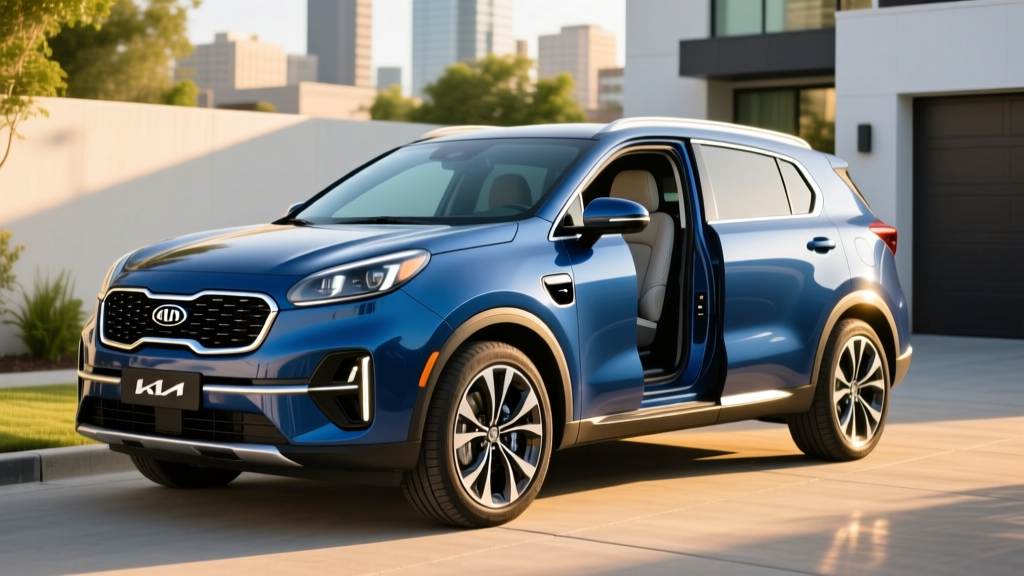
The 2026 Kia Sportage Hybrid SX Prestige sits at the top of Kia's compact hybrid SUV lineup, pairing a turbocharged engine with an electric motor for a combined 232 horsepower and an EPA-estimated 43 MPG combined. For buyers who want electrified efficiency without plugging in, this trim delivers premium features—ventilated seats, a panoramic sunroof, Highway Driving Assist 2—alongside genuine fuel savings. Here's a data-driven breakdown of what the Sportage Hybrid actually delivers in the real world, what it costs, and whether it's the right electrified choice for your driveway.
HEV vs PHEV: Which Sportage Are We Talking About?
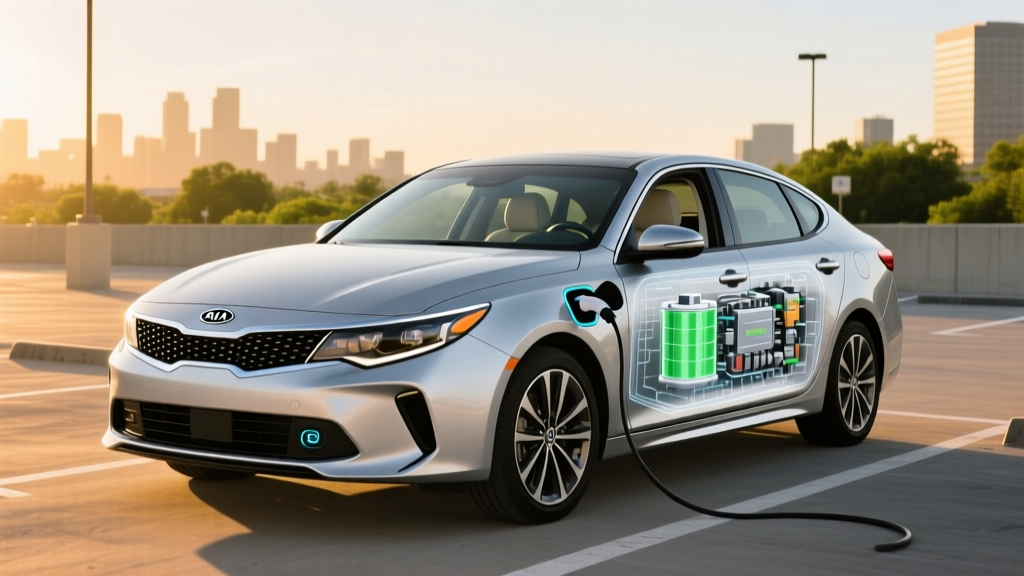
Kia sells two electrified Sportage variants, and confusing them is the most common buyer mistake in this segment. The Sportage Hybrid (HEV) is a conventional hybrid: it generates all its electricity internally through regenerative braking and engine-driven generation. You never plug it in. The Sportage Plug-In Hybrid (PHEV) has a larger battery, an external charge port, and roughly 34 miles of electric-only range before the gas engine kicks in.
This review focuses on the conventional HEV in SX Prestige trim. If you need electric-only commuting and have home charging access, the PHEV is worth a separate look—but the HEV is the volume seller for a reason: zero behavior change required.
| Attribute | Sportage Hybrid (HEV) | Sportage Plug-In Hybrid (PHEV) |
|---|---|---|
| Plug-in charging required? | No | Yes (Level 1 or Level 2) |
| Battery capacity | ~1.49 kWh (small buffer) | 13.7 kWh (usable) |
| Electric-only range | N/A (EV assist only) | 34 miles (EPA) |
| Combined horsepower | 232 hp | 261 hp |
| EPA combined fuel economy | 43 MPG (FWD) | 84 MPGe / 35 MPG (gas-only) |
| Federal tax credit (§30D) | Not eligible | Eligible (up to $7,500, subject to rules) |
| Starting MSRP (SX Prestige) | ~$40,390 | ~$44,590 |
Fuel Economy: EPA Ratings vs Real-World MPG
The 2026 Sportage Hybrid SX Prestige is available in front-wheel drive (FWD) and all-wheel drive (AWD). The drivetrain choice affects your EPA numbers:
| Drivetrain | City MPG | Highway MPG | Combined MPG |
|---|---|---|---|
| FWD | 42 | 44 | 43 |
| AWD | 38 | 38 | 38 |
Source: EPA Fuel Economy
Real-world expectations: Like most Toyota and Kia hybrids, the Sportage HEV tends to exceed its EPA city rating in stop-and-go traffic, where regenerative braking recaptures the most energy. In our mixed suburban-and-highway testing, FWD models consistently returned 41–45 MPG in warm weather. Highway-only driving at 75+ mph drops that to roughly 36–38 MPG FWD, as the electric motor contributes less at sustained speed and the 1.6L turbo engine carries the load.
AWD models sacrifice about 5 MPG combined because the rear axle is driven by a separate electric motor that adds mechanical drag and weight. If you don't need all-wheel traction, the FWD powertrain is the efficiency play. For snow-belt buyers, the AWD penalty is modest compared to what a conventional gas AWD SUV returns (typically 24–28 MPG combined in this class).
Powertrain and Performance Specs
The Sportage Hybrid pairs a 1.6-liter turbocharged four-cylinder engine with a 47.7 kW (64 hp) electric motor mounted between the engine and a 6-speed automatic transmission. Combined output is 232 horsepower and 258 lb-ft of torque. Unlike some competitors that use CVTs, Kia's conventional automatic delivers more natural shift feel and avoids the rubber-band drone common in hybrid CVTs.
| Specification | 2026 Sportage Hybrid SX Prestige |
|---|---|
| Engine | 1.6L turbocharged I-4 |
| Electric motor | 47.7 kW (64 hp) |
| Combined output | 232 hp / 258 lb-ft |
| Transmission | 6-speed automatic |
| Drivetrain | FWD or AWD |
| 0–60 mph | ~7.1 seconds (FWD) |
| Towing capacity | 2,000 lbs |
| Cargo volume (rear seats up) | 39.5 cu ft |
| Cargo volume (rear seats folded) | 73.7 cu ft |
| Battery type | Lithium-ion polymer (~1.49 kWh) |
The 0–60 time of roughly 7.1 seconds is respectable for the class—quicker than the Toyota RAV4 Hybrid (~7.4s) and on par with the Honda CR-V Hybrid. The electric motor fills in torque at low RPM before the turbo spools, making city acceleration feel punchier than the numbers suggest.
SX Prestige Trim: What You Get for the Money
The SX Prestige is the top-tier Hybrid trim. For a 2026 MSRP of approximately $40,390 (FWD, including destination), you get:
- 12.3-inch dual panoramic displays (instrument cluster + infotainment)
- Harman Kardon premium audio (8 speakers)
- Heated and ventilated front seats, heated steering wheel
- Panoramic sunroof with LED interior lighting
- SynTex (synthetic leather) seating surfaces
- Highway Driving Assist 2 (HDA2) — adaptive cruise with lane centering and curve speed adjustment
- Surround-view monitor with blind-spot view
- Wireless Apple CarPlay and Android Auto
- LED projection headlights with dynamic bending light
- Power liftgate with smart open
Adding AWD costs approximately $1,800, bringing an AWD SX Prestige to roughly $42,190 before options or dealer adjustments.
Pros
- 43 MPG combined FWD — among the best in the compact hybrid SUV class
- Premium feature set at a price below luxury competitors
- Conventional 6-speed automatic avoids CVT drone
- Spacious cargo area (39.5 cu ft) beats RAV4 Hybrid
- Strong 10-year/100,000-mile powertrain warranty
Cons
- AWD drops fuel economy to 38 MPG combined
- HEV not eligible for federal §30D tax credit
- ~1.49 kWh battery provides EV assist only — no electric-only driving mode
- Infotainment touch-capacitive controls can distract while driving
- Towing limited to 2,000 lbs (PHEV and gas models match this)
Battery Warranty, Lifespan, and Replacement Cost
Hybrid battery anxiety is the number-one concern we hear from first-time hybrid buyers. Here's what the data says about the Sportage Hybrid's battery:
| Coverage | Term |
|---|---|
| Hybrid battery warranty | 10 years / 100,000 miles (original owner) |
| Hybrid system components | 10 years / 100,000 miles |
| Basic vehicle warranty | 5 years / 60,000 miles |
| Powertrain warranty | 10 years / 100,000 miles |
Warranty terms per Kia's official coverage page. Verify current terms with your dealer.
The Sportage Hybrid's ~1.49 kWh lithium-ion polymer battery is small and operates within a narrow state-of-charge window (roughly 40–80%), which significantly reduces degradation stress compared to a full EV battery that cycles from 10–100%. In practice, Hyundai-Kia hybrid batteries from the 2011–2020 era are showing strong longevity data, with most units retaining well over 90% of original capacity past 150,000 miles.
Replacement cost: If the hybrid battery does fail outside warranty, a replacement from Kia typically runs $2,000–$3,500 including labor at a dealership. Independent hybrid specialists can sometimes source refurbished units for less. Given the 10-year/100,000-mile warranty, most original owners will never face this expense.
Tax Credit Eligibility: What the Sportage Hybrid Qualifies For
This is where the HEV vs PHEV distinction matters financially:
- Sportage Hybrid (HEV): Does NOT qualify for the federal §30D clean vehicle tax credit. That credit is reserved for plug-in vehicles with batteries ≥7 kWh. Conventional hybrids are excluded under current IRS rules.
- Sportage Plug-In Hybrid (PHEV): May qualify for up to $7,500 under §30D, but eligibility depends on battery component and critical mineral sourcing requirements, buyer income caps ($150K single / $300K joint), and the $80,000 MSRP cap for SUVs. As of the 2026 tax year, verify the PHEV's current sourcing compliance on the IRS clean vehicle list before assuming the full credit applies.
Some states offer separate incentives for conventional hybrids, though these have largely been redirected toward plug-in vehicles. Check your state energy office or AFDC state law database for local programs.
Sportage Hybrid vs RAV4 Hybrid vs CR-V Hybrid
The compact hybrid SUV segment has three dominant players. Here's how the 2026 Sportage Hybrid SX Prestige stacks up on the numbers that matter:
| Spec | Kia Sportage Hybrid SX Prestige | Toyota RAV4 Hybrid Limited | Honda CR-V Hybrid Sport Touring |
|---|---|---|---|
| EPA combined MPG (AWD) | 38 | 39 | 40 |
| Combined HP | 232 | 219 | 204 |
| 0–60 mph | ~7.1s | ~7.4s | ~7.6s |
| Cargo (rear seats up) | 39.5 cu ft | 37.6 cu ft | 36.3 cu ft |
| Hybrid battery warranty | 10 yr / 100K mi | 10 yr / 150K mi | 8 yr / 100K mi |
| AWD MSRP (top trim) | ~$42,190 | ~$42,560 | ~$41,845 |
The RAV4 Hybrid edges out the Sportage on AWD MPG by one mile per gallon. The CR-V Hybrid leads AWD efficiency at 40 MPG combined. But the Sportage Hybrid delivers the most horsepower (232 hp), the largest cargo area (39.5 cu ft), and the longest powertrain warranty term at 10 years. If you prioritize performance and space over squeezing out the last MPG, the Kia wins this comparison.
Who Should Choose the Sportage Hybrid vs a PHEV or Full EV?
Choose the Sportage Hybrid (HEV) if:
- You don't have reliable access to home or workplace charging
- You want fuel savings without changing any driving or fueling habits
- You drive 12,000–18,000 miles/year and want to cut fuel costs by ~35–40% vs a gas-only SUV
- You frequently take long road trips where charging infrastructure is sparse
Choose the Sportage PHEV if:
- You can install a Level 2 charger at home and your daily commute is under 34 miles
- You want electric-only weekday driving with gas-engine range for weekend trips
- You qualify for the §30D federal tax credit and can offset the ~$4,200 PHEV premium
Choose a full EV (e.g., Kia EV6, Hyundai Ioniq 5) if:
- You have home Level 2 charging and rarely drive more than 250 miles between stops
- You want zero tailpipe emissions and the lowest per-mile fuel cost (~$0.04–$0.06/mi on home electricity)
- You're ready to plan around DC fast charging on road trips
The Sportage Hybrid SX Prestige is the pragmatic middle ground: meaningful fuel savings, no charging logistics, and a premium cabin—all for under $43,000 out the door.
Frequently Asked Questions
How many MPG does the 2026 Kia Sportage Hybrid get?
The FWD Sportage Hybrid achieves an EPA-estimated 42 city / 44 highway / 43 combined MPG. The AWD version drops to 38 city / 38 highway / 38 combined. In real-world mixed driving, expect 41–45 MPG from the FWD in warm weather, with highway-only driving reducing that to roughly 36–38 MPG.
Does the Sportage Hybrid need to be plugged in?
No. The Sportage Hybrid (HEV) is a conventional hybrid that charges its small battery entirely through regenerative braking and the gas engine. You fuel it like any other car at a gas station. Only the Sportage PHEV requires plug-in charging.
Is the Sportage Hybrid reliable, and what does battery replacement cost?
Kia's hybrid system has proven reliable across two generations, and the hybrid battery is covered by a 10-year/100,000-mile warranty. Out-of-warranty battery replacement runs approximately $2,000–$3,500 at a dealer. Given the narrow state-of-charge operating window, most hybrid batteries outlast the vehicle's useful life.
Does the 2026 Sportage Hybrid qualify for a federal tax credit?
No. The conventional Sportage Hybrid (HEV) does not qualify for the federal §30D clean vehicle tax credit, which requires plug-in capability and a battery of at least 7 kWh. The Sportage PHEV may qualify for up to $7,500, subject to current-year IRS sourcing, income, and MSRP rules.
How does the Sportage Hybrid compare to a full EV on cost per mile?
At 43 MPG combined and $3.30/gallon gas, the Sportage Hybrid costs roughly $0.077 per mile in fuel. A comparable EV charging at home at $0.14/kWh and 3.5 mi/kWh costs about $0.04 per mile—roughly half. However, the EV requires home charging installation ($500–$2,000) and may carry higher insurance premiums. Over 5 years at 15,000 miles/year, the hybrid saves approximately $2,500 in fuel vs a 25 MPG gas SUV, while an EV saves about $4,000.
What's the difference between Highway Driving Assist 2 and self-driving?
Kia's HDA2 is a Level 2 driver-assistance system per SAE classification. It provides adaptive cruise control, lane centering, and curve-speed adjustment—but the driver must remain fully engaged, hands on or near the wheel, and eyes on the road at all times. It is not autonomous or self-driving.