Why the Kia Sportage Hybrid Is Dominating Lease Searches
If you've been searching for a Kia Sportage Hybrid lease, you're not alone. The compact crossover hybrid segment is fiercely competitive in 2026, and the Sportage Hybrid — available as both a conventional hybrid (HEV) and a plug-in hybrid (PHEV) — sits at the intersection of practicality, efficiency, and aggressive lease pricing. Kia has structured its lease programs to undercut rivals like the Toyota RAV4 Hybrid and Honda CR-V Hybrid on monthly cost, while offering more standard technology and a longer warranty.
But before you sign a 36-month lease, you need to understand exactly what you're getting: the real-world fuel economy, the difference between the HEV and PHEV powertrains, battery longevity, and whether any federal tax incentives apply to your lease. This guide breaks down every number that matters.
HEV vs PHEV: Which Sportage Hybrid Fits Your Commute?
Kia offers the 2026 Sportage in two electrified flavors, and confusing them is the most common mistake shoppers make. Here's the core distinction:
Conventional Hybrid (HEV)
- No plug required. The battery charges through regenerative braking and the gasoline engine.
- Best for: Drivers without reliable home or workplace charging access.
- Fuel economy advantage: Consistent MPG regardless of whether you "remember to charge."
- Lower upfront cost: Typically $3,000–$5,000 less than the PHEV variant.
Plug-In Hybrid (PHEV)
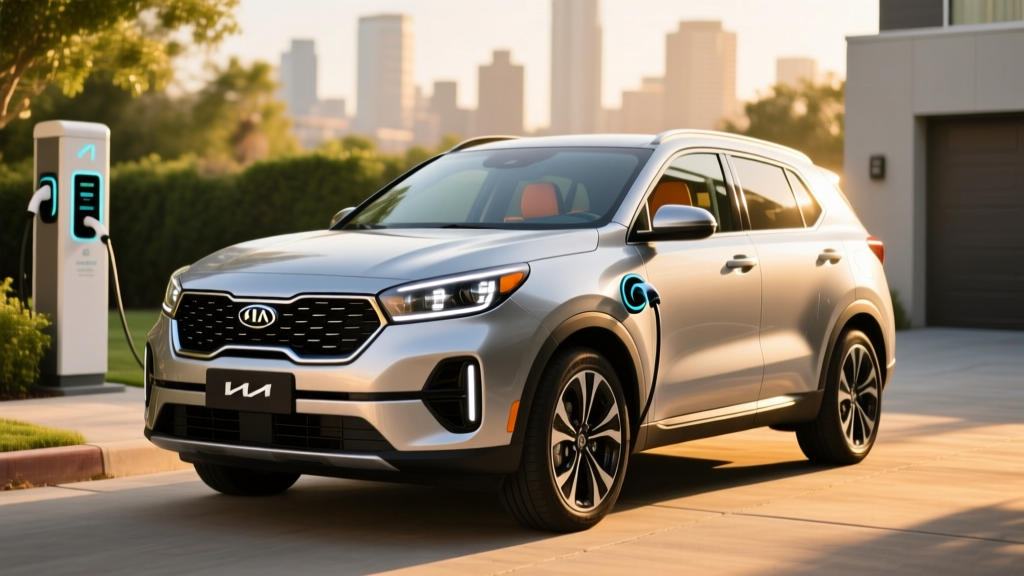
- Plug-in capable. A larger battery provides genuine electric-only driving before the gas engine engages.
- Best for: Drivers with home Level 2 charging who commute under 35 miles round-trip.
- Electric-only range: 34 miles EPA — enough for most daily errands without burning a drop of gas.
- Federal tax credit eligible (subject to §30D sourcing and income rules — see below).
Fuel Economy Breakdown: EPA MPG and Real-World Results
Fuel economy is the primary reason buyers choose a hybrid over a gas-only compact SUV. Here's what the EPA rates the 2026 Sportage Hybrid lineup at, alongside real-world observations from mixed driving conditions:
| Model | City MPG | Highway MPG | Combined MPG | Real-World Combined* |
|---|---|---|---|---|
| Sportage Hybrid (FWD) | 42 | 44 | 43 | 39–45 |
| Sportage Hybrid (AWD) | 38 | 38 | 38 | 35–40 |
| Sportage PHEV (AWD) | 84 MPGe | 75 MPGe | 84 MPGe (combined) | 78–86 MPGe |
| Sportage PHEV (gas-only mode) | 36 | 35 | 35 | 32–36 |
*Real-world figures reflect mixed city/highway driving in moderate climates. Hybrids tend to exceed EPA city estimates in stop-and-go traffic (where regenerative braking shines) but may fall short on sustained highway runs. Cold weather (below 30°F) typically reduces hybrid efficiency by 8–15% due to increased engine idle time for cabin heat.
PHEV Electric-Only Range: What to Expect
EPA Rating: 34 miles electric-only
Real-world expectation: 28–34 miles depending on temperature, terrain, and highway speeds. At 70+ mph, expect closer to 25–28 miles. In mild city driving below 45 mph, some drivers report 36–38 miles before the engine engages.
Total combined range (electric + gas): Approximately 430 miles.
Powertrain Specs: Horsepower, Engine, and Battery Details
Both hybrid variants share Kia's turbocharged 1.6-liter inline-four, but the electric motor output and battery capacity differ significantly.
| Specification | Sportage Hybrid (HEV) | Sportage PHEV |
|---|---|---|
| Engine | 1.6L turbo I-4 | 1.6L turbo I-4 |
| Combined System Horsepower | 226 hp | 261 hp |
| Combined Torque | 258 lb-ft | 258 lb-ft |
| Electric Motor Output | 44 kW (59 hp) | 72 kW (97 hp) |
| Battery Capacity | 1.49 kWh (nominal) | 13.8 kWh (usable) |
| Battery Chemistry | Lithium-ion (NMC) | Lithium-ion (NMC) |
| Transmission | 6-speed automatic | 6-speed automatic |
| Drivetrain | FWD or AWD | AWD standard |
| 0–60 mph | ~7.4 sec | ~6.7 sec |
| Towing Capacity | 2,000 lbs | 2,000 lbs |
The PHEV's larger battery and more powerful motor give it a noticeable acceleration advantage, making it the more engaging driver's choice. The HEV, meanwhile, prioritizes simplicity and lower weight.
PHEV Charging: Times, Connectors, and What You Need at Home
If you opt for the Sportage PHEV, charging logistics become part of your ownership routine. Here's the breakdown:
| Charging Level | Power (kW) | Time (0–100%) | Miles Added per Hour |
|---|---|---|---|
| Level 1 (120V household) | ~1.4 kW | ~10.5 hours | ~3 miles |
| Level 2 (240V, 32A) | ~7.2 kW | ~2 hours | ~17 miles |
| DC Fast Charge | Not supported | N/A | N/A |
Critical note: The 2026 Sportage PHEV does not support DC fast charging. This is common for PHEVs — the battery is small enough that Level 2 charging fully replenishes it in about two hours. You'll use a standard J1772 connector for all charging.
For most PHEV owners, a Level 2 home charger installed in the garage is the ideal setup. Plug in when you get home, wake up to a full 34-mile electric range every morning. Level 1 (standard wall outlet) works but is best suited for overnight top-ups if your daily driving is under 15 miles.
Lease Pricing, Incentives, and the Tax Credit Question
Kia's 2026 Sportage Hybrid lease offers have been competitive, typically structured around 36-month terms with $2,500–$3,500 due at signing. Here's a general pricing landscape:
| Trim / Model | MSRP (approx.) | Typical Lease (36 mo) | Federal Tax Credit Eligible? |
|---|---|---|---|
| Sportage Hybrid LX (FWD) | $30,290 | $329–$369/mo | No (HEV) |
| Sportage Hybrid EX (AWD) | $34,590 | $379–$419/mo | No (HEV) |
| Sportage PHEV X-Line | $40,590 | $419–$479/mo | Potential (see below) |
| Sportage PHEV X-Line Prestige | $44,290 | $459–$519/mo | Potential (see below) |
Lease pricing varies by region, dealer, credit tier, and current Kia Motors Finance promotions. Always request a detailed lease quote showing money factor, residual value, and all fees.
Federal Tax Credit on a Lease — How It Works
Under IRS §30D rules, the federal clean vehicle credit (up to $7,500) applies to purchased new PHEVs that meet battery sourcing, critical mineral, MSRP cap ($80,000 for SUVs), and buyer income requirements. The Sportage Hybrid HEV does not qualify — it's a conventional hybrid with no plug.
For leases, the rules differ. Under the "commercial vehicle" loophole (§45W), the leasing company (lessor) technically claims the credit and may pass savings to you as a "lease cash" incentive or capitalized cost reduction. Kia has historically passed through some or all of this credit on PHEV leases, but this is not guaranteed. Ask your dealer specifically: "Is Kia passing through the federal lease credit on this Sportage PHEV?"
§30D PHEV Credit Checklist (for purchases)
- Vehicle MSRP must not exceed $80,000 (SUV classification)
- Buyer AGI: ≤ $150,000 (single) / ≤ $300,000 (joint)
- Battery components must meet North American sourcing thresholds (phasing stricter through 2026)
- Critical minerals must meet sourcing requirements from FTA countries
- Credit is now available as a point-of-sale transfer to the dealer (reduces purchase price directly)
- Final assembly must be in North America — the Sportage PHEV is assembled in West Point, Georgia ✓
Battery Warranty, Reliability, and Long-Term Costs
Hybrid battery anxiety is the top concern for first-time hybrid buyers. Here's what the data says about the Sportage Hybrid's battery longevity:
Kia Hybrid Battery Warranty
Hybrid/EV Battery: 10 years / 100,000 miles (whichever comes first)
Coverage threshold: Battery must retain sufficient capacity; Kia covers repair or replacement if capacity drops below functional thresholds during the warranty period.
Powertrain warranty: 10 years / 100,000 miles
Bumper-to-bumper: 5 years / 60,000 miles
Kia's 10-year/100,000-mile hybrid battery warranty is among the best in the industry — matching Hyundai and exceeding Toyota's 10-year/150,000-mile hybrid battery warranty only slightly on mileage. For a 36-month lease, you'll be well within warranty coverage for the entire term.
Battery replacement cost (out of warranty): Industry estimates for the Sportage Hybrid's ~1.5 kWh HEV battery pack range from $2,000–$3,500. The PHEV's 13.8 kWh pack would likely cost $4,500–$7,000. However, modern NMC hybrid batteries routinely exceed 150,000 miles before significant degradation, and many last the life of the vehicle. According to IIHS, the Sportage has performed well in crash testing, and Kia's hybrid powertrain has shown strong reliability in owner surveys.
Who Should Lease the Sportage Hybrid (and Who Shouldn't)
Pros
- Strong city MPG (42 FWD) with no plug-in requirement for the HEV
- PHEV offers 34 miles of genuine electric commuting
- Class-leading 10-year/100,000-mile powertrain and battery warranty
- Competitive lease pricing vs. RAV4 Hybrid and CR-V Hybrid
- 261 hp PHEV is the quickest in its class
- Spacious interior with 39.5 cu ft cargo volume behind rear seats
Cons
- AWD HEV loses 5 MPG combined vs FWD (38 vs 43)
- PHEV does not support DC fast charging
- Turbo engine requires premium fuel for maximum output (regular acceptable with slight power reduction)
- Infotainment learning curve with the dual-screen setup
- PHEV cargo space slightly reduced due to larger battery (36.3 cu ft)
The Decision Framework
Choose the Sportage Hybrid HEV if: You don't have home charging, want maximum simplicity, drive more than 15,000 miles/year, and want the lowest monthly lease payment.
Choose the Sportage PHEV if: You have garage/driveway charging, your round-trip commute is under 35 miles, you want to minimize gas consumption on weekdays, and the potential lease credit pass-through makes the math work.
Consider a full EV (like the Kia EV6 or Hyundai Ioniq 5) if: You have reliable home Level 2 charging, drive under 250 miles/day, want zero gas station visits, and qualify for the full $7,500 federal credit on purchase.
Frequently Asked Questions
How many MPG does the Kia Sportage Hybrid get?
The 2026 Sportage Hybrid FWD is EPA-rated at 42 city / 44 highway / 43 combined MPG. The AWD version drops to 38/38/38 MPG. In real-world driving, city-heavy commutes often yield better-than-EPA results thanks to regenerative braking, while sustained highway driving at 75+ mph may return 35–37 MPG in the FWD model.
How far can the Sportage PHEV go on electric only?
The EPA rates the 2026 Sportage PHEV at 34 miles of electric-only range. Real-world results vary: expect 28–34 miles depending on speed, temperature, and terrain. At highway speeds above 65 mph or in sub-freezing temperatures, plan for roughly 25–28 miles before the gasoline engine engages.
Does the Kia Sportage Hybrid qualify for a tax credit?
The conventional Sportage Hybrid (HEV) does not qualify for any federal tax credit — it has no plug and no significant electric-only range. The Sportage PHEV may qualify for up to $7,500 under IRS §30D if purchased (subject to income, MSRP, and battery sourcing rules). On a lease, the lessor claims the credit and may pass savings through as a capitalized cost reduction — confirm with your dealer.
Is the Sportage Hybrid reliable? What about battery replacement?
Kia's hybrid system has proven reliable since its introduction, and the 10-year/100,000-mile hybrid battery warranty provides strong protection. Hybrid battery replacement costs $2,000–$3,500 (HEV) or $4,500–$7,000 (PHEV) out of warranty, but modern hybrid batteries commonly exceed 150,000 miles without significant issues. On a 36-month lease, battery replacement is virtually never a concern.
Should I lease or buy the Sportage Hybrid?
Leasing makes sense if you want the lowest monthly payment, plan to upgrade in 3 years, and want to stay fully under warranty. Buying makes sense if you drive over 15,000 miles/year (lease mileage penalties add up), want to claim the §30D tax credit directly (PHEV only), and plan to keep the vehicle 7+ years. For the PHEV, compare the total lease cost over 36 months against the purchase price minus the $7,500 credit to see which path saves more.
Does the Sportage Hybrid need to be plugged in?
No — the conventional Sportage Hybrid (HEV) never needs to be plugged in. It charges its small battery through regenerative braking and the gas engine. Only the Sportage PHEV benefits from plugging in (J1772 connector, Level 1 or Level 2). If you don't plug in the PHEV, it simply operates as a conventional hybrid with 35 MPG combined.