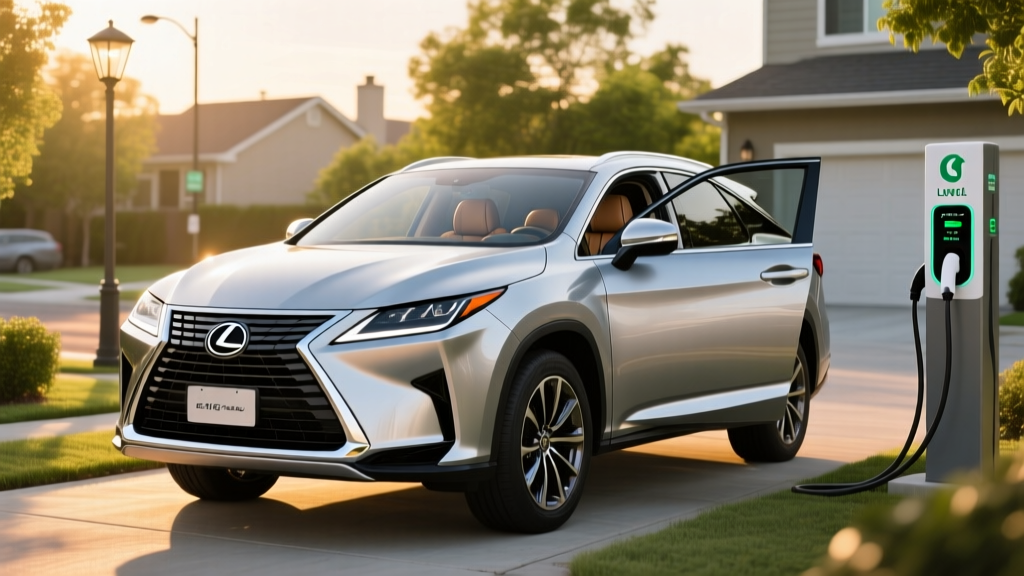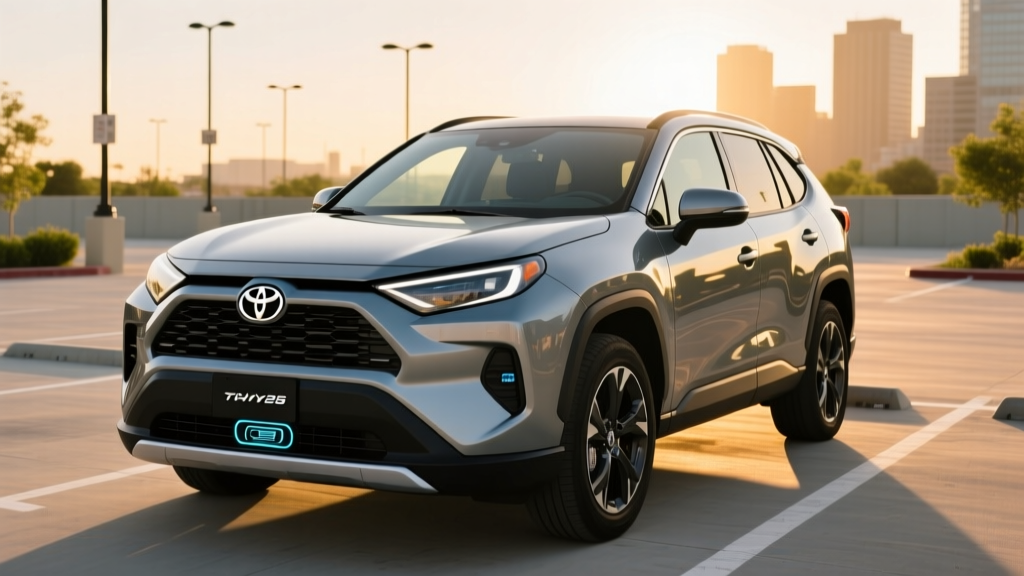
The midsize three-row SUV segment is crowded, but the 2026 Kia Sorento Hybrid AWD occupies a specific niche: buyers who need three rows, all-weather capability, and strong fuel economy — without plugging in, committing to a full EV, or settling for a smaller crossover. With a turbocharged 1.6-liter engine paired with an electric motor and standard all-wheel drive, the Sorento Hybrid returns an EPA-estimated 34 MPG combined while offering seating for up to six.
But Kia also offers the Sorento Plug-In Hybrid (PHEV), which adds 32 miles of electric-only range and a larger battery. Which one actually fits your driveway? This guide breaks down every spec, real-world fuel economy expectation, warranty detail, and tax-credit nuance you need to decide.
HEV vs PHEV: Understanding the Two Sorento Hybrids
Before diving into MPG and pricing, it's critical to separate the two electrified Sorento variants. They share a platform but serve different use cases.
Sorento HEV (Conventional Hybrid)
How it works: A small battery (~1.5 kWh) is charged exclusively through regenerative braking and the gasoline engine. You never plug it in. The electric motor assists the gas engine during acceleration and enables brief low-speed electric driving.
Best for: Drivers without home charging access, apartment dwellers, or anyone who wants better MPG without changing their fueling habits.
Sorento PHEV (Plug-In Hybrid)
How it works: A larger 13.8 kWh battery can be charged via a wall outlet or Level 2 charger, delivering up to 32 miles of pure electric driving before the gas engine engages. It also has a more powerful electric motor (72 kW vs 44 kW in the HEV).
Best for: Households with a garage or driveway where overnight Level 2 charging is feasible, and daily commutes under 30 miles.
Fuel Economy: EPA Numbers and Real-World MPG
Hybrid fuel economy varies significantly based on driving style, terrain, and temperature. Here's what the EPA rates and what you should realistically expect.
| Powertrain | City MPG | Highway MPG | Combined MPG | Real-World Expectation |
|---|---|---|---|---|
| HEV AWD | 36 | 33 | 34 | 32–36 MPG |
| PHEV AWD (gas only) | 33 | 31 | 32 | 30–33 MPG |
| PHEV AWD (MPGe, electric+gas) | 79 MPGe combined | Varies with plug-in frequency | ||
Real-world note: Like most hybrids, the Sorento HEV tends to exceed its EPA city rating in stop-and-go traffic, where regenerative braking recaptures the most energy. On sustained highway trips at 75+ mph, expect fuel economy to dip toward 30–31 MPG as aerodynamic drag dominates and the electric motor contributes less. In cold weather (below 30°F), anticipate a 5–8% reduction in MPG as the engine runs more frequently for cabin heat and the battery operates less efficiently.
According to fueleconomy.gov, the 2026 Sorento HEV AWD's 34 MPG combined saves an estimated $2,250 in fuel costs over five years compared to the average new vehicle.
Electric-Only Range and Charging (PHEV Only)
The Sorento PHEV's headline feature is its ability to handle most daily commutes without burning a drop of gasoline.
- EPA electric-only range: 32 miles
- Total combined range (electric + gas): approximately 420 miles
- Battery capacity: 13.8 kWh (lithium-ion polymer)
- Onboard charger: 7.2 kW (Level 2, J1772 connector)
- Level 2 charge time (0–100%): approximately 2 hours at 7.2 kW
- Level 1 charge time (120V outlet): approximately 10–12 hours
- DC fast charging: Not available — the PHEV does not support DC fast charging, which is typical for plug-in hybrids in this class
If your round-trip commute is 25 miles or less and you charge nightly, you could go weeks between fill-ups. The gasoline engine seamlessly engages once the battery depletes, so there's no range anxiety on longer trips.
Powertrain Specs: What Moves the Sorento Hybrid
| Specification | HEV AWD | PHEV AWD |
|---|---|---|
| Engine | 1.6L turbo 4-cyl | 1.6L turbo 4-cyl |
| Electric Motor Power | 44 kW (59 hp) | 72 kW (97 hp) |
| Combined System Output | 227 hp / 258 lb-ft | 261 hp / 258 lb-ft |
| Transmission | 6-speed automatic | 6-speed automatic |
| Drivetrain | AWD (standard) | AWD (standard) |
| 0–60 mph (est.) | ~7.5 sec | ~6.8 sec |
| Towing Capacity | 2,000 lbs | 2,000 lbs |
| Seating | 6 (captain's chairs) | 6 (captain's chairs) |
The PHEV's larger motor gives it a noticeable acceleration advantage — 34 extra horsepower makes highway merging and passing feel more confident. Both models use a traditional 6-speed automatic rather than a CVT, which means more natural-feeling shifts and none of the "rubber band" sensation some hybrid CVTs produce.
Pricing, Trims, and Tax Credit Eligibility
Here's where the decision between HEV and PHEV gets financial. Pricing below reflects 2026 MSRP before any incentives.
| Trim | HEV AWD MSRP | PHEV AWD MSRP |
|---|---|---|
| S | $38,390 | — |
| EX | $41,790 | $50,290 |
| SX Prestige | — | $54,690 |
Federal Tax Credit for the Sorento PHEV
The Sorento PHEV may qualify for a federal tax credit of up to $6,843 under the IRS §30D Clean Vehicle Credit, depending on your specific situation. The HEV (conventional hybrid) does not qualify for any federal purchase incentive.
§30D Tax Credit Eligibility Checklist (2026)
- Vehicle MSRP cap: SUVs must be under $80,000 — the Sorento PHEV qualifies ✓
- Buyer income cap: Modified AGI must not exceed $150,000 (single), $225,000 (head of household), or $300,000 (joint) — check your tax situation
- Battery sourcing: Critical minerals and battery component requirements phase in annually; credit amount may be reduced if sourcing thresholds aren't fully met — the Sorento PHEV's current qualifying amount is $6,843, not the full $7,500
- Point-of-sale transfer: You can elect to transfer the credit to the dealer at purchase, reducing your out-of-pocket cost immediately rather than waiting for tax filing
- Final assembly: Must occur in North America — the Sorento is assembled in West Point, Georgia ✓
Source: IRS.gov §30D guidelines. Tax eligibility is complex — consult a tax professional before relying on credit estimates.
When you factor in a potential $6,843 credit, the EX PHEV's effective price drops to approximately $43,447 — narrowing the gap with the HEV EX to roughly $1,650. If you can charge at home, the PHEV's fuel savings can close that gap further within two to three years.
Battery Warranty, Reliability, and Replacement Cost
Hybrid battery longevity remains the top concern for buyers transitioning from conventional vehicles. Kia addresses this with one of the strongest warranty packages in the industry.
Kia Hybrid Battery & Powertrain Warranty
| Hybrid/EV Battery: | 10 years / 100,000 miles |
| Powertrain: | 10 years / 100,000 miles |
| Bumper-to-Bumper: | 5 years / 60,000 miles |
| Capacity Retention Threshold: | Below 70% of original capacity (PHEV) |
Real-world reliability data: Kia's 1.6L turbo hybrid powertrain has been in service since the 2021 model year across the Sorento, Tucson, and Santa Fe platforms. Early models experienced some transmission-related complaints, but the powertrain has matured through successive model years. The hybrid battery uses lithium-ion polymer cells, which have demonstrated less than 10% degradation over 100,000 miles in fleet data from similar Hyundai/Kia hybrid platforms.
Battery replacement cost: If the high-voltage battery requires replacement outside warranty, expect a cost between $2,500 and $4,000 for the HEV's smaller pack and $5,000 to $7,500 for the PHEV's larger 13.8 kWh battery, including labor. However, individual module replacement (rather than the full pack) may be possible at lower cost depending on the failure mode.
Who Should Buy the Sorento Hybrid AWD — and Who Shouldn't
✓ Choose the HEV If:
- You lack home charging access (apartment, street parking)
- You want three-row seating under $42,000
- Your annual mileage is high and you want consistent MPG without behavior changes
- You live in a region without state PHEV/EV incentives
- You want the simplest ownership experience — no cables, no charging apps
✓ Choose the PHEV If:
- You can install a Level 2 charger at home (garage or driveway)
- Your daily round-trip commute is under 30 miles
- You qualify for the federal §30D credit and/or state incentives
- You want EV-like daily driving with gas-engine flexibility for road trips
- You value the extra 34 hp for highway confidence
Sorento Hybrid vs. Full EV vs. Gas SUV — Which Fits You?
| Sorento HEV | Best all-rounder for families who need AWD and 3 rows but can't charge at home. 34 MPG with zero lifestyle change. |
| Sorento PHEV | Ideal bridge for households ready to drive electric daily but not ready to commit to a full EV for road trips. Best economics if you qualify for the tax credit. |
| Full EV (e.g., Kia EV9) | Lower running costs and zero tailpipe emissions, but higher upfront price ($54,900+), fewer three-row EV options, and requires reliable home or workplace charging. |
| Gas-only SUV (e.g., Sorento gas, Toyota Highlander) | Lower purchase price but 22–26 MPG combined means $600–$900/year more in fuel. Only makes sense at very low annual mileage. |
Frequently Asked Questions
How many MPG does the Kia Sorento Hybrid AWD get?
The 2026 Kia Sorento HEV AWD is EPA-rated at 36 city / 33 highway / 34 combined MPG. In real-world driving, expect 32–36 MPG depending on conditions — city driving often yields higher numbers thanks to regenerative braking, while sustained highway speeds above 75 mph and cold weather reduce efficiency.
How far can the Sorento PHEV go on electric only?
The EPA rates the Sorento PHEV at 32 miles of electric-only range. In practice, expect 22–28 miles in cold weather or at highway speeds, and up to 32–34 miles in mild conditions around town. Once the battery depletes, the gas engine takes over seamlessly, giving a total range of approximately 420 miles.
Does the Kia Sorento Hybrid qualify for a tax credit?
The conventional HEV does not qualify for any federal tax credit. The PHEV may qualify for up to $6,843 under the §30D Clean Vehicle Credit, subject to buyer income limits ($150K single / $300K joint), MSRP caps (under $80K for SUVs), and battery sourcing requirements. The credit can be transferred to the dealer at point of sale. Always verify current eligibility on IRS.gov and consult a tax professional.
Is the Sorento Hybrid reliable, and what does battery replacement cost?
Kia's hybrid powertrain has been in production since 2021 and has shown solid reliability through successive model years. The hybrid battery is covered by a 10-year/100,000-mile warranty. Out-of-warranty replacement costs range from $2,500–$4,000 (HEV) or $5,000–$7,500 (PHEV), though partial module repairs may cost less. Most hybrid batteries outlast the vehicle's useful life.
Do I need to plug in the Sorento Hybrid?
No. The conventional HEV charges its small battery through regenerative braking and the gas engine — you never plug it in. Only the PHEV variant benefits from being plugged in (to a standard 120V outlet or a 240V Level 2 charger). If you buy the HEV, your only change from a gas car is fewer stops at the pump.
Can the Sorento PHEV DC fast charge?
No. The Sorento PHEV supports Level 1 (120V) and Level 2 (240V, up to 7.2 kW) charging only. There is no DC fast charging capability, which is standard for plug-in hybrids in this segment. A full Level 2 charge takes about 2 hours.
Does the hybrid system affect cargo space or third-row room?
Minimally. The hybrid battery is packaged under the cargo floor, so the Sorento Hybrid retains comparable cargo volume to the gas model. Third-row space is tight for adults on longer trips — best suited for children — but this is consistent across the Sorento lineup regardless of powertrain.
Sources: EPA fueleconomy.gov, IRS §30D Clean Vehicle Credit, Kia Motors America official specifications. Pricing and credit eligibility reflect 2026 model year data and are subject to change. Verify all figures with your dealer and tax advisor before purchasing.