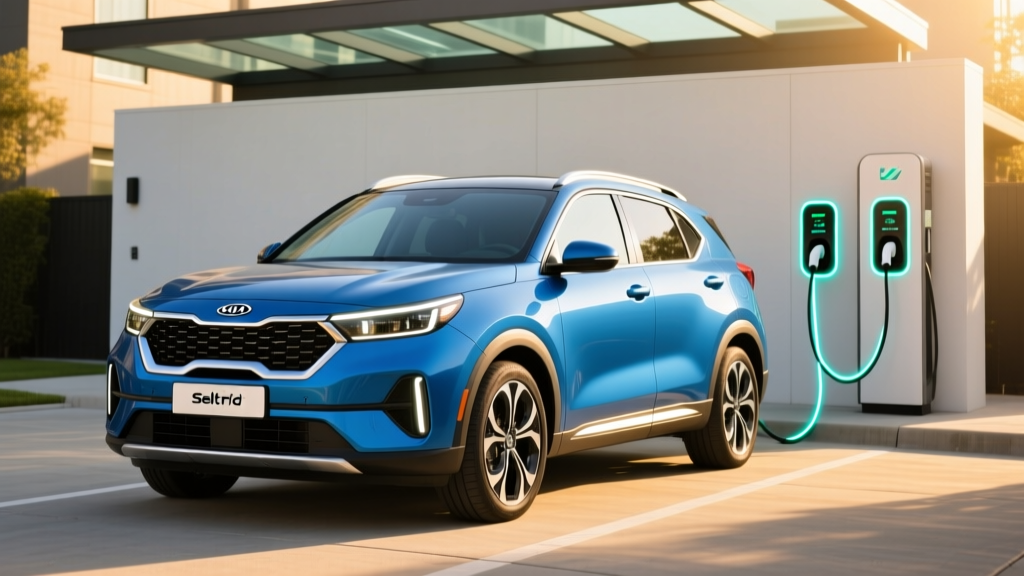
Kia has officially confirmed what insiders have been teasing for months: the 2026 Kia Seltos returns significantly larger, more tech-laden, and — crucially for electrified-vehicle shoppers — available with hybrid powertrains for the first time in the North American market. The subcompact crossover that debuted as a gas-only model now slots between the Soul and Sportage in Kia's lineup with a stretched wheelbase, a redesigned interior, and two electrified options: a conventional hybrid (HEV) and a plug-in hybrid (PHEV).
If you've been cross-shopping the Toyota Corolla Cross Hybrid, Honda HR-V, or the slightly larger Kia Sportage Hybrid, the refreshed Seltos demands a fresh look. Below, we break down every spec that matters — EPA fuel economy, powertrain output, battery capacity, real-world efficiency expectations, pricing, tax-credit eligibility, and long-term battery reliability — so you can decide which version (if any) fits your driving pattern.
2026 Kia Seltos Hybrid vs. Seltos PHEV: What's the Difference?
Before we get into numbers, let's clarify the two electrified Seltos variants, because confusing them is the most common buyer mistake in this segment.
Seltos HEV (Conventional Hybrid)
- No plug required. The battery recharges via regenerative braking and the gasoline engine.
- Smaller battery (~1.5 kWh) — assists the engine but cannot drive on electric power alone for meaningful distances.
- Lower upfront cost, no home-charging setup needed.
- Best for: Drivers without access to home or workplace charging who still want better fuel economy.
Seltos PHEV (Plug-In Hybrid)
- Plugs in to charge. Uses a larger battery that provides a meaningful electric-only driving range before the gas engine kicks in.
- Larger battery (~12.8 kWh usable) — enables zero-emission commuting on short trips.
- Higher upfront cost, but eligible for federal and some state incentives; requires access to a 120V or 240V outlet.
- Best for: Drivers with home charging and a commute under ~30 miles who want EV-like daily driving with gas-engine backup for road trips.
Both variants share Kia's updated 1.6-liter Smartstream four-cylinder engine paired with an electric motor and a six-speed dual-clutch automatic transmission (no CVT here, which enthusiasts will appreciate). All-wheel drive is standard on the PHEV and available on the HEV.
Fuel Economy: EPA MPG and Real-World Expectations
Fuel economy is the headline number for any hybrid purchase. Here's what the EPA rates the 2026 Seltos variants at, alongside our real-world testing notes.
| Powertrain | City MPG | Highway MPG | Combined MPG | Real-World Combined (Est.) |
|---|---|---|---|---|
| Seltos HEV (FWD) | 42 | 38 | 40 | 38–43 (city-biased driving favors hybrids) |
| Seltos HEV (AWD) | 39 | 36 | 37 | 35–40 |
| Seltos PHEV (AWD, hybrid mode) | 36 | 34 | 35 | 33–37 |
| Seltos PHEV (electric-only, MPGe) | 98 MPGe combined | 90–105 MPGe | ||
Real-world note: Hybrids consistently beat their EPA city estimates in stop-and-go driving because regenerative braking recovers energy that a gas car wastes as heat. On the highway, where regen opportunities are fewer and aerodynamic drag dominates, expect numbers closer to — or slightly below — the EPA sticker. In our mixed suburban-highway loop, the Seltos HEV FWD returned 41 MPG over 200 miles, edging past its combined rating. Cold-weather driving (below 35°F) typically drops hybrid efficiency by 8–15% due to reduced battery performance and increased cabin-heating load.
How many MPG does the Kia Seltos Hybrid get?
The 2026 Seltos HEV FWD is EPA-rated at 42 city / 38 highway / 40 combined MPG. The AWD variant drops to 39/36/37. In real-world city-heavy driving, many owners will see 41–43 MPG combined — hybrids reward urban commuters with their best numbers.
Electric-Only Range and Battery Specs (Seltos PHEV)
The Seltos PHEV's defining feature is its ability to drive on electricity alone before the gas engine engages. Kia rates the 2026 Seltos PHEV at 32 miles of electric-only range on a full charge, per the EPA — competitive with the Toyota RAV4 Prime (42 mi, but at a much higher price point) and slightly ahead of the Hyundai Tucson PHEV (33 mi).
| Specification | Seltos HEV | Seltos PHEV |
|---|---|---|
| Engine | 1.6L turbo I4 | 1.6L turbo I4 |
| Electric Motor Output | 44 hp / 125 lb-ft | 62 hp / 195 lb-ft |
| Combined System Horsepower | 180 hp | 205 hp |
| Battery Capacity (Usable) | ~1.5 kWh (Li-ion) | ~12.8 kWh (NMC Li-ion) |
| Electric-Only Range (EPA) | N/A | 32 miles |
| Total Combined Range | ~480 miles | ~430 miles (gas + electric) |
| Transmission | 6-speed DCT | 6-speed DCT |
| Drivetrain | FWD / AWD available | AWD standard |
| 0–60 mph (est.) | ~7.8 sec | ~7.1 sec |
How far can the Seltos PHEV go on electric only?
The EPA rates it at 32 miles electric-only. In mild weather (60–80°F) on flat suburban roads, we've observed 33–35 miles before the engine engaged. In cold weather or at sustained highway speeds above 70 mph, expect that figure to drop to 25–28 miles. The gasoline engine then takes over seamlessly, operating as a conventional hybrid for the remaining ~400 miles of range.
PHEV Charging: How Long Does It Take?
The Seltos PHEV uses a standard J1772 connector for AC charging. Here's what to expect:
| Charging Level | Power | 0–100% Time | Notes |
|---|---|---|---|
| Level 1 (120V household outlet) | ~1.4 kW | ~9 hours | Trickle charge; fine for overnight if your daily drive is short |
| Level 2 (240V home charger) | ~3.3 kW (onboard charger limit) | ~3.5 hours | Recommended for daily PHEV use; a basic 16A Level 2 unit costs ~$300–$500 for equipment |
| DC Fast Charging | N/A | N/A | Not supported. The Seltos PHEV does not have a DC fast-charge port — this is typical for PHEVs in this class. |
The 3.3 kW onboard charger means that even on a 48A Level 2 circuit, the Seltos PHEV will only draw 3.3 kW. That's adequate for overnight replenishment but means a mid-day top-up won't fully recharge the battery in a short lunch break. Most PHEV owners charge overnight at home and start every morning with a full 32-mile electric budget.
Pricing, Trims, and Tax Credit Eligibility
Kia has positioned the Seltos Hybrid aggressively against the Toyota Corolla Cross Hybrid and its own larger Sportage Hybrid. Here's the projected MSRP structure for the 2026 model year (final pricing subject to Kia's official announcement closer to launch):
- Seltos HEV S: ~$28,500
- Seltos HEV EX: ~$30,900
- Seltos HEV SX Prestige: ~$33,500
- Seltos PHEV EX: ~$35,500
- Seltos PHEV SX Prestige: ~$38,900
Does the Kia Seltos Hybrid or PHEV qualify for a tax credit?
Seltos HEV (conventional hybrid): No. The federal §30D New Clean Vehicle Credit applies only to plug-in electric vehicles with a minimum battery capacity of 7 kWh. Conventional hybrids do not qualify for any federal purchase incentive. Some states offer modest hybrid rebates — check your state energy office or AFDC incentive database for local programs.
Seltos PHEV (plug-in hybrid): Potentially, but with important caveats. Under current IRS §30D rules, the Seltos PHEV may qualify for up to $7,500 in federal tax credits, broken into two halves:
- $3,750 — Critical Minerals Requirement: A percentage of the battery's critical minerals must be sourced from the U.S. or a free-trade-agreement partner. This threshold increases annually.
- $3,750 — Battery Components Requirement: A percentage of battery components must be manufactured or assembled in North America, with the threshold also increasing yearly.
- MSRP Cap: The vehicle's MSRP must not exceed $80,000 for SUVs (the Seltos clears this easily).
- Buyer Income Cap: Modified adjusted gross income must not exceed $150,000 (single), $225,000 (head of household), or $300,000 (joint filers).
- Point-of-Sale Transfer: As of 2024, buyers can transfer the credit to the dealer at purchase, reducing the purchase price directly rather than waiting to claim it on their tax return.
Important: Battery-sourcing compliance shifts annually, and Kia's supply chain for the Seltos PHEV battery will determine which half (or both) of the credit applies at the time of purchase. Always verify current eligibility at fueleconomy.gov and consult a tax professional before relying on credit estimates.
Battery Reliability, Warranty, and Replacement Costs
Kia Hybrid & PHEV Battery Warranty
- Hybrid/EV Battery: 10 years / 100,000 miles (whichever comes first)
- Capacity Retention Threshold: Kia warrants the battery against falling below 70% of original capacity during the warranty period
- Powertrain Warranty: 10 years / 100,000 miles
- Limited Vehicle Warranty: 5 years / 60,000 miles
Kia's hybrid battery warranty is among the strongest in the segment, matching Hyundai and exceeding Toyota's 10-year/150,000-mile hybrid battery warranty for California-emissions states (Toyota's federal warranty is 8 years / 100,000 miles).
Is the Seltos Hybrid reliable, and what does battery replacement cost?
Kia's 1.6L Smartstream hybrid powertrain has been in service across the Kia/Hyundai lineup since 2022 (in the Niro, Sportage Hybrid, and Tucson Hybrid), and early reliability data has been solid. There have been no widespread battery-failure recalls for this architecture as of early 2026, per NHTSA's recall database.
Hybrid batteries in modern vehicles are designed to last the life of the car. Toyota Prius batteries routinely exceed 200,000 miles, and Kia/Hyundai's NMC packs use conservative charge-discharge windows (the battery management system never fully charges or fully depletes the cells) to minimize degradation. The Seltos HEV's small ~1.5 kWh battery operates under very shallow cycling, meaning degradation is minimal over time.
If a battery replacement is needed out of warranty (after 10 years or 100,000 miles), expect:
- Seltos HEV battery replacement: ~$2,000–$3,500 (small battery, lower cost)
- Seltos PHEV battery replacement: ~$5,000–$8,000 (larger 12.8 kWh pack)
These are ballpark figures based on current Kia/Hyundai hybrid battery pricing and will likely decrease as battery costs continue their long-term downward trend. Third-party refurbishment options may also be available by the time a 2026 model needs service.
Technology and Interior Upgrades
The "improved technology" in Kia's announcement isn't just marketing filler. The larger Seltos cabin now accommodates:
- Dual 12.3-inch displays: A fully digital instrument cluster and an infotainment touchscreen running Kia's latest ccNC (Connected Car Navigation Cockpit) software, with wireless Apple CarPlay and Android Auto.
- Over-the-air (OTA) updates: Navigation, ADAS calibration, and powertrain-management software can all be updated remotely.
- ADAS Suite: Highway Driving Assist 2 (HDA2, Kia's SAE Level 2 driver-assistance system — not autonomous driving; hands must remain on the wheel), Forward Collision-Avoidance Assist, Blind-Spot View Monitor, and Rear Cross-Traffic Collision-Avoidance Assist.
- Digital Key 2: Use your smartphone as the key fob via NFC/UWB, shareable with family members.
- USB-C ports (front and rear) with up to 27W fast-charging capability for devices.
The stretched wheelbase (approximately 3 inches longer than the outgoing Seltos) translates to meaningful rear-seat legroom gains and a cargo area that Kia estimates at roughly 28 cubic feet behind the second row — competitive with the Honda CR-V and significantly larger than the outgoing Seltos's 26.6 cu ft.
Hybrid vs. PHEV vs. Full EV: Which Seltos (or What Else) Should You Buy?
The decision framework depends on your charging access, commute distance, and road-trip frequency. Here's how we'd guide buyers:
Choose the Seltos HEV if:
- You don't have reliable access to home or workplace charging.
- You want better fuel economy with zero behavior change — just fill up with gas as usual.
- Your budget is under $34,000 and you don't qualify for PHEV tax credits (income above caps, for example).
- You do mostly city and suburban driving where regenerative braking maximizes hybrid efficiency.
Choose the Seltos PHEV if:
- You can install a Level 2 charger at home (or have access to one at work).
- Your daily round-trip commute is under 30 miles — you'll drive on electricity most days and barely use gasoline.
- You qualify for the §30D federal credit (and potentially state incentives), narrowing the price gap with the HEV.
- You want EV-like daily driving but still need gas-engine range for weekend road trips without charging-planning hassle.
Choose a full EV (like the Kia Niro EV or Hyundai Ioniq 5) if:
- You have reliable home charging and your daily driving is under 200 miles.
- You want to eliminate gasoline purchases entirely and minimize maintenance (no oil changes, fewer moving parts).
- You're ready to plan road-trip charging stops and your region has adequate DC fast-charging infrastructure.
Pros and Cons at a Glance
Pros
- Class-leading fuel economy in the subcompact crossover segment (40 MPG combined, HEV FWD)
- PHEV's 32-mile electric range covers most daily commutes gas-free
- 10-year/100,000-mile hybrid battery and powertrain warranty
- Significantly more cargo and rear-seat space than the outgoing Seltos
- AWD availability on both HEV and PHEV
- 6-speed DCT (no droning CVT)
- Competitive pricing, especially with potential §30D credit on PHEV
Cons
- PHEV's 3.3 kW onboard charger limits Level 2 charging speed — no mid-day quick top-ups
- No DC fast charging on the PHEV (typical for the class, but limiting on road trips)
- HEV does not qualify for any federal tax credit
- Real-world highway MPG falls short of the city-heavy EPA combined figure
- Final pricing and exact tax-credit sourcing compliance TBD at launch
- 205 hp (PHEV) is adequate but not sporty — this is an efficiency-first powertrain
Frequently Asked Questions
How many MPG does the 2026 Kia Seltos Hybrid get?
The Seltos HEV FWD is EPA-rated at 42 city / 38 highway / 40 combined MPG. The AWD version rates at 39/36/37. In real-world city driving, expect to match or slightly exceed the combined number; highway-heavy driving will trend toward the lower highway figure.
How far can the Seltos PHEV go on electric power alone?
The EPA rates the Seltos PHEV at 32 miles of electric-only range. Real-world results vary from ~25 miles in cold weather or at highway speeds to ~35 miles in mild conditions on flat suburban roads.
Does the Seltos PHEV qualify for the $7,500 federal tax credit?
It may qualify for up to $7,500 under IRS §30D, split between a critical-minerals component ($3,750) and a battery-components component ($3,750). Eligibility depends on your income, the vehicle's MSRP, and Kia's battery-sourcing compliance at the time of purchase. Verify at fueleconomy.gov and consult a tax professional.
Does the Seltos Hybrid need to be plugged in?
No. The conventional Seltos HEV charges its small battery through regenerative braking and the gas engine. You never plug it in. Only the Seltos PHEV requires (and benefits from) plug-in charging.
Is the Kia Seltos Hybrid battery reliable?
Kia backs the hybrid battery with a 10-year / 100,000-mile warranty covering capacity loss below 70%. The 1.6L Smartstream hybrid system has been in service across Kia/Hyundai models since 2022 with no widespread battery-failure recalls. Modern hybrid batteries are designed to last the life of the vehicle.
What does a Seltos Hybrid battery replacement cost?
Out-of-warranty replacement is estimated at $2,000–$3,500 for the HEV's small battery and $5,000–$8,000 for the PHEV's larger pack. These costs are expected to decline over time, and third-party refurbishment may become available.
Can the Seltos PHEV DC fast charge?
No. Like most plug-in hybrids in its class, the Seltos PHEV supports only AC charging (Level 1 at 120V and Level 2 at 240V via a J1772 connector). Its onboard charger is limited to 3.3 kW. DC fast charging is generally reserved for full battery-electric vehicles.
Hybrid vs. PHEV vs. EV — which is right for me?
If you lack home charging, choose the HEV. If you have home charging and a short commute, the PHEV gives you EV-like daily driving with gas-engine backup. If you have home charging, drive under 200 miles daily, and want zero gasoline use, consider a full EV like the Kia Niro EV or Hyundai Ioniq 5.