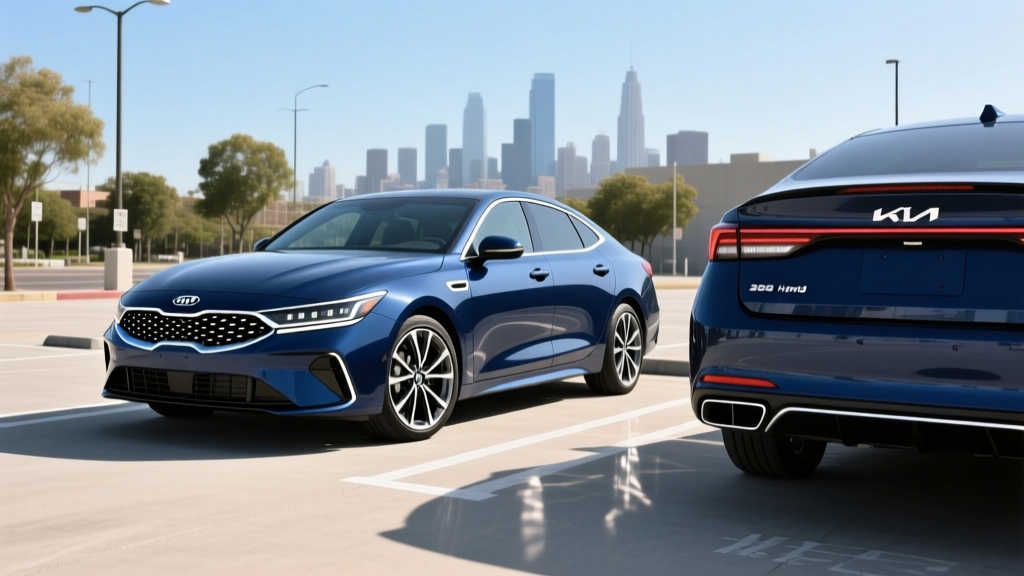
The Kia Optima Hybrid and Optima Plug-In Hybrid occupied a sweet spot in the midsize sedan market before Kia retired the nameplate after the 2020 model year, replacing it with the K5 (which dropped the hybrid variants in the U.S. market). For used-car shoppers in 2026, Optima Hybrid models remain compelling: real-world fuel economy that often beats the EPA sticker in city driving, a proven 2.0-liter hybrid powertrain, and a battery warranty that in many cases still has years of coverage remaining.
This guide covers every Kia Optima Hybrid model year, the conventional HEV versus the PHEV, exact EPA figures, powertrain specs, battery longevity, and whether these sedans still make financial sense against a full EV or a newer gas-only car.
Kia Optima Hybrid vs. Optima Plug-In Hybrid: What's the Difference?
Kia sold two distinct electrified Optima variants. Confusing them is the most common mistake used buyers make. Here is the fundamental distinction:
Optima Hybrid (HEV)
A conventional hybrid. It has a small battery (typically 1.62 kWh in later model years) that charges itself through regenerative braking and the gasoline engine. You never plug it in. It cannot drive on electric power alone for meaningful distances. Its job is to maximize MPG.
Optima Plug-In Hybrid (PHEV)
A plug-in hybrid with a larger battery (9.8 kWh) that you charge from a wall outlet or Level 2 charger. It delivers roughly 27–29 miles of electric-only driving before the gasoline engine engages. After the battery depletes, it operates as a conventional hybrid. It qualifies for a used-EV federal tax credit when purchased from a dealer.
If you have access to home or workplace charging and a commute under 30 miles, the PHEV can eliminate most of your gasoline use. If you lack reliable charging access, the conventional HEV is the correct choice — it requires zero behavior change from a gas car.
Fuel Economy: EPA MPG and Real-World Numbers
The Optima Hybrid's fuel economy improved across its production run. The final generation (2017–2020) with the 2.0-liter GDI engine and 6-speed automatic is the most efficient. Here are the official EPA figures from fueleconomy.gov:
| Model | City MPG | Highway MPG | Combined MPG | MPGe (PHEV EV mode) |
|---|---|---|---|---|
| 2020 Optima Hybrid EX | 40 | 39 | 40 | — |
| 2020 Optima Hybrid EX Premium | 39 | 37 | 38 | — |
| 2019 Optima Plug-In Hybrid | 38 (hybrid mode) | 37 (hybrid mode) | 38 (hybrid mode) | 101 MPGe |
| 2018 Optima Plug-In Hybrid | 38 | 37 | 38 | 103 MPGe |
| 2017 Optima Hybrid | 39 | 43 | 41 | — |
Real-World MPG: City vs. Highway
Hybrids shine in stop-and-go traffic where regenerative braking recovers energy and the engine shuts off at stops. In real-world driving, Optima Hybrid owners consistently report 42–46 MPG in city driving, exceeding the EPA city estimate. Highway driving at 75+ mph typically yields 34–37 MPG, below the EPA highway figure, because the electric motor provides less assist at sustained high speeds and aerodynamic drag dominates.
If your commute is mostly urban or suburban with traffic lights, expect to beat the sticker. If you drive 70%+ highway miles at high speed, expect to fall short. This is the opposite pattern of a conventional gas car.
Powertrain Specs: Engine, Motor, and Combined Output
| Specification | Optima Hybrid (HEV) | Optima Plug-In Hybrid (PHEV) |
|---|---|---|
| Engine | 2.0L GDI 4-cylinder | 2.0L GDI 4-cylinder |
| Engine HP | 154 hp | 154 hp |
| Electric Motor | 38 kW (51 hp) | 50 kW (67 hp) |
| Combined System HP | 192 hp | 202 hp |
| Transmission | 6-speed automatic | 6-speed automatic |
| 0–60 mph | ~8.3 seconds | ~7.9 seconds |
| Drivetrain | FWD | FWD |
The PHEV's larger, more powerful electric motor gives it a slight acceleration advantage and enables genuine electric-only driving. The conventional HEV's smaller motor assists the engine but cannot propel the car independently beyond very low-speed creep.
PHEV Electric-Only Range, Battery, and Charging
The Optima Plug-In Hybrid carries a 9.8 kWh lithium-polymer battery, of which approximately 7.8 kWh is usable (the system reserves a buffer to protect longevity). Here is what that delivers:
Optima PHEV Electric Range
EPA electric-only range: 27–29 miles (varies by model year and wheel size).
Real-world expectation: 22–26 miles in mixed driving; 18–22 miles at highway speeds or in cold weather (below 40°F). After battery depletion, total range extends to approximately 430+ miles on a full tank plus full charge.
| Charging Level | Power | Time (0–100%) | Notes |
|---|---|---|---|
| Level 1 (120V household) | ~1.4 kW | ~9 hours | Overnight from any standard outlet |
| Level 2 (240V) | 3.3 kW | ~3 hours | Home wallbox or public Level 2 |
| DC Fast Charge | — | — | Not supported. No DC fast-charge port. |
A critical point for PHEV shoppers: the Optima PHEV's onboard charger maxes out at 3.3 kW. Even if you plug into a 7.2 kW or 11.5 kW Level 2 station, the car will only accept 3.3 kW. This is standard for PHEVs of this era but means a full charge still takes roughly three hours. The conventional HEV, of course, has no charge port at all — it refuels exclusively at the gas pump.
Battery Warranty, Reliability, and Replacement Cost
Hybrid battery longevity is the number-one concern for used hybrid buyers, and for good reason: a replacement traction battery is a significant expense. Here is what Kia provides and what the data shows:
Kia Hybrid Battery Warranty
Original coverage: 10 years / 100,000 miles (whichever comes first) for the hybrid battery pack, applicable to the original owner in most states.
Transferability: In CARB-adopting states (California, New York, Massachusetts, and others), the hybrid battery warranty extends to 15 years / 150,000 miles and is fully transferable to subsequent owners. In non-CARB states, the transferable warranty drops to 10 years / 100,000 miles from the original in-service date.
Hybrid system components (inverter, motor, control unit): 10 years / 100,000 miles, transferable.
Real-World Reliability
The Optima Hybrid's 2.0L Nu engine and TMED (Transmission-Mounted Electric Device) hybrid system have proven durable. The most common issues reported by owners and tracked by NHTSA are not battery-related — they involve conventional components like brake actuators and infotainment glitches. The lithium-polymer battery pack, manufactured by LG Chem, has a strong longevity record in the Optima and the mechanically similar Hyundai Sonata Hybrid.
Based on fleet data and owner reports, Optima Hybrid batteries typically retain 85–92% of original capacity at 100,000 miles. Significant degradation (below 70% capacity, the threshold where Kia considers the battery defective under warranty) is uncommon before 150,000+ miles.
Battery Replacement Cost
If your battery does fail outside of warranty, expect these approximate costs in 2026:
- Optima HEV battery pack (1.62 kWh): $2,200–$3,500 (parts) + $400–$800 (labor) = $2,600–$4,300 total
- Optima PHEV battery pack (9.8 kWh): $4,500–$6,800 (parts) + $500–$900 (labor) = $5,000–$7,700 total
Refurbished and aftermarket packs are increasingly available from third-party suppliers at 30–50% below OEM pricing. For a 2017–2018 model, a refurbished pack may be the most economical route.
Used Pricing and Federal Tax Credit Eligibility
As of early 2026, used Kia Optima Hybrid models trade in these approximate ranges depending on mileage, condition, and trim:
| Model Year | Trim | Typical Price Range |
|---|---|---|
| 2020 | Optima Hybrid EX | $17,000–$21,000 |
| 2020 | Optima Hybrid EX Premium | $19,000–$23,500 |
| 2019 | Optima Plug-In Hybrid EX | $16,500–$20,500 |
| 2018 | Optima Plug-In Hybrid EX | $14,000–$18,000 |
| 2017 | Optima Hybrid Premium | $12,500–$16,000 |
Used-EV Federal Tax Credit (§25E)
The Optima Plug-In Hybrid may qualify for the federal used clean vehicle credit under IRS §25E, which provides up to $4,000 or 30% of the sale price (whichever is lower) for a qualifying used plug-in vehicle purchased from a licensed dealer. Key requirements:
- Vehicle price cap: Sale price must be $25,000 or less (the Optima PHEV typically qualifies)
- Buyer income cap: AGI must not exceed $75,000 (single), $112,500 (head of household), or $150,000 (joint)
- Model year requirement: Vehicle must be at least two model years old (all Optima PHEVs qualify)
- Dealer sale: Must be purchased from a licensed dealer, not a private party
- Battery capacity: Must have at least 7 kWh (the 9.8 kWh Optima PHEV qualifies; the 1.62 kWh HEV does not)
- One-time use: You can only claim this credit once every three years
The conventional Optima Hybrid (HEV) does not qualify for any federal tax credit — its battery is too small. State incentives for used hybrids vary by jurisdiction; check your state's energy office or DMV for current programs.
Optima Hybrid (HEV) Pros & Cons
Pros:
- 40+ MPG combined; 42–46 MPG achievable in city driving
- No plug-in charging required — zero lifestyle change
- Strong battery warranty with potential remaining coverage
- Comfortable midsize sedan with good cargo space (15.9 cu ft trunk)
- Proven, low-complexity powertrain
Cons:
- Discontinued after 2020 — no new models available
- No federal tax credit eligibility for the HEV
- 6-speed automatic feels less refined than e-CVT competitors
- Highway MPG drops below EPA at sustained 75+ mph
Optima Plug-In Hybrid (PHEV) Pros & Cons
Pros:
- 27–29 miles electric-only range covers most commutes
- May qualify for up to $4,000 used-EV tax credit (§25E)
- 202 combined HP — the quickest Optima Hybrid variant
- 430+ total range eliminates range anxiety entirely
- Charges on any standard 120V outlet overnight
Cons:
- No DC fast charging — 3.3 kW Level 2 max
- Trunk space reduced to 9.9 cu ft due to larger battery
- Requires home/work charging access to realize fuel savings
- PHEV battery replacement is more expensive ($5,000–$7,700)
- Limited used inventory compared to the conventional HEV
Optima Hybrid vs. Full EV vs. Gas Car: Which Fits You?
Choose the Optima Hybrid (HEV) if:
- You want maximum MPG with zero charging infrastructure
- You live in an apartment or lack reliable home charging access
- Your budget is $12,000–$21,000 for a used midsize sedan
- You drive 10,000–15,000 miles per year and want fuel savings without behavioral change
Choose the Optima Plug-In Hybrid (PHEV) if:
- You can install a Level 2 charger at home or have workplace charging
- Your daily commute is under 30 miles round-trip
- You want EV-like daily driving with gas-engine backup for road trips
- You meet the income requirements for the §25E used-EV credit (up to $4,000 off)
Choose a Full EV (e.g., used Chevy Bolt, Tesla Model 3) if:
- You have reliable home Level 2 charging
- You want to eliminate gasoline entirely and minimize maintenance
- Your daily driving is under 200 miles and you road-trip infrequently
- You prioritize the lowest per-mile fuel cost (electricity vs. gasoline)
Choose a Gas-Only Car if:
- You drive primarily highway miles at high speed (hybrid advantage diminishes)
- Your budget is under $10,000 and you want the lowest upfront cost
- You drive fewer than 7,000 miles per year (fuel savings won't offset hybrid premium)
Frequently Asked Questions
How many MPG does the Kia Optima Hybrid get?
The 2020 Kia Optima Hybrid EX is EPA-rated at 40 city / 39 highway / 40 combined MPG. In real-world city driving, owners regularly report 42–46 MPG thanks to regenerative braking. Highway driving at 75+ mph typically yields 34–37 MPG. Earlier model years (2011–2016) are rated lower, typically 35–38 combined.
How far can the Optima Plug-In Hybrid go on electric only?
The EPA rates the Optima PHEV at 27–29 miles of electric-only range (depending on model year). In real-world conditions, expect 22–26 miles in mixed driving, and as few as 18–22 miles in cold weather or at sustained highway speeds. After the battery depletes, the car operates as a conventional hybrid for an additional 400+ miles on the gasoline tank.
Is the Kia Optima Hybrid reliable, and what does battery replacement cost?
Yes. The 2.0L hybrid powertrain has a strong reliability record, and the LG Chem battery pack typically retains 85–92% capacity at 100,000 miles. Kia's hybrid battery warranty covers 10 years/100,000 miles (15 years/150,000 miles in CARB states). Out-of-warranty replacement costs approximately $2,600–$4,300 for the HEV and $5,000–$7,700 for the PHEV, with refurbished options available at lower cost.
Does the Kia Optima Hybrid qualify for any tax credit?
The conventional Optima Hybrid (HEV) does not qualify for any federal tax credit. The Optima Plug-In Hybrid (PHEV) may qualify for the federal used clean vehicle credit (§25E) of up to $4,000 when purchased from a dealer, provided the sale price is $25,000 or less and the buyer's AGI falls within the income caps ($75,000 single / $150,000 joint). Consult a tax professional and review current IRS guidance before relying on credit eligibility.
Can I still buy a new Kia Optima Hybrid?
No. Kia discontinued the Optima after the 2020 model year, replacing it with the K5 sedan, which does not offer a hybrid variant in the U.S. market. If you want a new Kia hybrid sedan, the closest current equivalent is the Kia K5 (gas-only) or the Kia Niro Hybrid (a crossover). For a midsize hybrid sedan, the Toyota Camry Hybrid and Hyundai Sonata Hybrid remain in production as of 2026.
Does the Optima Hybrid need to be plugged in?
No. The conventional Optima Hybrid (HEV) charges its own battery through regenerative braking and the gasoline engine. You never plug it in. Only the Optima Plug-In Hybrid (PHEV) has a charge port and benefits from being plugged in — though it will still operate as a regular hybrid if you never charge it.
Final Assessment: Is a Used Optima Hybrid Worth It in 2026?
For buyers who want a proven, comfortable midsize hybrid sedan without the complexity or cost of a full EV, the used Kia Optima Hybrid is a strong value proposition. The conventional HEV delivers genuine 40+ MPG with no lifestyle changes, and many 2017–2020 examples still carry meaningful factory battery warranty coverage.
The PHEV variant is the smarter financial play if you can charge at home and meet the §25E income requirements — the combination of 27+ miles of electric commuting and a potential $4,000 tax credit makes it one of the lowest-cost ways to drive mostly on electricity while retaining gas-engine flexibility for road trips.
The main trade-off is that the Optima is discontinued, meaning no new models, potential parts scarcity in the distant future, and a shrinking dealer service footprint as Kia shifts focus to the K5 and its electrified SUV lineup. For buyers who prioritize long-term parts availability and warranty simplicity, a current-production Toyota Camry Hybrid or Hyundai Sonata Hybrid may be worth the premium. For those who want the most MPG per dollar spent, the used Optima Hybrid remains difficult to beat.