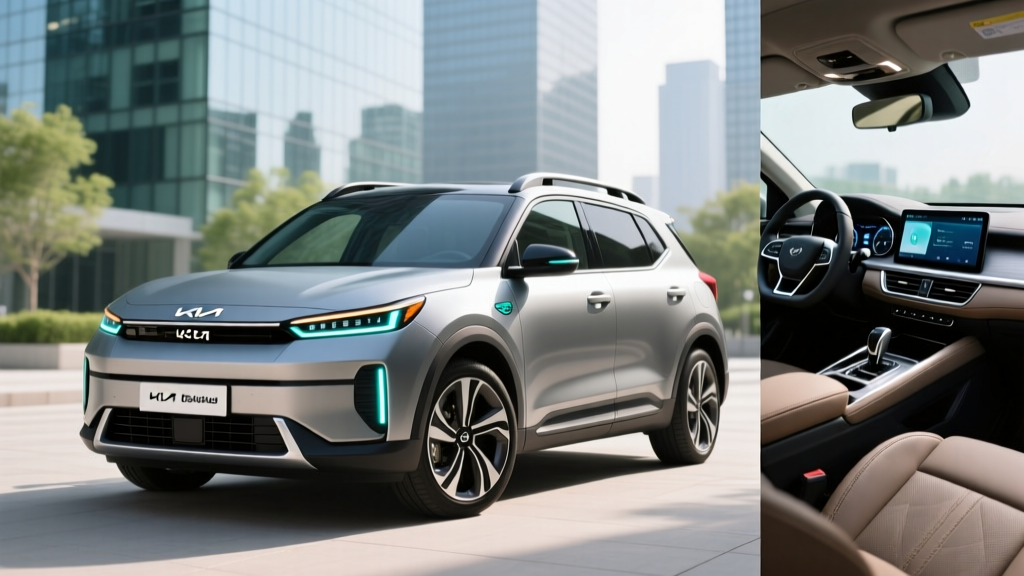
The Kia Niro occupies a specific niche: a compact crossover that offers conventional hybrid (HEV), plug-in hybrid (PHEV), and full electric (EV) powertrains on the same platform. For buyers searching for a kia niro suv hybrid, the decision starts with a fundamental question — do you want to plug in, or do you want a vehicle that manages its own battery through regenerative braking and engine power? The 2026 Niro Hybrid and Niro Plug-in Hybrid answer both, but with very different ownership experiences.
This guide breaks down the 2026 Kia Niro HEV and PHEV with exact EPA figures, real-world efficiency observations, battery longevity data, and tax-credit eligibility so you can match the right powertrain to your driving pattern.
HEV vs PHEV: Which Kia Niro Powertrain Fits You?
Conventional Hybrid (HEV): The Niro HEV pairs a 1.6L four-cylinder engine with a small electric motor and a 1.56 kWh lithium-ion battery. You never plug it in. The battery charges through regenerative braking and engine power. It operates as a seamless hybrid — the electric motor assists at low speeds and during acceleration, the engine handles highway cruising, and the system switches between them automatically.
Plug-in Hybrid (PHEV): The Niro PHEV uses a larger 11.1 kWh battery and a more powerful electric motor (83 hp vs 43 hp in the HEV). You plug it in to charge (Level 1 or Level 2 AC — no DC fast charging). It delivers approximately 33 miles of electric-only driving before the gasoline engine engages, functioning as a conventional hybrid afterward.
| Specification | Niro HEV | Niro PHEV |
|---|---|---|
| Engine | 1.6L GDI 4-cyl | 1.6L GDI 4-cyl |
| Electric Motor Output | 43 hp / 125 lb-ft | 83 hp / 195 lb-ft |
| Combined System HP | 139 hp | 180 hp |
| Battery Capacity | 1.56 kWh | 11.1 kWh |
| Plug-in Required? | No | Yes (for EV range) |
| DC Fast Charging | N/A | Not available |
| Transmission | 6-speed DCT | 6-speed DCT |
| Drivetrain | FWD | FWD |
The practical difference: If you drive fewer than 30 miles round-trip daily and have access to a standard 120V outlet or a Level 2 home charger, the PHEV lets you commute almost entirely on electricity — the engine might not start for weeks. If you lack reliable plug-in access or regularly drive longer distances, the HEV delivers strong efficiency without any infrastructure requirement.
Fuel Economy: EPA Ratings and Real-World MPG
| Model | City MPG | Highway MPG | Combined MPG | MPGe (PHEV EV mode) |
|---|---|---|---|---|
| Niro HEV (LX/EX) | 53 | 54 | 53 | N/A |
| Niro HEV (SX Touring) | 49 | 52 | 50 | N/A |
| Niro PHEV (hybrid mode) | 48 | 45 | 46 | 108 MPGe |
Data sourced from fueleconomy.gov.
Real-World MPG: What Owners Actually See
Kia's hybrid system excels in city driving, where regenerative braking and electric-motor assist do the heaviest work. In real-world mixed driving, many Niro HEV owners report 50–56 MPG combined, with city figures occasionally exceeding the EPA estimate — a common trait of parallel hybrids that the EPA test cycle doesn't fully capture.
Highway efficiency is more variable. At sustained 75–80 mph speeds, expect the Niro HEV to drop to roughly 44–48 MPG, as aerodynamic drag and the relatively small 1.6L engine working harder reduce the hybrid system's advantage. Cold weather (below 35°F) typically reduces hybrid efficiency by 8–12% due to increased engine warm-up time and reduced battery output.
For the PHEV, real-world electric-only range depends heavily on temperature and driving style. The EPA rates it at 33 miles on a full charge, but expect 25–30 miles in mild conditions and as low as 18–22 miles in freezing weather with heater use. Once the battery depletes, the PHEV operates as a conventional hybrid at approximately 46 MPG combined.
PHEV Electric Range, Charging Times, and Battery Specs
The Niro PHEV's 11.1 kWh battery delivers an EPA-rated 33 miles of electric-only range. Total combined range (electric + gasoline) exceeds 430 miles, eliminating range anxiety entirely.
| Charging Method | Power | 0–100% Time | Notes |
|---|---|---|---|
| Level 1 (120V household) | ~1.4 kW | ~9 hours | Standard outlet; overnight |
| Level 2 (240V home/public) | ~3.3 kW (onboard limit) | ~2 hr 45 min | Requires J1772 connector |
| DC Fast Charging | Not supported | N/A | CCS/NACS not available |
Critical detail: The Niro PHEV's onboard charger is limited to 3.3 kW. Even connected to a 7.2 kW or 11.5 kW Level 2 station, the car will only accept 3.3 kW. This is adequate for overnight home charging but means public Level 2 chargers won't fill the battery significantly faster than a dedicated home unit.
The Niro PHEV uses a standard J1772 connector for AC charging. It does not support DC fast charging — a limitation shared with most PHEVs in this price class, as the relatively small battery doesn't justify the added cost and weight of DC hardware.
2026 Pricing, Trims, and Tax-Credit Eligibility
| Model | Trim | MSRP | Federal Tax Credit |
|---|---|---|---|
| HEV | LX | $28,590 | None |
| HEV | EX | $31,090 | None |
| HEV | SX Touring | $35,490 | None |
| PHEV | EX | $35,890 | Up to $3,750* |
| PHEV | SX | $38,590 | Up to $3,750* |
*PHEV federal credit is not the full $7,500 available to qualifying BEVs. Under current IRS §30D rules, PHEVs must meet battery-capacity, critical-mineral sourcing, and battery-component requirements to qualify. The Niro PHEV's partial credit eligibility depends on supply-chain compliance that changes annually. Income caps ($150K single / $300K joint) and the point-of-sale transfer option apply. Verify current eligibility at irs.gov before purchasing.
The conventional Niro HEV does not qualify for any federal tax credit. Under §30D, only plug-in electric vehicles (PHEVs with ≥7 kWh batteries and BEVs) are eligible. The HEV's 1.56 kWh battery falls well below the threshold.
Some states and utilities offer additional rebates for PHEVs — California's CVRP, Colorado's state credit, and various utility-company incentives may apply. Check your state energy office and local utility for current programs, as these vary by jurisdiction and are subject to funding availability.
Battery Warranty, Longevity, and Replacement Cost
Kia Hybrid/PHEV Battery Warranty: 10 years / 100,000 miles (whichever comes first), covering defects and capacity loss below a manufacturer-defined threshold. The hybrid system components (motor, inverter, converter) carry the same 10-year/100,000-mile coverage.
General Powertrain Warranty: 10 years / 100,000 miles.
Bumper-to-Bumper: 5 years / 60,000 miles.
How Long Do Niro Hybrid Batteries Last?
Kia's lithium-ion hybrid batteries are engineered for the vehicle's lifespan. The HEV's small 1.56 kWh battery undergoes shallow charge/discharge cycles (typically operating between 40–60% state of charge), which minimizes degradation. The PHEV's 11.1 kWh battery sees deeper cycles but benefits from active thermal management.
Industry data from hybrid vehicles in service for 8–12 years shows battery replacement rates below 5% within the warranty period. Most hybrid batteries outlast 150,000+ miles before capacity loss becomes noticeable.
Battery Replacement Cost
If replacement is needed outside warranty:
- Niro HEV battery pack: $2,000–$3,500 (parts and labor)
- Niro PHEV battery pack: $5,000–$8,000 (parts and labor)
These figures are estimates based on current Kia hybrid parts pricing and may vary by dealer and region. Refurbished or aftermarket battery options may become available as the Niro platform ages, reducing long-term costs.
Reliability and Safety Ratings
The Kia Niro platform has been in production since 2017, giving Kia extensive field data on the hybrid powertrain's durability. The 1.6L GDI engine and 6-speed dual-clutch transmission are proven components shared across Hyundai-Kia's hybrid lineup.
The Niro has earned strong safety credentials. Check current ratings at IIHS and NHTSA for the latest crash-test results. Standard driver-assistance features include forward collision-avoidance assist, lane-keeping assist, blind-spot collision warning, and rear cross-traffic collision-avoidance — all part of Kia's Drive Wise suite.
Important distinction: These are SAE Level 1–2 driver-assistance features. They assist with steering and braking but require full driver engagement at all times. The Niro does not offer hands-free highway driving systems like GM's Super Cruise or Ford's BlueCruise.
Who Should Choose the Niro Hybrid vs PHEV vs Full EV?
Choose the Niro HEV If:
- You lack access to home or workplace charging
- You want maximum simplicity — no plugs, no apps, no charging planning
- Your daily driving exceeds 40+ miles consistently
- You want the lowest purchase price in the Niro lineup
- You primarily drive in city traffic where hybrid efficiency peaks
Choose the Niro PHEV If:
- You have reliable overnight charging (even a standard 120V outlet works)
- Your daily commute is under 30 miles round-trip
- You want electric driving for commutes but gas flexibility for road trips
- You can benefit from partial federal or state PHEV tax credits
- You want stronger acceleration (180 hp combined vs 139 hp)
When a Full EV Makes More Sense
If you have Level 2 home charging and your daily driving stays under 200 miles, a full EV like the Niro EV (239-mile EPA range) or competitors like the Hyundai Ioniq 5 or Chevrolet Equinox EV will deliver lower fuel costs, fewer moving parts, and full $7,500 federal tax-credit eligibility (subject to §30D sourcing and income rules). The PHEV is a bridge — it makes sense when charging access is partial or when you regularly exceed EV range.
Frequently Asked Questions
How many MPG does the Kia Niro hybrid get?
The 2026 Niro HEV (LX/EX trims) is EPA-rated at 53 city / 54 highway / 53 combined MPG. The SX Touring trim, with larger wheels and additional equipment, drops to 49/52/50 MPG. Real-world city driving often matches or slightly exceeds these figures, while sustained highway speeds above 75 mph typically yield 44–48 MPG.
How far can the Kia Niro PHEV go on electric only?
The EPA rates the Niro PHEV at 33 miles of electric-only range on a full charge. Real-world results vary: expect 25–30 miles in moderate temperatures with gentle driving, and 18–22 miles in cold weather with cabin heating. After the battery depletes, the vehicle operates as a conventional hybrid at 46 MPG combined.
Does the Kia Niro hybrid qualify for a tax credit?
The conventional Niro HEV does not qualify for any federal tax credit — it lacks the minimum battery capacity required under IRS §30D. The Niro PHEV may qualify for a partial federal credit (up to $3,750 based on current sourcing compliance), subject to buyer income caps ($150K single / $300K joint) and point-of-sale transfer rules. State and utility incentives may also apply. Always verify at irs.gov before purchase.
Is the Kia Niro hybrid reliable? What about battery replacement cost?
The Niro hybrid powertrain has been in production since 2017 with strong reliability data. Kia covers the hybrid battery for 10 years / 100,000 miles. Out-of-warranty replacement costs approximately $2,000–$3,500 for the HEV and $5,000–$8,000 for the PHEV. Most hybrid batteries last well beyond 150,000 miles based on industry failure-rate data.
Can I plug in the regular Kia Niro Hybrid?
No. The conventional Niro HEV has no plug and no charging port. Its 1.56 kWh battery charges exclusively through regenerative braking and the gasoline engine. Only the Niro PHEV and Niro EV have plug-in capability.
How long does it take to charge the Niro PHEV at home?
On a standard 120V household outlet (Level 1), a full charge takes approximately 9 hours. On a 240V Level 2 home charger, it takes about 2 hours and 45 minutes. The Niro PHEV's onboard charger is limited to 3.3 kW, so higher-powered public Level 2 stations will not charge it faster.