Quick Verdict: The Efficiency Benchmark Under $30K
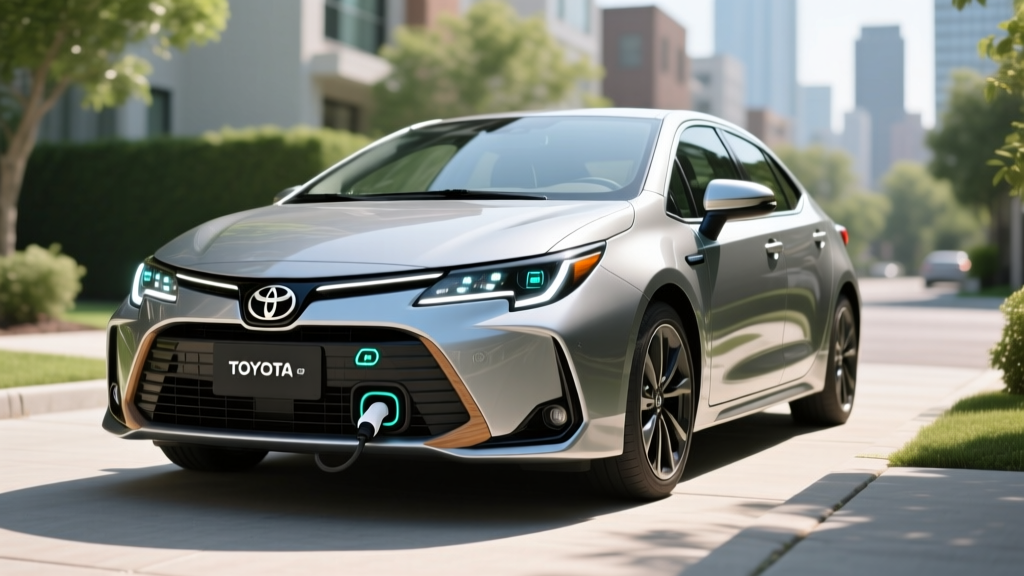
The Toyota Corolla Hybrid remains one of the most fuel-efficient vehicles you can buy without plugging in. For 2026, Toyota continues the formula that has made this compact sedan a staple for hypermilers and budget-conscious commuters: a proven series-parallel hybrid system, standard all-wheel drive on select trims, and an EPA-estimated 50 MPG combined that routinely gets beaten in real-world city driving. Starting around $24,000, it undercuts nearly every PHEV and EV on price while delivering fuel costs that rival plug-in alternatives for drivers without home charging access.
This guide covers everything a prospective buyer needs — exact MPG by trim, powertrain specs, battery longevity data, tax credit reality, and how the Corolla Hybrid stacks up against PHEVs and full EVs for different driving patterns.
EPA Fuel Economy and Real-World MPG
The 2026 Corolla Hybrid is rated by the EPA at 53 MPG city / 46 MPG highway / 50 MPG combined for the LE FWD trim. The AWD-equipped trims see a slight reduction due to the rear motor's drag and added weight, landing at 51 MPG city / 44 MPG highway / 47 MPG combined. These figures place the Corolla Hybrid at the top of the compact sedan segment, ahead of the Hyundai Elantra Hybrid (54 combined for the Blue trim) and well above the Honda Civic Hybrid (49 combined).
| Trim | Drivetrain | City MPG | Highway MPG | Combined MPG |
|---|---|---|---|---|
| LE | FWD | 53 | 46 | 50 |
| LE | AWD | 51 | 44 | 47 |
| SE | AWD | 50 | 43 | 47 |
| XLE | AWD | 50 | 43 | 46 |
HEV vs PHEV: What the Corolla Hybrid Is (and Isn't)
A critical distinction for shoppers: the Corolla Hybrid is a conventional hybrid electric vehicle (HEV). It does not plug in. There is no Corolla Plug-In Hybrid in Toyota's 2026 lineup. The small traction battery (approximately 1.1 kWh usable) charges entirely through regenerative braking and the gasoline engine. You fuel it like any other car — at a gas station — and the hybrid system handles the rest.
| Attribute | HEV (Corolla Hybrid) | PHEV (e.g., Prius Prime) | BEV (e.g., Tesla Model 3) |
|---|---|---|---|
| Plugs in? | No | Yes (Level 1/2) | Yes (Level 1/2/DC) |
| Electric-only range | ~1 mile at low speed | 35–44 miles | 250–360 miles |
| Fuel/energy source | Gasoline only | Gasoline + electricity | Electricity only |
| Home charging needed? | No | Recommended for benefit | Essential |
| Upfront cost | Lowest (~$24K) | Mid (~$33K) | Highest (~$39K+) |
| Federal tax credit | None | Up to $7,500 (§30D) | Up to $7,500 (§30D) |
| Best for | No home charging, budget-first | Short commute + home charger | Home charging + low running cost |
If you can install a Level 2 home charger and your daily commute is under 40 miles, a PHEV like the Toyota Prius Prime (44 miles electric-only, 48 MPG combined on gas) may save more fuel overall. But if you live in an apartment without charging access, drive long highway routes, or simply want the lowest purchase price with excellent efficiency, the Corolla HEV is the pragmatic choice.
Powertrain, Battery, and Performance
The 2026 Corolla Hybrid uses Toyota's fifth-generation hybrid system: a 1.8-liter Atkinson-cycle four-cylinder engine paired with two front-mounted motor-generators and, on AWD trims, a rear-mounted electric motor. The system prioritizes efficiency over acceleration, though the latest generation has improved responsiveness.
| Specification | Detail |
|---|---|
| Engine | 1.8L 4-cylinder Atkinson-cycle |
| Engine horsepower | 96 HP @ 5,200 RPM |
| Front motor output | 94 HP / 139 lb-ft torque |
| Rear motor (AWD only) | 41 HP / 76 lb-ft torque |
| Net combined system HP | 138 HP |
| Transmission | eCVT (planetary gearset) |
| Battery chemistry | Lithium-ion (NiMH on base LE) |
| Traction battery capacity | ~1.1 kWh usable |
| 0–60 MPH | ~9.0 seconds |
| Fuel tank | 11.4 gallons |
| Total driving range | ~520–570 miles |
The 138 HP output is modest. The Corolla Hybrid is not a performance car — it's an efficiency tool. Merging onto highways requires planning, and passing at speed demands a firm foot. The eCVT eliminates shift shock but produces the characteristic engine drone under hard acceleration. For daily commuting and city driving, the electric motor's instant torque (139 lb-ft from the front motor alone) makes the car feel adequately responsive off the line.
The AWD system is not a traditional mechanical setup. Instead, the rear electric motor engages automatically when the front wheels slip — on wet roads, light snow, or gravel. It operates up to approximately 43 MPH and adds roughly 165 lbs to the vehicle. This is a traction-aid system, not an off-road solution, but it meaningfully improves confidence in inclement weather compared to FWD-only competitors.
Pricing, Trims, and Tax Credit Eligibility
The 2026 Corolla Hybrid lineup spans four core configurations:
| Trim | Drivetrain | MSRP | Key Features |
|---|---|---|---|
| LE | FWD | $24,225 | 8" touchscreen, TSS 3.0, wireless CarPlay/Android Auto |
| LE | AWD | $25,625 | Same as LE FWD + electronic AWD |
| SE | AWD | $27,225 | Sport-tuned suspension, 16" alloy wheels, paddle shifters |
| XLE | AWD | $29,325 | SofTex seats, 10.5" display, wireless charging, JBL audio |
For context: a buyer choosing the Corolla Hybrid LE AWD at $25,625 over a comparable PHEV at ~$33,500 (even after a $7,500 credit) still saves roughly $400 upfront. The PHEV's electric-only commuting may save more fuel over time, but only if you have reliable home charging and a short commute. For apartment dwellers or high-mileage highway drivers, the HEV's simplicity wins.
Battery Longevity, Warranty, and Replacement Cost
Hybrid battery anxiety is the most common concern among first-time hybrid buyers. Here's the data:
Toyota's hybrid batteries have demonstrated exceptional longevity in fleet and owner data. The Prius — which shares the same fundamental hybrid architecture — has documented cases of original batteries lasting 200,000+ miles. The Corolla Hybrid's lithium-ion pack (on most trims) is smaller and less stressed than a PHEV or BEV battery because it operates within a narrow state-of-charge window (roughly 40–80% SoC), avoiding the deep cycles that accelerate degradation in larger batteries.
| Metric | Detail |
|---|---|
| Traction battery warranty | 10 years / 150,000 miles |
| Hybrid system warranty | 10 years / 150,000 miles |
| Expected battery lifespan | 150,000–250,000+ miles (based on Prius fleet data) |
| OEM replacement cost (out of warranty) | $2,500–$4,000 (battery + labor) |
| Refurbished/remanufactured option | $1,200–$2,000 (aftermarket suppliers) |
| Individual cell/module repair | $500–$1,200 (specialist hybrid shops) |
If the battery does fail outside warranty — most likely at 12–15+ years of age — replacement is significantly cheaper than a BEV battery swap ($8,000–$20,000). The Corolla Hybrid's small pack and Toyota's parts availability keep costs manageable. Independent hybrid specialists can also replace individual modules rather than the entire pack, further reducing expense.
Safety, Tech, and Daily Livability
Every 2026 Corolla Hybrid includes Toyota Safety Sense 3.0 as standard equipment: pre-collision braking with pedestrian detection, full-speed adaptive cruise control, lane departure alert with steering assist, lane tracing assist, automatic high beams, and road sign assist. The Corolla has consistently earned top marks from the IIHS and NHTSA in prior model years.
The infotainment system uses Toyota's latest interface on an 8-inch (LE/SE) or 10.5-inch (XLE) touchscreen. Wireless Apple CarPlay and Android Auto are standard across all trims. A Wi-Fi hotspot, available on higher trims, supports over-the-air updates. The digital gauge cluster on SE and XLE trims includes a hybrid energy flow display showing real-time power split between engine and motor — useful for drivers who want to optimize their technique for maximum MPG.
Cargo space is 13.1 cubic feet — competitive for the segment but smaller than some rivals (the Civic sedan offers 14.8 cu ft). The hybrid battery sits under the rear seat, preserving trunk volume compared to earlier-generation hybrids that sacrificed cargo space. Rear seat legroom is adequate for adults on shorter trips but tight for anyone over 6 feet on long drives.
Who Should Buy the Corolla Hybrid?
✓ Choose the Corolla Hybrid If:
- You lack access to home or workplace charging (apartment, street parking)
- Your budget is under $30K and you want maximum MPG
- You drive a mix of city and highway with no single dominant pattern
- You want AWD for snow/rain without an SUV's price and fuel penalty
- You plan to keep the car 8–10+ years and value proven reliability
- You want minimal ownership complexity — no charging cables, no plug-in routines
✗ Look Elsewhere If:
- You have home charging and a sub-40-mile commute (a PHEV saves more fuel)
- You want electric-only driving for emissions or HOV lane access
- You prioritize acceleration — 9-second 0–60 is leisurely
- You need more than 13 cu ft of cargo space
- You want the lowest possible cost-per-mile (a BEV with home solar wins)
- You want a federal tax credit to offset purchase price
Corolla Hybrid vs Alternatives: Decision Framework
| Metric | Corolla Hybrid LE AWD | Prius Prime (PHEV) | Model 3 RWD (BEV) | Civic Hybrid |
|---|---|---|---|---|
| MSRP | $25,625 | $33,695 | $39,630 | $29,845 |
| EPA Combined | 47 MPG | 48 MPG + 44 mi EV | 132 MPGe | 49 MPG |
| Annual fuel cost* | ~$1,050 | ~$600–$900 | ~$550 | ~$1,000 |
| Federal credit | $0 | Up to $7,500 | Up to $7,500 | $0 |
| Home charging needed | No | Recommended | Essential | No |
| AWD available | Yes (standard on AWD trims) | No | No (AWD costs more) | No |
| 0–60 MPH | ~9.0 sec | ~6.6 sec | ~5.8 sec | ~7.5 sec |
*Annual fuel cost estimates based on 15,000 miles/year, $3.40/gal gas, $0.15/kWh electricity. PHEV assumes 60% of miles on electricity. Source: fueleconomy.gov annual fuel cost tool.
Frequently Asked Questions
How many MPG does the Corolla Hybrid actually get?
The EPA rates the FWD Corolla Hybrid LE at 53 city / 46 highway / 50 combined. AWD trims are rated 51/44/47. In real-world city driving with frequent stops, many owners report 52–58 MPG. Sustained highway driving at 75+ MPH typically drops to 40–44 MPG. Cold weather reduces efficiency by 5–10% due to increased engine runtime for cabin heating.
Does the Corolla Hybrid plug in?
No. The Corolla Hybrid is a conventional HEV — it charges its small battery through regenerative braking and the gasoline engine. You never plug it in. If you want a plug-in Toyota, look at the Prius Prime (PHEV) or bZ4X (BEV).
How far can the Corolla Hybrid drive on electric only?
Effectively about 1 mile at very low speeds (under 25 MPH) on a fully charged hybrid battery. The system uses the electric motor primarily to assist the gas engine during acceleration and to enable engine-off coasting — not for sustained electric-only driving. This is fundamentally different from a PHEV, which can drive 35–44 miles on electricity alone.
Is the Corolla Hybrid reliable, and what does battery replacement cost?
Toyota's hybrid system is among the most proven in the industry, with two decades of Prius fleet data demonstrating battery lifespans of 200,000+ miles. The traction battery carries a 10-year/150,000-mile warranty. Out-of-warranty OEM replacement runs $2,500–$4,000, with refurbished options available for $1,200–$2,000. The hybrid system's simplicity (no traditional transmission, no starter motor, no alternator) actually means fewer failure points than a conventional gas car.
Does the Corolla Hybrid qualify for any tax credit?
Not at the federal level. The IRS §30D Clean Vehicle Credit applies only to plug-in vehicles (PHEVs and BEVs) that meet battery component sourcing, critical mineral, MSRP cap ($55,000 for sedans), and buyer income requirements. As a conventional HEV, the Corolla Hybrid is ineligible. A few states offer rebates for high-efficiency hybrids — check your state's energy or environmental agency for current programs.
Is AWD worth the MPG penalty on the Corolla Hybrid?
The AWD system costs you roughly 3 MPG combined (47 vs 50) and adds $1,400 to the MSRP. If you regularly drive on snow, ice, or rain-slicked roads, the electronic AWD provides meaningful traction improvement over FWD. The fuel economy penalty is small — about $60–$80 per year in additional gas at 15,000 miles/year. For most buyers in northern climates, the AWD upgrade is worth it. In dry, warm climates, FWD saves money at purchase and at the pump.
How does the Corolla Hybrid compare to a full EV for total cost of ownership?
Over 5 years at 15,000 miles/year, the Corolla Hybrid LE AWD costs roughly $31,000 total (purchase + fuel + estimated maintenance). A comparable BEV like the Tesla Model 3 RWD, even after a $7,500 federal credit, starts at a higher effective price but has lower per-mile energy costs. The BEV wins on 5-year TCO only if you have cheap home electricity (under $0.14/kWh) and avoid high public DC fast-charging rates. Without home charging, the Corolla Hybrid's total cost is often lower and always more predictable — no charging infrastructure investment required.