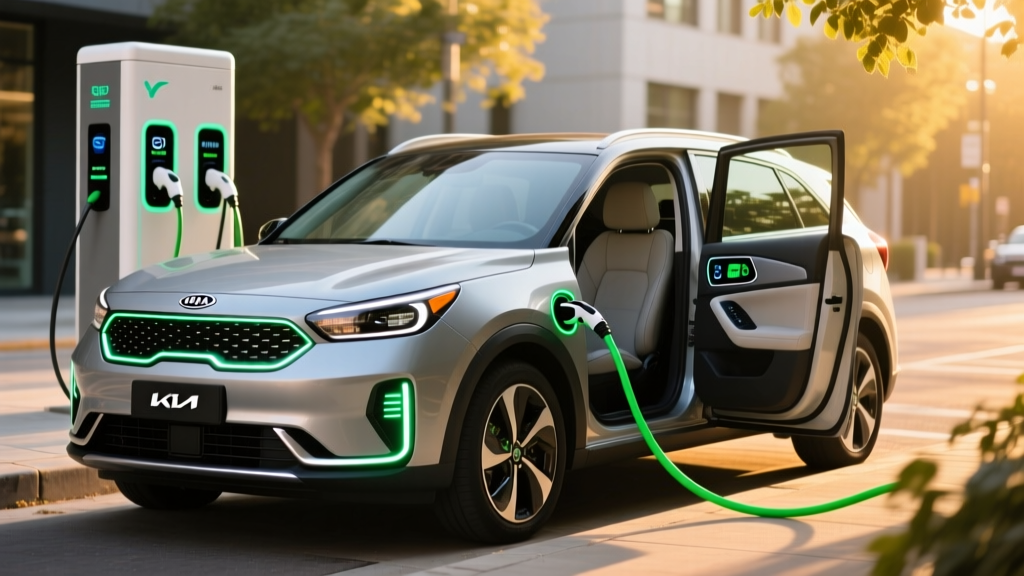
The Kia Niro occupies a rare sweet spot in the electrified-vehicle market: it's a practical small crossover that sips fuel like a compact sedan, yet it doesn't demand the lifestyle changes of a full battery-electric vehicle. For the 2026 model year, the Niro continues to offer two distinct electrified flavors — a conventional hybrid (HEV) and a plug-in hybrid (PHEV) — both built on the same efficient platform but aimed at very different buyers.
If you've been searching for a kia niro hybrid small suv, you're likely weighing fuel savings against purchase price, wondering whether the PHEV's plug-in capability is worth the premium, and asking the hard question: how long will that hybrid battery actually last? This guide answers all of that with exact EPA figures, real-world expectations, and ownership economics.
HEV vs PHEV: Which Kia Niro Is Right for You?
Before diving into specs, the most important distinction: the conventional Niro Hybrid (HEV) never needs to be plugged in. It generates electricity through regenerative braking and its gasoline engine, storing energy in a small battery that assists the motor. The Niro Plug-in Hybrid (PHEV) carries a larger battery that you charge from a wall outlet or public charger, giving you a meaningful electric-only driving range before the gas engine kicks in.
| Attribute | 2026 Niro Hybrid (HEV) | 2026 Niro Plug-in Hybrid (PHEV) |
|---|---|---|
| Needs to be plugged in? | No — self-charging | Yes — for electric-only range |
| Battery capacity | 1.56 kWh (small buffer) | 11.1 kWh usable |
| EPA electric-only range | N/A (EV assist only) | 33 miles |
| EPA combined MPG / MPGe | 53 MPG combined | 108 MPGe (elec+gas) / 48 MPG (gas only) |
| Total driving range | ~590 miles | ~560 miles (electric + gas) |
| DC fast charging | N/A | No — Level 2 AC only |
| Level 2 charge time (0–100%) | N/A | ~2 hours 45 minutes |
| Starting MSRP | $28,390 | $35,690 |
The decision framework is straightforward: if you have reliable access to a Level 2 home charger and your daily commute falls under 33 miles round-trip, the PHEV lets you drive almost entirely on electricity most days while keeping the gas engine for road trips. If you live in an apartment, street-park, or simply don't want to think about plugging in, the HEV delivers outstanding fuel economy with zero behavioral change.
Fuel Economy: EPA Ratings and Real-World MPG
The conventional Niro Hybrid's fuel economy is its headline act. The EPA rates the 2026 Niro HEV at 53 MPG city / 54 MPG highway / 53 MPG combined for the LX and EX trims, with the Touring trim dropping slightly to 49/46/48 MPG due to larger 18-inch wheels and added weight from premium features.
| Trim | City MPG | Highway MPG | Combined MPG |
|---|---|---|---|
| Niro HEV LX | 53 | 54 | 53 |
| Niro HEV EX | 53 | 54 | 53 |
| Niro HEV EX Touring | 49 | 46 | 48 |
| Niro PHEV (all trims, gas-only mode) | 49 | 47 | 48 |
Source: fueleconomy.gov
Real-world expectations: Hybrids typically outperform their EPA city rating in stop-and-go traffic because regenerative braking recaptures energy that a gas car wastes as heat. In mixed suburban driving, owners frequently report 54–58 MPG in warm weather. Highway-only driving at 75+ MPH tends to drop the HEV to around 46–49 MPG, as aerodynamic drag dominates and the electric motor provides less benefit. In cold weather (below 35°F), expect a 5–10% reduction as the engine runs more frequently to heat the cabin and the battery's chemical efficiency drops.
For the PHEV, the 33-mile electric-only range is EPA-rated and generally achievable in mild weather at moderate speeds. In our experience, cold-weather electric range drops to roughly 25–28 miles due to cabin heating demands and reduced battery efficiency. Once the battery depletes, the PHEV operates as a conventional hybrid at 48 MPG combined — still excellent, though slightly below the HEV due to the PHEV's additional ~250 lbs of battery mass.
Niro HEV: EPA combined 53 MPG → expect 48–58 MPG depending on driving style, temperature, and terrain. Total range: ~530–640 miles on 11.1-gallon tank.
Niro PHEV: EPA 33 mi electric → expect 25–35 mi depending on temperature and speed. After depletion: 48 MPG combined. Total range: ~560 miles.
Powertrain Specs: Engine, Motor, and Combined Output
| Specification | Niro HEV | Niro PHEV |
|---|---|---|
| Engine | 1.6L GDI 4-cylinder | 1.6L GDI 4-cylinder |
| Engine output | 104 hp / 109 lb-ft | 104 hp / 109 lb-ft |
| Electric motor output | 43 hp / 125 lb-ft | 83 hp / 195 lb-ft |
| Combined system output | 139 hp / 195 lb-ft | 180 hp / 195 lb-ft |
| Transmission | 6-speed dual-clutch (DCT) | 6-speed dual-clutch (DCT) |
| Drivetrain | FWD | FWD |
| 0–60 mph | ~9.3 seconds | ~7.4 seconds |
| Battery chemistry | Lithium-ion polymer | Lithium-ion polymer |
| Battery capacity | 1.56 kWh | 11.1 kWh |
| Towing capacity | Not rated | Not rated |
The Niro's 6-speed dual-clutch automatic is a deliberate choice that sets it apart from the Toyota Prius and Corolla Cross Hybrid, which use continuously variable transmissions (CVTs). The DCT delivers more natural-feeling acceleration without the rubber-band drone of a CVT, though it can occasionally hunt for gears at low speeds. The PHEV's stronger 83-hp electric motor gives it meaningfully quicker off-the-line acceleration, making highway merging and passing more confident.
Neither version offers all-wheel drive. If you need AWD in a small hybrid SUV, the Toyota RAV4 Hybrid or Hyundai Tucson Hybrid are the alternatives to consider, though both are larger and less efficient.
PHEV Charging: What You Need to Know
The Niro PHEV charges exclusively via AC — there is no DC fast-charging capability, which is typical for plug-in hybrids in this class. Here's what to expect:
| Charging Level | Power | 0–100% Time | Notes |
|---|---|---|---|
| Level 1 (120V household outlet) | ~1.4 kW | ~8 hours | Useful for overnight top-ups; included cord |
| Level 2 (240V home/public) | ~3.3 kW (onboard charger limit) | ~2 hours 45 min | Recommended for daily use |
| DC Fast Charge | N/A | N/A | Not supported |
The Niro PHEV's onboard charger is limited to 3.3 kW, which means even if you plug into a 7.2 kW or 11.5 kW Level 2 station, the car will only accept 3.3 kW. This is adequate for overnight charging but means a midday top-up won't fully replenish the battery during a quick stop. For PHEV owners, a basic 240V Level 2 home installation is the sweet spot — you'll wake up to a full 33-mile electric range every morning.
Home charging installation cost: A Level 2 home setup for a PHEV typically costs $500–$1,500 if your electrical panel has capacity for a new 240V circuit. If a panel upgrade is needed (200A service), costs can reach $2,500–$4,500. Since the Niro PHEV only draws 3.3 kW, you can use a lower-amperage circuit, which may reduce electrician costs. Always get a quote from a licensed electrician for your specific home.
Pricing, Trims, and Tax Credit Eligibility
The 2026 Kia Niro lineup is positioned as one of the most affordable hybrid crossovers available:
- Niro HEV LX: $28,390 MSRP
- Niro HEV EX: $31,090 MSRP
- Niro HEV SX Touring: $34,590 MSRP
- Niro PHEV EX: $35,690 MSRP
- Niro PHEV SX Touring: $39,090 MSRP
Federal tax credit for the Niro PHEV: Under current IRS §30D rules, the Niro Plug-in Hybrid may qualify for a partial or full federal tax credit of up to $3,750, depending on battery component and critical mineral sourcing requirements that phase in progressively each year. The conventional HEV does not qualify for the §30D new clean vehicle credit. Key eligibility rules for the PHEV include:
- Buyer AGI must not exceed $150,000 (single) / $300,000 (joint)
- Vehicle MSRP must not exceed $80,000 (SUV cap — Niro PHEV easily qualifies)
- Battery components must meet US/FCA manufacturing thresholds (phasing up annually)
- Critical minerals must meet sourcing requirements (phasing up annually)
- Credit can be transferred to the dealer at point of sale as a purchase discount
Source: irs.gov — Credits for New Clean Vehicles. Tax credit eligibility changes frequently. Consult a tax professional and check the IRS source for current-year rules before purchasing.
Many states also offer additional rebates for PHEVs — California's CVRP, Colorado's state credit, and various utility company incentives can stack with the federal credit. Check your state energy office or utility provider for current programs, as these vary by jurisdiction and funding availability.
Battery Warranty, Reliability, and Replacement Costs
Kia covers the hybrid/EV battery system for 10 years / 100,000 miles (whichever comes first) under the powertrain warranty. This applies to both the HEV and PHEV. The basic vehicle warranty is 5 years / 60,000 miles.
This is one of the strongest hybrid battery warranties in the segment. Toyota covers its hybrid batteries for 10 years / 150,000 miles on models from 2020 onward, giving it a slight mileage edge, but Kia's decade of coverage provides substantial peace of mind for most owners.
Real-world reliability: Kia's hybrid powertrain has proven durable. The 1.6L GDI engine is a well-established design, and the DCT transmission, while occasionally jerky at low speeds, has not shown widespread failure patterns. Hybrid batteries in modern Kia vehicles typically last well beyond the warranty period — degradation of 10–15% over 100,000 miles is common, meaning you'll notice slightly reduced electric assist but not a catastrophic failure.
Battery replacement cost: If the hybrid battery does need replacement outside warranty, expect $2,500–$4,000 for the HEV's smaller 1.56 kWh pack and $5,000–$8,000 for the PHEV's larger 11.1 kWh pack, including labor. These costs have been trending downward as battery manufacturing scales, and refurbished packs may become available as the Niro fleet ages. For context, most hybrid batteries outlast 150,000+ miles before requiring replacement.
Who Should Buy the Niro Hybrid — and Who Should Look Elsewhere?
- Class-leading 53 MPG combined (HEV)
- 33-mile PHEV electric range covers most commutes
- Strong 10yr/100k-mi hybrid battery warranty
- Spacious interior for a subcompact (22.8 cu ft cargo)
- Affordable starting price under $29K
- Dual-clutch transmission feels more natural than CVT
- No AWD option
- Modest 139 hp (HEV) — not quick off the line
- PHEV limited to 3.3 kW AC charging — no DC fast charge
- Road noise noticeable at highway speeds
- Touring trim drops to 48 MPG (HEV)
- PHEV price premium takes years to recoup vs HEV
- Choose the Niro HEV if: You want maximum fuel savings with zero plug-in hassle, you street-park or live in an apartment, and your budget is under $35K. It's the simplest path to 50+ MPG.
- Choose the Niro PHEV if: You can install a Level 2 charger at home, your daily commute is under 33 miles, you want to drive mostly electric on weekdays but take gas-powered road trips on weekends, and the ~$7,300 premium over the HEV LX makes sense with available tax credits.
- Choose a full EV (like the Kia EV6 or Hyundai Ioniq 5) if: You have home charging, you want zero gasoline expenses, your daily driving is under 250 miles, and you're ready to commit to the EV charging ecosystem for longer trips.
- Choose a gas-only SUV if: You drive very few miles annually (under 8,000), you need AWD for snow/mud, or the hybrid premium doesn't pencil out for your ownership timeline.
How the Niro Stacks Up Against Rivals
The Niro's most direct competitors are the Toyota Corolla Cross Hybrid (42 MPG combined, AWD standard, ~$30K), the Hyundai Kona Hybrid (not available in the US — the Kona is EV-only stateside), and the Toyota Prius (57 MPG combined but a liftback, not an SUV). Among PHEVs, the Toyota RAV4 Prime offers 42 miles of electric range and AWD but starts above $44,000.
The Niro's advantage is its combination of crossover ride height, genuine SUV cargo space (22.8 cu ft behind rear seats, 63.7 cu ft folded), and top-tier efficiency. Its disadvantage is the lack of AWD and the modest power output, which makes it better suited to commuting and city driving than mountain passes or heavy cargo hauling.
Frequently Asked Questions
How many MPG does the Kia Niro Hybrid get?
The 2026 Niro HEV gets an EPA-rated 53 MPG city / 54 MPG highway / 53 MPG combined on the LX and EX trims. The Touring trim rates at 49/46/48 MPG. In real-world suburban driving, many owners report 54–58 MPG in warm weather, while sustained highway driving at 75+ MPH drops to roughly 46–49 MPG.
How far can the Niro PHEV go on electric only?
The 2026 Niro Plug-in Hybrid has an EPA-rated 33 miles of electric-only range. In mild weather at moderate speeds, this is achievable. In cold weather (below 35°F), expect roughly 25–28 miles of electric range due to cabin heating demands and reduced battery efficiency. Once depleted, the PHEV operates as a conventional hybrid at 48 MPG combined.
Is the Kia Niro Hybrid reliable, and what does battery replacement cost?
Kia's hybrid system has a solid reliability track record, backed by a 10-year / 100,000-mile hybrid battery warranty. Hybrid battery replacement outside warranty costs approximately $2,500–$4,000 for the HEV and $5,000–$8,000 for the PHEV. Most modern hybrid batteries last 150,000+ miles before significant degradation.
Does the Kia Niro qualify for any tax credit?
The Niro PHEV may qualify for a partial or full federal tax credit under IRS §30D, currently up to $3,750 depending on battery sourcing requirements. The conventional HEV does not qualify for the federal new clean vehicle credit. Buyer income caps ($150K single / $300K joint) and MSRP caps ($80K for SUVs) apply. The credit can be applied at the point of sale. Check irs.gov for current-year eligibility.
Do I need to plug in the Niro Hybrid?
No. The conventional Niro HEV is a self-charging hybrid — it never needs to be plugged in. Only the Niro PHEV (Plug-in Hybrid) benefits from being plugged in to access its 33-mile electric-only range. If you don't plug in the PHEV, it still operates as a conventional hybrid at 48 MPG combined.
How long does it take to charge the Niro PHEV?
On a 240V Level 2 charger, the Niro PHEV charges from empty to full in approximately 2 hours and 45 minutes. On a standard 120V household outlet (Level 1), it takes roughly 8 hours. The PHEV does not support DC fast charging. The onboard charger is limited to 3.3 kW.
Sources: fueleconomy.gov, Kia.com Niro specifications, IRS §30D Clean Vehicle Credits.