Quick Verdict: The RAV4 XLE Premium Hybrid at a Glance
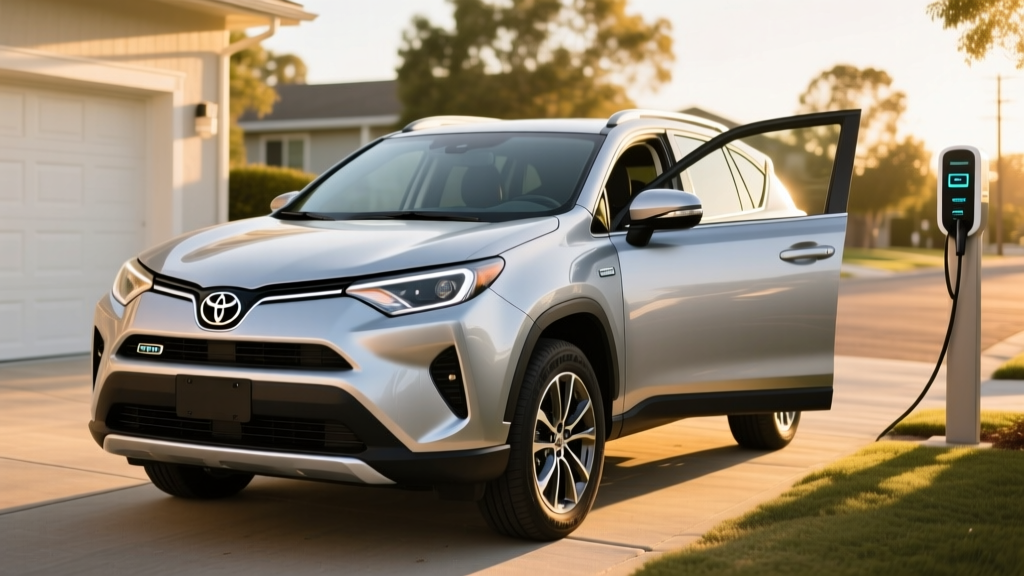
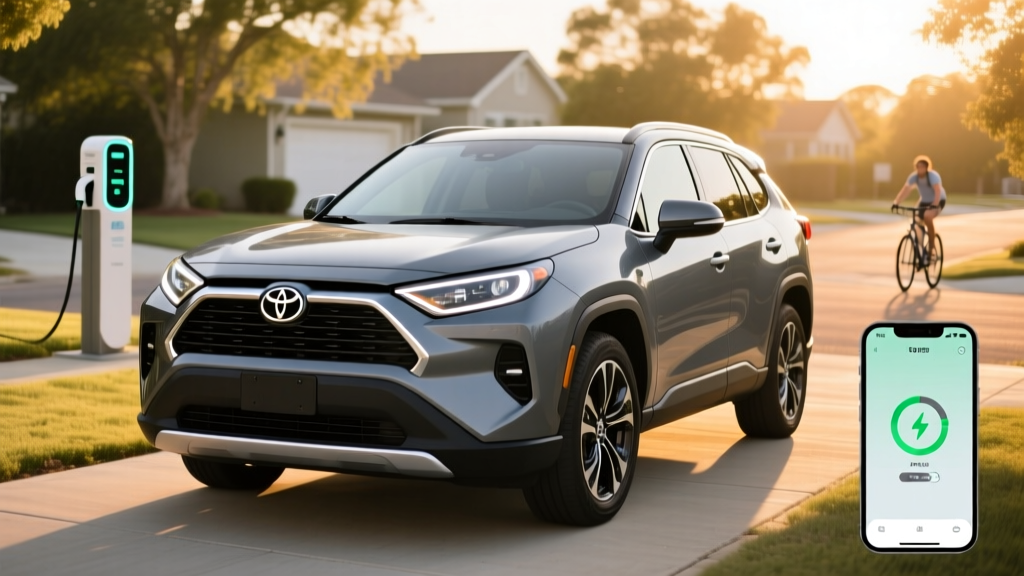
The 2026 Toyota RAV4 XLE Premium Hybrid occupies a specific sweet spot in Toyota's best-selling SUV lineup: it bundles the proven 219-hp hybrid powertrain with upgraded interior materials, a power moonroof, and a leather-trimmed steering wheel — all without requiring a plug. This is a conventional hybrid electric vehicle (HEV), not a plug-in hybrid (PHEV). It charges its own 1.6 kWh nickel-metal hydride (NiMH) traction battery through regenerative braking and the gasoline engine. You fuel it like any other car, and the hybrid system handles the rest.
For the buyer who wants meaningful fuel savings without altering their refueling habits or installing a home charger, the XLE Premium Hybrid delivers. The EPA rates it at 41 city / 38 highway / 39 combined MPG — numbers that hold up well in real-world driving, especially in stop-and-go commutes where hybrids shine brightest.
| Specification | Value |
|---|---|
| Powertrain | 2.5L 4-cyl + 2 electric motors (AWD) |
| Combined Horsepower | 219 hp |
| EPA MPG (City / Hwy / Combined) | 41 / 38 / 39 MPG |
| Fuel Tank | 14.5 gallons |
| Total Driving Range | ~565 miles |
| Traction Battery | 1.6 kWh NiMH (self-charging) |
| 0–60 mph | ~7.4 seconds |
| Cargo Volume (behind rear seats) | 37.6 cu ft |
| MSRP (est.) | ~$36,000 |
| Hybrid Battery Warranty | 10 years / 150,000 miles |
HEV vs. PHEV vs. EV: Which RAV4 Powertrain Fits You?
Toyota offers the RAV4 with three distinct electrification levels. Confusing them is one of the most common mistakes shoppers make, so let's separate them clearly before going deeper into the XLE Premium Hybrid.
| Attribute | RAV4 Hybrid (HEV) | RAV4 Prime (PHEV) | bZ4X (BEV) |
|---|---|---|---|
| Plug Required? | No — self-charging | Yes — plugs in for EV range | Yes — fully electric |
| Electric-Only Range | ~1 mile at low speed | 42 miles EPA | 252 miles EPA (FWD) |
| Combined MPG / MPGe | 39 MPG | 94 MPGe (EV) / 38 MPG (hybrid) | 119 MPGe |
| Combined HP | 219 hp | 302 hp | 201 hp (FWD) |
| Battery Size | 1.6 kWh NiMH | 18.1 kWh Li-ion | 71.4 kWh Li-ion |
| DC Fast Charge? | No | No (Level 2 only) | Yes (~150 kW peak) |
| Federal Tax Credit (§30D) | Not eligible | Up to $7,500 (eligibility varies) | Up to $7,500 (eligibility varies) |
| Starting MSRP (est.) | ~$32,000 | ~$44,500 | ~$38,500 |
The XLE Premium Hybrid (HEV) is the right pick if you have no access to home or workplace charging, drive a mix of city and highway miles, and want lower fuel costs without lifestyle changes. The RAV4 Prime (PHEV) makes sense if you have a garage with a 120V or 240V outlet and a commute under 42 miles — you'd burn almost no gasoline on weekdays. The bZ4X (BEV) is best for drivers ready to go fully electric with reliable home charging and mostly urban/suburban driving patterns.
Fuel Economy: EPA Numbers vs. Real-World MPG
The EPA rates the 2026 RAV4 Hybrid AWD (including the XLE Premium trim) at 41 city / 38 highway / 39 combined MPG, per fueleconomy.gov. These figures apply across all AWD hybrid trims because the powertrain hardware is identical — the XLE Premium's additional comfort features add only marginal weight.
| Driving Cycle | EPA Rating | Real-World Expectation |
|---|---|---|
| City | 41 MPG | 42–45 MPG (hybrids often beat EPA in stop-and-go) |
| Highway | 38 MPG | 34–37 MPG (sustained 70+ mph reduces regen benefit) |
| Combined | 39 MPG | 37–41 MPG depending on driving mix |
| Cold Weather (below 32°F) | — | 33–36 MPG combined (engine runs more for cabin heat) |
The real-world dynamic worth understanding: hybrids overperform in city driving because regenerative braking recovers energy at every stop, and the engine shuts off frequently. On sustained highway runs above 70 mph, the engine does most of the work alone, and aerodynamic drag erodes the hybrid advantage. If 80% of your driving is urban or suburban, expect to average 41–43 MPG. If you're primarily a highway commuter, plan on 35–37 MPG in warm weather, dropping further in winter.
With a 14.5-gallon tank, that translates to roughly 565 miles of total range in mixed driving — enough for most drivers to visit a gas station once every two weeks or less.
Powertrain Deep Dive: 219 HP and Standard AWD
The RAV4 Hybrid pairs a 2.5-liter Atkinson-cycle four-cylinder engine (176 hp, 163 lb-ft on its own) with two electric motor-generators — one on the front axle and a dedicated rear motor providing electronic all-wheel drive. Combined system output is 219 horsepower.
The front motor handles most low-speed propulsion, seamlessly blending in the gasoline engine as demand increases. The rear motor engages during acceleration, low-traction conditions, and low-speed corners. Unlike mechanical AWD systems, there's no driveshaft connecting the axles — the rear motor activates only when needed, which contributes to the hybrid's efficiency advantage over the gas-only RAV4 AWD.
The result is a 0–60 mph time of approximately 7.4 seconds — quicker than the non-hybrid RAV4 AWD (~8.1 sec) and adequate for confident highway merging. The continuously variable transmission (CVT) prioritizes smoothness over sportiness; under hard acceleration, the engine drone is noticeable but not objectionable.
Pricing, Trims, and Tax Credit Reality
The 2026 Toyota RAV4 XLE Premium Hybrid carries an estimated MSRP of approximately $36,000 (including destination). This positions it between the base XLE Hybrid (~$33,500) and the fully loaded Limited Hybrid (~$40,000). The XLE Premium upgrade over the standard XLE adds:
- SofTex synthetic leather-trimmed seats
- Power tilt/slide moonroof
- Leather-trimmed steering wheel and shift knob
- 10-way power-adjustable driver's seat
- 12.3-inch Toyota Audio Multimedia touchscreen
- Wireless Apple CarPlay and Android Auto
Federal Tax Credit Eligibility
The RAV4 Hybrid (HEV) does not qualify for the federal §30D Clean Vehicle Credit. Under current IRS rules, only plug-in electric vehicles (PHEVs and BEVs) with sufficient battery capacity are eligible. The hybrid's 1.6 kWh battery falls far below the §30D threshold.
If tax incentives are a priority, the RAV4 Prime PHEV or bZ4X BEV may qualify for up to $7,500 — subject to buyer income caps ($150K single / $300K joint), MSRP limits ($80K for SUVs), critical-mineral and battery-component sourcing requirements, and point-of-sale transfer availability. Always verify current-year eligibility with a tax professional or the IRS directly before purchasing.
Some states offer additional incentives for hybrids, though these are increasingly rare as programs shift toward plug-in vehicles. Check your state's energy office or AFDC state incentive database for local programs.
Battery Warranty, Reliability, and Replacement Costs
Hybrid battery longevity is consistently the top concern among first-time hybrid buyers. Toyota addresses this with one of the strongest warranties in the industry.
Toyota Hybrid Battery Coverage
- Hybrid Battery Warranty: 10 years / 150,000 miles (whichever comes first)
- Hybrid System Components: 8 years / 100,000 miles
- Capacity Threshold: Toyota warrants the battery against defects and abnormal loss of capacity — if the battery degrades below functional levels within the warranty period, Toyota replaces it at no cost
- Transferable: Warranty transfers to subsequent owners, supporting resale value
The RAV4 Hybrid uses a 1.6 kWh nickel-metal hydride (NiMH) traction battery. NiMH chemistry is less energy-dense than lithium-ion but has an exceptionally well-documented longevity record — Toyota's Prius fleet has accumulated billions of real-world miles on this chemistry. In practice, Toyota hybrid batteries routinely last 150,000–200,000+ miles before significant degradation.
If replacement is eventually needed out of warranty, a new OEM hybrid battery for the RAV4 Hybrid typically costs between $2,000 and $3,500 installed. Refurbished or aftermarket options can reduce that to $1,200–$2,000. For context, this is dramatically less than a BEV battery replacement ($8,000–$20,000+) because the hybrid battery is small and operates within a narrow state-of-charge window that minimizes stress.
Toyota's hybrid reliability record is well-established. The RAV4 Hybrid consistently earns high marks from both IIHS for crash safety and owner-survey reliability data. The hybrid powertrain has fewer wear items than a conventional gas powertrain — no starter motor, no alternator, no traditional transmission clutches, and regenerative braking extends pad life significantly.
Who Should Choose the RAV4 XLE Premium Hybrid?
Pros
- 39 MPG combined without plugging in — no lifestyle changes required
- Standard electronic AWD with 219 hp for confident all-weather driving
- 10-year/150,000-mile hybrid battery warranty
- ~565-mile total range — fewer fuel stops than gas-only competitors
- Strong resale value driven by Toyota reliability reputation
- 37.6 cu ft cargo space (no battery-pack intrusion)
Cons
- No federal tax credit eligibility (HEV, not PHEV/BEV)
- Highway MPG drops to ~35 in sustained 70+ mph driving
- Cold-weather MPG penalty of 10–15% due to engine running for cabin heat
- CVT drone under hard acceleration
- Not eligible for HOV/carpool lane access in most states
- XLE Premium trim pricing overlaps with entry-level PHEV territory
Decision Framework
Choose the RAV4 XLE Premium Hybrid if: You lack access to home or workplace charging, drive 10,000–15,000 miles per year in a mix of city and highway conditions, and want a proven, low-maintenance powertrain with strong resale value.
Choose the RAV4 Prime PHEV instead if: You can install a Level 2 charger at home, your daily commute is under 42 miles round-trip, and you want to qualify for the federal tax credit while still having a gas engine for road trips.
Choose a full BEV (bZ4X or competitor) if: You have reliable home charging, want zero tailpipe emissions, your daily driving stays under 200 miles, and you want to minimize long-term fuel and maintenance costs.
Frequently Asked Questions
How many MPG does the 2026 RAV4 XLE Premium Hybrid get?
The EPA rates it at 41 city / 38 highway / 39 combined MPG. In real-world mixed driving, expect 37–41 MPG depending on your city-to-highway ratio, with city-heavy commutes often exceeding the EPA city figure thanks to regenerative braking.
Does the RAV4 Hybrid need to be plugged in?
No. The RAV4 Hybrid is a conventional HEV — it charges its small traction battery through regenerative braking and the gasoline engine. You refuel it at any gas station like a standard vehicle. Only the RAV4 Prime (PHEV) and bZ4X (BEV) require plugging in.
How far can the RAV4 Hybrid drive on electric power alone?
Approximately 0.5–1 mile at very low speeds (under 25 mph) in EV mode. The 1.6 kWh battery isn't designed for meaningful electric-only driving — it assists the gas engine to improve overall efficiency. If you want substantial EV-only range, the RAV4 Prime PHEV delivers 42 miles on battery power.
Is the RAV4 Hybrid battery expensive to replace?
Out of warranty, a new OEM hybrid battery replacement runs $2,000–$3,500 installed. Refurbished options cost $1,200–$2,000. However, Toyota's NiMH hybrid batteries routinely last 150,000–200,000+ miles, and the 10-year/150,000-mile warranty covers most owners for the vehicle's useful life.
Does the RAV4 XLE Premium Hybrid qualify for a federal tax credit?
No. Under current IRS §30D rules, only plug-in vehicles (PHEVs and BEVs) with batteries above a minimum capacity threshold qualify. The RAV4 Hybrid's 1.6 kWh NiMH battery does not meet this requirement. The RAV4 Prime PHEV may qualify for up to $7,500, subject to income, MSRP, and battery-sourcing rules.
How does the XLE Premium trim differ from the standard XLE Hybrid?
The XLE Premium adds SofTex synthetic leather seats, a power moonroof, leather-wrapped steering wheel and shift knob, a 10-way power driver's seat, and a larger 12.3-inch infotainment screen with wireless smartphone integration. The hybrid powertrain, AWD system, and EPA fuel economy are identical across all hybrid trims.