Quick Verdict: A Sport-Compact Hybrid Ahead of Its Time
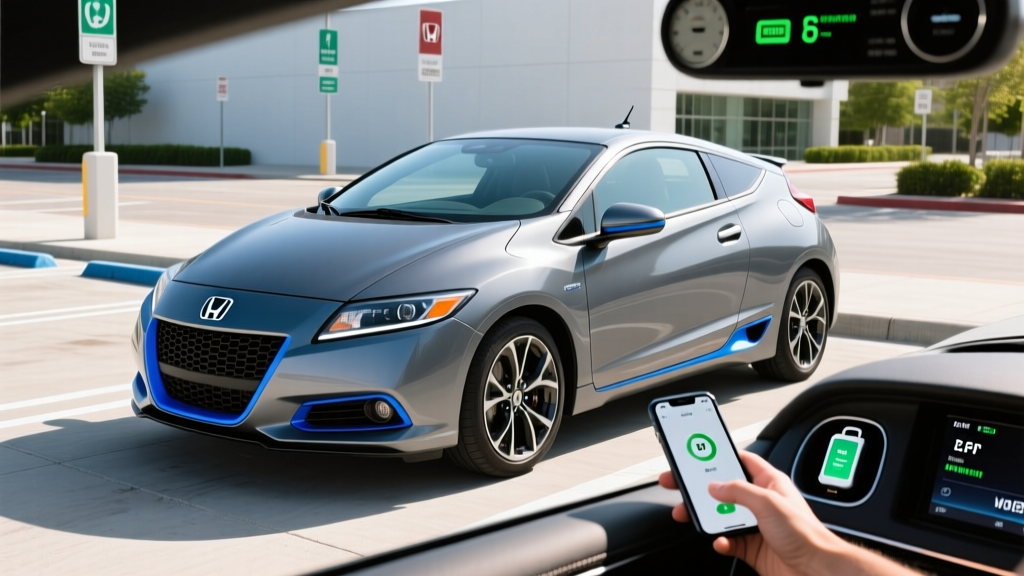
The 2015 Honda CR-Z hybrid occupies a curious space in the used-car market: a two-seat sport coupe with a manual transmission option and a hybrid powertrain. Honda discontinued the CR-Z after the 2016 model year, but its Integrated Motor Assist (IMA) system and 36 MPG combined EPA rating keep it relevant for budget-conscious commuters who want something more engaging than a Prius. At used prices typically between $9,000 and $16,000 depending on mileage and condition, the 2015 CR-Z is one of the most affordable entry points into hybrid ownership in 2026.
But before you sign the paperwork, you need to understand what this car is — and what it isn't. The CR-Z is a conventional hybrid (HEV), not a plug-in hybrid (PHEV). It cannot drive on electric power alone for any meaningful distance, it has no plug, and it does not qualify for any federal EV or PHEV tax credit. Its value proposition is straightforward: modest fuel savings, Honda reliability, and a fun-to-drive character that most hybrids lack.
HEV vs PHEV: What the CR-Z Actually Is
A common source of confusion among used-car shoppers is whether the CR-Z needs to be plugged in. It does not. Here's the critical distinction:
| Feature | Conventional Hybrid (HEV) — CR-Z | Plug-In Hybrid (PHEV) |
|---|---|---|
| Plugs in to charge? | No — charges via regenerative braking and engine | Yes — has a charge port and onboard charger |
| Electric-only driving range | Negligible (motor assists engine only) | Typically 20–50 miles on battery alone |
| Battery size | 0.5 kWh (nickel-metal hydride) | 8–20+ kWh (lithium-ion) |
| Federal tax credit (§30D) | Not eligible | Up to $7,500 if new and eligible (used: up to $4,000 under §25E) |
| Driving experience | Gas engine always runs; motor provides torque assist | Can operate as full EV for short trips, then hybrid |
The CR-Z uses Honda's IMA system, where a small electric motor sandwiched between the engine and transmission provides supplemental torque during acceleration. The motor cannot propel the car by itself at any meaningful speed. Think of it as a turbo-like torque fill rather than electric-only propulsion.
Fuel Economy: EPA Numbers vs Real-World MPG
| Configuration | City MPG | Highway MPG | Combined MPG |
|---|---|---|---|
| CVT Automatic | 36 | 39 | 37 |
| 6-Speed Manual | 31 | 38 | 34 |
Source: EPA / fueleconomy.gov
The CVT-equipped 2015 CR-Z achieves an EPA-estimated 36 city / 39 highway / 37 combined MPG. The 6-speed manual drops to 31/38/34 — a penalty you pay for row-your-own engagement.
Real-World MPG: What Owners Actually See
Conventional hybrids like the CR-Z often exceed their EPA city estimates in stop-and-go traffic because regenerative braking recaptures energy that gas-only cars waste as heat. Many CR-Z owners report 38–42 MPG in mixed city driving with the CVT. Highway-only trips at 75+ MPH tend to yield 34–36 MPG as aerodynamic drag overwhelms the small 1.5L engine's efficiency sweet spot.
In cold weather (below 35°F), expect a 5–10% MPG reduction. The IMA battery is less efficient at low temperatures, and the engine runs richer during warmup. Owners in northern climates typically see 32–35 MPG combined in winter months versus 37–40 MPG in summer.
Powertrain Specs: Engine, Motor, and Combined Output
| Specification | Detail |
|---|---|
| Engine | 1.5L i-VTEC inline-4 |
| Engine horsepower | 130 hp @ 6,000 rpm |
| Electric motor output | 15 kW (20 hp) / 58 lb-ft torque |
| Combined system output | 130 hp / 140 lb-ft torque |
| Transmission options | 6-speed manual or CVT |
| 0–60 mph | ~9.7 seconds (CVT) / ~9.1 seconds (manual) |
| Drivetrain | Front-wheel drive |
| IMA battery | 0.5 kWh nickel-metal hydride (NiMH) |
| Curb weight | ~2,698 lbs |
| Fuel tank | 10.6 gallons |
| Total driving range | ~392 miles (CVT, EPA combined) |
The combined system output of 130 hp makes the CR-Z adequate rather than quick. Honda's IMA system prioritizes fuel efficiency over performance, and the electric motor's primary role is filling in the torque dip that small-displacement engines exhibit at low RPM. The result is a car that feels peppier off the line than its 0–60 time suggests, but runs out of breath above 70 mph.
Battery Health, Warranty, and Replacement Cost
IMA Battery Warranty & Lifespan
- Original warranty: 8 years / 80,000 miles (10 years / 150,000 miles in CARB states including CA, CT, ME, MD, MA, NJ, NY, OR, RI, VT, WA)
- Chemistry: Nickel-metal hydride (NiMH)
- Typical lifespan: 150,000–200,000 miles before significant capacity loss
- Replacement cost (2026): $1,800–$2,800 for OEM; $1,000–$1,600 for refurbished/reconditioned
- 12V auxiliary battery: Standard lead-acid; replace every 3–5 years at ~$150–$220
For a 2015 model in 2026, the original 8-year/80,000-mile federal hybrid battery warranty has expired on every example. If you live in a CARB state, the 10-year/150,000-mile extension may still cover low-mileage examples through mid-2025 at the latest — but realistically, you're buying this car without battery warranty coverage.
Is the IMA Battery Reliable?
Honda's IMA system has a strong reliability track record. The NiMH battery pack is simpler and more thermally stable than lithium-ion packs in modern EVs and PHEVs. Failures before 120,000 miles are uncommon. When degradation does occur, it typically manifests as reduced regenerative braking capacity and slightly lower MPG — not a sudden no-start condition.
Several aftermarket suppliers offer reconditioned IMA battery packs for $1,000–$1,600, and independent hybrid specialists can install them for $300–$500 in labor. This is significantly cheaper than traction battery replacements in full EVs or larger PHEVs, which can exceed $8,000–$15,000.
Does the 2015 CR-Z Qualify for Any Tax Credit?
No. Under current IRS rules, the 2015 Honda CR-Z does not qualify for any federal tax credit as a new vehicle purchase — it is no longer sold new, and conventional hybrids (HEVs) have never qualified for the §30D New Clean Vehicle Credit, which is reserved for plug-in vehicles with battery capacities of at least 7 kWh.
If you're purchasing a used 2015 CR-Z, the §25E Used Clean Vehicle Credit also does not apply. That credit requires the vehicle to be a qualified plug-in electric vehicle or fuel cell vehicle, and the CR-Z is neither. The used-EV credit also has a $25,000 sale price cap and buyer income limits — but the fundamental disqualifier here is the powertrain type.
Some states offer rebates or incentives for used hybrid purchases, but these vary by jurisdiction and change frequently. Check your state's energy or environmental agency website for current programs. A tax professional can confirm whether any local incentives apply to your specific situation. For federal rules, see the IRS clean vehicle credits page.
Who Should Buy the 2015 CR-Z — and Who Shouldn't
Pros
- 36–37 MPG combined (CVT) with real-world potential for 40+ in city driving
- 6-speed manual transmission option — rare in any hybrid, let alone a coupe
- Low used-car entry price ($9K–$16K) with Honda reliability
- Lightweight (2,698 lbs) and genuinely fun to drive on back roads
- IMA battery replacement is affordable compared to EV/PHEV packs
- Sport+ mode sharpens throttle response and steering weighting
Cons
- Two seats only — zero practicality for families or carpooling
- 130 hp combined feels underpowered for highway merging
- Tiny 10.6-gallon fuel tank means ~390-mile max range
- No plug-in capability; cannot drive on electric power alone
- Dated infotainment with no Apple CarPlay or Android Auto
- No federal tax credit eligibility of any kind
- IMA battery warranty has expired on all 2015 examples
Hybrid vs PHEV vs EV: Which Fits You?
If you're cross-shopping the 2015 CR-Z against modern alternatives, here's a practical decision framework:
- Choose the CR-Z (conventional HEV) if: You want the lowest upfront cost, can't charge at home, drive mostly in the city, and value driving engagement over tech features. Budget: under $16,000.
- Choose a used PHEV (e.g., 2017+ Prius Prime, 2018+ Clarity PHEV) if: You have home charging access, want 20–47 miles of electric-only commuting, and still want gas-engine range flexibility. Budget: $15,000–$25,000.
- Choose a used full EV (e.g., 2019+ Bolt, 2018+ Leaf Plus) if: You can charge at home, drive under 200 miles daily, want the lowest per-mile fuel cost, and are ready to leave gas behind. Budget: $14,000–$25,000. Note: some used EVs may qualify for the §25E credit (up to $4,000) if the sale price is under $25,000 and income limits are met.
Ownership Costs: Fuel, Insurance, and Maintenance
At 37 MPG combined and a national average of $3.10/gallon (early 2026), the CR-Z costs approximately $0.084 per mile in fuel. Compare that to a 28 MPG gas-only sport coupe at $0.111/mile — a savings of roughly $270 per year at 10,000 miles annually. Over five years, that's about $1,350 in fuel savings versus a comparable gas car.
Insurance rates for the CR-Z are moderate. Its low power output, two-seat configuration, and Honda badge keep premiums in the $1,200–$1,800/year range for most drivers, though rates vary significantly by state, age, and driving record.
Maintenance follows Honda's standard schedule: oil changes every 7,500–10,000 miles (the 1.5L uses conventional 0W-20), brake pads lasting 60,000–80,000 miles thanks to regenerative braking reducing wear, and the CVT requiring fluid changes at 30,000-mile intervals. Parts availability remains strong since the CR-Z shares components with the Fit and other Honda platforms.
Frequently Asked Questions
How many MPG does the 2015 Honda CR-Z hybrid get?
The EPA rates the 2015 CR-Z with CVT at 36 city / 39 highway / 37 combined MPG. The 6-speed manual gets 31 city / 38 highway / 34 combined. In real-world driving, many owners report 38–42 MPG in city conditions with the CVT, while highway-only driving at high speeds yields 34–36 MPG.
Can the 2015 CR-Z drive on electric power only?
No. The CR-Z is a conventional hybrid (HEV) with Honda's IMA system. The electric motor assists the gas engine during acceleration but cannot propel the car on its own at any meaningful speed. There is no plug and no EV-only mode.
Is the 2015 Honda CR-Z reliable?
Yes. The CR-Z benefits from Honda's well-established IMA hybrid system and the proven 1.5L i-VTEC engine. The NiMH battery pack typically lasts 150,000–200,000 miles. Major mechanical failures are uncommon. The primary long-term expense is IMA battery replacement at $1,000–$2,800 depending on OEM vs refurbished.
What does a replacement IMA battery cost?
In 2026, an OEM Honda IMA battery pack costs approximately $1,800–$2,800 installed. Reconditioned/rebuilt packs from aftermarket suppliers run $1,000–$1,600 installed. This is considerably less than traction battery replacements in modern EVs or PHEVs.
Does the 2015 CR-Z qualify for any federal tax credit?
No. The CR-Z is a conventional hybrid, not a plug-in vehicle. It has never qualified for the §30D New Clean Vehicle Credit, and as a discontinued model, it cannot be purchased new. The §25E Used Clean Vehicle Credit also does not apply because the CR-Z is not a plug-in electric or fuel cell vehicle.
How does the CR-Z compare to a Prius for fuel economy?
The 2015 Toyota Prius achieves 50 MPG combined (EPA), significantly outperforming the CR-Z's 37 MPG combined. However, the CR-Z offers a sportier driving experience, a manual transmission option, and a lower curb weight. If maximum fuel economy is your priority, the Prius wins. If you want a hybrid that's actually fun to drive, the CR-Z is the pick.
Is the CR-Z a good first hybrid to buy used?
For a single person or couple without kids who primarily commute in urban or suburban environments, the 2015 CR-Z is an excellent first hybrid. It's affordable, reliable, and simple to maintain. The main limitations are its two-seat layout, modest power, and lack of modern infotainment. If you need back seats or more than 130 hp, look at a used Civic Hybrid, Insight, or Accord Hybrid instead.