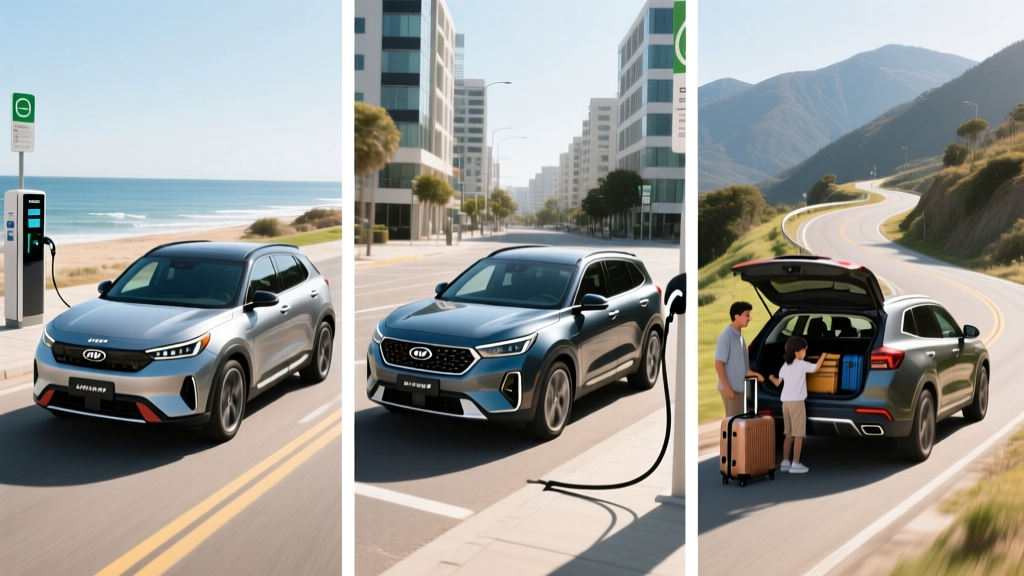
If you are not ready to commit to a full battery-electric vehicle but want to cut fuel costs meaningfully, Kia offers one of the broadest hybrid lineups in the mainstream market for 2026. From the compact Niro to the three-row Sorento, Kia sells both conventional hybrids (HEVs) and plug-in hybrids (PHEVs) across multiple nameplates — each with very different economics, range profiles, and charging requirements.
This guide breaks down every current Kia hybrid and plug-in hybrid with exact EPA MPG figures, real-world fuel economy expectations, PHEV electric-only range, battery warranties, powertrain specs, pricing, and federal tax credit eligibility. Whether you are cross-shopping a RAV4 Hybrid, a CR-V Hybrid, or a full EV like the EV6, this is the data you need to pick the right Kia electrified model.
HEV vs PHEV: What Kia Hybrid Buyers Must Understand First
Before comparing specific models, the distinction between Kia's two hybrid types is critical because it determines your fuel cost, charging behavior, and tax credit eligibility.
Conventional Hybrid (HEV)
- No plug required. The battery recharges through regenerative braking and the gasoline engine.
- Small battery: typically 1.0–1.6 kWh — assists the engine but cannot drive on electric power alone for meaningful distances.
- Best for: drivers without home charging access who want better MPG with zero lifestyle change.
- No federal tax credit under current IRS §30D rules (credit applies to PHEVs and BEVs only).
Plug-In Hybrid (PHEV)
- Plugs in to charge. Larger battery provides 25–33 miles of electric-only driving before the gas engine engages.
- Larger battery: 11–18 kWh — charges on Level 1 (120V) or Level 2 (240V); no DC fast charging on Kia PHEVs.
- Best for: drivers with home charging who commute under 35 miles round-trip and want EV-like daily driving with gas-engine backup for road trips.
- May qualify for federal tax credits — eligibility depends on battery sourcing, MSRP caps, and buyer income limits under IRS §30D rules.
2026 Kia Niro Hybrid and Niro Plug-In Hybrid
The Niro is Kia's most efficient hybrid and the entry point to the lineup. Redesigned for the current generation, it offers both HEV and PHEV variants in a compact crossover body with strong cargo space for its class.
| Spec | Niro HEV | Niro PHEV |
|---|---|---|
| Powertrain | 1.6L I4 + electric motor | 1.6L I4 + electric motor |
| Combined HP | 139 hp | 180 hp |
| Battery | 1.32 kWh (lithium-ion) | 11.1 kWh (lithium-ion polymer) |
| EPA City / Hwy / Combined MPG | 53 / 54 / 53 MPG | 48 MPG (charge-sustaining) |
| Electric-Only Range (PHEV) | N/A | 33 miles |
| MPGe (PHEV electric mode) | N/A | 108 MPGe combined |
| Total Combined Range | ~590 miles | ~440 miles (gas + electric) |
| Level 2 Charge Time (PHEV) | N/A | ~2 hr 45 min (0–100%) |
| DC Fast Charging | No | No |
| 0–60 mph | ~9.0 sec | ~7.5 sec |
| Starting MSRP | ~$29,390 | ~$35,590 |
The Niro HEV's 53 MPG combined is exceptional — it matches or beats the Toyota Prius in real-world mixed driving. According to fueleconomy.gov, the Niro HEV achieves its best efficiency in city driving where regenerative braking recovers the most energy. Expect real-world city MPG to occasionally exceed the EPA sticker, while sustained highway driving at 75+ mph may return 45–48 MPG.
The Niro PHEV's 33-mile electric-only range covers most daily commutes. On a Level 2 home charger (240V, 32A), a full charge takes under three hours — plug in when you get home and the car is ready by morning. There is no DC fast charging capability, which is typical for PHEVs in this segment.
2026 Kia Sportage Hybrid and Sportage Plug-In Hybrid
The Sportage is Kia's volume compact SUV, and its hybrid variants compete directly with the Toyota RAV4 Hybrid and Honda CR-V Hybrid. The Sportage PHEV is notable for offering 34 miles of electric range — among the best in its class.
| Spec | Sportage HEV | Sportage PHEV |
|---|---|---|
| Powertrain | 1.6L turbo I4 + electric motor | 1.6L turbo I4 + electric motor |
| Combined HP | 227 hp | 261 hp |
| Battery | 1.49 kWh | 13.8 kWh |
| EPA City / Hwy / Combined MPG | 42 / 44 / 43 MPG (FWD) | 35 MPG (charge-sustaining) |
| Electric-Only Range (PHEV) | N/A | 34 miles |
| MPGe (PHEV electric mode) | N/A | 84 MPGe combined |
| Total Combined Range | ~540 miles | ~430 miles |
| Level 2 Charge Time (PHEV) | N/A | ~3 hr 15 min (0–100%) |
| DC Fast Charging | No | No |
| 0–60 mph | ~7.4 sec | ~6.8 sec |
| Starting MSRP | ~$31,490 | ~$40,590 |
| AWD Availability | Optional | Standard |
The Sportage HEV's 43 MPG combined is competitive, though the RAV4 Hybrid edges it out at 41 MPG combined with standard AWD. Where the Sportage hybrid wins is interior space — its rear legroom and cargo volume are class-leading. Real-world owners report 40–45 MPG in mixed driving, with city-heavy routes yielding the best results thanks to frequent regen braking events.
The Sportage PHEV's 34-mile electric range is practical for suburban commutes. AWD is standard on the PHEV, which is a significant advantage for buyers in snow-belt states. The trade-off: charge-sustaining MPG drops to 35 once the battery is depleted, which is lower than the HEV variant because the PHEV carries roughly 300 lbs of additional battery weight.
2026 Kia Sorento Hybrid and Sorento Plug-In Hybrid
The Sorento is the only three-row SUV in Kia's hybrid lineup, making it the default choice for families needing six or seven seats without stepping up to the Telluride (which currently has no hybrid option). Both HEV and PHEV variants are available.
| Spec | Sorento HEV | Sorento PHEV |
|---|---|---|
| Powertrain | 1.6L turbo I4 + electric motor | 1.6L turbo I4 + electric motor |
| Combined HP | 227 hp | 261 hp |
| Battery | 1.49 kWh | 13.8 kWh |
| EPA City / Hwy / Combined MPG | 39 / 35 / 37 MPG (FWD) | 33 MPG (charge-sustaining) |
| Electric-Only Range (PHEV) | N/A | 32 miles |
| MPGe (PHEV electric mode) | N/A | 79 MPGe combined |
| Total Combined Range | ~520 miles | ~420 miles |
| Level 2 Charge Time (PHEV) | N/A | ~3 hr 25 min (0–100%) |
| DC Fast Charging | No | No |
| 0–60 mph | ~7.8 sec | ~7.2 sec |
| Starting MSRP | ~$38,890 | ~$51,090 |
| Seating | 6 passengers | 6 passengers |
The Sorento HEV's 37 MPG combined is strong for a three-row SUV — for context, the Toyota Highlander Hybrid returns 35 MPG combined. Real-world fuel economy tends to track close to EPA estimates, with city driving yielding slightly higher numbers. Highway cruising at 70+ mph may drop to 32–34 MPG due to the vehicle's aerodynamic profile and weight.
The Sorento PHEV's 32-mile electric range handles school runs and grocery trips without burning gas, but the $51,090 starting price is steep. This is where tax credit eligibility becomes a key factor in the purchase decision (details below).
Federal Tax Credit Eligibility for Kia PHEVs (2026 Rules)
Under current IRS §30D regulations, only plug-in hybrids and full EVs qualify for federal clean vehicle credits. Conventional Kia HEVs (Niro HEV, Sportage HEV, Sorento HEV) do not qualify for any federal tax credit.
For Kia PHEVs, eligibility depends on several factors that change periodically:
- MSRP cap: SUVs (Niro PHEV, Sportage PHEV, Sorento PHEV) must be under $80,000 MSRP — all current Kia PHEVs clear this threshold.
- Buyer income cap: Modified adjusted gross income must not exceed $150,000 (single), $225,000 (head of household), or $300,000 (joint filers).
- Battery sourcing: Critical minerals and battery components must meet phased-in domestic/free-trade-partner sourcing requirements. This requirement has tightened annually and may reduce or eliminate credit amounts for some Kia PHEVs depending on current supply chain compliance.
- Point-of-sale transfer: Eligible buyers can transfer the credit to the dealer at purchase for an immediate price reduction rather than waiting to claim it on their tax return.
- Credit amount: Up to $7,500 maximum, but partial credits ($3,750) apply if only one of the two sourcing requirements (critical minerals OR battery components) is met.
Because battery sourcing rules shift frequently, always verify current eligibility on the fueleconomy.gov tax credit page before purchasing. Your tax professional should confirm your personal eligibility.
Battery Warranty, Reliability, and Replacement Costs
Kia Hybrid & PHEV Battery Warranty
All 2026 Kia hybrids and plug-in hybrids carry a 10-year / 100,000-mile hybrid battery warranty (whichever comes first). This covers battery capacity loss below a defined threshold and defects in the hybrid system components including the electric motor, inverter, and battery control module.
This warranty is transferable to a second owner if the vehicle was originally purchased new, which supports resale value.
Kia's hybrid systems have proven reliable in the current generation. The 1.6L turbocharged engine paired with a 6-speed automatic (no CVT) avoids the rubber-band feel and long-term durability concerns some buyers associate with continuously variable transmissions.
If a hybrid battery replacement is needed out of warranty — rare before 150,000+ miles based on current degradation data — expect the following approximate costs:
- Niro HEV battery: $2,000–$3,000 (small 1.32 kWh pack)
- Niro PHEV battery: $4,500–$6,500 (11.1 kWh pack)
- Sportage/Sorento PHEV battery: $5,500–$8,000 (13.8 kWh pack)
These are parts-and-labor estimates. Hybrid batteries rarely fail catastrophically — more commonly, individual modules degrade and can sometimes be reconditioned or partially replaced at lower cost.
Real-World MPG: What Owners Actually Report
EPA estimates are measured under controlled conditions. Real-world fuel economy varies with driving style, climate, terrain, and tire condition. Here is what to expect from Kia's 2026 hybrid lineup in practice:
| Model | EPA Combined | Real-World City | Real-World Highway | Cold Weather Impact |
|---|---|---|---|---|
| Niro HEV | 53 MPG | 50–56 MPG | 44–49 MPG | −3 to −5 MPG |
| Sportage HEV (FWD) | 43 MPG | 40–46 MPG | 37–42 MPG | −2 to −4 MPG |
| Sorento HEV (FWD) | 37 MPG | 35–40 MPG | 32–36 MPG | −2 to −4 MPG |
Hybrids consistently outperform their EPA city estimates in stop-and-go traffic because regenerative braking recovers kinetic energy that a gas-only car wastes as heat. Highway MPG tends to fall below EPA because aerodynamic drag increases with the square of speed, and the electric motor provides less benefit at steady high speeds.
Cold weather reduces fuel economy in all vehicles. In hybrids, the engine must run more frequently to provide cabin heat (since there is no large battery to power a heat pump as in a BEV), and the battery's charge/discharge efficiency drops at low temperatures. Expect a 5–10% MPG reduction in sustained sub-freezing conditions.
Hybrid vs PHEV vs Full EV: Which Kia Is Right for You?
Choose a Kia HEV (Niro, Sportage, or Sorento) if:
- You cannot install a home charger (apartment, street parking, landlord restrictions).
- You want better MPG with zero change to your fueling routine.
- Your budget is tighter — HEVs cost $5,000–$10,000 less than their PHEV counterparts.
- You drive more than 15,000 miles per year and most of it is highway.
Choose a Kia PHEV if:
- You have access to Level 1 or Level 2 home charging.
- Your daily round-trip commute is under 35 miles — you could drive months without visiting a gas station.
- You want EV-like daily driving but need gas-engine range for road trips or rural travel.
- You qualify for a federal or state PHEV tax credit that narrows the price gap with the HEV.
Choose a Full EV (Kia EV6 or EV9) if:
- You have reliable home Level 2 charging and access to DC fast chargers for road trips.
- You want the lowest per-mile fuel cost (electricity at $0.14/kWh costs roughly $0.04/mile vs. $0.12–$0.15/mile for a 40 MPG hybrid on $3.50/gal gas).
- You want maximum federal tax credit eligibility and zero tailpipe emissions.
- You are willing to plan charging stops on long road trips.
Pricing Summary and Value Assessment
Kia's hybrid lineup spans from under $30,000 to over $50,000. Here is the full pricing picture at base MSRP before destination charges, incentives, or dealer adjustments:
- 2026 Kia Niro HEV LX: ~$29,390
- 2026 Kia Niro PHEV LX: ~$35,590
- 2026 Kia Sportage HEV LX: ~$31,490
- 2026 Kia Sportage PHEV X-Line: ~$40,590
- 2026 Kia Sorento HEV S: ~$38,890
- 2026 Kia Sorento PHEV SX Prestige: ~$51,090
The Niro HEV at under $30K is one of the most affordable hybrid crossovers available. The Sportage HEV offers the best balance of space, power, and efficiency in the compact SUV segment. The Sorento PHEV is the most expensive option and makes the most financial sense only if you qualify for the full $7,500 federal credit and have a short commute that keeps you in electric mode most days.
Pros: Kia Hybrid Lineup
- Class-leading 10-year / 100,000-mile hybrid battery warranty
- Niro HEV achieves 53 MPG combined — among the best of any non-Prius crossover
- PHEV variants offer 32–34 miles of electric-only range for gas-free commuting
- Sportage and Sorento offer more rear-seat and cargo space than key rivals
- 6-speed automatic transmission (no CVT) in all hybrid models
- Available AWD across most trims
Cons: Kia Hybrid Lineup
- No DC fast charging on any Kia PHEV — Level 2 only
- PHEV variants carry a significant price premium ($6,000–$12,000 over HEV)
- Sorento PHEV charge-sustaining MPG (33) is mediocre once battery depletes
- HEV models do not qualify for any federal tax credit
- PHEV tax credit eligibility uncertain due to evolving battery sourcing rules
- Third-row seat in Sorento is tight for adults
Frequently Asked Questions
How many MPG does a Kia hybrid get?
It depends on the model. The 2026 Kia Niro HEV leads the lineup at 53 MPG combined (53 city / 54 highway). The Sportage HEV returns 43 MPG combined with FWD, and the Sorento HEV achieves 37 MPG combined with FWD. In real-world city driving, expect hybrids to match or slightly exceed their EPA city figures thanks to regenerative braking.
How far can a Kia PHEV go on electric only?
The 2026 Kia Niro PHEV delivers 33 miles of electric-only range, the Sportage PHEV achieves 34 miles, and the Sorento PHEV manages 32 miles. These are EPA-rated figures; real-world electric range may drop to 25–28 miles in cold weather or at highway speeds, where the battery depletes faster.
Does the Kia hybrid need to be plugged in?
No. Conventional Kia hybrids (HEV) never need to be plugged in — the battery charges automatically through regenerative braking and the gasoline engine. Only Kia plug-in hybrids (PHEV) benefit from being plugged in to a Level 1 or Level 2 charger to replenish their larger battery for electric-only driving.
Is the Kia hybrid battery reliable and what does replacement cost?
Kia covers all hybrid and PHEV batteries with a 10-year / 100,000-mile warranty, one of the longest in the industry. Hybrid battery failures before 150,000 miles are uncommon. If replacement is needed out of warranty, expect $2,000–$3,000 for a Niro HEV battery and $5,500–$8,000 for a Sportage or Sorento PHEV battery, including labor.
Does any Kia hybrid qualify for a federal tax credit?
Only Kia PHEV models may qualify for the federal §30D clean vehicle credit (up to $7,500). Conventional HEVs are not eligible. PHEV credit eligibility depends on your income, the vehicle's MSRP, and current battery sourcing compliance — all of which change periodically. Verify on IRS.gov before purchasing.
Kia hybrid vs Toyota hybrid — which is better?
Toyota's hybrid system (especially in the Prius and RAV4 Hybrid) is the segment benchmark for proven long-term reliability and slightly higher highway MPG. Kia counters with a longer battery warranty (10 years vs. Toyota's 10 years/150,000 miles — comparable), more interior space in the Sportage and Sorento, and a conventional 6-speed automatic that some drivers prefer over Toyota's e-CVT. Both are strong choices; test-drive both to compare ride quality and tech interfaces.
Can a Kia PHEV charge on a regular household outlet?
Yes. All Kia PHEVs can charge on a standard 120V Level 1 outlet, adding roughly 4–5 miles of electric range per hour of charging. A full charge from empty takes approximately 10–12 hours on Level 1. For faster charging, a 240V Level 2 home charger reduces full-charge time to 2.5–3.5 hours.