The State of Jaguar Hybrids in 2026
Jaguar's path to full electrification has been anything but linear. The brand originally pledged to go all-electric by 2025, then pushed that target to 2030, and as of 2026 is undergoing a radical repositioning under its "Reimagine" strategy. For buyers searching for a Jaguar hybrid today, the options are narrow but not nonexistent — and understanding what's available versus what's been discontinued is essential before you walk into a dealership.
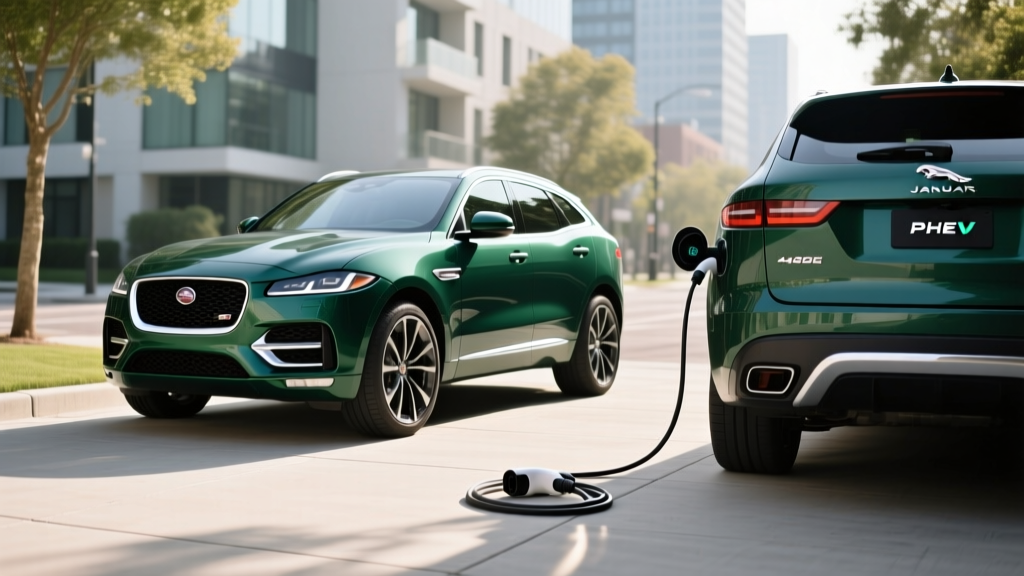
The most relevant hybrid model still in Jaguar's portfolio is the F-PACE P400e plug-in hybrid (PHEV), a luxury compact SUV that pairs a turbocharged four-cylinder engine with an electric motor and a battery you can charge at home. The smaller E-PACE and the XF sedan, which previously offered mild-hybrid (MHEV) powertrains, have been wound down or heavily restructured in Jaguar's lineup as the brand pivots upmarket.
This guide focuses on what a Jaguar hybrid buyer can actually purchase in 2026, with exact EPA figures, real-world expectations, and ownership economics — plus a clear-eyed look at whether a Jaguar PHEV makes sense compared to a full EV or a competing luxury hybrid.
HEV vs PHEV vs MHEV: What Jaguar Actually Offers
Before diving into specs, it's critical to distinguish the three types of hybrid technology Jaguar has used, because they serve very different purposes and have different ownership implications.
Hybrid Types at a Glance
| Type | Plug-In? | Electric-Only Range | How It Works |
|---|---|---|---|
| MHEV (Mild Hybrid) | No | None | 48V system assists gas engine; cannot drive on electric alone. Found in older E-PACE, F-PACE, and XF models. |
| HEV (Conventional Hybrid) | No | Very short (<1 mi) | Self-charging via regenerative braking; Toyota-style. Jaguar has not offered a full HEV in the US market. |
| PHEV (Plug-In Hybrid) | Yes | 20–40+ miles | Larger battery charges via plug; can drive on electricity alone for daily commutes. This is the F-PACE P400e. |
The key takeaway: if you want meaningful electric driving from a Jaguar, the P400e PHEV is the only option. The mild-hybrid systems in older models provide marginal efficiency gains (typically 1–2 MPG improvement) and do not offer electric-only propulsion.
F-PACE P400e: Powertrain, Range, and Efficiency Specs
The F-PACE P400e is the plug-in hybrid variant of Jaguar's best-selling SUV. Here's the complete spec breakdown based on EPA and manufacturer data:
| Specification | F-PACE P400e |
|---|---|
| Powertrain | 2.0L turbo I4 + electric motor (PHEV) |
| Combined Horsepower | 398 hp / 472 lb-ft torque |
| 0–60 mph | 5.1 seconds |
| Battery (Usable) | 17.1 kWh lithium-ion (NMC chemistry) |
| EPA Electric-Only Range | 33 miles |
| EPA MPGe (Electric + Gas) | 50 MPGe combined |
| EPA MPG (Gas Only, Battery Depleted) | 23 city / 27 highway / 25 combined |
| Total Combined Range | ~430 miles (electric + gas tank) |
| DC Fast Charging | No (AC charging only) |
| Level 2 Charge Time (0–100%) | ~2 hours at 7.4 kW |
| Level 1 Charge Time (120V) | ~8–10 hours |
| Drivetrain | AWD (all-wheel drive) |
| Base MSRP | ~$69,000 (before incentives) |
Real-World Range vs. EPA Estimate
EPA electric-only range: 33 miles. In real-world driving, expect 25–30 miles of electric range on a mixed commute. Highway-speed driving (70+ mph) and cold weather (below 40°F) can reduce that to 18–22 miles. The 17.1 kWh usable battery is modest by 2026 PHEV standards — competitors like the BMW X5 xDrive50e offer 38+ miles on a larger pack.
Gas-only MPG reality: The EPA rates the F-PACE P400e at 25 MPG combined once the battery is depleted. In real-world highway testing, owners report 23–26 MPG, which is respectable for a 4,700-lb luxury SUV but not dramatically better than the non-hybrid F-PACE P250 (22 MPG combined). The efficiency advantage is almost entirely in the electric portion.
Fuel Economy Breakdown: When the PHEV Advantage Matters
The value of a plug-in hybrid depends entirely on your driving pattern. Here's the honest math:
| Driving Scenario | F-PACE P400e | F-PACE P250 (Gas) | Tesla Model Y LR (EV) |
|---|---|---|---|
| Daily commute <30 mi (charged nightly) | ~100+ MPGe (mostly electric) | 22 MPG | 123 MPGe |
| Mixed driving (some electric, some gas) | 30–40 MPGe effective | 22 MPG | 123 MPGe |
| Long road trip (battery depleted) | 23–26 MPG | 22–24 MPG | ~3.5 mi/kWh (DC stops needed) |
The PHEV advantage is massive on short, chargeable commutes and essentially zero on long highway trips. If your daily round-trip commute is under 30 miles and you can charge at home every night, you'll burn very little gasoline day-to-day. If you regularly drive 50+ miles without charging access, the P400e's extra weight (about 400 lbs more than the gas F-PACE) actually works against you.
Charging the F-PACE P400e: What You Need at Home
The F-PACE P400e uses a SAE J1772 connector for AC charging and does not support DC fast charging. This is typical for PHEVs — the battery is small enough that Level 2 charging fills it quickly, and the added cost/weight of DC hardware isn't justified.
| Charging Level | Power | 0–100% Time | Miles of EV Range per Hour |
|---|---|---|---|
| Level 1 (120V household) | ~1.4 kW | 8–10 hours | ~3–4 mi/hr |
| Level 2 (240V, 32A) | 7.4 kW | ~2 hours | ~16 mi/hr |
| DC Fast Charge | Not supported | N/A | N/A |
Practical recommendation: A Level 2 home charger is strongly recommended. A 2-hour charge time means you can easily top off during the workday if you have workplace charging, or overnight at home. Install costs for a Level 2 circuit typically run $500–$1,500 depending on panel proximity and local electrician rates. Given the small battery, even a modest 24A Level 2 unit (5.8 kW) will charge the P400e in under 3 hours.
Pricing, Tax Credits, and Incentives
The F-PACE P400e starts around $69,000 before destination charges, placing it firmly in luxury PHEV territory. Here's what you need to know about incentives:
Federal Tax Credit (§30D) Eligibility
- MSRP cap: SUVs must be under $80,000 — the F-PACE P400e qualifies on base pricing, but heavily optioned models may exceed the cap.
- Income cap: AGI must not exceed $150,000 (single) / $300,000 (joint filing) per IRS §30D rules.
- Battery sourcing: The credit amount depends on critical-mineral and battery-component sourcing requirements that tighten annually. As of 2026, many European-built PHEVs qualify for a partial credit ($3,750) rather than the full $7,500 due to battery-component sourcing rules. Verify current eligibility on fueleconomy.gov before purchasing.
- Point-of-sale transfer: Eligible buyers can transfer the credit to the dealer at purchase, reducing the out-of-pocket price immediately rather than waiting for a tax refund.
Always consult a tax professional and verify eligibility at the time of purchase — rules change frequently.
Some states offer additional PHEV rebates (California's CVRP, for example, has historically offered up to $1,500–$2,000 for qualifying PHEVs, though program availability varies by funding cycle). Check your state energy office for current programs.
Reliability, Battery Warranty, and Long-Term Ownership
Jaguar's reliability reputation is a legitimate consideration. The brand has consistently ranked in the lower third of J.D. Power and Consumer Reports reliability surveys, though the P400e powertrain is relatively well-proven — it shares its Ingenium 2.0L engine and hybrid architecture with Land Rover models that have been in production since 2020.
Hybrid Battery Warranty
Jaguar covers the F-PACE P400e high-voltage battery with an 8-year / 100,000-mile warranty (whichever comes first), with a capacity retention threshold of 70%. This means Jaguar will repair or replace the battery if it degrades below 70% of original capacity within the warranty period.
Out-of-warranty replacement cost: Based on dealer estimates and comparable Land Rover PHEV packs, a full battery replacement runs $8,000–$12,000 including labor. However, PHEV batteries of this size (17.1 kWh) typically retain 85–90% capacity at 100,000 miles under normal use, making out-of-pocket replacement uncommon within the first decade of ownership.
General maintenance on the P400e is slightly more complex than a pure EV (you still have an internal combustion engine requiring oil changes, spark plugs, and coolant service) but slightly less than a gas-only vehicle (regenerative braking extends brake pad life significantly). Budget $800–$1,200/year for scheduled maintenance after the included complimentary period expires.
Who Should Buy a Jaguar Hybrid — and Who Shouldn't
Choose the F-PACE P400e if:
- You want Jaguar's design language and luxury interior but need to reduce daily fuel consumption
- Your commute is under 30 miles round-trip and you can charge at home nightly
- You take regular road trips where EV charging infrastructure is sparse or unreliable
- You value the 398-hp combined output and AWD capability
- You're not ready to commit to a full EV but want to drive partially on electricity
Choose a Full EV Instead (e.g., Tesla Model Y, BMW iX, Audi Q8 e-tron) if:
- You have reliable home charging and your daily driving is under 250 miles
- You want to eliminate gasoline and engine maintenance entirely
- You want access to the full $7,500 federal tax credit (many EVs qualify more readily than PHEVs)
- You prioritize lower running costs over brand-specific styling
Choose a Gas-Only SUV if:
- You cannot charge at home or at work
- Your budget is under $50,000 (the P400e's premium is hard to justify without charging access)
- You drive primarily long highway routes where the PHEV advantage disappears
Pros
- 33-mile electric range covers most daily commutes
- 398 hp with seamless electric torque fill
- Luxury interior with genuine materials
- AWD standard for all-weather capability
- No range anxiety — gas engine for long trips
- Level 2 charging fills battery in ~2 hours
Cons
- $69K+ starting price; limited tax credit eligibility
- No DC fast charging capability
- Jaguar's below-average reliability ratings
- Gas-only MPG (25 combined) barely beats non-hybrid F-PACE
- Brand's uncertain future; resale value risk
- Smaller EV battery than key rivals (X5 PHEV: 25.7 kWh)
Jaguar's Electric Future: What's Coming Next
Jaguar's "Reimagine" strategy has been a moving target. The brand initially planned to sell only EVs by 2025, then revised to 2030, and as of 2026 is repositioning as an ultra-luxury marque competing with Bentley and Aston Martin rather than BMW and Mercedes. The first product of this reinvention — a grand-touring EV expected to be called the Jaguar GT — has been announced for the 2026 model year with preliminary specs suggesting a 100+ kWh battery and 400+ mile range, but final specifications and pricing have not been confirmed.
For hybrid buyers, this means the F-PACE P400e may represent the end of an era. Jaguar is unlikely to invest in next-generation PHEV powertrains as it funnels development budget toward its EV platform. If a Jaguar PHEV appeals to you, the current F-PACE P400e is likely the last opportunity to buy one new.
Frequently Asked Questions
How many MPG does the Jaguar F-PACE P400e get?
The EPA rates the F-PACE P400e at 50 MPGe combined when factoring in electric driving, and 25 MPG combined (23 city / 27 highway) when running on gasoline alone after the battery is depleted. Real-world gas-only MPG typically falls between 23–26 depending on driving conditions.
How far can the Jaguar PHEV go on electric only?
The EPA rates the F-PACE P400e at 33 miles of electric-only range. In real-world conditions — especially highway speeds or cold weather — expect 25–30 miles in mild conditions and as low as 18–22 miles in winter or at sustained highway speeds above 70 mph.
Does the Jaguar F-PACE P400e qualify for a federal tax credit?
It may qualify for a partial federal tax credit (up to $3,750) under IRS §30D, depending on battery-component and critical-mineral sourcing requirements, your income level, and the vehicle's final MSRP. Eligibility changes as sourcing rules tighten. Verify current status at fueleconomy.gov and consult a tax professional.
Is the Jaguar hybrid reliable? What does battery replacement cost?
Jaguar ranks below average in major reliability surveys, though the P400e powertrain shares proven components with Land Rover. The hybrid battery is warrantied for 8 years / 100,000 miles at 70% capacity retention. Out-of-warranty replacement is estimated at $8,000–$12,000, though most PHEV batteries retain 85–90%+ capacity at the 100K-mile mark.
Should I buy the Jaguar PHEV or just get a full EV?
If you can charge at home and your daily driving stays under 250 miles, a full EV like the BMW iX or Tesla Model Y will deliver lower running costs, less maintenance, and often a larger tax credit. The F-PACE P400e makes sense if you need gas-engine range for frequent road trips, want Jaguar's specific design and brand cachet, or lack reliable access to DC fast charging on your regular routes.
Can the F-PACE P400e DC fast charge?
No. The F-PACE P400e supports only AC charging via a J1772 connector — Level 1 (120V) or Level 2 (240V). A full Level 2 charge takes approximately 2 hours at 7.4 kW. DC fast charging is not available on this model, which is standard for most PHEVs given their smaller battery packs.