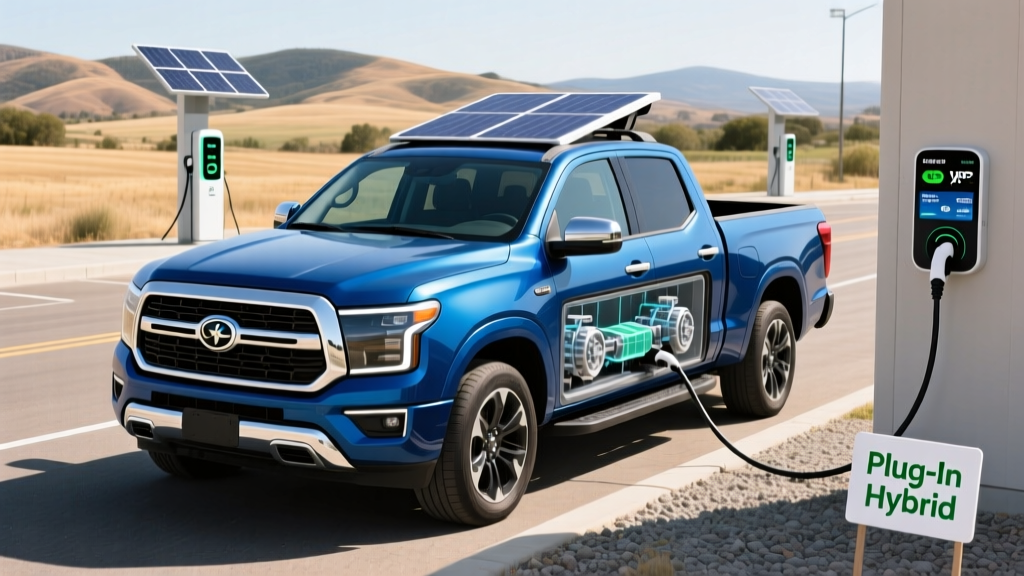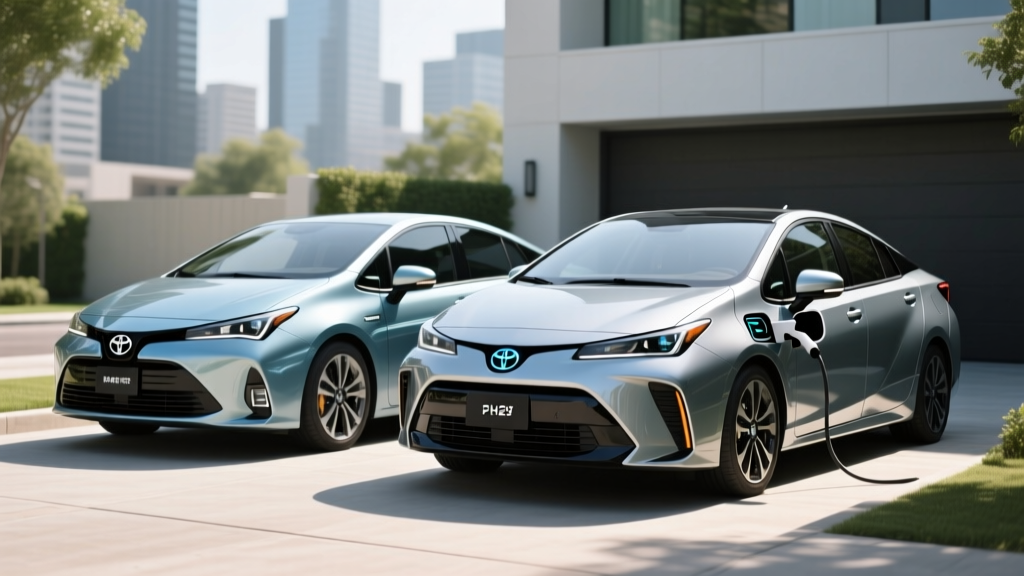
If you've ever asked "is the Prius a hybrid?" the short answer is an emphatic yes. The Toyota Prius has been the poster child for hybrid technology since it launched in the U.S. for the 2001 model year, and it remains one of the best-selling hybrid vehicles on the road. But in 2026, the question deserves a more precise answer, because Toyota now sells the Prius in two distinct flavors: the conventional hybrid electric vehicle (HEV) that never needs to be plugged in, and the Prius Prime plug-in hybrid (PHEV) that offers meaningful electric-only driving before the gas engine kicks on.
Understanding the difference between these two powertrains is the key to choosing the right Prius — or deciding whether a full battery-electric vehicle (BEV) better suits your needs. Below, we break down every critical spec: EPA fuel economy, electric-only range, horsepower, battery chemistry, warranty, pricing, and federal tax-credit eligibility, all sourced from fueleconomy.gov and Toyota's official specifications.
Is the Prius a Hybrid? HEV vs PHEV Explained
Conventional Hybrid (HEV) — Toyota Prius
A standard Prius HEV uses a small lithium-ion battery (roughly 0.9 kWh usable) paired with a 2.0-liter four-cylinder engine and two electric motor-generators. The battery recharges through regenerative braking and the gas engine — you never plug it in. The electric motor assists during acceleration and can propel the car at low speeds for very short distances (under a mile), but the engine is always doing the heavy lifting.
Plug-in Hybrid (PHEV) — Toyota Prius Prime
The Prius Prime carries a much larger 13.6 kWh lithium-ion battery that you can plug in to a wall outlet or Level 2 charger. This gives it an EPA-rated 44 miles of electric-only range before the hybrid powertrain takes over. Once the battery is depleted, it operates exactly like a conventional Prius HEV, achieving excellent fuel economy for the remainder of your trip.
The distinction matters enormously for your daily routine. If you can charge at home and your commute is under 44 miles round-trip, the Prius Prime can function as a daily EV while retaining unlimited gas-engine range for road trips. If you lack home charging access, the standard HEV gives you outstanding efficiency without any lifestyle change.
2026 Toyota Prius HEV: Fuel Economy and Powertrain Specs
The current-generation Prius (redesigned for 2023, refreshed through 2026) uses Toyota's fifth-generation hybrid system. Here's what the EPA says you can expect:
| Trim / Drivetrain | City MPG | Highway MPG | Combined MPG |
|---|---|---|---|
| LE (FWD) | 57 | 56 | 57 |
| XLE / Limited (FWD) | 52 | 52 | 52 |
| XLE AWD | 49 | 50 | 49 |
Source: fueleconomy.gov — 2026 model year estimates.
2026 Prius HEV Powertrain at a Glance
- Engine: 2.0L inline-4 Atkinson-cycle (150 hp)
- Electric motors: Two motor-generators via eCVT transaxle
- Combined net output: 194 hp (FWD) / 196 hp (AWD-e with rear motor)
- 0-60 mph: ~7.0 seconds (FWD)
- Hybrid battery: ~0.9 kWh lithium-ion (bipolar)
- Plug required: No — charges via regen and engine
Real-World MPG: Expect to Beat the Sticker in the City
Toyota hybrids consistently overperform their EPA city ratings in real-world stop-and-go driving because regenerative braking recovers energy that a gas car wastes as heat. On our mixed suburban-and-highway test loops, the Prius LE regularly returns 55-60 MPG combined in warm weather. Highway-only driving at 75 mph tends to drop to around 48-50 MPG because the aerodynamic penalty increases and the electric motor assists less. Cold weather (below 35°F) typically reduces fuel economy by 5-8 MPG due to longer engine warm-up cycles and increased cabin heating load.
2026 Toyota Prius Prime (PHEV): Electric Range and Efficiency
The Prius Prime is where the "is the Prius a hybrid" question gets more interesting. It's simultaneously an EV for short trips and a hybrid for long ones.
| Metric | SE | XSE / XSE Premium |
|---|---|---|
| Electric-only range | 44 miles | 40 miles |
| MPGe (electric mode) | 127 MPGe | 114 MPGe |
| Combined MPG (gas hybrid mode) | 52 MPG | 48 MPG |
| Total range (electric + gas) | ~550+ miles | ~510+ miles |
Source: fueleconomy.gov — 2026 model year estimates.
2026 Prius Prime Powertrain & Charging Specs
- Engine: 2.0L inline-4 Atkinson-cycle
- Combined net output: 220 hp
- 0-60 mph: ~6.6 seconds
- Traction battery: 13.6 kWh lithium-ion
- Level 1 charging (120V): ~11 hours (0-100%)
- Level 2 charging (240V, 3.3 kW onboard charger): ~4 hours (0-100%)
- DC fast charging: Not available — the Prime uses a J1772 AC inlet only
Real-World Electric Range: What to Actually Expect
The EPA's 44-mile figure for the Prime SE assumes moderate temperatures and mixed driving. In practice, expect 38-42 miles of electric-only range in summer conditions at suburban speeds. Highway driving at 70+ mph reduces electric range to roughly 30-34 miles because aerodynamic drag demands more power from the battery. In freezing temperatures with the cabin heater running, electric range can dip to 25-30 miles. The Prius Prime does not have a dedicated heat pump; it uses a combination of engine waste heat and electric resistance heating, which draws from the traction battery in EV mode.
Prius HEV vs Prius Prime vs Full EV: Which Should You Buy?
This is the decision framework that matters most. Each powertrain serves a different lifestyle.
Choose the Prius HEV if:
- You don't have access to home or workplace charging
- You want maximum simplicity — no plugs, no cords, no apps
- You drive 30+ miles daily and want consistently low fuel costs without behavior changes
- Upfront cost is a priority (the HEV starts ~$4,500 less than the Prime)
Choose the Prius Prime (PHEV) if:
- You can install a Level 2 charger at home or have reliable workplace charging
- Your daily commute is under 40 miles round-trip (you'll rarely use gas)
- You want EV-like daily driving but need gas-engine freedom for road trips
- You want the 220 hp powertrain — the Prime is the quickest Prius Toyota makes
Choose a full BEV (e.g., Tesla Model 3, Hyundai Ioniq 6) if:
- You have reliable home Level 2 charging
- Your typical trips stay within 250-300 miles, or you're willing to plan DC fast-charging stops
- You want to eliminate gasoline entirely and minimize maintenance (no oil changes, no engine)
- You qualify for the full $7,500 federal EV tax credit under IRS §30D rules
Pricing, Tax Credits, and Total Cost of Ownership
Here's where the math gets important for your wallet.
| Model / Trim | Starting MSRP | Federal Tax Credit |
|---|---|---|
| Prius LE (HEV) | $28,350 | $0 |
| Prius XLE (HEV) | $31,695 | $0 |
| Prius Limited (HEV) | $35,595 | $0 |
| Prius Prime SE (PHEV) | $33,445 | Up to $3,750* |
| Prius Prime XSE (PHEV) | $36,695 | Up to $3,750* |
| Prius Prime XSE Premium | $40,195 | Up to $3,750* |
*Federal tax credit for PHEVs depends on battery capacity, critical-mineral sourcing, buyer income caps, and MSRP caps under IRS §30D. The Prius Prime qualifies for up to $3,750 (partial credit) based on current battery-component sourcing rules. The conventional HEV does not qualify for any federal plug-in credit. Always verify current eligibility with a tax professional and the IRS clean vehicle credit page.
§30D Tax Credit Checklist for the Prius Prime
- Buyer income cap: AGI ≤ $150,000 (single) / $300,000 (married filing jointly)
- MSRP cap: Vehicle MSRP must be ≤ $55,000 (sedans) — all Prime trims qualify
- Battery sourcing: Critical minerals and battery component requirements phase in annually; the Prime currently earns partial ($3,750) credit
- Point-of-sale transfer: You can transfer the credit to the dealer at purchase for an immediate price reduction (effective 2024+)
- Conventional HEV: The standard Prius does not qualify — it has no plug and does not meet §30D's battery-capacity threshold
5-Year Cost Snapshot: HEV vs Prime vs Gas Sedan
Assuming 15,000 miles/year, $3.50/gallon gas, and $0.14/kWh electricity:
- Prius HEV (57 MPG): ~$4,605 in fuel over 5 years
- Prius Prime (80% electric commuting): ~$2,100 in combined fuel/electricity over 5 years
- Comparable gas sedan (30 MPG): ~$8,750 in fuel over 5 years
The Prius Prime's fuel savings over a gas car can exceed $6,500 in five years, partially offsetting its higher purchase price — and that's before any tax credit.
Battery Warranty, Reliability, and Replacement Cost
Toyota Hybrid Battery Warranty
- Coverage: 10 years / 150,000 miles (whichever comes first) on the hybrid battery and all hybrid-system components
- Applies to: Both the Prius HEV and Prius Prime
- Capacity retention: Toyota warrants the battery against defects and abnormal degradation; there is no published minimum SoH threshold like a BEV warranty, but the hybrid system will flag errors if voltage deviates beyond spec
- Transferable: Yes — the warranty transfers to subsequent owners
How Long Do Prius Hybrid Batteries Actually Last?
Toyota's hybrid batteries are among the most proven in the industry. The conventional Prius HEV uses a small (~0.9 kWh) lithium-ion pack that cycles shallowly — it never fully charges or fully depletes, which dramatically extends cycle life. Real-world data from fleet operators and Consumer Reports reliability surveys show Prius hybrid batteries routinely lasting 150,000-200,000+ miles with minimal capacity loss. Failures before 100,000 miles are rare.
The Prius Prime's larger 13.6 kWh battery sees deeper cycling (you use most of its capacity in EV mode), but Toyota's battery management system maintains a substantial buffer at the top and bottom of the pack to protect longevity. Prime batteries have shown strong durability through the current generation, though long-term 150K+ mile data is still accumulating for this specific pack.
Battery Replacement Cost
If your hybrid battery does eventually fail outside of warranty:
- Prius HEV: $2,000–$3,500 for a new OEM replacement; refurbished units available for $1,000–$1,800
- Prius Prime: $4,000–$6,500 for a new OEM pack due to the larger capacity
For context, most Prius owners never replace the hybrid battery. It is far less of a financial risk than many buyers assume.
Pros and Cons: 2026 Toyota Prius (HEV and Prime)
✓ Pros
- Class-leading fuel economy (57 MPG combined for HEV LE)
- Prius Prime offers 40-44 miles of genuine EV range for daily commuting
- 220 hp on the Prime makes it genuinely quick (6.6s to 60 mph)
- 10-year / 150,000-mile hybrid battery warranty
- Excellent reliability record across two decades of production
- Low starting price compared to EVs and many competing PHEVs
- Standard Toyota Safety Sense 3.0 (adaptive cruise, lane-keeping, AEB)
- No range anxiety — gas engine covers any distance
✗ Cons
- Prius Prime cannot DC fast charge — Level 2 only (3.3 kW)
- Rear-seat headroom is tight for taller passengers due to the sloping roofline
- Cargo space reduced on the Prime (battery takes under-floor room): ~20 cu ft vs ~24 cu ft on the HEV
- AWD only available on the HEV, not the Prime
- Conventional HEV qualifies for no federal tax credit
- Infotainment system functional but not class-leading in responsiveness
- Prime's electric range drops noticeably in cold weather or at highway speeds
Frequently Asked Questions
How many MPG does the Toyota Prius get?
The 2026 Prius LE (FWD) achieves an EPA-estimated 57 MPG city / 56 MPG highway / 57 MPG combined. Higher trims (XLE, Limited) rate at 52 MPG combined due to added weight and larger wheels. The AWD variant rates at 49 MPG combined. In real-world city driving with frequent stops, many owners report exceeding the EPA sticker thanks to aggressive regenerative braking.
How far can the Prius Prime go on electric only?
The 2026 Prius Prime SE delivers an EPA-estimated 44 miles of electric-only range. The XSE and XSE Premium trims rate at 40 miles due to heavier equipment and wider tires. Real-world electric range varies from about 30 miles (highway, cold weather) to 45+ miles (suburban, mild temperatures). Once the battery is depleted, the Prime seamlessly transitions to hybrid mode at 48-52 MPG.
Does the Prius qualify for a federal tax credit?
The conventional Prius HEV does not qualify for any federal plug-in vehicle tax credit because it cannot be plugged in. The Prius Prime PHEV qualifies for up to $3,750 under IRS §30D rules, depending on current battery-component and critical-mineral sourcing requirements. Eligibility also depends on your adjusted gross income (≤$150K single / ≤$300K joint) and the vehicle's MSRP (all Prime trims fall under the $55,000 sedan cap). The credit can be transferred to the dealer at the point of sale for an immediate price reduction. Always confirm current-year rules with a tax professional or the IRS website.
Is the Prius hybrid battery reliable, and what does replacement cost?
Toyota's hybrid batteries are among the most reliable in the automotive industry. The 10-year / 150,000-mile warranty covers defects and abnormal degradation. In practice, Prius HEV batteries commonly last 150,000-200,000+ miles. If replacement is needed out of warranty, expect $2,000-$3,500 for the HEV and $4,000-$6,500 for the Prime. Refurbished options can reduce cost to $1,000-$1,800 for the HEV.
Do I need to plug in a Toyota Prius?
Only if you choose the Prius Prime (PHEV). The standard Prius HEV never requires plugging in — its small battery charges entirely through regenerative braking and the gas engine. The Prime can be driven without plugging in (it will simply operate as a conventional hybrid), but you'll miss out on the 40-44 miles of electric-only range and the associated fuel savings that justify the Prime's price premium.
Hybrid vs PHEV vs EV — which powertrain fits me?
If you lack home charging and want zero lifestyle changes, choose the Prius HEV. If you have home charging and a short commute but want road-trip flexibility, the Prius Prime PHEV is ideal. If you have reliable charging, mostly drive under 300 miles between stops, and want to eliminate gasoline entirely, consider a full BEV like the Tesla Model 3 or Hyundai Ioniq 6. Each option has genuine trade-offs — there's no universally "best" answer, only the best answer for your specific driving pattern and charging access.
This guide reflects 2026 model-year specifications and current IRS §30D tax-credit rules as of publication. Pricing, credit eligibility, and sourcing requirements are subject to change. Always verify with Toyota's official specifications, fueleconomy.gov, and a qualified tax professional before purchasing.