The Short Answer: Yes, the Prius Is a Hybrid — But Which Kind?
If you've searched "is a Prius a hybrid," the answer is an emphatic yes. The Toyota Prius is the vehicle that introduced hybrid technology to the mass market back in 1997, and it remains one of the most efficient cars you can buy in 2026. But the question deserves a more precise answer, because Toyota now sells two distinct versions of the Prius, and confusing them is one of the most common mistakes shoppers make.
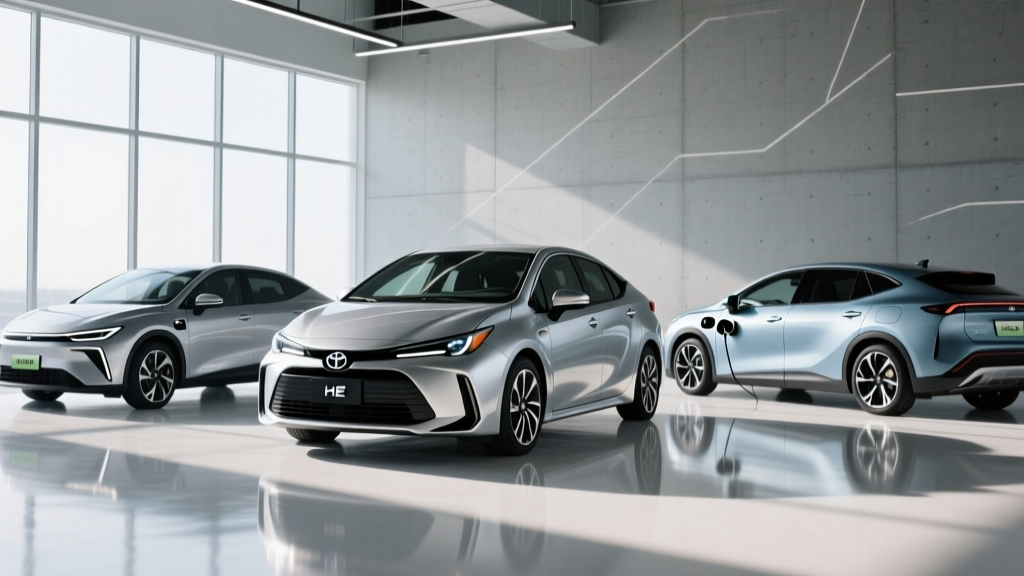
The Toyota Prius (conventional hybrid, or HEV) pairs a gasoline engine with an electric motor and a small battery that recharges through regenerative braking and engine power. You never plug it in. The Toyota Prius Prime (plug-in hybrid, or PHEV) adds a larger battery and a charge port, giving you roughly 44 miles of pure electric driving before the gas engine kicks in.
Both are hybrids. Both are exceptionally efficient. But they serve very different use cases — and only one qualifies for a federal tax credit. Let's break down exactly what you're getting.
HEV vs PHEV: What's the Actual Difference?
| Feature | Prius (HEV) | Prius Prime (PHEV) |
|---|---|---|
| Plug-in charging required? | No — self-charging | Yes — plug in to access EV range |
| Battery capacity | ~1.0 kWh (lithium-ion) | 13.6 kWh (lithium-ion) |
| Electric-only driving | Brief, low-speed assist only | Up to 44 miles (EPA) |
| Charge port | None | J1772 (Level 1/2 AC); no DC fast charge |
| Federal tax credit (§30D) | Not eligible | Up to $3,750 (see rules below) |
| Starting MSRP (2026) | ~$28,350 | ~$33,445 |
The critical distinction: a conventional hybrid like the Prius HEV never needs to be plugged in. It generates all its electricity internally. A PHEV like the Prius Prime can run on gas alone if you never charge it, but you'd be leaving its best feature on the table. If you can charge at home, the Prime effectively becomes a short-range EV for daily commuting with a gas engine as a range-extending safety net.
Fuel Economy: How Many MPG Does the Prius Get?
This is where the Prius earns its reputation. The current-generation Prius (redesigned for 2023 and carried forward through 2026) delivers class-leading efficiency in both its HEV and PHEV forms. Here are the official EPA figures from fueleconomy.gov:
| Model / Trim | City MPG | Highway MPG | Combined MPG | MPGe (PHEV EV mode) |
|---|---|---|---|---|
| Prius LE (FWD) | 57 | 56 | 57 | N/A |
| Prius XLE / Limited (FWD) | 52 | 52 | 52 | N/A |
| Prius AWD (all trims) | 49 | 50 | 49 | N/A |
| Prius Prime SE | 52 combined (gas-only, after EV range depleted) | 127 MPGe | ||
| Prius Prime XSE / XSE Premium | 48 combined (gas-only, after EV range depleted) | 114 MPGe | ||
Real-World MPG: What to Actually Expect
Hybrids have a distinctive real-world trait: they often exceed EPA city estimates in gentle, low-speed driving because the electric motor handles the stop-and-go work where gas engines are least efficient. On the flip side, sustained highway driving at 75+ mph reduces the hybrid advantage, since the engine runs continuously.
For the Prius LE FWD, owners consistently report 55–62 MPG in mixed suburban driving and 48–53 MPG on long highway trips at 70–80 mph. In cold weather (below 35°F), expect a 5–10% drop as the engine runs more often for cabin heat and the battery's chemical efficiency decreases. If your commute is mostly city and suburban, the Prius HEV is one of the few cars where the real-world number can genuinely beat the sticker.
Prius Prime PHEV: Electric-Only Range and Charging
The Prius Prime's headline feature is its 44 miles of EPA-rated electric-only range (SE trim; 40 miles for XSE trims due to larger wheels and added weight). For many commuters, that covers a full round-trip without burning a drop of gasoline.
| Specification | Value |
|---|---|
| Usable battery capacity | ~10.9 kWh (of 13.6 kWh total) |
| EPA electric-only range (SE) | 44 miles |
| EPA electric-only range (XSE) | 40 miles |
| Total combined range (EV + gas) | ~470 miles (SE) |
| Level 1 charging (120V, 12A) | ~11 hours (0–100%) |
| Level 2 charging (240V, 32A) | ~4 hours (0–100%) |
| DC fast charging | Not supported |
| Charge port standard | J1772 |
A few practical notes on charging the Prime:
- No DC fast charging. The Prius Prime tops out at Level 2 AC charging (~3.5 kW peak). That's fine for overnight home charging but means you won't benefit from highway DC fast chargers.
- Level 1 is viable for low-mileage drivers. If you drive 25–30 miles per day, a standard 120V household outlet can replenish enough overnight to cover most of your commute.
- A Level 2 home charger is ideal if you want a full battery every morning, especially in colder climates where efficiency drops.
Powertrain: Horsepower, Engine, and Performance
The current-generation Prius isn't just efficient — it's genuinely quick by hybrid standards. Toyota's fifth-generation hybrid system pairs a 2.0-liter four-cylinder engine with electric motors for a meaningful power bump over the previous generation's often-criticized sluggishness.
| Spec | Prius HEV (FWD) | Prius HEV (AWD) | Prius Prime |
|---|---|---|---|
| Combined net horsepower | 194 hp | 196 hp | 220 hp |
| Engine | 2.0L 4-cyl | 2.0L 4-cyl | 2.0L 4-cyl |
| Electric motor(s) | 1 front | 1 front + 1 rear | 1 front (higher output) |
| 0–60 mph (est.) | ~7.2 sec | ~7.0 sec | ~6.6 sec |
| Drivetrain | FWD | AWD (e-AWD) | FWD |
| Transmission | eCVT | eCVT | eCVT |
The Prime's 220 hp makes it the quickest Prius ever sold, and the HEV AWD model's electronic rear axle provides confident traction in rain and light snow without a mechanical driveshaft — the rear motor engages only when needed.
Pricing, Trims, and Tax Credit Eligibility
Here's what you'll actually pay at the dealership for a 2026 Prius, before any incentives:
| Model / Trim | MSRP (incl. destination) |
|---|---|
| Prius LE | $28,350 |
| Prius XLE | $31,695 |
| Prius Limited | $35,595 |
| Prius Prime SE | $33,445 |
| Prius Prime XSE | $36,745 |
| Prius Prime XSE Premium | $40,145 |
Does the Prius Qualify for a Federal Tax Credit?
This is where the HEV and PHEV diverge sharply:
- Prius HEV (conventional hybrid): Does NOT qualify for the federal §30D clean vehicle credit. Conventional hybrids are ineligible — the credit applies only to plug-in vehicles (BEVs and PHEVs).
- Prius Prime (PHEV): May qualify for up to $3,750 under the §30D credit, subject to the following requirements:
- Buyer AGI must not exceed $150,000 (single) / $300,000 (joint)
- Vehicle MSRP must be under $55,000 (sedan cap — all Prius Prime trims qualify)
- Battery must meet critical-mineral and component-sourcing thresholds set by the IRS; the exact credit amount ($3,750 vs. $7,500) depends on whether the vehicle meets one or both sourcing requirements for the given tax year
- Credit can be transferred to the dealer as a point-of-sale rebate (effective 2024 onward)
Because battery-sourcing rules tighten periodically, the exact credit amount available at purchase can change. Always verify current eligibility on IRS.gov or consult a tax professional before committing. Some states also offer additional rebates for PHEVs — check your state energy office for details.
Battery Longevity, Warranty, and Replacement Cost
Hybrid battery anxiety is one of the most persistent concerns among first-time hybrid buyers. Here's what the data actually shows for the Prius.
| Item | Detail |
|---|---|
| Hybrid battery warranty | 10 years / 150,000 miles (all 50 states, model year 2020+) |
| Powertrain warranty | 5 years / 60,000 miles |
| Basic warranty | 3 years / 36,000 miles |
| HEV battery replacement cost (out of warranty) | $2,500 – $4,000 (OEM); $1,500 – $2,500 (remanufactured) |
| Prime PHEV battery replacement cost (out of warranty) | $5,000 – $8,000 (estimated, OEM) |
| Real-world battery lifespan | Many Prius HEV batteries last 150,000–200,000+ miles with normal use |
The Prius has the longest track record of any hybrid on the road. Taxi fleets and rideshare drivers have logged 300,000+ miles on original hybrid batteries. Toyota's 10-year/150,000-mile hybrid battery warranty (which applies nationwide, not just in CARB states) provides substantial protection. The smaller HEV battery is under less stress than a full EV pack because it operates in a narrow state-of-charge window — Toyota's battery management system rarely lets it drop below ~40% or above ~80%, which dramatically extends cycle life.
For the Prius Prime, the larger PHEV battery sees deeper cycling, but Toyota still warranties it for 10 years/150,000 miles at a minimum 70% capacity retention threshold. If you're buying new, the likelihood of paying out-of-pocket for a battery replacement within your ownership period is low.
Reliability: Is the Prius a Safe Long-Term Bet?
The Prius consistently ranks among the most reliable vehicles in its class. Toyota's hybrid synergy drive system has been refined over nearly three decades, and the 2.0L Dynamic Force engine used in the current generation is one of the most thermally efficient production engines ever built (over 40% thermal efficiency).
Key reliability advantages:
- No traditional transmission. The eCVT is a planetary gearset with no belts, clutches, or bands to wear out — it's fundamentally simpler than a conventional automatic.
- Regenerative braking saves brake pads. Because the electric motor handles much of the deceleration, Prius owners often report original brake pads lasting 80,000–100,000 miles.
- Lower maintenance costs. No timing belt (chain-driven), no starter motor, no alternator in the traditional sense — the hybrid system handles all of these functions.
Check IIHS ratings for the latest crash-test performance. The current-generation Prius earned top marks in multiple categories, a significant improvement over earlier models.
Who Should Choose the Prius HEV, the Prime PHEV, or a Full EV?
Prius HEV (Conventional Hybrid)
Pros:
- Best-in-class 57 MPG combined, no plug needed
- Lowest starting price ($28,350)
- Zero charging infrastructure dependency
- Proven long-term reliability, low maintenance
- AWD available for all-weather traction
Cons:
- No federal tax credit
- No electric-only driving mode
- Still burns gasoline on every trip
Prius Prime (PHEV)
Pros:
- 44 miles EV range covers most commutes gas-free
- Up to $3,750 federal tax credit
- Gas engine eliminates range anxiety on road trips
- 220 hp — quickest Prius variant
- Total range ~470 miles
Cons:
- $5,000+ premium over HEV base
- No DC fast charging
- Smaller cargo area (battery placement)
- Requires home charging to maximize value
The Decision Framework
Choose the Prius HEV if: You lack access to home or workplace charging, you want the simplest possible ownership experience, your budget is under $30K, or you drive long highway routes where hybrid efficiency shines without the need for electric-only operation.
Choose the Prius Prime PHEV if: You can install a Level 2 charger at home, your daily round-trip commute is under 40 miles, you want to drive mostly on electricity without committing to a full EV, or you want the federal tax credit to offset the price premium.
Choose a full EV (like the Tesla Model 3, Hyundai Ioniq 6, or Chevy Equinox EV) if: Your daily driving is predictable, you have reliable home charging, you want zero tailpipe emissions, you're ready to leave gasoline behind entirely, and you want access to the full $7,500 federal credit (where eligible).
Frequently Asked Questions
Is a Prius a hybrid or an electric car?
The Toyota Prius is a hybrid — it combines a gasoline engine with an electric motor. It is not a fully electric car (BEV). However, the Prius Prime variant is a plug-in hybrid (PHEV) that can drive up to 44 miles on electricity alone before switching to hybrid mode.
Do I need to plug in a regular Prius?
No. The standard Prius HEV charges its own battery through regenerative braking and the gasoline engine. There is no charge port. Only the Prius Prime PHEV has a plug.
How long does a Prius hybrid battery last?
Toyota warranties the hybrid battery for 10 years or 150,000 miles. Real-world data from taxi fleets and high-mileage owners shows many Prius batteries lasting 200,000+ miles. Out-of-warranty replacement costs $2,500–$4,000 for the HEV and an estimated $5,000–$8,000 for the Prime PHEV.
Does the Prius qualify for any tax credit?
The standard Prius HEV does not qualify for any federal tax credit. The Prius Prime PHEV may qualify for up to $3,750 under the IRS §30D clean vehicle credit, subject to income limits, MSRP caps, and battery-sourcing requirements. Verify current eligibility at IRS.gov.
Is the Prius Prime worth the extra cost over the regular Prius?
It depends on your commute and charging access. If you can charge at home and your daily driving is under 44 miles, the Prime lets you commute on electricity for pennies per mile while keeping the gas engine for road trips. The potential $3,750 tax credit also narrows the price gap. If you can't charge at home, the standard HEV's 57 MPG is hard to beat for simplicity and value.
How does Prius MPG compare to a full EV's cost per mile?
At 57 MPG and $3.30/gallon gas, the Prius HEV costs roughly $0.058 per mile in fuel. A typical EV consuming 28 kWh/100mi at $0.14/kWh (national average home electricity) costs about $0.039 per mile. The EV is cheaper per mile, but the Prius has no charging dependency and a lower purchase price — the break-even point depends on how many miles you drive annually and your local electricity rates.