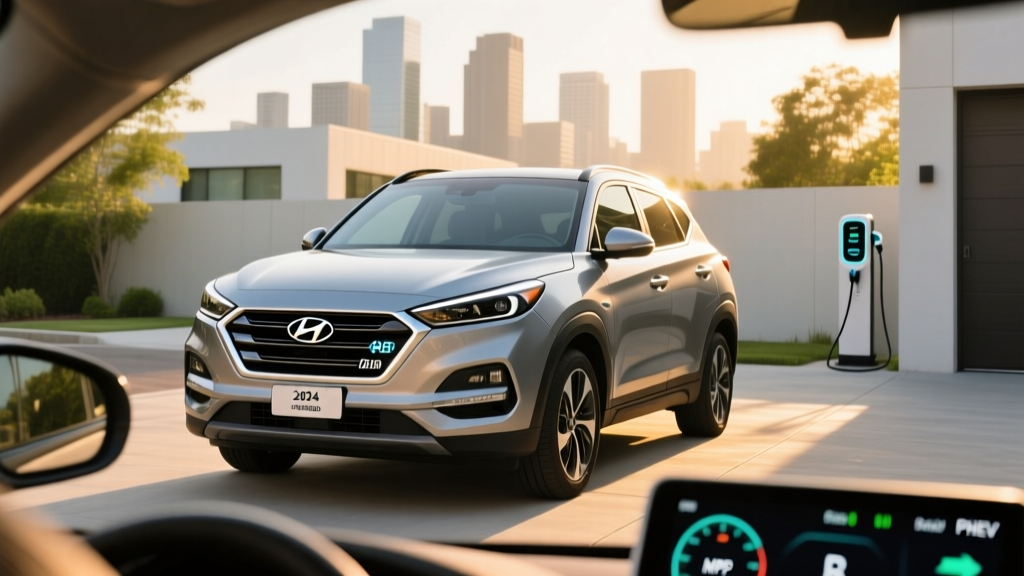
The compact SUV segment is crowded, but the 2024 Hyundai Tucson Hybrid stands out by offering two distinct electrified paths: a conventional hybrid (HEV) that never needs plugging in, and a plug-in hybrid (PHEV) that delivers genuine electric-only commuting range. With combined horsepower figures that outmuscle many gas-only rivals and fuel economy that undercuts them at the pump, the Tucson Hybrid lineup deserves a close look for buyers not yet ready to commit to a full battery-electric vehicle.
This guide breaks down the exact EPA numbers, real-world efficiency expectations, powertrain specs, pricing, and ownership considerations you need to decide between the HEV, the PHEV, or a full EV alternative.
Hyundai Tucson HEV vs PHEV: What's the Difference?
Before diving into specs, it's critical to understand the fundamental distinction between these two powertrains — they serve different use cases.
| Feature | Tucson Hybrid (HEV) | Tucson Plug-In Hybrid (PHEV) |
|---|---|---|
| Needs to plug in? | No — regenerative braking and engine charge the battery | Yes — plug in to access electric-only range |
| Electric-only driving | Brief low-speed EV mode only | EPA-estimated 33 miles fully electric |
| Battery size | 1.49 kWh (small buffer) | 13.8 kWh usable |
| Charging hardware | None needed | Level 1 (120V) or Level 2 (240V); no DC fast charging |
| Combined horsepower | 226 hp | 261 hp |
| Drivetrain | AWD standard | AWD standard |
| Federal tax credit | Not eligible | Not eligible under current §30D rules (sourcing/battery requirements) |
The HEV is a drop-in replacement for a gas car: you fill up at the station and the hybrid system handles the rest. The PHEV rewards owners who can charge at home or work with meaningful electric-only miles for daily commutes, then switches to hybrid mode for longer trips with no range anxiety.
Fuel Economy: EPA MPG and Real-World Expectations
Fuel efficiency is the primary reason buyers choose hybrids. Here's how the Tucson lineup stacks up per EPA data on fueleconomy.gov:
| Model | City MPG | Highway MPG | Combined MPG | MPGe (PHEV EV mode) |
|---|---|---|---|---|
| Tucson Hybrid (HEV) AWD | 37 | 38 | 38 | N/A |
| Tucson PHEV AWD | 35 (hybrid mode) | 35 (hybrid mode) | 35 (hybrid mode) | 80 MPGe |
| Tucson Gas (2.5L AWD, baseline) | 23 | 29 | 26 | N/A |
Real-World MPG: What to Actually Expect
Hybrids typically exceed their EPA city rating in stop-and-go traffic because regenerative braking recaptures energy that a gas car wastes as heat. In mixed suburban driving, Tucson HEV owners regularly report 36–40 MPG. Highway cruising at 75+ mph yields closer to 33–35 MPG because the electric motor assists less at sustained speed and aerodynamic drag dominates.
For the PHEV, once the battery depletes after ~33 electric miles, the gasoline engine engages and you'll see roughly 33–35 MPG in hybrid mode — slightly lower than the HEV because the PHEV carries a heavier battery pack. If your daily round-trip commute is under 33 miles and you charge nightly, you may use almost no gasoline for weeks.
Powertrain Specs: Horsepower, Engine, and Motors
| Specification | Tucson HEV | Tucson PHEV |
|---|---|---|
| Engine | 1.6L turbocharged 4-cylinder | 1.6L turbocharged 4-cylinder |
| Electric motor | 44.2 kW (59 hp) | 66.9 kW (90 hp) |
| Combined system output | 226 hp / 258 lb-ft torque | 261 hp / 258 lb-ft torque |
| Transmission | 6-speed automatic | 6-speed automatic |
| 0–60 mph (est.) | ~7.3 seconds | ~6.3 seconds |
| Towing capacity | 2,000 lbs | 2,000 lbs |
| Drivetrain | HTRAC AWD | HTRAC AWD |
The PHEV's larger electric motor gives it a noticeable acceleration advantage — 261 hp makes it genuinely quick off the line, especially in EV mode where torque delivery is instant. Both models use Hyundai's HTRAC all-wheel-drive system, which can route torque between axles for traction in rain and light snow.
Tucson PHEV Electric Range, Battery, and Charging
The Tucson PHEV's headline feature is its 33-mile EPA-estimated all-electric range. That's enough to cover the average American one-way commute (roughly 16 miles per the Census Bureau) with margin to spare for errands.
PHEV Battery: 13.8 kWh lithium-ion polymer pack. Charges via Level 1 (120V household outlet) in approximately 11 hours, or Level 2 (240V, 7.2 kW onboard charger) in under 2 hours. No DC fast charging capability — this is common for PHEVs, as the smaller battery doesn't justify the cost and weight of DC hardware.
Total combined range (electric + gasoline) exceeds 400 miles, eliminating range anxiety on road trips. When the battery depletes, the vehicle seamlessly transitions to hybrid mode — you never need to manage the switch manually.
Charging Cost vs. Gasoline
At the US average electricity rate of ~$0.16/kWh, fully charging the PHEV's 13.8 kWh battery costs roughly $2.21 for 33 miles — about 6.7 cents per mile. Compare that to the gas-only Tucson at 26 MPG and $3.40/gallon: roughly 13.1 cents per mile. If you charge at home and commute within EV range, you cut fuel costs nearly in half for daily driving.
Pricing, Trims, and Tax Credit Eligibility
Here's the 2024 Tucson Hybrid pricing structure (MSRP, before destination):
| Trim | Powertrain | MSRP |
|---|---|---|
| Blue | HEV | $32,975 |
| SEL Convenience | HEV | $36,385 |
| Limited | HEV | $40,575 |
| SEL Convenience | PHEV | $39,675 |
| Limited | PHEV | $45,435 |
Does the Tucson Hybrid Qualify for a Federal Tax Credit?
Under current IRS §30D clean vehicle credit rules, the Tucson PHEV does not qualify for the up-to-$7,500 federal tax credit. The credit now requires battery component manufacturing and critical mineral sourcing thresholds that the Tucson PHEV does not meet for the 2024 model year. The conventional HEV has never been eligible, as §30D requires a minimum battery capacity and plug-in capability.
However, some states offer their own hybrid or PHEV incentives — check your state energy office or department of environmental quality for current programs. Hyundai also periodically offers manufacturer incentives (cash-back or low-APR financing) that can offset the lack of federal credits.
Battery Warranty, Reliability, and Replacement Costs
Hyundai provides one of the strongest hybrid battery warranties in the industry:
Hybrid/PHEV Battery Warranty: 10 years / 100,000 miles (whichever comes first) for the original owner. This covers battery capacity loss below a specified threshold and defects.
Powertrain Warranty: 10 years / 100,000 miles.
New Vehicle Limited Warranty: 5 years / 60,000 miles.
Is the Tucson Hybrid Reliable?
Hyundai's 1.6L turbo hybrid powertrain has been in service across multiple models (Sonata, Elantra, Tucson) since 2021 with generally positive reliability outcomes. The hybrid system adds complexity (electric motor, inverter, high-voltage battery) but eliminates other wear items — there's no traditional starter motor, no alternator, and regenerative braking extends brake pad life significantly.
Should the hybrid battery require replacement outside of warranty, expect a cost in the $2,500–$4,500 range depending on whether you source OEM or refurbished units. However, modern lithium-ion hybrid batteries are designed to last the life of the vehicle in most cases — data from Hyundai's earlier hybrid models shows minimal degradation at 100,000+ miles.
Hybrid vs PHEV vs Full EV: Which Tucson Fits You?
Choose the Tucson HEV if:
- You can't charge at home or work (apartment, street parking)
- You want maximum fuel efficiency with zero behavior change
- Your budget is closer to $33K–$40K
- You drive mostly city/suburban miles where regen braking shines
Choose the Tucson PHEV if:
- You have Level 1 or Level 2 charging access at home
- Your daily commute is under ~33 miles round-trip
- You want EV-like daily driving but road-trip flexibility
- You value the extra 35 hp and quicker acceleration
When to Consider a Full EV Instead
If you have reliable home charging, drive under 250 miles daily, and want to eliminate gasoline entirely, a full BEV like the Hyundai Ioniq 5 (303 miles EPA range, DC fast charging to 10–80% in ~18 minutes) may save more long-term and qualifies for federal and state incentives the Tucson PHEV does not. However, if you regularly tow, take 500+ mile road trips, or live in an area with sparse DC charging infrastructure, the Tucson PHEV's flexibility is a genuine advantage.
Frequently Asked Questions
How many MPG does the 2024 Hyundai Tucson Hybrid get?
The Tucson HEV is EPA-rated at 37 city / 38 highway / 38 combined MPG. Real-world results vary: expect 36–40 MPG in city driving (where regen braking helps most) and 33–35 MPG at sustained highway speeds above 70 mph.
How far can the Tucson PHEV go on electric only?
The 2024 Tucson PHEV has an EPA-estimated 33 miles of all-electric range. Real-world EV range may drop to 27–30 miles in cold weather (below 40°F) or at highway speeds, and can extend to 35+ miles in mild conditions with light acceleration.
Does the Tucson Hybrid need to be plugged in?
The conventional Tucson HEV does not need plugging in — it charges its small battery through regenerative braking and the gasoline engine. Only the Tucson PHEV benefits from being plugged in to access its 33-mile electric range.
Is the Tucson Hybrid battery expensive to replace?
Hybrid battery replacement costs roughly $2,500–$4,500 if needed out of warranty. However, Hyundai covers the battery for 10 years/100,000 miles, and real-world data suggests these batteries rarely require full replacement within normal ownership periods.
Does the 2024 Tucson Hybrid qualify for any tax credit?
Neither the Tucson HEV nor the Tucson PHEV qualifies for the federal §30D clean vehicle tax credit under current battery sourcing and manufacturing rules. Check IRS.gov for updates and consult a tax professional. Some state-level incentives may apply.
How does the Tucson Hybrid compare to the Toyota RAV4 Hybrid?
The RAV4 Hybrid is rated at 41/38/40 MPG (city/highway/combined) — slightly higher than the Tucson HEV's 37/38/38. However, the Tucson offers more standard horsepower (226 vs 219), a more modern interior, and the PHEV option that Toyota also offers (RAV4 Prime, 42 miles EV range but at a significant price premium and limited availability).