Quick Verdict: The Sonata Limited Hybrid Earns Its Top-Trim Price
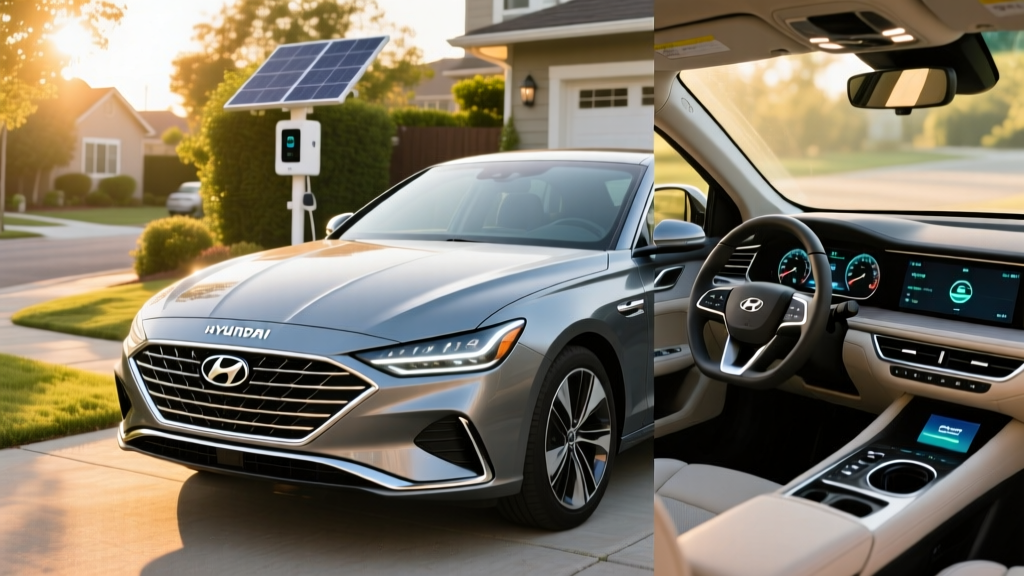
The 2026 Hyundai Sonata Limited Hybrid sits at the apex of Hyundai's midsize sedan lineup, pairing a proven 2.0-liter gasoline direct-injection engine with a 39 kW electric motor and a 1.62 kWh lithium-ion battery pack. The result is a conventional hybrid electric vehicle (HEV) that requires no plug-in charging, delivers 192 combined horsepower, and achieves an EPA-estimated 44 MPG combined. For buyers who want premium features — leather seats, a panoramic sunroof, a digital key, and Hyundai's full SmartSense suite — without the commitment of a plug-in hybrid or battery-electric vehicle, the Limited Hybrid occupies a compelling niche.
But does the $38,250 starting MSRP justify itself over the lower trims, and how does real-world fuel economy compare to the EPA sticker? This guide breaks down every number that matters.
EPA Fuel Economy vs. Real-World MPG
The Sonata Hybrid's powertrain is optimized for efficiency across all driving conditions, but like most hybrids, it shines brightest in stop-and-go city traffic where regenerative braking recaptures energy and the electric motor handles low-speed propulsion.
| Driving Condition | EPA Estimate | Real-World Expectation |
|---|---|---|
| City | 44 MPG | 42–48 MPG |
| Highway | 42 MPG | 38–43 MPG |
| Combined | 44 MPG | 40–45 MPG |
Source: EPA Fuel Economy Guide
With a 13.0-gallon fuel tank, the Sonata Hybrid's total range sits between approximately 520 and 585 miles depending on driving conditions — enough to stretch most owners to a single fill-up per week or less.
HEV vs. PHEV: Which Sonata Hybrid Is Right for You?
Hyundai offers the Sonata exclusively as a conventional hybrid (HEV) in the US market. There is no plug-in hybrid (PHEV) variant currently available, which simplifies the buying decision but also means you cannot access electric-only driving or the federal §30D tax credit reserved for plug-in vehicles.
| Attribute | Sonata Hybrid (HEV) | Typical PHEV Sedan | Full EV Sedan |
|---|---|---|---|
| Plug-in Charging Required | No | Yes (recommended) | Yes (mandatory) |
| Electric-Only Range | None (EV-assist only) | 25–40 miles | 250–350+ miles |
| Fuel / Energy Source | Gasoline only | Gasoline + electricity | Electricity only |
| Federal Tax Credit (§30D) | Not eligible | Up to $7,500* | Up to $7,500* |
| Typical Combined MPG / MPGe | 44 MPG | 40–50 MPG + 80–100 MPGe | 100–130 MPGe |
| Home Charging Setup | Not needed | Level 2 recommended | Level 2 essential |
*§30D credit eligibility depends on MSRP caps ($55,000 for sedans), buyer income limits, and battery critical-mineral sourcing requirements. See IRS guidelines for current-year rules. Consult a tax professional before relying on credit estimates.
The Sonata HEV is purpose-built for drivers who want maximum fuel efficiency with zero lifestyle change — no charging cables, no range planning, no electrical panel upgrades.
Powertrain and Performance Specs
The Sonata Hybrid uses Hyundai's TMED-II (Transmission-Mounted Electric Drive) system, which places the electric motor between the engine and a 6-speed automatic transmission. This architecture provides smooth power delivery without the rubber-band feel of some CVT-based hybrids.
| Specification | 2026 Sonata Limited Hybrid |
|---|---|
| Engine | 2.0L GDI 4-cylinder (150 HP, 139 lb-ft) |
| Electric Motor | 39 kW (52 HP, 151 lb-ft) |
| Combined System Output | 192 HP |
| Transmission | 6-speed automatic (TMED-II) |
| Hybrid Battery | 1.62 kWh lithium-ion |
| 0–60 MPH | ~7.5 seconds |
| Drivetrain | Front-wheel drive |
| Fuel Tank | 13.0 gallons |
| EPA Combined MPG | 44 MPG |
| Total Range | ~520–585 miles |
| Curb Weight | ~3,530 lbs |
The 192 combined horsepower is adequate for highway merging and passing but won't mistake this for a performance sedan. The electric motor's instant torque (151 lb-ft) provides responsive off-the-line acceleration in city driving, which is where most Sonata Hybrid owners spend their miles.
2026 Sonata Limited Hybrid Pricing and Trims
The Limited sits at the top of the Sonata Hybrid range, adding premium features over the SEL Convenience and Blue trims.
| Trim | MSRP (approx.) | Key Additions Over Base Hybrid |
|---|---|---|
| Blue | $30,250 | Base hybrid powertrain, 47 MPG combined (lighter weight) |
| SEL Convenience | $34,750 | SynTex leatherette, heated front seats, wireless CarPlay/Android Auto, 12.3" cluster |
| Limited | $38,250 | Genuine leather, panoramic sunroof, Digital Key 2, ventilated front seats, heated rear seats, surround-view monitor, Highway Driving Assist 2 |
MSRP figures are approximate and exclude destination charges (~$1,150). Verify current pricing on Hyundai's official site.
What the Limited Trim Adds for the Money
The $3,500 step up from SEL Convenience to Limited buys meaningful upgrades that affect daily comfort and safety:
- Panoramic sunroof: A cabin-brightening feature unavailable on lower trims, though it adds ~50 lbs and slightly reduces headroom.
- Genuine leather seating: Upgraded from SynTex synthetic leather, with ventilated front seats — a significant comfort upgrade in warm climates.
- Digital Key 2: Use your smartphone as a key fob via NFC and UWB; share access with family members remotely.
- Highway Driving Assist 2 (HDA-2): Hyundai's Level 2 driver-assistance system with lane-centering, adaptive cruise, and lane-change assist. The driver must remain engaged at all times — this is not autonomous driving.
- Surround-view monitor: 360-degree camera system with parking collision-avoidance assist.
- Heated rear seats: Rare at this price point and a differentiator for family-oriented buyers.
For buyers who plan to keep the car 5+ years and value daily comfort features, the Limited trim's additions are worth the premium. If your priority is purely fuel economy, the Blue trim actually achieves 47 MPG combined due to its lighter weight and aerodynamic wheel covers.
Battery Warranty, Reliability, and Replacement Cost
Hybrid battery longevity is the number-one concern for buyers new to hybrid ownership. Hyundai addresses this with one of the strongest warranty packages in the industry.
- Duration: 10 years / 100,000 miles (whichever comes first) for original owners in most states
- California-emissions states: 10 years / 150,000 miles
- Coverage: Defects and capacity loss below functional threshold
- Hybrid system components: 10 years / 100,000 miles (motor, inverter, control unit)
- Basic vehicle warranty: 5 years / 60,000 miles
- Powertrain warranty: 10 years / 100,000 miles
Hyundai's 1.62 kWh hybrid battery is far smaller than a full EV battery (typically 60–100 kWh), which means replacement costs are proportionally lower. Based on industry data and Hyundai dealer service estimates:
- Hybrid battery replacement (out of warranty): $2,500–$4,500 including parts and labor
- Expected battery lifespan: 150,000–200,000+ miles under normal use, based on Hyundai's track record with the Ioniq and Sonata Hybrid platforms
- Degradation pattern: Lithium-ion hybrid batteries lose capacity gradually; most owners never notice a meaningful drop in MPG over the vehicle's life because the battery buffer manages charge/discharge cycles conservatively
The Sonata Hybrid's battery operates in a narrow state-of-charge window (roughly 40–80% SoC), which dramatically reduces degradation compared to EVs that regularly charge to 100%. Real-world failure rates for Hyundai/Kia hybrid batteries have been low, with most issues covered under warranty.
For reliability ratings, the Sonata Hybrid carries strong marks from owner surveys. Hyundai's hybrid system has been in production since the 2011 Sonata Hybrid, giving it over a decade of iterative refinement. Check IIHS for the latest crash-test scores and safety evaluations.
Who Should Choose the Sonata Limited Hybrid?
- You drive 12,000–20,000 miles per year and want to minimize fuel costs without charging infrastructure
- You live in an apartment or lack access to home/workplace charging
- You want a premium midsize sedan with leather, sunroof, and advanced safety tech under $40,000
- You take regular road trips and don't want to plan around charging stops
- You want strong resale value with a proven hybrid powertrain
- You have home Level 2 charging access and a short commute (a PHEV could cover 25–40 miles electric-only)
- You want to qualify for the $7,500 federal §30D tax credit (HEVs are not eligible)
- You want to eliminate gasoline entirely and have reliable charging access
- You live in a state with cheap electricity and expensive gasoline (California, New York, Hawaii)
The Sonata Limited Hybrid makes the most sense for drivers who prioritize simplicity: no plug, no app, no charging anxiety — just fill up at any gas station and drive. The 44 MPG combined rating translates to roughly $1,100–$1,300 in annual fuel costs at 15,000 miles per year and $3.30/gallon, compared to $1,900–$2,200 for a comparable 28 MPG gasoline midsize sedan.
Pros and Cons at a Glance
- 44 MPG combined (47 MPG on Blue trim) with no plug-in required
- 10-year/100,000-mile hybrid battery and powertrain warranty
- Limited trim offers genuine luxury features under $40K
- HDA-2 Level 2 driver assist is among the best in class
- 520+ mile total range eliminates refueling stops on most trips
- Smooth 6-speed automatic avoids CVT drone
- Strong IIHS safety ratings
- Not eligible for federal §30D tax credit (HEV, not PHEV/EV)
- No electric-only driving mode for zero-emission city miles
- 192 HP is adequate but not sporty; 0–60 in ~7.5 seconds
- Limited trim's panoramic sunroof slightly reduces headroom
- FWD only — no AWD option for snow-belt buyers
- 42 MPG highway is good but not class-leading (Toyota Camry Hybrid achieves 44–51 MPG combined depending on trim)
Frequently Asked Questions
How many MPG does the 2026 Hyundai Sonata Limited Hybrid get?
The EPA rates the Sonata Limited Hybrid at 44 MPG city, 42 MPG highway, and 44 MPG combined. The lighter Blue trim achieves 47 MPG combined. In real-world driving, city MPG often exceeds the EPA estimate thanks to regenerative braking, while sustained highway driving above 75 MPH typically returns 38–43 MPG.
Does the Sonata Hybrid need to be plugged in?
No. The Sonata Hybrid is a conventional HEV (hybrid electric vehicle). It charges its 1.62 kWh battery through regenerative braking and the gasoline engine. You never plug it in — just fill up at any gas station.
Does the Sonata Hybrid qualify for any tax credit?
The Sonata Hybrid does not qualify for the federal §30D Clean Vehicle Credit, which requires a plug-in vehicle with at least 7 kWh of battery capacity. Some state and local utility programs offer rebates for high-efficiency hybrids — check the AFDC incentive search for programs in your area.
Is the Sonata Hybrid reliable, and what does battery replacement cost?
Hyundai's hybrid system has a strong reliability track record spanning over a decade. The hybrid battery is covered by a 10-year/100,000-mile warranty (10/150,000 in CARB states). Out-of-warranty replacement runs approximately $2,500–$4,500, though most hybrid batteries last 150,000–200,000+ miles with normal use.
How does the Sonata Hybrid compare to the Toyota Camry Hybrid?
The Camry Hybrid (especially the LE trim) achieves slightly higher EPA ratings at up to 51 MPG combined and offers AWD. The Sonata Hybrid counters with a more premium interior on the Limited trim, a longer basic warranty (5/60,000 vs. Toyota's 3/36,000), and Hyundai's Digital Key technology. Both are excellent choices — the decision often comes down to brand preference and which feature set matters more to you.
Hybrid vs. PHEV vs. EV — which is right for me?
Choose a conventional hybrid (HEV) like the Sonata Hybrid if you have no charging access and want maximum simplicity. Choose a PHEV if you can charge at home and want 25–40 miles of electric-only commuting with a gas engine for longer trips. Choose a full EV if you have reliable home charging, want the lowest operating costs, and are ready to plan around DC fast charging on road trips.
What is the Sonata Hybrid's total driving range?
With a 13.0-gallon fuel tank and 44 MPG combined, the Sonata Limited Hybrid delivers approximately 520–585 miles of total range depending on driving conditions. That translates to roughly 350–400 miles of real-world highway driving between fill-ups.