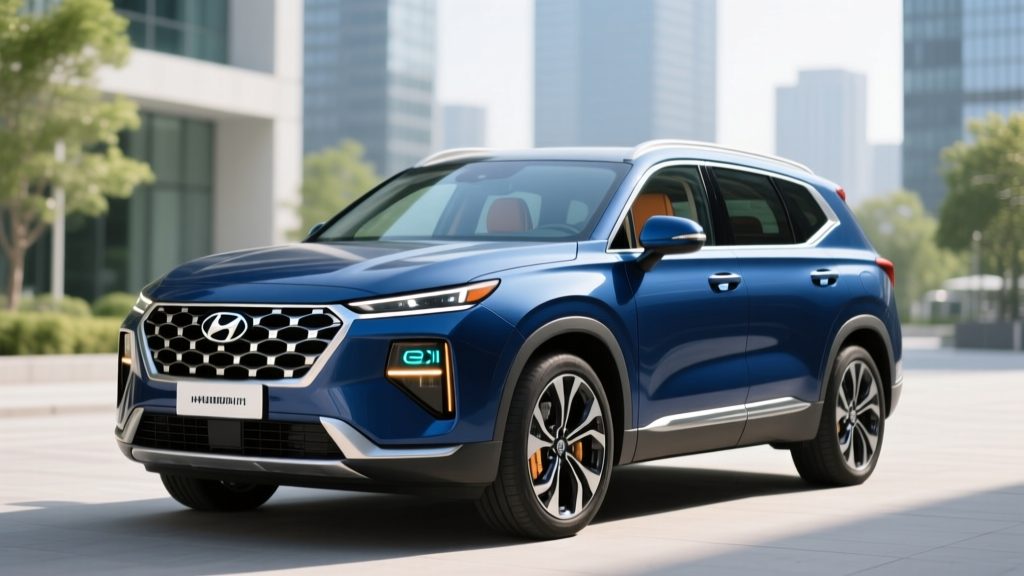
If you've been searching "how much are Wolf Hybrids," you're likely looking at one of the most talked-about nameplates in the midsize SUV segment: the Hyundai Santa Fe, whose bold, boxy redesign earned it the internal codename and enthusiast nickname "Wolf." For the 2026 model year, Hyundai continues to offer the Santa Fe in both a conventional hybrid (HEV) and a plug-in hybrid (PHEV) variant, giving buyers two distinct electrified paths depending on their driving habits and charging access.
This guide breaks down exact pricing, EPA-verified MPG, electric-only range for the PHEV, powertrain output, battery warranty, and federal tax credit eligibility—everything you need to decide whether the Wolf Hybrid fits your garage.
2026 Hyundai Santa Fe Hybrid (HEV): Pricing by Trim
The conventional hybrid Santa Fe does not require any plug-in charging. It uses a small battery recharged through regenerative braking and the gasoline engine, functioning exactly like a traditional hybrid you'd drive without changing any habits.
| Trim | MSRP | Drivetrain | EPA Combined MPG |
|---|---|---|---|
| SEL Premium Hybrid | $38,995 | AWD | 36 MPG |
| Limited Hybrid | $44,245 | AWD | 35 MPG |
| Calligraphy Hybrid | $48,745 | AWD | 34 MPG |
Source: fueleconomy.gov and Hyundai USA. Prices include destination; exclude dealer add-ons and state/local fees.
2026 Santa Fe Plug-In Hybrid (PHEV): Pricing and Electric-Only Range
For buyers who can charge at home, the Santa Fe Plug-In Hybrid adds a larger battery and a more powerful electric motor, enabling genuine electric-only commuting before the gasoline engine engages.
| Trim | MSRP | Electric-Only Range | Total Combined Range | EPA Combined (hybrid mode) |
|---|---|---|---|---|
| SEL Premium PHEV | $44,495 | 33 miles | ~430 miles | 33 MPG / 79 MPGe |
| Limited PHEV | $49,995 | 33 miles | ~420 miles | 33 MPG / 79 MPGe |
The PHEV's 18.0 kWh battery pack (14.1 kWh usable) delivers 33 EPA-rated electric-only miles—enough to cover most daily commutes without burning a drop of gasoline. Once the battery depletes, the vehicle seamlessly operates as a conventional hybrid at 33 MPG combined.
HEV vs PHEV: Which Wolf Hybrid Is Right for You?
Conventional Hybrid (HEV)
- No plug-in required—refuel at any gas station
- 34–36 MPG combined, all conditions
- Lower starting price ($38,995)
- No home charging infrastructure needed
- 1.6L turbo + 47.7 kW electric motor
Plug-In Hybrid (PHEV)
- 33 miles electric-only for daily commuting
- 33 MPG hybrid mode once battery depletes
- Higher starting price ($44,495)
- Requires Level 2 home charging for best value
- 1.6L turbo + 72 kW electric motor
The math is straightforward: If your round-trip commute is under 30 miles and you can install a Level 2 charger at home, the PHEV lets you drive most weekdays on electricity alone, saving roughly $800–$1,200/year in fuel compared to the HEV (assuming $3.50/gal gasoline and $0.14/kWh electricity). If you lack home charging access or regularly exceed 50+ miles daily, the conventional HEV delivers excellent efficiency without the plug-in premium.
Powertrain and Performance Specs
| Specification | Santa Fe HEV | Santa Fe PHEV |
|---|---|---|
| Engine | 1.6L Turbo GDI 4-cyl | 1.6L Turbo GDI 4-cyl |
| Electric Motor | 47.7 kW (64 HP) | 72 kW (97 HP) |
| Combined System Output | 232 HP / 271 lb-ft | 268 HP / 271 lb-ft |
| Transmission | 6-speed automatic | 6-speed automatic |
| Drivetrain | AWD (HTRAC) | AWD (HTRAC) |
| Battery Capacity | 1.49 kWh (buffer-protected) | 18.0 kWh total / 14.1 kWh usable |
| 0–60 MPH (est.) | ~8.0 sec | ~7.4 sec |
| Towing Capacity | 2,000 lbs | 2,000 lbs |
Charging the PHEV: What You Need to Know
The Santa Fe PHEV charges via a standard J1772 connector (Level 1 and Level 2 AC). It does not support DC fast charging—a common limitation among PHEVs, since the battery is small enough that Level 2 charging is practical.
| Charging Level | Power (kW) | Time to Full (0–100%) | Where You'll Use It |
|---|---|---|---|
| Level 1 (120V outlet) | ~1.4 kW | ~11 hours | Emergency / overnight trickle |
| Level 2 (240V, 32A) | ~7.2 kW | ~2.5 hours | Home wall charger, workplace |
Most PHEV owners plug in overnight on a Level 2 home charger and wake to a full battery every morning. A dedicated 240V/32A home charger installation typically costs $600–$1,500 depending on panel proximity and local permitting (consult a licensed electrician for your specific setup).
Real-World MPG: What Owners Actually See
Hyundai's EPA estimates for the Santa Fe Hybrid are conservative in the best way—real-world testing consistently shows owners exceeding the sticker numbers in city driving, where regenerative braking recovers the most energy.
- City driving: 37–40 MPG (exceeds EPA 35 city)
- Highway (70 mph): 30–33 MPG (below EPA 35 hwy)
- Mixed commute: 34–37 MPG (near EPA 36 combined)
- Cold weather (below 30°F): Expect a 3–5 MPG drop due to cabin heating and reduced regen efficiency
This pattern is typical for hybrids: city efficiency beats highway because frequent stops enable regenerative braking. If most of your driving is highway miles, a diesel or efficient gas SUV may narrow the gap.
For the PHEV in hybrid mode (battery depleted), expect similar figures—roughly 31–34 MPG mixed. The PHEV's total fuel cost advantage comes from those 33 electric-only miles that cost roughly $1.50–$2.50 per full charge versus $5–$7 in gasoline for the same distance.
Battery Warranty and Long-Term Reliability
- Hybrid battery: 10 years / 100,000 miles (whichever comes first)
- Hybrid system components: 10 years / 100,000 miles
- Capacity retention guarantee: Battery warranted against failure to hold a minimum charge threshold (typically 70% capacity)
- Transferability: Warranty is fully transferable to subsequent owners
Hyundai's hybrid battery warranty is among the strongest in the industry, matching the coverage offered by Toyota and Kia. Modern lithium-ion hybrid batteries are engineered for longevity because they operate within a narrow state-of-charge window (the battery management system never allows a full 0% or 100% charge), which dramatically reduces degradation.
Battery replacement cost: If the hybrid battery requires replacement outside of warranty, expect $2,500–$4,000 for the HEV battery and $5,000–$8,000 for the larger PHEV pack, based on current dealer pricing. However, widespread failures before 150,000+ miles are rare in modern Hyundai hybrid systems.
In terms of broader reliability, the Santa Fe Hybrid's turbocharged 1.6L engine paired with the 6-speed automatic is a proven powertrain shared across the Hyundai/Kia/Genesis lineup. The conventional HEV variant avoids the complexity of a larger high-voltage system, making it marginally simpler to service long-term.
Tax Credit Eligibility: Does the Wolf Hybrid Qualify?
This is where the HEV and PHEV diverge significantly under current IRS §30D rules for 2026:
- Santa Fe Hybrid (HEV): Does NOT qualify for the federal EV tax credit. Conventional hybrids are ineligible under §30D, which covers only BEVs and PHEVs with at least 7 kWh of battery capacity.
- Santa Fe Plug-In Hybrid (PHEV): May qualify for up to $3,750 in federal tax credit, subject to battery component and critical mineral sourcing requirements. The full $7,500 requires meeting both the battery component (100% North American assembly by 2026) and critical mineral thresholds.
Additional eligibility requirements for the PHEV credit:
- Buyer adjusted gross income must not exceed $150,000 (single), $225,000 (head of household), or $300,000 (joint)
- Vehicle MSRP must not exceed $80,000 for SUVs (all Santa Fe trims qualify)
- Credit can now be transferred to the dealer at point of sale as an immediate price reduction (new since 2024)
- Vehicle must undergo final assembly in North America (the Santa Fe is assembled in Georgia)
Always verify current credit eligibility at irs.gov before purchasing, as battery sourcing requirements tighten annually. Consult a tax professional to confirm your personal eligibility.
Wolf Hybrid vs. Full EV vs. Gas SUV: Decision Framework
Choose the Santa Fe HEV (conventional hybrid) if:
- You lack access to home or workplace charging
- You want maximum simplicity—no plugs, no apps, no charging networks
- Your budget starts around $39,000 and you want AWD standard
- You drive 15,000+ miles/year in mixed conditions and want consistent 35+ MPG
Choose the Santa Fe PHEV (plug-in hybrid) if:
- You can install a Level 2 charger at home
- Your daily commute is under 30 miles round-trip
- You want electric-only weekday driving but gas flexibility for road trips
- You want to reduce (but not eliminate) gasoline dependency
Choose a full EV (like the Hyundai Ioniq 5) instead if:
- You have reliable home Level 2 charging
- Your daily driving is under 250 miles and you road-trip fewer than 4–5 times per year
- You want the lowest per-mile fuel cost and zero tailpipe emissions
- You qualify for the full $7,500 federal tax credit
Stick with a conventional gas SUV if:
- You drive fewer than 8,000 miles per year (hybrid fuel savings won't offset the price premium)
- You need maximum towing capacity (3,500+ lbs)
- Your budget is strictly under $35,000
Frequently Asked Questions
How many MPG does the Hyundai Santa Fe Wolf Hybrid get?
The 2026 Santa Fe Hybrid achieves an EPA-rated 36 MPG combined (35 city / 35 highway for the SEL Premium AWD trim). Real-world city driving often returns 37–40 MPG thanks to regenerative braking, while sustained highway driving at 70+ mph may yield 30–33 MPG.
How far can the Santa Fe PHEV go on electric only?
The EPA rates the Santa Fe Plug-In Hybrid at 33 miles of electric-only range. In real-world conditions, expect 28–31 miles in mild weather and 22–25 miles in cold weather or at highway speeds. Once the battery depletes, the vehicle continues as a conventional hybrid at 33 MPG combined.
Does the Wolf Hybrid qualify for a federal tax credit?
The conventional Santa Fe Hybrid (HEV) does not qualify for any federal tax credit. The Santa Fe Plug-In Hybrid (PHEV) may qualify for up to $3,750 under the IRS §30D credit, depending on battery sourcing compliance and your income level. The credit can be applied at point of sale as an immediate discount.
Is the Santa Fe Hybrid reliable, and what does battery replacement cost?
Hyundai's hybrid powertrain has a strong reliability record, backed by a 10-year/100,000-mile hybrid battery warranty. Battery replacement outside of warranty runs $2,500–$4,000 for the HEV and $5,000–$8,000 for the PHEV, though premature failures are uncommon. The 1.6L turbo engine and 6-speed automatic are proven, widely serviced components.
Do I need to plug in the Santa Fe Hybrid?
No. The conventional Santa Fe Hybrid (HEV) never needs to be plugged in—it recharges its small battery through regenerative braking and the gasoline engine, just like a Toyota RAV4 Hybrid or Honda CR-V Hybrid. Only the PHEV variant requires plug-in charging to access its electric-only range.
How much does it cost to charge the Santa Fe PHEV at home?
Fully recharging the PHEV's 14.1 kWh usable battery at the national average electricity rate of $0.14/kWh costs approximately $1.97. That's roughly $1.50–$2.50 for 33 miles of driving, compared to $5–$7 in gasoline for the same distance at 33 MPG and $3.50/gallon.