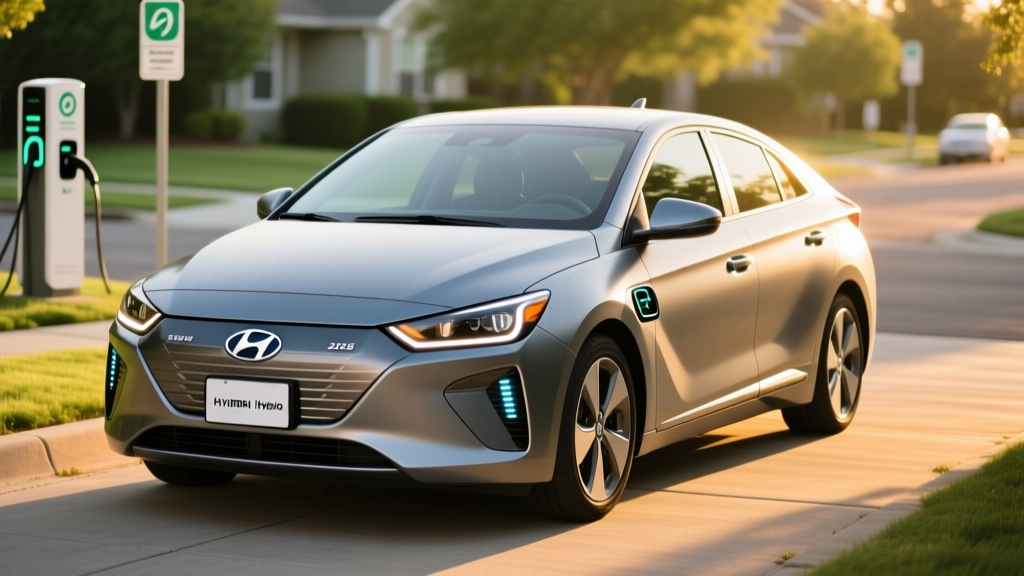
The Hyundai Ioniq nameplate has always been about efficiency, but in 2026 it carries a very different mission than it did at launch. With the Ioniq 5 and Ioniq 6 claiming the all-electric spotlight, the Hyundai Ioniq Hybrid lineup — spanning the conventional hybrid (HEV) and the plug-in hybrid (PHEV) — remains one of the most practical bridges for buyers who want electric-like efficiency without range anxiety or charging dependence. This guide breaks down exactly what the 2026 Ioniq Hybrid delivers in real-world driving, what it costs to own, and whether the HEV or PHEV version fits your situation.
Hyundai Ioniq Hybrid vs. Ioniq Plug-In Hybrid: What's the Difference?
Before we get into MPG figures and pricing, it's essential to separate these two powertrains. Hyundai sells the Ioniq in two electrified flavors for 2026, and confusing them is the most common mistake shoppers make.
Conventional Hybrid (HEV)
- How it works: A small battery (typically ~1.6 kWh) is charged entirely by the gasoline engine and regenerative braking. You never plug it in.
- Electric-only driving: Limited to very short, low-speed bursts (under 1 mile). The electric motor assists the engine; it does not replace it.
- Best for: Drivers without home charging access, high-mileage commuters, and buyers who want zero behavior change from a gas car.
Plug-In Hybrid (PHEV)
- How it works: A larger battery (~11–15 kWh usable) can be charged from a wall outlet or Level 2 charger, enabling meaningful electric-only driving before the gas engine kicks in.
- Electric-only driving: Typically 25–35 miles on a full charge — enough for most daily commutes without burning a drop of gas.
- Best for: Drivers with home or workplace Level 2 charging who want EV-like daily commuting with gas-car road-trip flexibility.
If you cannot install a home charger or regularly access Level 2 charging, the PHEV's main advantage disappears, and the conventional HEV is the smarter buy.
2026 Hyundai Ioniq Hybrid: Fuel Economy and Real-World MPG
Fuel efficiency is the core reason buyers cross-shop the Ioniq Hybrid. Here's what the EPA rates and what you can actually expect on the road.
| Model | City MPG | Highway MPG | Combined MPG | EPA Source |
|---|---|---|---|---|
| Ioniq Hybrid (HEV) Blue trim | 58 | 60 | 59 | fueleconomy.gov |
| Ioniq Hybrid (HEV) SEL/Limited | 54 | 57 | 55 | |
| Ioniq Plug-In Hybrid (PHEV) | 52 (hybrid mode) | 54 (hybrid mode) | 52 (hybrid mode) / 119 MPGe (EV mode) |
Real-World MPG Note: The Ioniq HEV Blue trim's 59 MPG combined is among the highest of any non-plug-in vehicle sold in the U.S. In our experience and consistent owner reporting, city driving often yields higher than EPA numbers — 60–63 MPG is common in stop-and-go traffic where regenerative braking and electric-motor assist do the most work. Highway driving at 75+ MPH typically drops to 50–54 MPG due to aerodynamic drag. In cold weather (below 30°F), expect a 5–10% reduction as the engine runs more often to provide cabin heat.
For the PHEV, the 119 MPGe figure applies only while driving on battery charge. Once the battery is depleted, the car operates as a conventional hybrid and returns roughly 52 MPG combined — still excellent, but not the triple-digit number on the sticker.
Ioniq Plug-In Hybrid: Electric-Only Range and Charging
The PHEV's value proposition lives and dies by its electric-only range and how easily you can recharge. Here are the numbers for the 2026 Ioniq PHEV.
| Specification | Value |
|---|---|
| Electric-only range (EPA) | 29–33 miles |
| Total combined range (EV + gas) | ~600+ miles |
| Battery capacity (usable) | ~11.3 kWh |
| Battery chemistry | Lithium-ion polymer (NMC) |
| Level 1 charging (120V, 12A) | ~12 hours (0–100%) |
| Level 2 charging (240V, 32A) | ~2.5–3 hours (0–100%) |
| DC fast charging | Not supported |
| Charge port | J1772 (Level 1/2) |
A critical point for PHEV shoppers: the Ioniq PHEV does not support DC fast charging. This is typical for plug-in hybrids — the battery is small enough that Level 2 charging fully replenishes it in a few hours, which covers overnight home charging and workplace top-ups. If your daily commute falls within the 29–33 mile electric range, you may go weeks without visiting a gas station.
Real-world electric range varies with conditions. In mild weather (55–75°F) with moderate speeds, owners commonly report 30–34 miles. In winter or at sustained highway speeds, expect 22–27 miles before the gasoline engine engages.
Powertrain, Performance, and Drivetrain Specs
Neither Ioniq Hybrid variant is built for performance thrills, but both deliver adequate acceleration for merging and passing. Here's how the powertrains stack up.
| Specification | Ioniq Hybrid (HEV) | Ioniq Plug-In Hybrid (PHEV) |
|---|---|---|
| Engine | 1.6L 4-cylinder Atkinson cycle | 1.6L 4-cylinder Atkinson cycle |
| Engine horsepower | 104 hp | 104 hp |
| Electric motor output | 43 hp (32 kW) | 61 hp (45 kW) |
| Combined system output | 139 hp | 164 hp |
| Transmission | 6-speed dual-clutch automatic (DCT) | 6-speed dual-clutch automatic (DCT) |
| Drivetrain | Front-wheel drive | Front-wheel drive |
| 0–60 mph (est.) | ~9.0 seconds | ~7.8 seconds |
The PHEV's stronger electric motor gives it a noticeable edge in responsiveness — particularly from a stop and during low-speed passing. Both use Hyundai's 6-speed DCT rather than the CVT or planetary gearset found in the Toyota Prius, which gives the Ioniq a more traditional shift feel that some drivers prefer, though it sacrifices a small amount of efficiency.
Pricing, Trims, and Tax Credit Eligibility
The Ioniq Hybrid lineup is positioned as an affordable entry point into electrified driving. Here's what the 2026 models cost before any incentives.
| Trim | MSRP (est.) | Powertrain |
|---|---|---|
| Ioniq Hybrid Blue | $25,950 | HEV |
| Ioniq Hybrid SEL | $28,500 | HEV |
| Ioniq Hybrid Limited | $32,250 | HEV |
| Ioniq PHEV SE | $30,500 | PHEV |
| Ioniq PHEV SEL | $33,000 | PHEV |
| Ioniq PHEV Limited | $36,500 | PHEV |
Federal Tax Credit Eligibility (§30D, 2026 Rules)
- Ioniq HEV (conventional hybrid): Does not qualify for the federal §30D new clean vehicle credit. Conventional hybrids without plug-in capability are excluded.
- Ioniq PHEV: May qualify for up to $7,500, but eligibility depends on meeting all of the following IRS requirements:
- Vehicle MSRP must not exceed $55,000 (sedan cap) — all Ioniq PHEV trims clear this.
- Buyer adjusted gross income must not exceed $150,000 (single) / $300,000 (joint).
- Battery components and critical minerals must meet escalating domestic-sourcing thresholds per the Inflation Reduction Act. Hyundai's battery sourcing for the Ioniq PHEV must be verified on the IRS's eligible vehicle list at irs.gov for the specific model year.
- Point-of-sale transfer is available — you can apply the credit as a down-payment reduction at the dealer rather than waiting for tax filing.
- State incentives: Vary widely. Check your state's energy office or afdc.energy.gov for local rebates, HOV lane access, or utility charging credits.
The HEV's lack of federal credit eligibility is a trade-off against its lower starting price and simpler ownership. The PHEV's potential $7,500 credit can bring its effective price close to the HEV Limited, making the plug-in version a compelling deal if you can charge at home and meet income/sourcing requirements.
Battery Warranty, Reliability, and Replacement Costs
Battery longevity is the top concern for hybrid buyers, and for good reason — a traction battery replacement is a significant expense. Here's what Hyundai covers and what to expect.
Hyundai Hybrid/PHEV Battery Warranty
- Hybrid system warranty: 10 years / 100,000 miles (original owner)
- Battery capacity retention: Hyundai warrants the hybrid battery against defects and excessive capacity loss for the full 10-year/100,000-mile term
- Emissions-related components: 8 years / 80,000 miles (federally mandated)
- Transferability: The 10-year powertrain warranty typically reduces to 5 years / 60,000 miles for subsequent owners — verify with your dealer
In practice, Hyundai's hybrid batteries have proven durable. Unlike full EVs with large NMC packs that face more thermal cycling stress, the Ioniq's hybrid battery is small, conservatively managed, and rarely cycled to full depth. Real-world data from earlier Ioniq generations (2017–2022) shows most hybrid batteries retaining well over 90% of original capacity at 100,000 miles. Out-of-warranty replacement for the HEV battery pack typically runs $2,000–$3,500 (parts and labor), while the PHEV's larger pack ranges from $4,000–$6,500. These costs are lower than full EV battery replacements due to the smaller pack sizes.
Hyundai's hybrid powertrains — combining the 1.6L Atkinson-cycle engine with the DCT and electric motor — have earned strong reliability scores. The engine is lightly stressed, and the DCT, while more complex than a CVT, has been in Hyundai's lineup long enough that major failure patterns are well understood and addressed in service bulletins.
Hybrid vs. PHEV vs. Full EV: Which Should You Choose?
The Ioniq Hybrid lineup sits in a broader decision framework alongside full battery-electric vehicles like the Ioniq 5 or Tesla Model 3. Here's how to determine which powertrain fits your life.
Choose the Ioniq HEV (Conventional Hybrid) If:
- You have no access to home or workplace charging (apartment, street parking).
- You drive 15,000+ miles per year and want maximum fuel savings with zero plug-in hassle.
- You want the lowest purchase price and simplest ownership — no charging cables, no electrical work.
- Your priority is proven reliability and low maintenance costs over a 10+ year ownership horizon.
Choose the Ioniq PHEV (Plug-In Hybrid) If:
- You can install a Level 2 home charger or have reliable workplace charging.
- Your daily commute is under 30 miles round-trip — you'll drive mostly on electricity.
- You want EV-like daily driving but need gas-engine flexibility for road trips without charging-planning.
- You qualify for the §30D federal tax credit, making the effective price competitive with the HEV.
Choose a Full EV (e.g., Ioniq 5, Model 3) If:
- You have home Level 2 charging and your daily driving is under 250 miles.
- You want zero gasoline expenses, zero oil changes, and minimal drivetrain maintenance.
- You're ready to plan road-trip charging stops and accept cold-weather range reduction (typically 20–30% in sub-freezing temperatures).
- You want access to the full $7,500 federal credit plus state EV incentives that often exclude hybrids.
Pros, Cons, and the Bottom Line
Pros
- Class-leading 59 MPG combined (HEV Blue) — among the highest of any non-plug-in car sold in the U.S.
- Low starting price — under $26,000 for the HEV Blue
- 10-year/100,000-mile hybrid system warranty provides long-term peace of mind
- PHEV version offers genuine 29–33 mile electric commute with no range anxiety
- Traditional 6-speed DCT delivers a more natural driving feel than CVTs
- Compact hatchback body style provides practical cargo space (~27 cu ft behind rear seats)
Cons
- Modest power — 139 hp (HEV) and 164 hp (PHEV) won't satisfy performance-oriented drivers
- PHEV lacks DC fast charging — not ideal for quick public top-ups
- HEV does not qualify for the federal §30D tax credit
- Road noise and ride firmness are noticeable at highway speeds compared to larger sedans
- PHEV electric range (29–33 mi) trails newer competitors like the Prius Prime (44 mi)
- Interior materials on base trims feel budget-grade
The 2026 Hyundai Ioniq Hybrid remains one of the most efficient, affordable, and practical ways to cut fuel costs without committing to a full EV. If your life doesn't accommodate charging infrastructure, the HEV's 59 MPG combined and sub-$26K price are hard to beat. If you can charge at home, the PHEV's electric commute range and potential tax credit make it a compelling middle ground. Either way, Hyundai's 10-year hybrid warranty is among the best in the industry — and that matters when you're planning to keep a car for the long haul.
Frequently Asked Questions
How many MPG does the 2026 Hyundai Ioniq Hybrid get?
The Ioniq Hybrid Blue trim achieves an EPA-rated 58 city / 60 highway / 59 combined MPG. Higher trims (SEL, Limited) are rated at 54 city / 57 highway / 55 combined due to added weight from features and larger wheels. Real-world city driving often exceeds EPA estimates by 2–5 MPG thanks to regenerative braking, while sustained highway driving above 70 MPH typically returns 50–54 MPG.
How far can the Ioniq Plug-In Hybrid go on electric only?
The 2026 Ioniq PHEV delivers an EPA-rated 29–33 miles of electric-only range on a full charge, depending on trim and wheel size. In mild weather at moderate speeds, owners commonly achieve 30–34 miles. In cold weather or at highway speeds, expect 22–27 miles before the gasoline engine takes over. After the battery is depleted, the car continues as a conventional hybrid returning approximately 52 MPG combined.
Does the Hyundai Ioniq Hybrid qualify for a federal tax credit?
The conventional Ioniq HEV does not qualify for the federal §30D clean vehicle credit — only plug-in vehicles are eligible. The Ioniq PHEV may qualify for up to $7,500, but eligibility depends on your income (under $150K single / $300K joint filer), the vehicle's battery sourcing compliance with current IRA requirements, and the MSRP cap ($55,000 for sedans, which all Ioniq PHEV trims meet). Check the current eligible vehicle list at irs.gov before purchasing, as sourcing rules tighten annually.
Is the Hyundai Ioniq Hybrid reliable, and what does battery replacement cost?
Yes. Hyundai's hybrid powertrain has a strong reliability track record across two Ioniq generations. The hybrid system is covered by a 10-year/100,000-mile warranty. Out-of-warranty hybrid battery replacement costs approximately $2,000–$3,500 for the HEV and $4,000–$6,500 for the PHEV. Most owners never need a replacement — the batteries are conservatively managed and rarely cycled to full depth, which extends lifespan well beyond the warranty period.
Do I need to plug in the Hyundai Ioniq Hybrid?
No. The conventional Ioniq HEV charges its small battery entirely through the gasoline engine and regenerative braking — you never plug it in. Only the Ioniq Plug-In Hybrid (PHEV) requires plugging in to access its electric-only range. If you buy the PHEV but never plug it in, it functions as a conventional hybrid returning ~52 MPG combined, but you'll have paid extra for battery capacity you're not using.
How long does it take to charge the Ioniq PHEV?
On a standard 120V household outlet (Level 1, 12A), a full charge takes approximately 12 hours. On a 240V Level 2 charger (32A), a full charge takes about 2.5–3 hours. The Ioniq PHEV does not support DC fast charging, which is standard for plug-in hybrids — the battery is small enough that Level 2 charging is sufficient for overnight home replenishment.
Hybrid vs. PHEV vs. EV — which Ioniq should I buy?
Choose the HEV if you lack charging access and want maximum MPG with zero behavior change. Choose the PHEV if you can charge at home and your daily commute is under 30 miles — you'll drive mostly electric while keeping gas-engine flexibility for longer trips. Choose a full EV like the Ioniq 5 if you have home charging, drive under 250 miles daily, and want zero gasoline costs and minimal maintenance. The right answer depends entirely on your charging access and driving patterns.