HEV vs PHEV: The Core Difference Every Buyer Needs to Know
If you're not ready to commit to a full battery-electric vehicle but want to cut fuel costs and emissions, you've likely landed on two options: a conventional hybrid (HEV) or a plug-in hybrid (PHEV). Both use a gasoline engine paired with an electric motor, but the way they operate—and the savings they deliver—diverge sharply in daily use.
Conventional Hybrid (HEV)
An HEV like the Toyota RAV4 Hybrid or Honda CR-V Hybrid uses a small battery (typically 1.0–2.0 kWh) that recharges exclusively through regenerative braking and the engine. You never plug it in. The electric motor assists the gas engine during acceleration and enables low-speed electric-only driving for brief stretches (usually under 1 mile). The result: dramatically improved city MPG without any change to your fueling routine.
Plug-In Hybrid (PHEV)
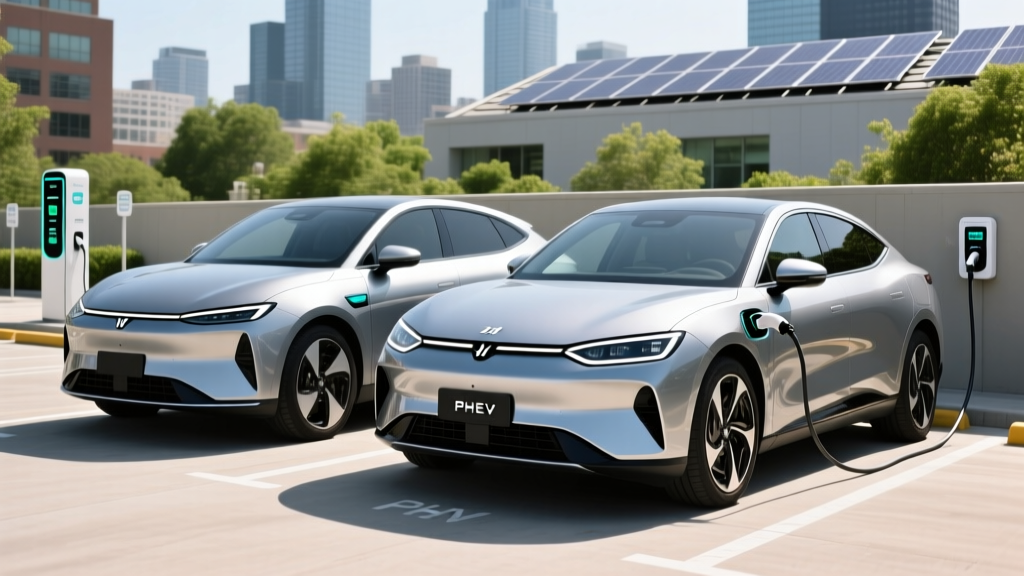
A PHEV like the Toyota RAV4 Prime or Jeep Wrangler 4xe carries a much larger battery (15–25+ kWh) that you charge via a wall outlet or charging station. It delivers 25–50+ miles of pure electric driving before the gas engine engages, effectively functioning as a short-range EV for daily commutes and a hybrid for longer trips. PHEVs bridge the gap between gas and full electric with zero range anxiety.
The wrong choice can cost you thousands in missed fuel savings or wasted upfront premium. Here's how to decide.
Real-World MPG: What You'll Actually See
The EPA publishes combined, city, and highway fuel-economy figures, but hybrids have a well-documented quirk: they routinely exceed their EPA city estimates in stop-and-go traffic because regenerative braking recovers energy that a gas car wastes as heat. Highway driving tells a different story—at sustained 70–80 mph speeds, the engine does most of the work, and real-world MPG often falls 2–5 MPG below the sticker.
| Vehicle | Type | City MPG | Highway MPG | Combined MPG | EV Range (mi) | Combined MPGe |
|---|---|---|---|---|---|---|
| Toyota RAV4 Hybrid | HEV | 41 | 38 | 40 | — | — |
| Toyota RAV4 Plug-In Hybrid (Prime) | PHEV | 40 (gas) | 36 (gas) | 38 (gas) | 42 | 94 |
| Honda CR-V Hybrid | HEV | 43 | 36 | 40 | — | — |
| Hyundai Tucson Plug-In Hybrid | PHEV | 35 (gas) | 35 (gas) | 35 (gas) | 33 | 80 |
| Toyota Prius | HEV | 57 | 56 | 57 | — | — |
| Toyota Prius Plug-In Hybrid | PHEV | 52 (gas) | 48 (gas) | 50 (gas) | 44 | 127 |
| Ford Escape PHEV | PHEV | 42 (gas) | 38 (gas) | 40 (gas) | 37 | 105 |
| Jeep Wrangler 4xe | PHEV | — | — | 20 (gas) | 22 | 49 |
Source: fueleconomy.gov (EPA). Real-world city MPG for HEVs often runs 2–4 MPG above EPA; highway MPG often runs 2–5 MPG below, especially at 75+ mph or in cold weather.
For PHEVs, the MPGe figure represents efficiency while operating on battery power and is not directly comparable to gas-only MPG. The more actionable number is electric-only range: if your round-trip commute is 30 miles and you charge nightly, a PHEV with 35+ miles of EV range means you'll burn almost zero gasoline on weekdays.
PHEV Electric-Only Range and Charging Logistics
The defining advantage of a PHEV is its electric-only range. In 2025–2026, most mainstream PHEVs deliver between 25 and 50 miles on battery power alone, with the class leader—the Toyota Prius Plug-In Hybrid—reaching an EPA-rated 44 miles.
| Model | Battery (kWh usable) | EPA EV Range | Total Range (mi) | Level 2 Charge Time (0–100%) | DC Fast Charge |
|---|---|---|---|---|---|
| Toyota RAV4 Prime | 14.9 | 42 mi | 600+ | ~2.5 hr (240V, 32A) | No |
| Toyota Prius PHEV | 13.6 | 44 mi | 510+ | ~4 hr (120V) / ~2 hr (240V) | No |
| Hyundai Tucson PHEV | 13.8 | 33 mi | 420+ | ~2 hr (240V) | No |
| Ford Escape PHEV | 14.4 | 37 mi | 520+ | ~3.5 hr (240V) | No |
| Jeep Wrangler 4xe | 17.3 | 22 mi | 370+ | ~2 hr (240V) | No |
| Chrysler Pacifica PHEV | 16.0 | 32 mi | 520+ | ~2 hr (240V) | No |
A critical point for PHEV shoppers: virtually no mainstream PHEVs support DC fast charging. They charge on Level 1 (120V household outlet, adding roughly 4–6 miles of range per hour) or Level 2 (240V, adding roughly 15–20 miles per hour). This isn't a limitation—it's a design choice. PHEV batteries are small enough that overnight Level 1 or a few hours on Level 2 fully replenishes them, making DC fast charging unnecessary for most owners.
If you install a 240V Level 2 outlet (a NEMA 14-50, typically $300–$800 for a basic install depending on your electrical panel), you'll wake up to a full battery every morning. For PHEV owners without home charging access, a standard 120V outlet still works—you'll just need 4–8 hours for a full charge, which overnight parking typically covers.
Powertrain Performance: Engine + Motor Combined Output
Hybrids aren't just about efficiency—many deliver meaningful performance upgrades over their gas-only counterparts, thanks to the instant torque of the electric motor filling in the gaps where a four-cylinder engine feels strained.
| Model | Engine | Combined HP | 0–60 mph (sec) | Drivetrain |
|---|---|---|---|---|
| Toyota RAV4 Hybrid | 2.5L I4 + 2 motors | 219 | 7.4 | AWD (eAWD) |
| Toyota RAV4 Prime (PHEV) | 2.5L I4 + 2 motors | 302 | 5.7 | AWD (eAWD) |
| Honda CR-V Hybrid | 2.0L I4 + 2 motors | 204 | 7.6 | AWD |
| Toyota Prius | 2.0L I4 + motor | 194 | 7.0 | FWD / AWD available |
| Toyota Prius PHEV | 2.0L I4 + motor | 220 | 6.6 | FWD |
| Hyundai Tucson PHEV | 1.6L Turbo I4 + motor | 261 | 6.8 | AWD |
| Jeep Wrangler 4xe | 2.0L Turbo I4 + motor | 375 | 6.0 | 4WD |
The Toyota RAV4 Prime is a standout: its 302 combined horsepower makes it one of the quickest vehicles in the Toyota lineup, while still delivering 42 miles of electric range and 38 MPG once the battery depletes. The Jeep Wrangler 4xe leverages its PHEV powertrain for 375 HP and 470 lb-ft of torque—genuine off-road capability with electric-only crawling in low-speed trail situations.
Pricing, Tax Credits, and Total Cost Considerations
HEVs command a modest premium over gas-only trims—typically $1,500–$3,000—while PHEVs carry a larger $4,000–$8,000 premium due to the bigger battery and onboard charger. The question is whether the fuel savings and any available incentives justify the upcharge.
| Model | Base MSRP | Federal §30D Tax Credit | Point-of-Sale Transfer |
|---|---|---|---|
| Toyota RAV4 Hybrid (LE AWD) | $33,425 | Not eligible (HEV) | N/A |
| Toyota RAV4 Prime (SE) | $44,765 | Up to $7,500* | Yes, if eligible |
| Honda CR-V Hybrid (Sport) | $36,395 | Not eligible (HEV) | N/A |
| Toyota Prius (LE) | $29,445 | Not eligible (HEV) | N/A |
| Toyota Prius Plug-In Hybrid (SE) | $34,075 | Up to $7,500* | Yes, if eligible |
| Hyundai Tucson PHEV (SEL) | $39,935 | Up to $7,500* | Yes, if eligible |
| Jeep Wrangler 4xe (Willys) | $51,790 | Up to $7,500* | Yes, if eligible |
*Federal §30D tax credit eligibility depends on MSRP caps ($80,000 for SUVs/pickups, $55,000 for sedans), buyer income limits ($300K joint / $150K single AGI), and battery critical-mineral and component sourcing requirements that have tightened significantly under current IRS rules. Many PHEVs that previously qualified have seen partial or full credit reduction. Always verify current eligibility on IRS.gov or consult a tax professional. Credits can now be transferred to the dealer at point of sale as an instant rebate.
For HEVs, there is no federal purchase tax credit, but some states offer rebates for high-efficiency vehicles. Check your state energy office or AFDC state incentive database for local programs.
On total cost: a PHEV owner who charges nightly and commutes 30 miles round-trip might use 5–8 gallons of gas per month, compared to 30–40 gallons for a conventional gas SUV. At $3.50/gallon, that's $70–$100/month in fuel savings—enough to recoup a $6,000 PHEV premium in roughly 5–6 years, or faster with a tax credit.
Battery Reliability, Warranty Coverage, and Replacement Costs
Hybrid battery longevity remains one of the top concerns for buyers switching from a conventional gas car. The data, after two decades of real-world hybrid operation, is reassuring.
Hybrid and PHEV Battery Warranties (2025–2026)
- Federal mandate: All hybrid and PHEV batteries sold in the US carry a minimum warranty of 8 years / 100,000 miles for emissions-related components, and 10 years / 150,000 miles in CARB states (California and states that follow CARB standards).
- Toyota: 10 years / 150,000 miles on hybrid battery (all 50 states, starting with 2020+ models).
- Honda: 8 years / 100,000 miles (10 years / 150,000 miles in CARB states).
- Hyundai/Kia: 10 years / 100,000 miles on hybrid/PHEV battery.
- Stellantis (Jeep/Chrysler): 8 years / 100,000 miles on PHEV battery.
Warranties typically guarantee the battery will retain at least 60–70% of its original capacity. Degradation in practice is slow: most HEV and PHEV batteries retain 85–90%+ capacity after 100,000 miles based on fleet data.
Replacement costs, should the battery fail outside warranty, vary widely:
- HEV battery (1–2 kWh): $2,000–$4,000 (parts + labor). Toyota Prius replacements commonly run $2,500–$3,500 at a dealer; refurbished units from independent shops can be $1,000–$1,800.
- PHEV battery (14–18 kWh): $5,000–$9,000. Larger packs cost more, but failures remain rare within the first 150,000 miles.
Toyota's hybrid synergy drive system has accumulated over 20 years of field data, with many first-generation Prius taxis surpassing 300,000 miles on original or single-replacement batteries. Hyundai and Kia's PHEV systems are newer but have shown strong reliability in early J.D. Power and Consumer Reports assessments.
Who Should Choose an HEV, a PHEV, or a Full EV?
The right choice depends on your driving pattern, charging access, and budget. Here's a practical decision framework:
Choose a Conventional Hybrid (HEV) If:
- You have no access to home or workplace charging (apartment, street parking, no garage).
- Your budget is tight and you want to minimize upfront cost—HEV premiums are typically $1,500–$3,000.
- You drive mostly in city traffic, where regenerative braking maximizes efficiency (expect to beat EPA city MPG).
- You want zero behavioral change—no plugging in, no charging apps, no route planning.
Choose a Plug-In Hybrid (PHEV) If:
- You have home or workplace Level 1/2 charging and a daily commute under 40 miles round-trip.
- You want EV-like daily driving with the security of a gas engine for road trips—no range anxiety.
- You qualify for the federal §30D tax credit (up to $7,500), which can erase most of the PHEV price premium.
- You tow or drive in remote areas where charging infrastructure is sparse.
Choose a Full Battery EV (BEV) If:
- You have reliable home Level 2 charging and your typical trips fall within 250–300 miles.
- You want the lowest per-mile fuel cost (electricity at $0.12/kWh ≈ $0.04/mile vs. $0.12–$0.15/mile for gas).
- You want minimal maintenance—no oil changes, no spark plugs, no exhaust system.
- You're ready to plan longer road trips around DC fast charging stops (15–25 minutes per stop).
PHEV Pros
- 30–50 miles of zero-emission daily driving
- Gas engine eliminates range anxiety on road trips
- Eligible for up to $7,500 federal tax credit (model-dependent)
- Lower fuel cost if charged regularly
- No dependency on public charging infrastructure
PHEV Cons
- $4,000–$8,000 premium over gas-only models
- Two powertrains = more components to maintain long-term
- Heavier than HEV or gas equivalents (hurts highway MPG once battery depletes)
- No DC fast charging—Level 2 only
- EV range drops 20–30% in cold weather
Frequently Asked Questions
How many MPG does a hybrid get compared to a gas car?
A typical compact SUV hybrid like the Toyota RAV4 Hybrid achieves 40 MPG combined versus 28–30 MPG for the gas-only RAV4—a 33–40% improvement. In city driving, the gap widens further: 41 MPG hybrid vs. 27 MPG gas. Over 15,000 miles per year at $3.50/gallon, that's roughly $600–$750 in annual fuel savings.
How far can a PHEV go on electric only?
Current mainstream PHEVs deliver 22–44 miles of electric-only range. The Toyota Prius Plug-In Hybrid leads at 44 miles, followed by the RAV4 Prime at 42 miles. In cold weather (below 32°F), expect a 20–30% reduction, bringing a 40-mile PHEV down to roughly 28–32 miles. Highway speeds above 65 mph also reduce EV range due to higher aerodynamic drag.
Do conventional hybrids need to be plugged in?
No. A conventional hybrid (HEV) charges its battery entirely through regenerative braking and the gasoline engine. You fuel it like any other gas car—there is no plug, no charging cable, and no charging station dependency. Only plug-in hybrids (PHEVs) require or benefit from external charging.
Is a hybrid or PHEV battery reliable, and what does replacement cost?
Hybrid and PHEV batteries have proven highly reliable, with most lasting well beyond their 8–10 year / 100,000–150,000 mile warranties. HEV battery replacement runs $2,000–$4,000; PHEV replacement runs $5,000–$9,000. However, out-of-warranty failures are uncommon before 150,000+ miles based on two decades of Toyota Prius fleet data and growing Hyundai/Kia PHEV track records.
Does a hybrid or PHEV qualify for a federal tax credit?
Conventional hybrids (HEVs) do not qualify for the federal §30D clean vehicle tax credit. Plug-in hybrids (PHEVs) with at least 7 kWh of battery capacity may qualify for up to $7,500, subject to MSRP caps ($80,000 SUVs / $55,000 sedans), buyer income limits, and battery sourcing requirements. Eligibility changes frequently—always check the IRS Clean Vehicle Credit page before purchasing. The credit can be transferred to the dealer at point of sale as an instant price reduction.
What happens if I never plug in my PHEV?
A PHEV driven without charging operates as a conventional hybrid, with MPG similar to or slightly below an equivalent HEV (due to the added weight of the larger battery). You won't damage the vehicle, but you'll forfeit the fuel-cost advantage that justifies the PHEV premium. If you cannot charge regularly, an HEV is the more cost-effective choice.