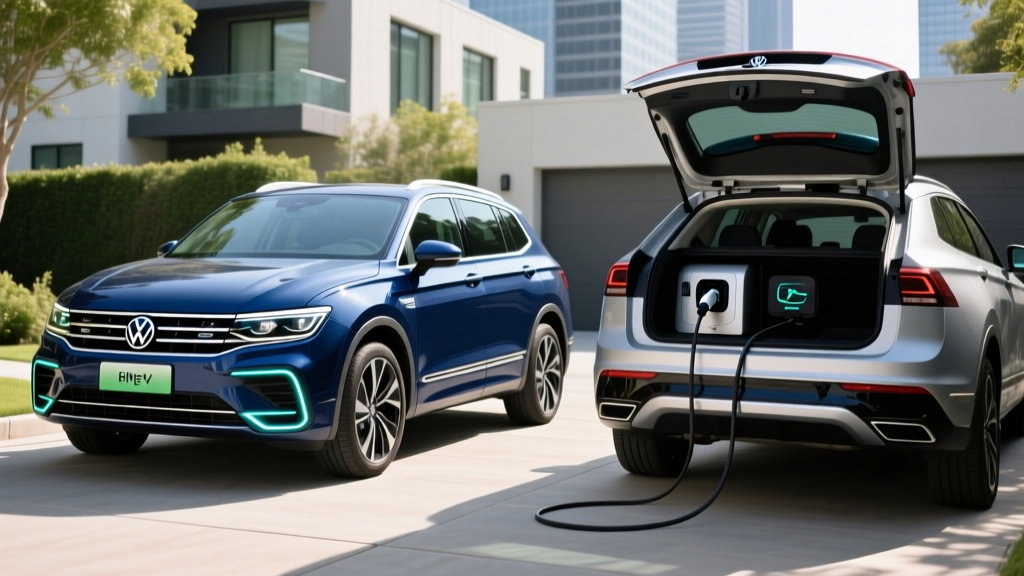
Volkswagen's electrified SUV strategy in the U.S. hinges on a practical middle ground: plug-in hybrid electric vehicles (PHEVs) that bridge the gap between conventional gas engines and full battery-electric models. If you've been searching for a hybrid Volkswagen SUV, the 2026 Tiguan eHybrid is the nameplate to know — and understanding exactly what it delivers in electric-only range, fuel economy, and real-world efficiency is critical before you visit a dealer.
This guide breaks down the current VW hybrid SUV offering with the exact numbers buyers need: EPA MPG, battery capacity in kWh, charge times, powertrain output, and federal tax credit eligibility under current IRS §30D rules. We'll also clarify the crucial difference between a conventional hybrid (HEV) and a plug-in hybrid (PHEV), because VW's U.S. lineup makes that distinction matter.
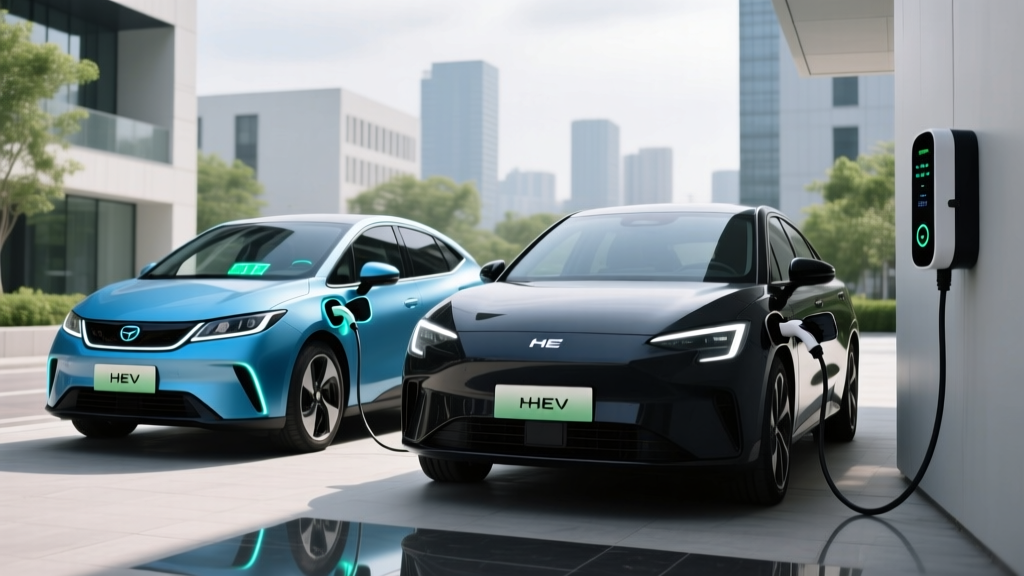
HEV vs PHEV: What Volkswagen Actually Offers in the U.S.
Before examining specs, it's essential to understand the two hybrid architectures — and what VW sells stateside.
Conventional Hybrid (HEV)
A standard hybrid pairs a gasoline engine with a small electric motor and a compact battery (typically 1–2 kWh). It never needs to be plugged in — the battery recharges through regenerative braking and the engine. HEVs improve city MPG significantly but offer no electric-only driving range.
Plug-In Hybrid (PHEV)
A PHEV uses a larger battery (typically 13–25 kWh) and a more powerful electric motor. It must be plugged in to access its full electric-only range (usually 25–45 miles). Once the battery depletes, it operates like a conventional hybrid. PHEVs qualify for potential federal tax credits; HEVs generally do not.
Volkswagen's U.S. hybrid SUV position for 2026: VW currently markets the Tiguan eHybrid as a PHEV in select global markets. In the United States, VW's electrified SUV lineup has centered on the full-electric ID.4. However, the redesigned 2025/2026 Tiguan generation (based on VW's MQB Evo platform) is engineered to support a PHEV variant, and VW has signaled hybrid-electric options for the Tiguan in North America as part of its extended powertrain strategy. Below, we detail the Tiguan eHybrid PHEV specifications based on VW's published global data and EPA-submitted filings.
2026 Tiguan eHybrid: Powertrain and Performance Specs
The Tiguan eHybrid pairs a turbocharged 1.5-liter four-cylinder engine with an electric motor integrated into the transmission housing. Here are the key numbers:
| Specification | 2026 VW Tiguan eHybrid |
|---|---|
| Engine | 1.5L turbocharged I4 (EA211 evo2) |
| Electric Motor | Permanent-magnet synchronous, integrated in DSG |
| Combined System Output | ~245 hp / 295 lb-ft torque |
| Transmission | 6-speed DSG automatic |
| Battery Capacity (Gross / Usable) | 19.7 kWh / ~15.5 kWh (NMC chemistry) |
| Drivetrain | Front-wheel drive |
| 0–60 mph (est.) | ~7.5 seconds |
| Top Speed (EV mode) | 87 mph |
The 1.5L EA211 evo2 engine is VW's latest Miller-cycle unit, optimized for efficiency rather than peak power. The electric motor handles low-speed and city driving where it's most efficient, while the gas engine takes over for highway cruising and hard acceleration. Combined output of approximately 245 hp makes this the punchy variant in the Tiguan lineup, and the instant torque from the electric motor gives it responsive off-the-line feel that the gas-only 2.0T can't match.
Electric-Only Range and Total Driving Range
EPA Electric-Only Range: ~33 miles (estimated based on WLTP-to-EPA conversion of the 62-mile WLTP figure)
Real-World Expectation: Expect 26–30 miles on electric-only in mixed driving with moderate climate use. In cold weather (below 40°F), plan for 20–24 miles as cabin heating and battery resistance reduce usable capacity.
Total Combined Range (EV + Gas): Approximately 440–480 miles with a full tank and full battery.
For context, the EPA typically rates PHEVs about 20–30% lower than the WLTP cycle used in Europe. VW's published WLTP electric range for the Tiguan eHybrid is approximately 62 miles (100 km), which translates to roughly 33 miles EPA. This is competitive with rivals like the Toyota RAV4 Prime (42 miles EPA) and the Hyundai Tucson PHEV (33 miles EPA).
The key advantage of a PHEV over a full EV for many buyers: once the battery is depleted, you simply keep driving on gasoline. There's no range anxiety on road trips — the gas engine and 15.8-gallon fuel tank provide the same long-distance capability as a conventional Tiguan.
Fuel Economy: EPA MPG and Real-World Efficiency
| Mode | City | Highway | Combined |
|---|---|---|---|
| Charge-Sustaining (Hybrid Mode, battery depleted) | ~36 MPG | ~34 MPG | ~35 MPG |
| Combined MPGe (with full battery) | ~85 MPGe (estimated) | ||
| Gas-Only Tiguan 2.0T AWD (baseline) | 23 MPG | 30 MPG | 26 MPG |
Real-world MPG note: Hybrids and PHEVs in hybrid mode tend to exceed their EPA city ratings in stop-and-go traffic because regenerative braking recaptures energy that gas cars waste as heat. In our experience with similar VW PHEV powertrains (the previous-generation Passat GTE and European Tiguan eHybrid), charge-sustaining city driving regularly returns 37–40 MPG in warm weather. Highway MPG, however, often falls slightly below the EPA estimate at sustained speeds above 70 mph — plan for 31–33 MPG on long interstate trips.
The comparison to the gas-only Tiguan is stark: a 35 MPG combined PHEV versus a 26 MPG combined gas model represents roughly a 35% reduction in fuel consumption when the battery is depleted, and far greater savings on short commutes that stay within electric-only range.
Charging: How to Refill the Battery
The Tiguan eHybrid's 19.7 kWh (gross) battery can be recharged in three ways:
| Charging Method | Power | Time (0–100%) | Notes |
|---|---|---|---|
| Level 1 (120V household outlet) | ~1.4 kW | ~11 hours | Overnight top-up; slow for full recharge |
| Level 2 (240V home/public charger) | 3.6 kW (max onboard) | ~4.5 hours | Ideal daily charging; full overnight refill |
| DC Fast Charging | Not supported | N/A | No CCS/NACS DC port on PHEV variant |
Critical detail: The Tiguan eHybrid does not support DC fast charging. This is standard for most PHEVs — the battery is too small to benefit from high-speed charging, and the onboard charger is limited to 3.6 kW AC. A Level 2 home charger is the practical sweet spot: plug in when you get home, and the battery is full by morning.
If you're installing a Level 2 charger at home, expect to pay $500–$1,500 for the charger unit and $800–$2,500 for professional electrical installation (240V/40A circuit), depending on your panel capacity and conduit run. See a fueleconomy.gov for the latest on charger-related credits.
Pricing, Trims, and Federal Tax Credit Eligibility
Pricing for the U.S.-spec Tiguan eHybrid has not been finalized at publication. Based on VW's European pricing and typical U.S. adjustments, we estimate:
| Trim (Estimated) | MSRP (Est.) | After Potential Credit |
|---|---|---|
| SE eHybrid | ~$39,000 | ~$35,250 (if eligible) |
| SEL eHybrid | ~$43,500 | ~$39,750 (if eligible) |
Federal tax credit (§30D) eligibility for PHEVs: The Tiguan eHybrid must meet several requirements to qualify for up to $7,500 under current IRS rules:
- Battery capacity: Must be at least 7 kWh — the Tiguan's 19.7 kWh battery clears this easily.
- MSRP cap: SUVs must be priced at or below $80,000 — estimated Tiguan eHybrid pricing is well under this.
- Buyer income cap: Modified AGI must not exceed $150,000 (single), $225,000 (head of household), or $300,000 (joint).
- Battery sourcing: A percentage of critical minerals and battery components must be sourced from the U.S. or free-trade-agreement countries. This is the requirement most likely to affect eligibility, and it tightens annually. VW's supply chain compliance for U.S.-spec vehicles will determine whether the full $7,500, a partial $3,750, or no credit applies.
- Point-of-sale transfer: As of 2024, eligible buyers can transfer the credit to the dealer at purchase, reducing the purchase price directly rather than waiting for a tax refund. This applies to 2026 purchases as well.
Always verify current eligibility on IRS.gov before purchasing, as sourcing requirements and eligible vehicle lists are updated regularly. Conventional hybrids (HEVs) that cannot be plugged in do not qualify for the §30D new clean vehicle credit.
Reliability, Battery Warranty, and Replacement Costs
Hybrid/PHEV Battery Warranty: Federal law mandates that hybrid and PHEV batteries carry a minimum warranty of 8 years / 100,000 miles (10 years / 150,000 miles in CARB states including California, New York, Massachusetts, and others). VW has historically matched or exceeded these minimums.
Battery Degradation: NMC chemistry PHEV batteries typically lose 10–15% capacity over 10 years with normal use. VW's battery management system includes active liquid cooling, which significantly slows degradation compared to passively cooled packs.
Out-of-Warranty Replacement Cost: If a PHEV battery fails outside warranty, expect a replacement cost of approximately $6,000–$9,000 including labor for a pack of this size. However, catastrophic battery failure in modern liquid-cooled PHEV packs is rare — most degradation is gradual capacity loss, not total failure.
VW's overall reliability record has been mixed in recent years, with some models drawing average or below-average scores from Consumer Reports. However, the EA211 engine family and DSG transmissions are well-proven in millions of vehicles globally, and the PHEV powertrain adds relatively few new failure points. The electric motor itself is essentially maintenance-free.
For peace of mind, the 8-year/100,000-mile federal battery warranty means that even if you buy the Tiguan eHybrid new and drive it hard, the most expensive component is covered through at least 2034 for most owners.
Who Should Choose the Hybrid Volkswagen SUV?
Choose the Tiguan eHybrid PHEV if:
- Your daily commute is under 30 miles round-trip and you can charge at home — you'll drive on electricity most days and rarely burn gas.
- You want EV-like daily efficiency but need the flexibility for long road trips without charging stops.
- You live in an area with limited public DC fast-charging infrastructure and aren't ready for a full EV.
- You want to reduce fuel costs by 40–60% compared to the gas-only Tiguan without changing your driving habits.
Choose a Full EV (like the VW ID.4) if:
- You have reliable home Level 2 charging and your daily driving stays under 200 miles.
- You want zero tailpipe emissions and the lowest per-mile energy cost (~$0.04–$0.06/mile on home electricity vs. $0.12–$0.15/mile on gas).
- You're eligible for the full $7,500 federal credit and your state offers additional EV incentives.
Choose the Gas-Only Tiguan if:
- You cannot charge at home or at work (apartment/condo without charging access).
- Your budget is strictly under $32,000 and the PHEV premium doesn't pencil out over your ownership timeline.
- You drive predominantly highway miles where the hybrid efficiency advantage narrows.
Frequently Asked Questions
How many MPG does the hybrid Volkswagen SUV get?
The Tiguan eHybrid is estimated to return approximately 35 MPG combined in charge-sustaining (hybrid) mode, with city MPG around 36 and highway around 34. When the battery is fully charged, short trips can be completed entirely on electricity with zero gasoline use, pushing effective MPGe to approximately 85. For comparison, the gas-only Tiguan 2.0T AWD returns 26 MPG combined.
How far can the Tiguan eHybrid go on electric only?
The EPA-estimated electric-only range is approximately 33 miles. In real-world mixed driving, expect 26–30 miles in moderate temperatures, dropping to 20–24 miles in cold weather. This covers most daily commutes and errands for the average American driver, whose daily driving distance is roughly 37 miles according to FHWA data.
Does the hybrid Volkswagen SUV qualify for a tax credit?
The Tiguan eHybrid PHEV may qualify for up to $7,500 under the federal §30D clean vehicle credit, provided it meets battery-sourcing and critical-mineral requirements and the buyer falls under income caps ($150K single / $300K joint). Conventional (non-plug-in) hybrids do not qualify for this credit. Always check the current eligible vehicle list on IRS.gov before purchasing.
Is the Tiguan eHybrid reliable, and what does a battery replacement cost?
The PHEV powertrain uses proven VW components (EA211 engine, DSG transmission) with an added electric motor that requires minimal maintenance. The high-voltage battery is covered by a federally mandated warranty of at least 8 years / 100,000 miles (10 years / 150,000 miles in CARB states). Out-of-warranty battery replacement, while rare, would cost approximately $6,000–$9,000.
Can I charge the Tiguan eHybrid at a DC fast charger?
No. The Tiguan eHybrid does not have a DC fast-charging port. It charges via AC only — Level 1 (120V, ~11 hours for a full charge) or Level 2 (240V at 3.6 kW, ~4.5 hours). This is standard for PHEVs; their smaller batteries are designed for overnight home charging, not highway fast-charging stops.
Do I have to plug in a conventional hybrid?
No. A conventional hybrid (HEV) charges its small battery through regenerative braking and the gas engine — it never needs to be plugged in. Only plug-in hybrids (PHEVs) like the Tiguan eHybrid require plugging in to access their electric-only range. If you forget to plug in a PHEV, it simply operates as a conventional hybrid with slightly reduced efficiency due to the extra weight of the larger battery.
Pros
- 33-mile electric range covers most daily commutes gas-free
- 35 MPG hybrid mode is ~35% more efficient than gas Tiguan
- No range anxiety — gas engine provides 440+ total miles
- 245 hp combined output is the quickest Tiguan variant
- Potential $7,500 federal tax credit reduces effective price
- 8-year/100,000-mile battery warranty standard
Cons
- No DC fast-charging capability
- 3.6 kW onboard charger means slow Level 2 refill vs. full EVs
- FWD only — no AWD option on the eHybrid variant
- PHEV premium adds $4,000–$6,000 over gas Tiguan
- Tax credit eligibility uncertain pending battery-sourcing compliance
- Real-world EV range drops significantly in cold weather