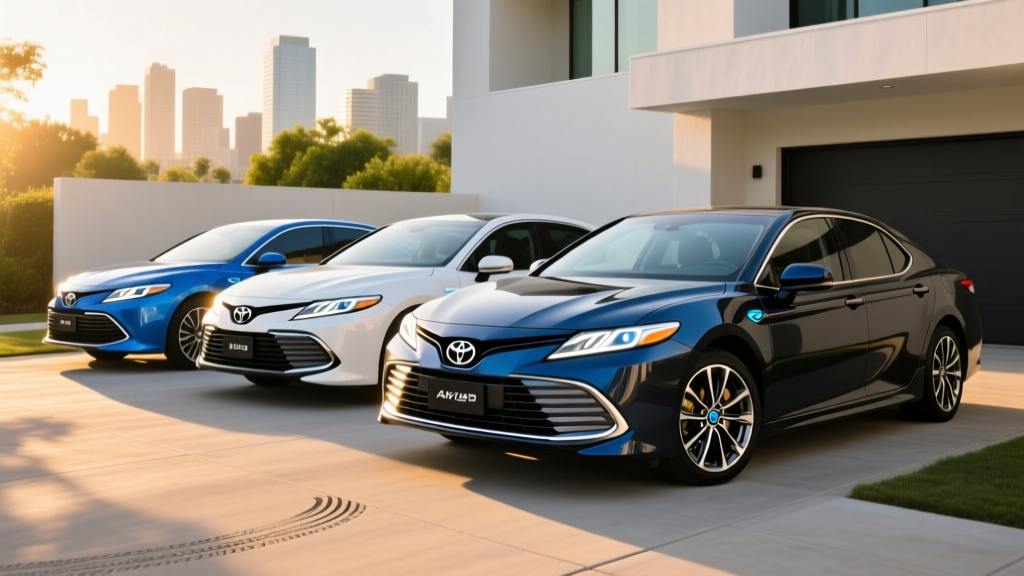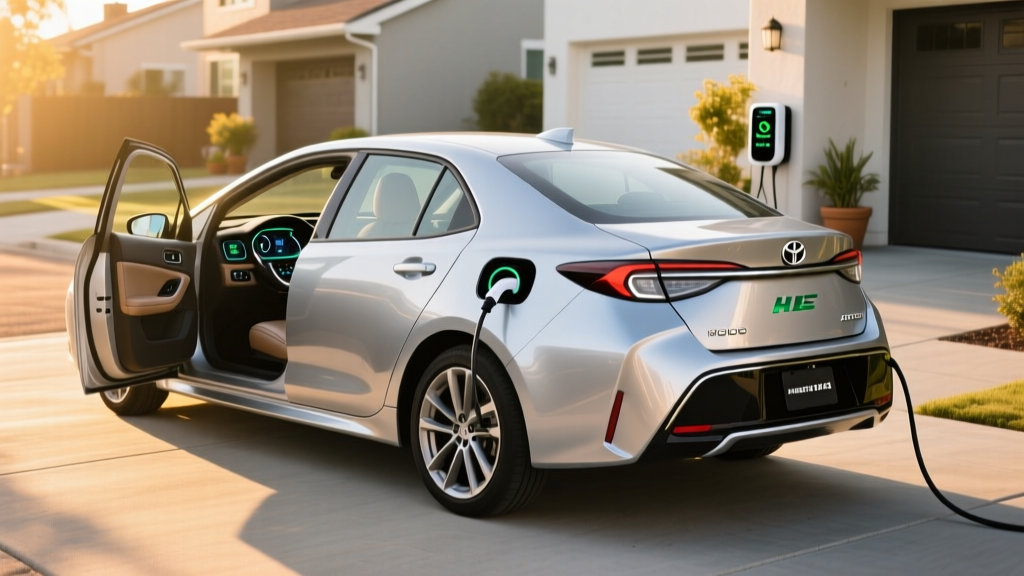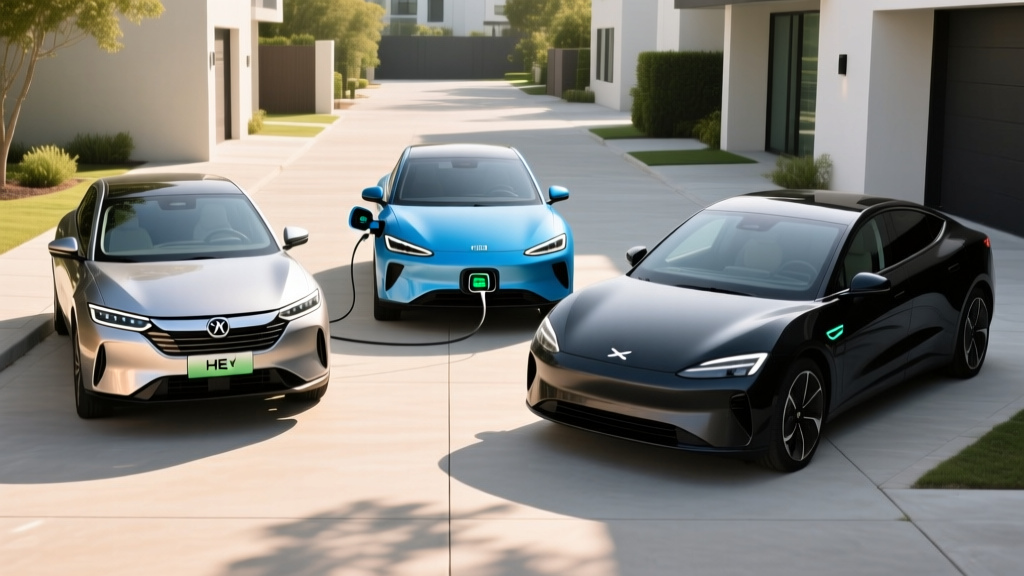
Shopping for an electrified vehicle in 2026 means navigating a thicket of acronyms: HEV, PHEV, BEV, EREV. Each powertrain type serves a different driving pattern, budget, and charging situation. Getting the wrong one means paying for battery capacity you'll never use — or burning gas when you could have plugged in.
This guide breaks down the main hybrid types available today, with exact EPA figures, real-world efficiency data, battery warranty terms, and federal tax credit eligibility. We'll use current benchmark models — the Toyota Prius (HEV), Toyota RAV4 Prime (PHEV), and Hyundai Ioniq 5 (BEV) — to anchor the numbers.
The Three Hybrid Types: HEV, PHEV, and BEV at a Glance
Before diving into MPG tables and charging specs, here's how the three electrified powertrains fundamentally differ:
| Attribute | HEV (Toyota Prius) | PHEV (RAV4 Prime) | BEV (Ioniq 5) |
|---|---|---|---|
| Plug-in Required? | No | Optional but recommended | Yes — mandatory |
| Battery Size | ~1.0 kWh (NiMH/Li-ion) | 18.1 kWh (Li-ion) | 77.4 kWh (NMC) |
| EPA Combined MPG / MPGe | 57 MPG | 94 MPGe (elec) / 38 MPG (gas) | 114 MPGe |
| Electric-Only Range | ~1 mile (low-speed assist) | 42 miles | 303 miles (EPA) |
| Combined HP | 196 hp | 302 hp | 320 hp (AWD) |
| Base MSRP (2026) | $29,445 | $44,985 | $43,600 |
| Federal Tax Credit (§30D) | Not eligible | Up to $7,500 (if eligible) | Up to $7,500 (if eligible) |
| Battery Warranty | 10 yr / 150,000 mi | 8 yr / 100,000 mi (traction) | 10 yr / 100,000 mi |
Conventional Hybrid (HEV): How It Works and Who It's For
A conventional hybrid — technically a Hybrid Electric Vehicle (HEV) — pairs a gasoline engine with one or more electric motors and a small battery pack (typically 0.5–2.0 kWh). The battery charges exclusively through regenerative braking and engine-driven generation. You never plug it in.
The 2026 Toyota Prius remains the benchmark. Its fifth-generation hybrid system delivers:
| Trim / Drivetrain | City MPG | Highway MPG | Combined MPG |
|---|---|---|---|
| LE (FWD) | 57 | 56 | 57 |
| XLE / Limited (FWD) | 52 | 52 | 52 |
| LE AWD | 53 | 54 | 54 |
Source: fueleconomy.gov
Real-World MPG vs. EPA Sticker
Conventional hybrids routinely match or slightly exceed their EPA city estimates in stop-and-go driving because regenerative braking recaptures energy that a gas-only car wastes as heat. On the highway, where regen opportunities are fewer, expect real-world figures to land within 1–3 MPG of the sticker. In cold weather (below 30°F), engine warm-up cycles and cabin heating demands can reduce efficiency by 5–10%, bringing a 57-MPG Prius down to roughly 50–52 MPG on short winter trips.
Powertrain Details
The Prius uses a 2.0-liter four-cylinder engine producing 150 hp, paired with a permanent-magnet electric motor for a combined system output of 196 hp. That's enough for a 0–60 mph time of approximately 7.2 seconds — a dramatic improvement from earlier generations. The AWD variant adds a rear-mounted electric motor for all-weather traction without a mechanical driveshaft.
Plug-In Hybrid (PHEV): The Bridge Between Gas and Electric
A Plug-In Hybrid Electric Vehicle (PHEV) carries a substantially larger battery (typically 12–25 kWh) that you can recharge from a wall outlet or charging station. This battery powers an electric-only driving mode for a meaningful distance — usually 25–50 miles — before the gasoline engine seamlessly engages.
The 2026 Toyota RAV4 Prime exemplifies the segment:
| Specification | Value |
|---|---|
| Battery Capacity | 18.1 kWh (lithium-ion) |
| EPA Electric-Only Range | 42 miles |
| Total Combined Range (Elec + Gas) | ~600 miles |
| MPGe (Electric Mode) | 94 MPGe |
| MPG (Gas-Only, Charge-Depleted) | 38 MPG combined |
| Combined System HP | 302 hp |
| 0–60 mph | 5.7 seconds |
| Level 2 Charge Time (0–100%) | ~2.5 hours (6.6 kW onboard charger) |
| DC Fast Charging | Not supported |
| Base MSRP | $44,985 (SE) |
How Far Can a PHEV Really Go on Electric Only?
The RAV4 Prime's EPA-rated 42 miles of electric range assumes moderate temperatures, flat terrain, and speeds under 55 mph. In real-world conditions:
- City driving, 65°F: Expect 38–44 miles — regenerative braking extends range at low speeds, similar to a conventional hybrid's advantage.
- Highway at 70 mph: Range drops to roughly 30–35 miles due to higher aerodynamic drag and less regen opportunity.
- Cold weather (25°F), cabin heat on: Plan for 25–32 miles. The engine may activate sooner to provide cabin warmth unless you precondition while plugged in.
For a driver with a 20-mile round-trip commute and home charging, a PHEV like the RAV4 Prime can operate as a de facto EV on weekdays and a conventional hybrid on weekend road trips — with zero range anxiety.
PHEV Charging: What You Need to Know
Most PHEVs charge on Level 1 (120V household outlet) in 8–12 hours or Level 2 (240V) in 2–4 hours. Critically, nearly all current PHEVs lack DC fast-charging capability. The RAV4 Prime's 6.6 kW onboard charger means a full charge from a Level 2 station takes about 2.5 hours. If you only have access to a standard 120V outlet, expect an overnight top-up to add roughly 30–35 miles of electric range — enough for many commutes.
Battery Electric Vehicle (BEV): The Full-Electric Option
A BEV like the Hyundai Ioniq 5 eliminates the gasoline engine entirely. Its 77.4 kWh (usable) NMC battery delivers an EPA-rated 303 miles of range (Long Range AWD). Efficiency is measured in MPGe — the Ioniq 5 achieves 114 MPGe combined, or roughly 29 kWh per 100 miles.
DC fast charging peaks at 350 kW on an 800V architecture, delivering a 10–80% charge in approximately 18 minutes at a compatible station. Level 2 charging at 10.9 kW takes about 7.3 hours for a full charge.
Real-world range on the Ioniq 5 Long Range AWD:
- City/mixed, mild weather: 280–310 miles
- Sustained highway at 70 mph: 250–275 miles
- Cold weather (20°F) with cabin heat: 200–240 miles (heat pump equipped trims fare better)
Source: fueleconomy.gov
Federal Tax Credits: Which Hybrid Types Qualify?
Under IRS §30D, the federal clean vehicle credit applies to PHEVs and BEVs — not conventional HEVs. The maximum credit is $7,500, but eligibility depends on several requirements that shift yearly:
§30D Tax Credit Eligibility Checklist (2026)
- Vehicle type: PHEV with ≥7 kWh battery OR BEV
- MSRP cap: ≤$55,000 for sedans; ≤$80,000 for SUVs/pickups/vans
- Buyer income cap: ≤$150,000 single / ≤$300,000 married filing jointly (MAGI)
- Battery sourcing: Critical minerals and battery components must meet phased-in domestic/free-trade sourcing thresholds
- Assembly: Final assembly must occur in North America
- Point-of-sale transfer: Eligible buyers can transfer the credit to the dealer for an immediate price reduction
Rules change frequently. Verify current eligibility at irs.gov or consult a tax professional before purchasing.
The Toyota Prius (HEV) does not qualify — its battery is far below the 7 kWh threshold. The RAV4 Prime (PHEV) and Ioniq 5 (BEV) may qualify for up to $7,500, but sourcing requirements have reduced the credit to $3,750 for some model years depending on battery component origin. Always confirm the specific VIN's eligibility before relying on the credit in your purchase math.
Reliability and Battery Replacement Costs
Hybrid battery longevity is one of the most common buyer concerns — and the data is reassuring. Toyota's hybrid systems have two decades of field-proven reliability, with many first-generation Prius packs lasting well beyond 200,000 miles.
Hybrid Battery Warranty Comparison
| Model | Battery Warranty | Estimated Out-of-Warranty Replacement |
|---|---|---|
| Toyota Prius (HEV) | 10 yr / 150,000 mi | $2,000–$3,500 (refurbished); $3,500–$4,500 (new OEM) |
| Toyota RAV4 Prime (PHEV) | 8 yr / 100,000 mi (traction battery) | $6,000–$9,000 (new OEM) |
| Hyundai Ioniq 5 (BEV) | 10 yr / 100,000 mi | $12,000–$18,000 (full pack replacement) |
Key points on hybrid battery health:
- HEV batteries are small and rarely stressed to full cycles, which contributes to their longevity. Degradation is gradual — you may notice slightly reduced electric assist at high mileage rather than sudden failure.
- PHEV batteries undergo deeper daily cycling (full charge-to-depletion), so manufacturers use more robust thermal management. Toyota warranties the RAV4 Prime's traction battery for 8 years/100,000 miles, with a capacity retention threshold of approximately 60% before warranty coverage triggers.
- BEV batteries are the largest and most expensive, but also benefit from sophisticated liquid cooling. Modern NMC packs typically lose 10–15% capacity over 150,000 miles based on current degradation data.
Decision Framework: Which Hybrid Type Fits Your Life?
Choose a Conventional Hybrid (HEV) If:
- You cannot charge at home or work (apartment, street parking, no garage)
- Your budget is under $35,000 and you want maximum fuel savings per dollar
- You drive mostly in city traffic where regen braking maximizes efficiency
- You want zero behavioral change — just fill up with gas less often
Choose a Plug-In Hybrid (PHEV) If:
- You have home charging (even a 120V outlet works for overnight top-ups)
- Your daily commute is under 40 miles round-trip
- You take road trips several times a year and don't want to plan around charging stations
- You want EV-like daily driving without committing to a full BEV
Choose a Battery Electric Vehicle (BEV) If:
- You have reliable Level 2 home charging
- Your daily driving is under 250 miles and you can plan road-trip charging
- You want the lowest per-mile fuel cost and minimal maintenance
- You want to maximize federal tax credit value (larger battery = more likely to meet full $7,500)
Total Cost of Ownership: HEV vs. PHEV vs. BEV Over 5 Years
Purchase price is only part of the equation. Here's a 5-year/75,000-mile ownership estimate assuming $3.50/gallon gas, $0.14/kWh electricity, and 12,000 miles/year for the PHEV/BEV (with 70% of PHEV miles driven on electricity):
| Cost Category | Prius (HEV) | RAV4 Prime (PHEV) | Ioniq 5 (BEV) |
|---|---|---|---|
| Purchase Price (base MSRP) | $29,445 | $44,985 | $43,600 |
| Est. Federal Tax Credit | $0 | $3,750–$7,500 | $7,500 |
| Fuel / Electricity (5 yr) | $6,580 | $3,400 | $3,700 |
| Maintenance (5 yr est.) | $2,800 | $2,600 | $1,800 |
| Est. Insurance (5 yr) | $7,500 | $8,800 | $9,200 |
| Net 5-Year Cost | $46,325 | $46,085–$49,835 | $50,800 |
The HEV wins on upfront affordability. The PHEV narrows the gap significantly when you factor in fuel savings and potential tax credits. The BEV has the lowest operating cost but the highest purchase price and insurance premiums. Your local electricity rate and gas price will shift these numbers — a buyer paying $0.30/kWh in California faces different math than one at $0.09/kWh in Louisiana.
Frequently Asked Questions
How many MPG does a conventional hybrid get?
The 2026 Toyota Prius LE achieves 57 MPG combined (57 city / 56 highway) per the EPA. In real-world city driving with frequent stops, many owners report matching or slightly exceeding this figure. Highway-only driving at sustained speeds above 70 mph typically yields 50–54 MPG.
How far can a PHEV go on electric only?
The 2026 Toyota RAV4 Prime delivers 42 miles of EPA-rated electric-only range. Real-world range varies from roughly 25 miles in cold highway driving to 44 miles in mild-weather city conditions. Most PHEVs on the market offer between 25 and 50 miles of electric range.
Do I need to plug in a conventional hybrid?
No. A conventional HEV charges its small battery entirely through regenerative braking and the gasoline engine. There is no plug, no charging cable, and no change to your fueling routine — you simply visit gas stations less frequently.
Is a hybrid reliable, and what does battery replacement cost?
Modern hybrids from Toyota, Honda, and Hyundai have excellent reliability records. Toyota's hybrid battery warranty covers 10 years/150,000 miles on the Prius. Out-of-warranty replacement for a Prius HEV battery runs $2,000–$4,500 depending on new vs. refurbished. PHEV battery replacement is more expensive ($6,000–$9,000) due to the larger pack, but failures within the warranty period are rare based on current field data.
Does a hybrid qualify for a federal tax credit?
Conventional hybrids (HEVs) do not qualify for the §30D federal tax credit — their batteries are too small. Plug-in hybrids (PHEVs) with at least 7 kWh of battery capacity may qualify for up to $7,500, subject to MSRP caps, buyer income limits, battery sourcing requirements, and North American assembly rules. Check current eligibility at fueleconomy.gov before purchasing.
Hybrid vs. PHEV vs. EV — which should I buy?
Choose an HEV if you can't charge at home and want a simple, affordable efficiency upgrade. Choose a PHEV if you have home charging and a sub-40-mile commute but also take road trips. Choose a BEV if you have Level 2 home charging, want the lowest operating cost, and can plan around DC fast charging for longer trips.
Can a PHEV charge at a DC fast-charging station?
Almost no current PHEVs support DC fast charging. The RAV4 Prime, for example, maxes out at 6.6 kW on Level 2 AC. If you need rapid public charging, a BEV with 150+ kW DC capability is the appropriate choice.
Conventional Hybrid (HEV) Pros
- No charging infrastructure needed
- Lowest purchase price among electrified options
- Proven long-term reliability (20+ year track record)
- Excellent city MPG — often beats EPA estimates
- No behavioral change required
Conventional Hybrid (HEV) Cons
- No electric-only driving beyond low-speed assist
- No federal tax credit eligibility
- Still dependent on gasoline prices
- Higher emissions than PHEV/BEV
Plug-In Hybrid (PHEV) Pros
- 25–50 miles of daily electric driving covers most commutes
- Gasoline engine eliminates range anxiety on road trips
- Eligible for up to $7,500 federal tax credit
- Works even without home charging (as a conventional hybrid)
- Strong combined horsepower (302 hp in RAV4 Prime)
Plug-In Hybrid (PHEV) Cons
- Higher purchase price than comparable HEV
- No DC fast charging — slow public top-ups
- Two powertrains mean more potential maintenance points
- Electric range drops significantly in cold weather
- Must charge regularly to realize efficiency benefits