The State of Hybrid Mercedes-Benz in 2026
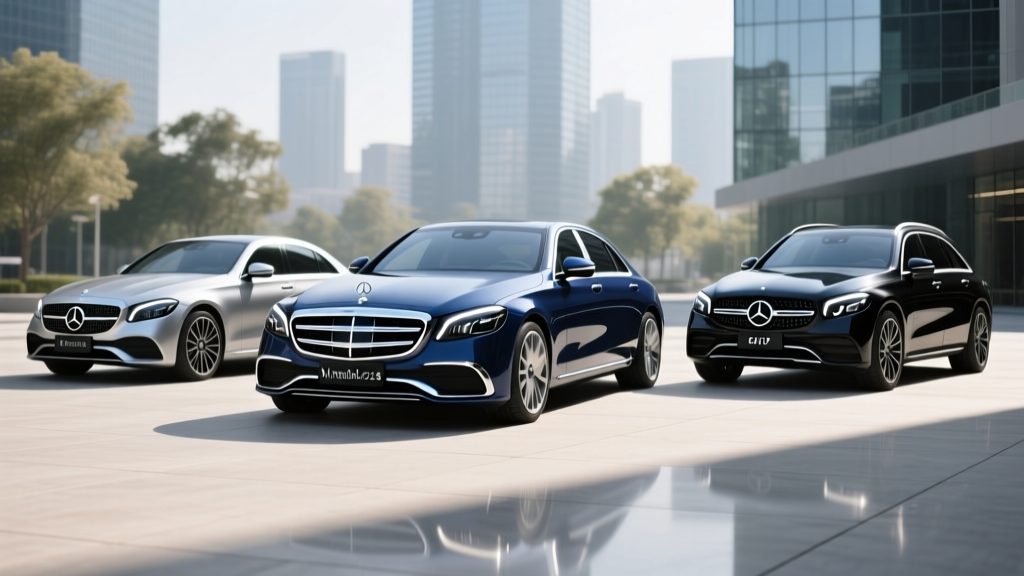
Mercedes-Benz has committed to a hybrid-heavy strategy through the end of the decade, and the 2026 lineup reflects that pivot. Unlike brands that abandoned plug-in hybrids to chase full battery-electric vehicles, Mercedes doubled down on PHEV powertrains across its sedan and SUV ranges. The result: a portfolio of hybrid Mercedes-Benz models that bridge the gap between gas convenience and electric efficiency — particularly for buyers who can't yet commit to a pure BEV.
This guide breaks down every current hybrid Mercedes-Benz available in the U.S. for 2026, with exact EPA figures, real-world efficiency expectations, battery specifications, and the tax-credit math that determines whether a PHEV actually saves you money over a conventional gas model.
HEV vs. PHEV: Which Hybrid Mercedes-Benz Are You Looking At?
Conventional Hybrid (HEV)
A traditional hybrid uses a small battery (typically 1–2 kWh) and an electric motor to assist the gas engine. You never plug it in — the battery recharges through regenerative braking and the engine. Mercedes-Benz currently offers very few pure HEVs in the U.S. market, as the brand has prioritized PHEV and BEV development. The mild-hybrid (MHEV) systems found on models like the GLB 250 and E 350 use a 48-volt integrated starter-generator to smooth stop-start and provide brief torque assist, but these are not full hybrids and cannot drive on electric power alone.
Plug-In Hybrid (PHEV)
A plug-in hybrid carries a much larger battery (18–31 kWh in the current Mercedes lineup) and a more powerful electric motor. You plug it in to recharge — via a standard outlet, Level 2 home charger, or in some cases a DC fast charger. A PHEV can drive 30–50+ miles on electricity alone before the gas engine engages. This is where Mercedes-Benz has concentrated its hybrid engineering, and it's what most buyers mean when they search for a "hybrid Mercedes-Benz."
2026 Hybrid Mercedes-Benz Models: Specs at a Glance
The table below covers the core PHEV models Mercedes-Benz sells in the U.S. for the 2026 model year. All figures are based on manufacturer specifications and EPA data where published.
| Model | Body Style | Battery (kWh, usable) | EPA Electric Range | Combined HP | EPA MPG (gas-only) | 0–60 mph | Base MSRP |
|---|---|---|---|---|---|---|---|
| S 580e 4MATIC | Luxury Sedan | 22.7 kWh (NMC) | ~39 mi | 442 hp | 25 city / 33 hwy / 28 combined | 5.0 sec | $120,350 |
| GLC 350e 4MATIC | Compact SUV | 23.2 kWh (NMC) | ~38 mi | 312 hp | 27 city / 31 hwy / 29 combined | 6.5 sec | $60,950 |
| GLE 450e 4MATIC | Midsize SUV | 23.2 kWh (NMC) | ~40 mi | 375 hp | 23 city / 27 hwy / 25 combined | 6.0 sec | $72,400 |
| C 300e (if available) | Compact Sedan | 25.4 kWh (NMC) | ~44 mi (WLTP; EPA pending) | 312 hp | TBD (est. 30 combined) | 5.9 sec | ~$55,000 (est.) |
Note: The C 300e has been sold in Europe and other markets. U.S. availability for 2026 depends on Mercedes-Benz's final certification. WLTP range figures are typically 10–15% higher than EPA equivalents.
How Many MPG Does a Hybrid Mercedes-Benz Get?
The answer depends entirely on how you use the vehicle. Here's the critical distinction that most hybrid buyers miss:
| Driving Scenario | S 580e | GLC 350e | GLE 450e |
|---|---|---|---|
| EPA Combined (gas-only, battery depleted) | 28 MPG | 29 MPG | 25 MPG |
| Real-World Highway (70–80 mph, battery depleted) | ~26 MPG | ~27 MPG | ~23 MPG |
| City with Daily Charging (short commutes) | 60+ MPGe | 55+ MPGe | 50+ MPGe |
| Cold Weather Highway (30°F, battery depleted) | ~23 MPG | ~24 MPG | ~21 MPG |
Real-world honesty: Mercedes PHEVs deliver their best efficiency when you charge daily and keep trips within the electric-only range. If you never plug in — treating the PHEV like a conventional hybrid — you'll get gas-only MPG that's only marginally better (and sometimes worse, due to the extra battery weight) than a non-hybrid equivalent. A GLE 450e with a dead battery at 80 mph on the interstate is essentially a heavy GLE 450. Plan your ownership around regular charging to unlock the efficiency these powertrains were designed for.
Electric-Only Range: How Far Can You Go Without Gas?
EPA Electric Range vs. Real World
The S 580e carries an EPA-rated ~39 miles of electric-only range. In real-world testing, expect:
- Ideal conditions (65°F, city driving, moderate speeds): 36–40 miles
- Highway at 75 mph: 30–34 miles
- Cold weather (25°F) with cabin heat: 24–30 miles (a 20–35% reduction)
The GLC 350e and GLE 450e follow similar patterns with their ~38–40 mile EPA ratings. Electric range drops are most pronounced in winter due to cabin heating demands and increased battery internal resistance.
For context, the average American commute is roughly 16 miles one way, according to FHWA data. That means most PHEV owners who charge at home overnight can complete their daily driving on electricity alone, using the gas engine only for weekend trips or longer drives. This is the ideal PHEV use case: electric daily, gas when needed.
Battery, Charging & Powertrain Details
All current Mercedes-Benz PHEVs use NMC (nickel manganese cobalt) lithium-ion battery packs. Unlike the LFP chemistry found in some Tesla and BYD models, NMC offers higher energy density — important for packaging a large battery into a luxury sedan or SUV without sacrificing cargo space.
Charging Capabilities
| Charging Method | Power (kW) | 0–100% Time | Availability |
|---|---|---|---|
| Level 1 (120V household outlet) | ~1.4 kW | 16–20 hours | All models |
| Level 2 (240V home/public charger) | 7.4–9.6 kW | 2.5–3.5 hours | All models |
| DC Fast Charge (CCS) | Up to 60 kW | ~30 min (10–80%) | S 580e (optional); GLE 450e (optional) |
Important: Not every Mercedes PHEV supports DC fast charging, and where it's available, it may be an optional package. Most PHEV owners charge at home on Level 2 overnight, which fully replenishes the ~23 kWh battery in under 3.5 hours. DC fast charging is useful for road-trip top-ups but is not essential for a PHEV the way it is for a full BEV.
Powertrain Architecture
The S 580e pairs a 3.0L turbocharged inline-six with a permanently excited synchronous electric motor integrated into the 9G-TRONIC automatic transmission. Combined output is 442 hp and 413 lb-ft of torque, routed through 4MATIC all-wheel drive. The electric motor alone produces approximately 148 hp — enough for confident highway merging without the engine engaging.
The GLC 350e and GLE 450e use a 2.0L turbocharged four-cylinder paired with a similar transmission-integrated motor. Combined outputs of 312 hp (GLC) and 375 hp (GLE) provide strong acceleration while keeping weight manageable.
Pricing, Tax Credits & Ownership Economics
Hybrid Mercedes-Benz pricing reflects the brand's luxury positioning, but the federal tax credit landscape for PHEVs requires careful attention.
Federal §30D Tax Credit Eligibility
Under current IRS rules for the §30D Clean Vehicle Credit, a plug-in hybrid may qualify for up to $7,500 — but eligibility depends on all of the following:
- MSRP cap: Vans, SUVs, and pickups must be under $80,000; sedans under $55,000. This immediately disqualifies the S 580e ($120,350) and most GLE 450e trims from the federal credit.
- Buyer income cap: Modified AGI must not exceed $150,000 (single), $225,000 (head of household), or $300,000 (joint filers).
- Battery sourcing: Critical minerals and battery components must meet phased-in percentages from U.S. or free-trade-agreement countries. Mercedes-Benz has been working to localize supply chains, but specific model eligibility changes periodically.
- Assembly: Final assembly must occur in North America. Verify via the VIN at fueleconomy.gov.
- Point-of-sale transfer: As of 2024, buyers can transfer the credit to the dealer at purchase, reducing the upfront price rather than waiting for a tax refund.
Bottom line: The GLC 350e, starting around $60,950, sits under the $80,000 SUV cap and is the most likely candidate for partial or full federal credit — but battery-sourcing compliance varies by build date. Always check the specific VIN on the IRS portal or fueleconomy.gov before purchasing. The S 580e sedan exceeds the $55,000 sedan cap and does not qualify. Consult a tax professional for your specific situation.
5-Year Ownership Cost Snapshot: GLC 350e vs. GLC 300 (Gas)
| Cost Category | GLC 350e PHEV | GLC 300 (Gas) |
|---|---|---|
| Base MSRP | $60,950 | $49,250 |
| Estimated Federal Credit | $0–$7,500* | $0 |
| Fuel/Energy (5 yr, 15k mi/yr) | ~$3,200** | ~$8,400 |
| Maintenance (5 yr) | ~$3,800 | ~$4,200 |
| Insurance (5 yr est.) | ~$11,500 | ~$9,800 |
| 5-Year Total (before depreciation) | ~$72,950 – $79,450 | ~$71,650 |
*Credit eligibility depends on sourcing rules and buyer income. **Assumes 70% of miles driven on electricity at $0.14/kWh national average, 30% on gasoline at $3.50/gal.
The PHEV's fuel savings are substantial — roughly $5,200 over five years — but the higher purchase price and insurance premiums narrow the gap. If you qualify for the full $7,500 credit, the GLC 350e can actually cost less to own over five years than its gas counterpart while delivering a dramatically smoother, quieter daily commute.
Reliability, Battery Warranty & Replacement Costs
Mercedes-Benz PHEV Battery Warranty
All current Mercedes-Benz plug-in hybrid models carry a high-voltage battery warranty of 6 years or 62,000 miles (whichever comes first), with a capacity retention threshold of approximately 70%. This is shorter than the 8-year/100,000-mile warranties typical of dedicated BEVs from brands like Hyundai and Tesla.
Battery replacement cost: Out of warranty, a Mercedes PHEV battery pack replacement runs approximately $8,000–$14,000 depending on the model, including labor. This is significantly less than a full BEV battery replacement ($15,000–$25,000+) because the PHEV packs are smaller.
Real-world degradation: PHEV batteries experience more charge-discharge cycles per mile driven than BEV batteries (because you use a larger percentage of the pack daily). However, Mercedes engineers the packs with a buffer — the usable 22–25 kWh sits inside a larger gross capacity — to slow visible degradation. Expect approximately 8–12% capacity loss over 8 years of typical use based on industry PHEV data.
On the broader reliability question: Mercedes-Benz as a brand has scored below average in recent Consumer Reports reliability surveys, and the added complexity of a PHEV powertrain (engine + motor + high-voltage battery + charging system) introduces more potential failure points than a conventional gas car or a pure BEV. That said, the hybrid-specific components (motor, inverter, battery) have proven robust in Mercedes' European fleet data, where some PHEV taxis have logged 150,000+ miles without battery replacement.
Who Should Choose a Hybrid Mercedes-Benz?
Choose a Mercedes PHEV if:
- You can charge at home (Level 2) and your daily driving is under 40 miles round-trip
- You want luxury-car refinement with reduced (but not eliminated) fuel costs
- You take regular road trips where charging infrastructure is uncertain
- You're not ready for a full BEV but want to reduce gas consumption
- You value the silent, torque-rich electric launch in stop-and-go traffic
Choose a full BEV (e.g., EQE, EQS) instead if:
- You want zero tailpipe emissions and lower maintenance (no oil changes, fewer moving parts)
- You drive under 300 miles daily and have reliable home + destination charging
- You want to qualify for the full $7,500 federal credit (more BEVs qualify than PHEVs)
Stick with a conventional gas model if:
- You cannot charge at home or at work
- Your budget is under $50,000 and you need maximum value
- You drive primarily long highway stretches where the PHEV battery is dead weight
Pros
- 30–44 miles of silent, zero-emission electric driving covers most commutes
- No range anxiety — gas engine provides 400+ miles of total range
- Luxury refinement: Mercedes interiors, MBUX tech, advanced driver-assist
- Regenerative braking reduces brake wear significantly
- Strong combined horsepower (312–442 hp) for confident acceleration
Cons
- Shorter battery warranty (6 yr/62k mi) than many competitors
- Premium pricing — GLC 350e starts ~$12,000 above the gas GLC 300
- DC fast charging is optional, not standard, on most models
- Below-average brand reliability ratings for non-powertrain components
- Tax credit eligibility is uncertain and model-dependent
Frequently Asked Questions
How many MPG does a hybrid Mercedes-Benz get?
On gasoline alone (battery depleted), the 2026 PHEV models achieve 25–29 MPG combined depending on the model. The GLC 350e leads at 29 MPG combined, while the heavier GLE 450e returns 25 MPG combined. When driven primarily on electricity with regular charging, effective efficiency can exceed 55 MPGe for daily commuting.
How far can a Mercedes PHEV go on electric only?
EPA-rated electric-only range spans 38–40 miles for the S 580e, GLC 350e, and GLE 450e. Real-world range is typically 30–40 miles in moderate conditions and drops to 24–30 miles in cold weather due to cabin heating and reduced battery efficiency.
Does a hybrid Mercedes-Benz qualify for a tax credit?
It depends on the model, your income, and current battery-sourcing rules. The GLC 350e (under the $80,000 SUV MSRP cap) is the strongest candidate for up to $7,500 under IRS §30D. The S 580e exceeds the $55,000 sedan cap and does not qualify. Always verify eligibility at irs.gov before purchasing.
Is a Mercedes PHEV reliable?
The high-voltage battery and electric motor components have proven durable, but Mercedes-Benz as a brand scores below average in overall reliability surveys. The added complexity of a dual powertrain means more potential service items than a pure BEV or simple gas car. The 6-year/62,000-mile battery warranty provides coverage, but it's shorter than some competitors offer.
How much does it cost to replace a Mercedes PHEV battery?
Out-of-warranty replacement runs approximately $8,000–$14,000 including labor, depending on the model. This is less than a full BEV battery swap because PHEV packs are smaller (22–25 kWh vs. 70–100+ kWh). Most owners will never need a replacement within typical ownership periods.
Do I need to plug in a Mercedes hybrid?
If it's a PHEV (350e, 450e, 580e), yes — plugging in is how you access the electric-only range and maximum efficiency. If you never plug in, the car still drives normally using the gas engine, but you lose the efficiency and cost advantages. Mercedes' mild-hybrid models (with "EQ Boost" or 48V systems) do not require plugging in, but they also cannot drive on electric power alone.
Can I DC fast charge a Mercedes PHEV?
DC fast charging is available as an option on select models (S 580e, GLE 450e) at up to 60 kW, enabling a 10–80% charge in roughly 30 minutes. It is not standard equipment on all trims. For most PHEV owners, Level 2 home charging (2.5–3.5 hours for a full charge) is sufficient and more cost-effective.