The Lincoln Hybrid Lineup in 2026: What You're Actually Buying
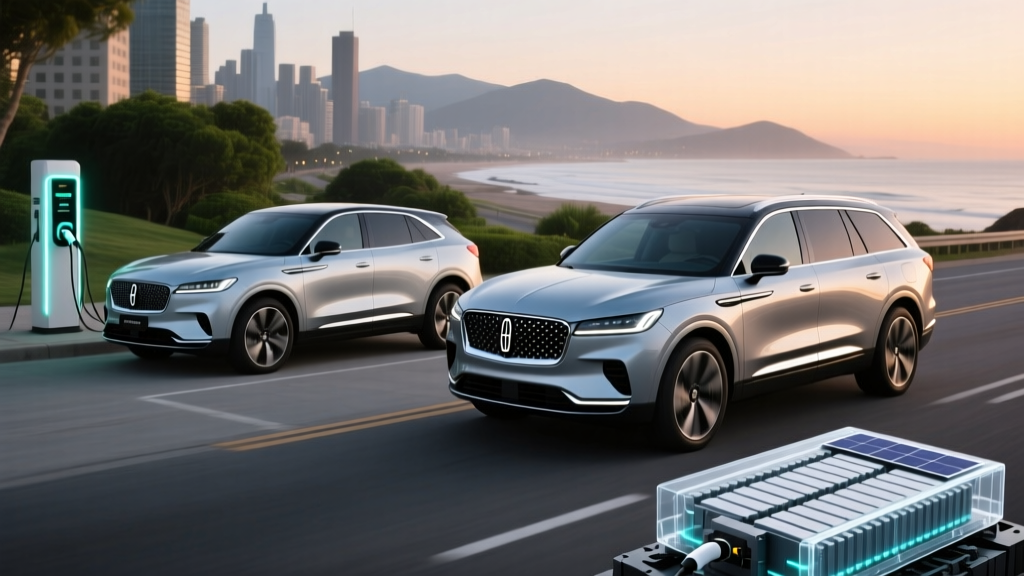
Lincoln's approach to electrification in 2026 centers on plug-in hybrid (PHEV) technology rather than full battery-electric vehicles. The brand currently offers one hybrid SUV for US buyers: the Lincoln Corsair Grand Touring, a plug-in hybrid compact luxury crossover. The larger Lincoln Aviator previously offered a Grand Touring PHEV variant, but Lincoln discontinued it after the 2024 model year, leaving the three-row Aviator as a conventional gasoline-only model for 2025 and 2026.
If you're searching for a hybrid Lincoln SUV, the Corsair Grand Touring is your primary option. This guide breaks down its powertrain, real-world efficiency, charging requirements, tax-credit eligibility, and how it stacks up against going full EV or sticking with gas.
HEV vs PHEV: What Lincoln Actually Offers
| Feature | Conventional Hybrid (HEV) | Plug-In Hybrid (PHEV) | Lincoln Corsair Grand Touring |
|---|---|---|---|
| Plugs in to charge? | No | Yes | Yes — PHEV |
| Electric-only driving | Minimal (under 1 mi) | 20-40 mi typical | EPA 27 mi |
| Battery size | 1-2 kWh | 10-25 kWh | 14.4 kWh usable |
| Gas engine | Yes, primary power | Yes, extends range | 2.5L 4-cyl + electric motor |
| Federal tax credit | No | Up to $7,500 (rules apply) | Eligible — see details below |
The Corsair Grand Touring is a plug-in hybrid, not a conventional hybrid like a Toyota RAV4 Hybrid. This means you plug it in to charge a larger battery that provides meaningful electric-only range for daily commuting, while the gasoline engine eliminates range anxiety on longer trips.
2026 Lincoln Corsair Grand Touring: Full Powertrain Breakdown
| Specification | 2026 Lincoln Corsair Grand Touring PHEV |
|---|---|
| Powertrain | 2.5L Atkinson-cycle 4-cylinder + permanent-magnet electric motor |
| Combined System Output | 266 hp |
| Transmission | eCVT (planetary gearset, not a belt-driven CVT) |
| Drivetrain | AWD (eAWD — rear axle driven by electric motor) |
| Battery Chemistry | Lithium-ion (NMC) |
| Battery Capacity (Usable) | 14.4 kWh |
| EPA Electric-Only Range | 27 miles |
| EPA Total Combined Range | ~430 miles (gas + electric) |
| EPA MPGe (Electric Mode) | 78 MPGe |
| EPA MPG (Gas-Only, Combined) | 33 MPG combined (34 city / 32 highway) |
| Level 1 Charging (120V) | ~10-11 hours (0-100%) |
| Level 2 Charging (240V) | ~3.5 hours (0-100%) at 32A |
| DC Fast Charging | Not supported |
| 0-60 mph | ~7.0 seconds (est.) |
| Cargo Volume (rear seats up) | 27.6 cu ft |
| Towing Capacity | Not rated for towing |
| Base MSRP (Reserve trim) | $53,995 |
| Battery Warranty | 8 years / 100,000 miles |
The 2.5-liter Atkinson-cycle engine is the same architecture Ford uses across its PHEV lineup (Escape PHEV, previously the Fusion Energi). It prioritizes efficiency over peak power, with the electric motor filling in torque at low RPMs. Combined output of 266 hp is adequate for merging and passing, though this is not a performance-oriented SUV — the eCVT prioritizes smoothness over sportiness.
Real-World MPG: What Owners Actually See
| Driving Scenario | Expected MPG / Range |
|---|---|
| City driving (electric mode, charged battery) | Electric-only for first 25-27 mi, then 36-38 MPG gas |
| City driving (battery depleted) | 34-37 MPG |
| Highway driving (70-80 mph, battery depleted) | 30-32 MPG |
| Highway driving (cold weather, 30°F) | 28-30 MPG gas; electric range drops to ~20 mi |
| Short commute (under 25 mi, daily charging) | Near-zero gas use — effectively 100+ MPGe |
The EPA's 33 MPG combined (gas-only) rating is realistic for mixed driving once the battery is depleted. According to fueleconomy.gov, the Corsair Grand Touring achieves 34 city and 32 highway on gasoline alone. In practice, hybrid efficiency tends to favor city driving where regenerative braking recaptures energy — expect to slightly beat EPA numbers in stop-and-go traffic and fall short on sustained highway runs.
The critical variable is charging frequency. If your daily commute is 20-25 miles round trip and you charge every night at home, you may visit a gas station once a month. If you never plug in, you're carrying 800+ lbs of dead battery weight and getting 33 MPG — still respectable, but you're leaving the PHEV's core advantage on the table.
Charging the Corsair Grand Touring: What You Need at Home
The Corsair Grand Touring uses a standard J1772 connector for AC charging. It does not support DC fast charging — there is no CCS or NACS port. All charging happens via AC power, either from a standard 120V household outlet or a 240V Level 2 home charger.
| Charging Level | Power | Time (0-100%) | Practical Use Case |
|---|---|---|---|
| Level 1 (120V outlet) | ~1.4 kW | 10-11 hours | Overnight top-up if you drive <15 mi/day |
| Level 2 (240V, 32A) | ~7.7 kW | ~3.5 hours | Recommended for daily full recharge |
For most PHEV owners, a Level 2 home charger is the practical standard. A 240V/32A unit (like a ChargePoint Home Flex or Emporia Level 2) replenishes the 14.4 kWh battery in roughly 3.5 hours — fast enough to fully recharge between an evening arrival and a morning departure. Expect to spend $500-$800 on the charger unit and $400-$1,200 on electrician installation, depending on your panel capacity and wiring run distance.
Level 1 charging from a standard 120V outlet is viable if your daily electric driving is under 15 miles. It adds roughly 4-5 miles of electric range per hour of charging — enough for light commuters but frustrating if you want a full battery every morning.
Tax Credit Eligibility: Does the Corsair Grand Touring Qualify?
The Lincoln Corsair Grand Touring PHEV has been eligible for a partial federal tax credit under IRS §30D rules, but eligibility depends on several factors that shift with battery-sourcing requirements and manufacturer compliance. As of the 2026 tax year:
- MSRP cap: SUVs must be under $80,000 MSRP. The Corsair Grand Touring at ~$53,995 clears this easily.
- Buyer income cap: AGI must not exceed $150,000 (single), $225,000 (head of household), or $300,000 (joint filers).
- Battery sourcing: Critical minerals and battery component requirements phase in progressively. Vehicles failing either requirement lose $3,750 of the credit per category. Check fueleconomy.gov's credit tracker for the current Corsair status.
- Point-of-sale transfer: Eligible buyers can transfer the credit to the dealer at purchase, reducing the out-of-pocket price immediately rather than waiting for a tax return.
- Assembly: Final assembly must occur in North America. The Corsair is assembled in Louisville, Kentucky, satisfying this requirement.
The realistic credit amount for the Corsair Grand Touring ranges from $3,750 to $7,500 depending on current-year sourcing compliance. Always verify the exact figure on fueleconomy.gov before purchasing, as these rules have changed multiple times since 2023 and battery-sourcing compliance can shift with supply-chain updates.
Battery Longevity, Warranty, and Replacement Costs
Lincoln PHEV Battery Warranty
Coverage: 8 years / 100,000 miles (whichever comes first)
Capacity threshold: Lincoln warrants the high-voltage battery against defects and excessive capacity loss. If the battery drops below approximately 70% of original capacity within the warranty period, Lincoln will repair or replace it at no cost.
What's covered: Battery cell defects, module failures, BMS malfunctions, thermal management system failures.
What's not covered: Normal capacity degradation within the threshold, damage from accidents or misuse, 12V auxiliary battery.
PHEV batteries are smaller and experience shallower charge cycles than full EV batteries, which generally translates to slower degradation. The 14.4 kWh pack in the Corsair Grand Touring is built on Ford's well-tested PHEV architecture — the same platform that powered the Fusion Energi for years with relatively few widespread battery-failure complaints.
If you do need an out-of-warranty replacement, expect $4,000-$6,500 for a new high-voltage battery pack plus labor. However, PHEV battery failures within the first 150,000 miles are statistically uncommon based on Ford/Lincoln's track record with this powertrain family. Many owners will sell or trade the vehicle before the battery becomes a concern.
Who Should Buy This Hybrid Lincoln SUV — And Who Shouldn't
Pros
- 27 miles of electric-only range covers most daily commutes gas-free
- No range anxiety — 430+ total miles with gas engine backup
- Quiet, smooth electric driving around town
- eAWD system provides confident traction without a mechanical driveshaft
- Luxury interior with Lincoln's ActiveGlide hands-free highway driving (Level 2)
- Federal tax credit potential reduces effective price to mid-$40K range
- No DC fast-charging dependency — Level 2 at home is sufficient
Cons
- Only 27 mi electric range — shorter than rivals (Toyota RAV4 Prime: 42 mi)
- No DC fast charging — public charging infrastructure is irrelevant
- eCVT drone under hard acceleration; not a sporty drive
- Premium pricing vs non-luxury PHEV competitors
- Cargo space slightly reduced vs gas Corsair due to battery placement
- Aviator hybrid discontinued — no three-row Lincoln PHEV option
- Must charge daily to maximize value; uncharged PHEV is an expensive hybrid
Hybrid vs PHEV vs EV: Which Fits You?
Choose the Corsair Grand Touring PHEV if: You have a garage or driveway for Level 2 charging, your daily commute is under 30 miles, you want luxury branding, and you take road trips too often to commit to a full EV's range limitations.
Choose a conventional hybrid (HEV) like the Lexus NX 350h if: You cannot install a home charger (apartment, street parking), you want set-it-and-forget-it efficiency without plugging in, and you don't need electric-only driving.
Choose a full EV like the Genesis GV70 Electrified or BMW iX if: You have reliable home charging, your daily driving is under 250 miles, you want zero tailpipe emissions, and you're ready to use public DC fast chargers for road trips.
Frequently Asked Questions
How many MPG does the hybrid Lincoln SUV get?
The 2026 Lincoln Corsair Grand Touring PHEV achieves an EPA-rated 33 MPG combined (34 city / 32 highway) when operating on gasoline alone after the battery is depleted. When the battery is charged, the first 27 miles are electric-only (78 MPGe), meaning your effective fuel economy depends entirely on how often you plug in. Owners with short commutes and daily charging report using gasoline only a few times per month.
How far can the Lincoln Corsair PHEV go on electric only?
The EPA rates the Corsair Grand Touring at 27 miles of electric-only range. In real-world conditions, expect 22-25 miles in warm weather with mixed driving, and 18-20 miles in cold weather (below 35°F) when cabin heating and reduced battery efficiency take their toll. Highway-speed electric driving depletes the battery faster — at 70 mph, you may see only 20 miles before the gas engine engages.
Is the Lincoln hybrid reliable, and what does battery replacement cost?
The Corsair Grand Touring's PHEV powertrain is derived from Ford's widely deployed 2.5L Atkinson-cycle hybrid system, which has a solid reliability track record across hundreds of thousands of vehicles (Escape Hybrid, Fusion Hybrid/Energi). Lincoln covers the high-voltage battery for 8 years / 100,000 miles. Out-of-warranty battery replacement runs approximately $4,000-$6,500, though premature failures are rare in this powertrain family. The eCVT transmission has no belts or friction clutches to wear out, contributing to long-term durability.
Does the Lincoln Corsair Grand Touring qualify for a tax credit?
Yes, the Corsair Grand Touring PHEV can qualify for a federal tax credit of up to $7,500 under IRS §30D, subject to battery-sourcing compliance, buyer income limits ($150K single / $300K joint), and the $80K SUV MSRP cap. The exact credit amount varies based on current critical-mineral and battery-component sourcing rules. Check fueleconomy.gov for the most current eligibility status, and consult a tax professional to confirm your personal eligibility. The credit can be transferred to the dealer at point of sale, reducing your purchase price immediately.
Does Lincoln make a three-row hybrid SUV?
Not for 2026. Lincoln previously offered the Aviator Grand Touring as a plug-in hybrid three-row SUV (2020-2024 model years, with 266 hp combined and ~21 miles of electric range), but the PHEV variant was discontinued. The 2026 Aviator is available only with a twin-turbo V6 gasoline powertrain. If you need a three-row luxury PHEV, competitors include the Volvo XC90 Recharge (35 mi electric) and the Mazda CX-90 PHEV (26 mi electric).
Do I need to install a home charger for the Lincoln PHEV?
You don't need one, but you should have one. The Corsair Grand Touring can charge from a standard 120V household outlet (Level 1), adding roughly 4-5 miles of range per hour. A full charge takes 10-11 hours this way. For practical daily use, a 240V Level 2 home charger reduces charging to ~3.5 hours, ensuring a full battery every morning. Installation typically costs $400-$1,200 plus $500-$800 for the charger unit. Without regular charging, you're paying a premium for PHEV hardware you're not using.