Quick Verdict: Two Sorentos, Two Very Different Ownership Experiences
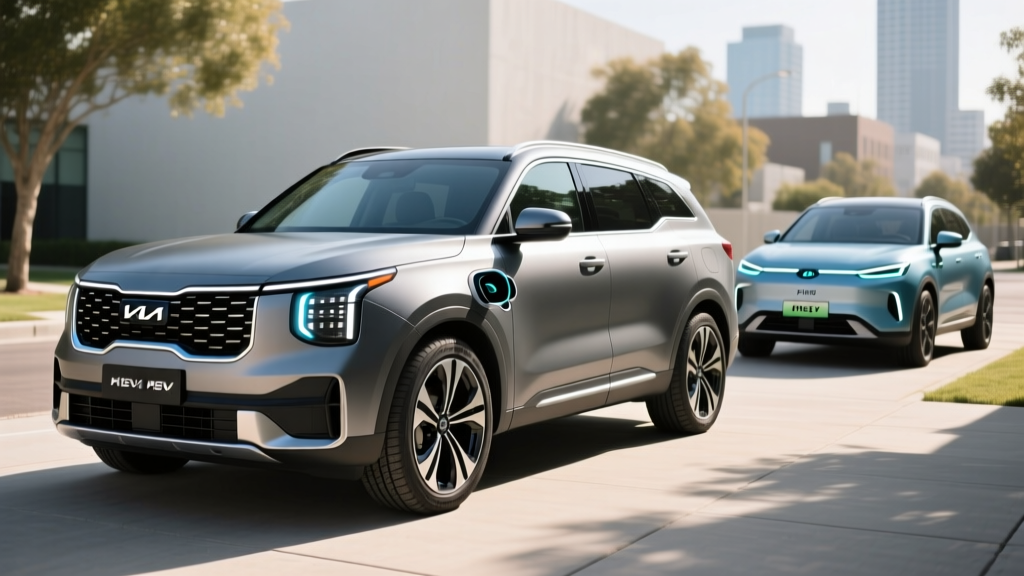
The 2026 Hybrid Kia Sorento comes in two flavors that buyers frequently confuse — and choosing the wrong one can cost you thousands over five years. The conventional hybrid (HEV) delivers up to 34 MPG combined with zero lifestyle change required. The plug-in hybrid (PHEV) offers 32 miles of electric-only driving, then operates as a hybrid once the battery depletes. Neither requires you to commit to a full battery-electric vehicle, but they serve distinctly different driving patterns.
If your daily commute is under 30 miles and you can charge at home, the PHEV can run months without visiting a gas station. If you lack home charging access or regularly take long road trips, the HEV's simplicity and lower starting price make more sense. Here's the exact data you need to decide.
HEV vs PHEV: What's the Difference?
Conventional Hybrid (HEV): Charges its small battery through regenerative braking and the gasoline engine. You never plug it in. It simply gets better fuel economy than a gas-only vehicle.
Plug-in Hybrid (PHEV): Has a larger battery you charge via a wall outlet or charging station. It drives on electricity alone for a set range (32 miles EPA for the Sorento PHEV), then seamlessly transitions to hybrid operation.
Hybrid Kia Sorento MPG: EPA Numbers and Real-World Expectations
Fuel economy is the primary reason buyers search for the hybrid Kia Sorento over the gas-only model. The HEV and PHEV achieve their efficiency differently, and real-world results depend heavily on your driving mix.
| Metric | Sorento HEV (FWD) | Sorento HEV (AWD) | Sorento PHEV (AWD) |
|---|---|---|---|
| EPA City MPG | 36 | 34 | 79 MPGe (electric+gas) |
| EPA Highway MPG | 35 | 34 | 34 MPG (charge-sustaining) |
| EPA Combined MPG | 35 | 34 | 34 MPG (after battery depleted) |
| Real-World City (observed) | 36–39 | 35–37 | Minimal gas use if charged daily |
| Real-World Highway (observed) | 32–34 | 31–33 | 31–33 (charge-sustaining) |
Why real-world city MPG often beats the EPA sticker: Hybrids recapture energy during stop-and-go braking that gas vehicles waste as heat. In urban driving, the Sorento HEV's electric motor handles low-speed acceleration while the engine stays off, pushing real-world city economy to 36–39 MPG in moderate temperatures. Highway driving reverses this advantage — aerodynamic drag dominates, and the engine runs continuously, so expect 2–3 MPG below the EPA combined figure at 70+ mph.
Cold-weather note: Below 40°F, expect a 5–10% MPG reduction in the HEV as the engine runs more frequently for cabin heat and battery warming. The PHEV can use grid electricity for cabin preconditioning if plugged in, preserving some efficiency.
Total Range Reality
Sorento HEV: With a 17.7-gallon fuel tank and 34 MPG combined (AWD), expect approximately 600 miles of total range — enough for most road trips without strategic fuel stops.
Sorento PHEV: 32 miles electric + ~430 miles on gasoline = approximately 462 miles total range. The smaller 12.6-gallon tank in the PHEV reduces total range compared to the HEV.
PHEV Electric-Only Range: How Far Can You Really Go?
The 2026 Sorento PHEV carries a 13.8 kWh battery pack (usable capacity approximately 11.5 kWh) that delivers an EPA-rated 32 miles of electric-only range. In practice, that figure fluctuates based on conditions:
- Ideal conditions (65–75°F, city speeds, flat terrain): 30–34 miles on a full charge
- Highway at 70 mph: 24–27 miles before the engine engages
- Cold weather (below 35°F): 22–26 miles, reduced by battery heating and cabin demands
- Hilly terrain or heavy cargo: 25–28 miles
For commuters with a sub-30-mile round trip and home charging, the PHEV effectively operates as an EV on weekdays. Weekend road trips use the gasoline engine without range anxiety. This dual personality is the PHEV's core value proposition — but only if you actually charge it. An uncharged PHEV is simply a heavier, more expensive hybrid.
Powertrain and Performance Specs
| Specification | Sorento HEV | Sorento PHEV |
|---|---|---|
| Engine | 1.6L turbocharged I-4 | 1.6L turbocharged I-4 |
| Electric Motor | 47 kW (63 hp) | 72 kW (97 hp) |
| Combined System Output | 232 hp / 258 lb-ft | 261 hp / 258 lb-ft |
| Transmission | 6-speed automatic | 6-speed automatic |
| Drivetrain | FWD or AWD | AWD (standard) |
| 0–60 mph (est.) | ~7.5 sec | ~7.0 sec |
| Towing Capacity | 2,000 lbs | 2,000 lbs |
| Battery Capacity | ~1.5 kWh (self-charging) | 13.8 kWh total (~11.5 usable) |
| Battery Chemistry | Lithium-ion (NMC) | Lithium-ion (NMC) |
Both powertrains use Kia's turbocharged 1.6-liter four-cylinder paired with an electric motor integrated into the transmission housing. The PHEV's larger motor provides noticeably stronger electric-only acceleration and a modest combined-output advantage. Neither is a performance vehicle, but both deliver confident highway merging — a significant upgrade over the base 191-hp gas Sorento.
PHEV Charging: Speeds, Times, and Infrastructure
| Charging Level | Power (kW) | Time (0–100%) | Availability |
|---|---|---|---|
| Level 1 (120V household) | ~1.4 kW | ~11 hours | Any standard outlet |
| Level 2 (240V home/public) | ~3.3 kW (onboard limit) | ~3.5 hours | Home wallbox, public L2 stations |
| DC Fast Charge | Not supported | N/A | N/A |
Critical detail: The Sorento PHEV does not support DC fast charging. Its onboard charger is limited to approximately 3.3 kW, meaning even at a public Level 2 station, a full charge takes roughly 3.5 hours. This is typical for PHEVs — the smaller battery makes overnight Level 1 or Level 2 home charging the practical standard.
For most PHEV owners, plugging into a standard 120V outlet overnight recovers enough charge for the next day's commute (roughly 1.4 kW × 10 hours = 14 kWh, more than the usable capacity). A dedicated Level 2 home charger provides faster top-ups and is useful if you make multiple short trips per day with charging opportunities between them.
Pricing, Trims, and Tax Credit Eligibility
| Model & Trim | 2026 MSRP (est.) | Drivetrain |
|---|---|---|
| Sorento HEV S | $38,390 | FWD |
| Sorento HEV EX | $41,290 | AWD |
| Sorento HEV SX Prestige | $45,590 | AWD |
| Sorento PHEV EX | $51,590 | AWD |
| Sorento PHEV SX Prestige | $55,090 | AWD |
Prices include destination charge. Verify current MSRP on Kia's official site as trims and pricing adjust throughout the model year.
Federal Tax Credit: The PHEV Advantage
Under IRS §30D rules, the Sorento PHEV may qualify for up to $7,500 in federal tax credits — but eligibility is far from automatic. The conventional HEV does not qualify for the federal EV credit (its battery is too small and it cannot plug in).
§30D Credit Requirements for the Sorento PHEV:
- Vehicle MSRP cap: SUVs must be under $80,000 — the Sorento PHEV clears this easily
- Buyer income cap: Modified AGI ≤ $150,000 (single) or ≤ $300,000 (joint)
- Battery sourcing: Critical minerals and battery components must meet phased-in domestic/free-trade requirements (percentages increase annually through 2030)
- Assembly: Vehicle must undergo final assembly in North America — the Sorento is built in West Point, Georgia ✓
- Point-of-sale transfer: Eligible buyers can apply the credit as a down-payment reduction at the dealer rather than waiting for tax filing
Important caveat: Battery-component and critical-mineral sourcing rules tighten each year. A PHEV that qualified for the full $7,500 in 2024 may qualify for only $3,750 or nothing in later years depending on supply-chain shifts. Always verify current eligibility on fueleconomy.gov and consult a tax professional before relying on credit estimates.
Battery Warranty, Reliability, and Replacement Costs
Kia Hybrid Battery Warranty
HEV and PHEV: 10 years / 100,000 miles (whichever comes first) for the hybrid battery pack and hybrid-system components.
Capacity retention threshold: Kia warrants the PHEV battery against dropping below approximately 70% of original capacity during the warranty period.
Standard powertrain warranty: 10 years / 100,000 miles covers the engine, transmission, and electric motor.
Kia's 10-year hybrid battery warranty is among the strongest in the segment, matching Hyundai's coverage and exceeding Toyota's 10-year/150,000-mile hybrid battery warranty only on mileage. In practice, hybrid battery failures before 150,000 miles are uncommon based on industry data from earlier-generation Kia and Hyundai hybrid systems.
Replacement Cost If Out of Warranty
Should the PHEV's 13.8 kWh battery require replacement after the warranty expires, expect a dealer-installed cost between $4,000 and $6,500 depending on labor rates and parts availability. The HEV's smaller battery is less expensive — typically $2,000 to $3,500 installed. Third-party refurbishment shops may offer lower-cost options, though availability varies by region.
For context, modern NMC lithium-ion hybrid batteries degrade slowly. Most PHEV owners report 5–10% capacity loss over the first five years based on data from comparable Hyundai/Kia PHEV platforms. The Sorento HEV's tiny battery cycles less aggressively because the engine supplements frequently, contributing to long service life.
Who Should Choose the Hybrid Sorento — and Which Version?
Choose the Sorento HEV if:
- You don't have reliable access to home or workplace charging
- Your daily driving exceeds 40+ miles, making PHEV electric range insufficient
- You want maximum total range (~600 miles) for frequent long road trips
- Budget is a priority — the HEV starts ~$13,000 lower than the PHEV
- You want a simple ownership experience with zero plug-in routine
Choose the Sorento PHEV if:
- Your round-trip commute is under 30 miles and you can charge at home nightly
- You qualify for the §30D tax credit (effectively reducing the PHEV price gap by up to $7,500)
- You want EV-like daily driving without range anxiety on longer trips
- You live in an area with high gasoline prices, making electric commuting cost-effective
- You want the more powerful 261-hp powertrain
Choose a Full EV Instead if:
- You have home Level 2 charging and rarely drive more than 250 miles in a single day
- You want zero gasoline purchases, zero oil changes, and minimal drivetrain maintenance
- You're considering vehicles like the Kia EV6 (310 mi EPA range) or Hyundai Ioniq 5 (303+ mi) which offer DC fast charging for road trips
Sorento HEV Pros
- 34 MPG combined (AWD) with no plug-in required
- ~600 miles total range
- Lower starting price ($38,390)
- Three-row seating (up to 7 passengers)
- 10-year/100,000-mile hybrid battery warranty
Sorento HEV Cons
- No federal tax credit eligibility
- No electric-only driving mode
- Modest 2,000-lb towing capacity
- AWD fuel economy drops slightly vs FWD
Sorento PHEV Pros
- 32 miles electric-only for gas-free commuting
- Up to $7,500 federal tax credit (if eligible)
- 261 hp combined — strongest Sorento powertrain
- AWD standard with electric torque
- Three-row seating retained
Sorento PHEV Cons
- $51,590+ starting price (before credits)
- No DC fast charging — 3.5 hours on Level 2
- Smaller 12.6-gal tank = ~462 mi total range
- Heavy without charge = 34 MPG (same as HEV AWD)
- Tax credit eligibility uncertain year-to-year
Frequently Asked Questions
How many MPG does the hybrid Kia Sorento get?
The 2026 Sorento HEV achieves an EPA-rated 35 MPG combined (36 city / 35 highway) in FWD trim, and 34 MPG combined in AWD. Real-world city driving often yields 36–39 MPG thanks to regenerative braking, while sustained highway driving at 75+ mph typically returns 31–33 MPG. The PHEV returns 34 MPG combined once its battery is depleted.
How far can the Sorento PHEV go on electric only?
The EPA rates the Sorento PHEV at 32 miles of electric-only range. In real-world conditions, expect 30–34 miles in mild weather at city speeds, 24–27 miles at highway speeds, and 22–26 miles in cold weather. Once the battery depletes, the gasoline engine takes over seamlessly.
Does the hybrid Kia Sorento qualify for a tax credit?
The conventional HEV does not qualify for any federal EV tax credit. The PHEV may qualify for up to $7,500 under IRS §30D, subject to buyer income caps ($150K single / $300K joint), battery sourcing requirements, and North American assembly (which the Sorento meets). The credit can be applied at point of sale as a down-payment reduction. Verify current eligibility on fueleconomy.gov and consult a tax professional.
Is the hybrid Sorento reliable, and what does battery replacement cost?
Kia's hybrid system has proven reliable across the Hyundai/Kia platform family. The hybrid battery carries a 10-year/100,000-mile warranty. Out-of-warranty PHEV battery replacement runs $4,000–$6,500; HEV battery replacement runs $2,000–$3,500. Industry data suggests significant degradation is uncommon before 150,000+ miles.
Do I need to plug in the Sorento hybrid?
Only the PHEV requires plugging in — and only if you want to use its electric-only range. The conventional HEV charges its own battery through regenerative braking and the gasoline engine. You fuel it like a normal car and never touch a charging cable. If you forget to plug in the PHEV, it simply operates as a conventional hybrid at 34 MPG combined.
Can the Sorento PHEV DC fast charge?
No. The Sorento PHEV does not support DC fast charging. Its onboard charger accepts up to approximately 3.3 kW on Level 2 (240V), taking about 3.5 hours for a full charge. On a standard 120V household outlet (Level 1), a full charge takes roughly 11 hours. This is standard for PHEVs — overnight home charging is the intended use case.
Hybrid vs PHEV vs full EV — which should I choose?
Choose the HEV if you lack home charging or want the lowest price and longest range. Choose the PHEV if you can charge at home, commute under 30 miles, and qualify for the tax credit. Choose a full EV if you have reliable Level 2 home charging, rarely exceed 250 daily miles, and want zero gasoline costs and minimal maintenance. The PHEV is the bridge option — it rewards home charging but doesn't strand you on road trips.