The Technology Behind Hybrid Insurance Premiums
When evaluating the total cost of ownership for a hybrid or plug-in hybrid electric vehicle (PHEV), most buyers focus on fuel economy, tax credits, and maintenance. However, one critical variable often catches new owners off guard: insurance premiums. While hybrids are generally safer and more reliable than their internal combustion engine (ICE) counterparts, the underlying technology that makes them efficient also introduces unique risk factors for insurance underwriters. To truly understand hybrid insurance costs, we must take a deep dive into the engineering of high-voltage systems, Advanced Driver Assistance Systems (ADAS), and vehicle mass.
High-Voltage Interlock Loops (HVIL) and Collision Totals
The most significant technological factor influencing hybrid insurance premiums is the high-voltage (HV) battery pack and its safety architecture. Modern hybrids utilize a High-Voltage Interlock Loop (HVIL)—a low-voltage diagnostic circuit that monitors the continuity of the high-voltage wiring harness. If a collision occurs and the vehicle's frame bends even slightly, or if an HV connector is jarred loose, the HVIL circuit breaks. This immediately shuts down the high-voltage system to prevent thermal runaway or electrical shock.
From an insurance perspective, an HVIL breach is a major red flag. Even in low-speed collisions where the battery cells themselves are unharmed, a tripped HVIL often requires the vehicle to be towed to a specialized hybrid repair center. Technicians must drop the battery pack, perform megohm testing to check for insulation breakdown, and recalibrate the system. This specialized labor and diagnostic requirement can easily add $2,000 to $4,000 to a minor collision claim. Consequently, actuaries price this elevated repair risk into the comprehensive and collision premiums for hybrid models.
ADAS Integration and Sensor Calibration
Hybrids and PHEVs are frequently positioned as premium, technology-forward trim levels within a manufacturer's lineup. As a result, they are disproportionately equipped with advanced ADAS features like adaptive cruise control, lane-keeping assist, and automatic emergency braking. According to the National Highway Traffic Safety Administration (NHTSA), these systems rely on a complex network of LiDAR, radar, and high-resolution cameras embedded in the bumpers, windshield, and side mirrors.
In a traditional ICE vehicle, replacing a cracked front bumper is a straightforward parts-and-paint job. In a modern hybrid equipped with forward-facing radar, that same bumper replacement requires precise optical and electronic calibration to ensure the ADAS sensors are perfectly aligned. A minor fender bender that would cost $600 to repair on a gas-only car can easily exceed $1,800 on a hybrid due to sensor recalibration and proprietary software licensing fees required by the dealership or certified body shop.
The Weight Factor: Curb Mass and Liability
Battery chemistry plays a direct role in vehicle weight. Whether a hybrid uses Nickel-Metal Hydride (NiMH) or Lithium-ion (Li-ion) cells, the addition of a high-voltage battery pack, electric motors, and reinforced structural casing adds significant mass. For example, a hybrid SUV can weigh 300 to 500 pounds more than its gas-only equivalent. In a multi-vehicle collision, the heavier vehicle transfers more kinetic energy to the lighter vehicle, causing more severe property damage and increasing the likelihood of bodily injury claims for the other party. This elevated risk directly increases the Property Damage Liability and Bodily Injury Liability premiums for hybrid owners.
Hybrid vs. ICE vs. PHEV: Insurance Cost Comparison
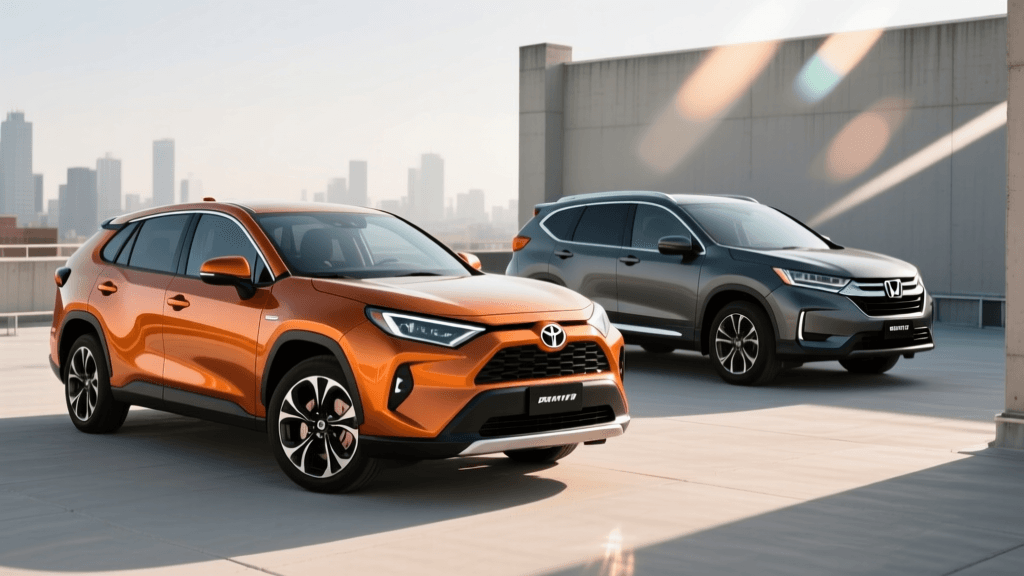
To visualize how these technological factors translate into real-world costs, we have compiled a comparison of average annual insurance premiums, estimated battery replacement costs, and curb weights for popular models. Note that premiums are national averages and will vary based on driver history, location, and coverage limits.
| Vehicle Model | Powertrain | Avg. Annual Premium | Est. HV Battery Cost | Curb Weight |
|---|---|---|---|---|
| Toyota RAV4 | ICE (Gas) | $1,420 | N/A | 3,615 lbs |
| Toyota RAV4 Hybrid | HEV | $1,560 | $3,000 - $4,500 | 3,800 lbs |
| Toyota RAV4 Prime | PHEV | $1,680 | $6,500 - $9,000 | 4,235 lbs |
| Honda Accord | ICE (Gas) | $1,380 | N/A | 3,239 lbs |
| Honda Accord Hybrid | HEV | $1,490 | $2,500 - $4,000 | 3,472 lbs |
| Ford Escape | ICE (Gas) | $1,450 | N/A | 3,299 lbs |
| Ford Escape PHEV | PHEV | $1,640 | $7,000 - $9,500 | 3,886 lbs |
As the data illustrates, PHEVs generally carry the highest insurance premiums. This is due to the combination of the largest, most expensive battery packs, the highest curb weights, and the inclusion of onboard charging hardware that is susceptible to power surge damage during Level 2 charging sessions.
How Hybrid Drivetrain Tech Affects Specific Coverages
Understanding your policy's fine print is critical when insuring a vehicle with a high-voltage drivetrain. Here is how hybrid technology intersects with standard coverage types:
- Collision and Comprehensive: Standard policies cover accidental damage to the hybrid battery (e.g., from a collision, flood, or falling tree). However, they do not cover battery degradation or failure due to age. For that, you must rely on the manufacturer's warranty, which the U.S. Department of Energy's Alternative Fuels Data Center notes is federally mandated to be at least 8 years or 100,000 miles for hybrid and EV batteries.
- Gap Insurance: Because PHEVs and some hybrids can suffer steep initial depreciation curves compared to their ICE counterparts, the actual cash value (ACV) of the car might fall below your loan balance quickly. If the HV battery is damaged and the car is totaled, Gap insurance is essential to prevent out-of-pocket losses.
- Liability Coverage: Due to the increased mass of hybrids, it is highly recommended to increase your Property Damage Liability limits. Hitting a newer, expensive vehicle in a heavy PHEV SUV can easily exceed the standard $25,000 minimum property damage limit required in many states.
Actionable Steps to Lower Your Hybrid Insurance Costs
Despite the technological risk factors, hybrid owners have several avenues to reduce their premiums and optimize their coverage:
1. Leverage Telematics and Usage-Based Insurance (UBI)
Because hybrids are often driven by commuters looking to maximize fuel efficiency, their driving patterns can be highly predictable and safe. According to the Insurance Information Institute (Triple-I), Usage-Based Insurance (UBI) programs monitor driving behavior—such as hard braking, rapid acceleration, and time of day—to offer personalized discounts. Technical Note: While some UBI devices plug into the OBD-II port, hybrids use the OBD-II port for complex 12V and HV system diagnostics. If you are concerned about aftermarket dongles interfering with your hybrid's CAN bus network, opt for smartphone-based telematics apps offered by major insurers instead.
2. Ask for 'Green Vehicle' or Alternative Fuel Discounts
Many major insurers recognize the environmental benefits of hybrids and offer specific 'Green Vehicle' discounts. Companies like Travelers and Liberty Mutual have historically offered up to a 10% discount on auto insurance premiums for hybrid and electric vehicles. Always explicitly ask your agent if your specific VIN qualifies for an alternative fuel credit.
3. Optimize Your Deductibles Around the Battery
If you have a robust emergency fund, consider raising your collision deductible from $500 to $1,000 or $2,000. Since minor cosmetic damage on a hybrid often triggers expensive ADAS recalibrations, you will likely use your collision coverage for moderate-to-severe claims anyway. A higher deductible significantly lowers your monthly premium, allowing you to reallocate those savings toward a dedicated maintenance fund for out-of-warranty HV battery servicing down the road.
4. Bundle and Reassess Annually
Hybrid insurance rates fluctuate as repair networks become more adept at handling high-voltage systems and as ADAS calibration tools become cheaper and more widespread in independent body shops. Reassess your quotes annually. An insurer that penalized hybrid battery risks heavily three years ago may have updated their actuarial tables to reflect the proven longevity and safety of modern Li-ion and NiMH battery enclosures.