The Hidden Cost of Hybrid Ownership: Depreciation
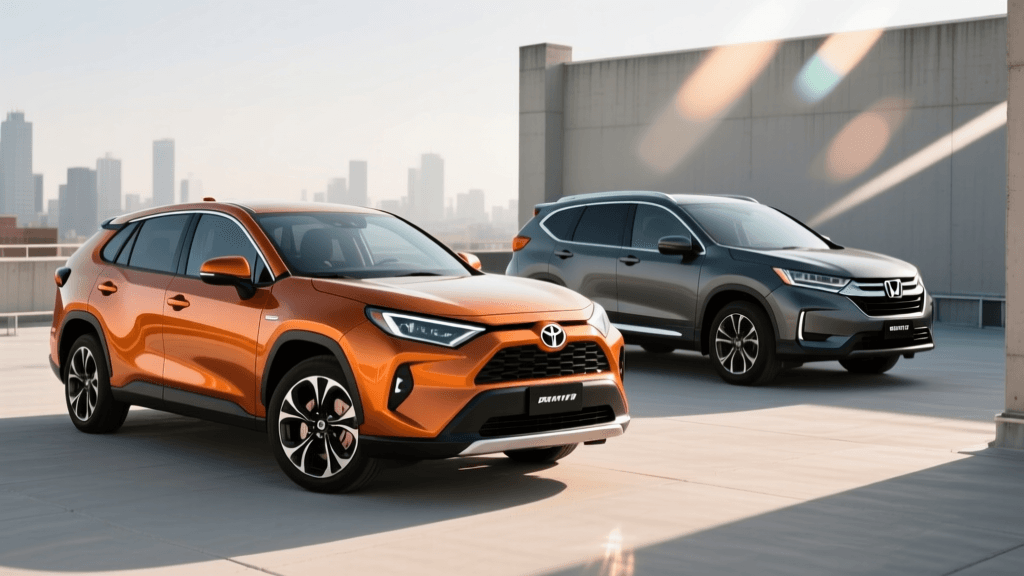
When shoppers evaluate hybrid vehicles, the immediate focus is almost always on fuel economy, horsepower, and cargo space. However, the most significant financial factor in vehicle ownership is often the one hiding in plain sight: depreciation. A hybrid might save you thousands at the gas pump over five years, but if it loses its value faster than its competitors on the used market, those fuel savings are quickly erased. In the fiercely competitive compact hybrid SUV segment, two titans dominate the conversation: the Toyota RAV4 Hybrid and the Honda CR-V Hybrid. Add the plug-in hybrid wildcard, the Toyota RAV4 Prime, and the resale value landscape becomes even more complex.
In this head-to-head showdown, we analyze the resale value and depreciation trajectories of these segment leaders. By examining historical data, battery warranty impacts, and market demand, we will determine which hybrid SUV truly offers the best long-term financial protection for your wallet.
The Contenders: Setting the Baseline
To accurately compare depreciation, we must establish the baseline MSRP and market positioning of our three contenders. Note that hybrid vehicles frequently experience dealer markups or incentives that can skew initial purchase prices, but we will use MSRP as our foundation for percentage-based depreciation calculations.
- 2024 Toyota RAV4 Hybrid (XLE Premium): Starting MSRP around $35,500. The undisputed sales king of the hybrid SUV world, known for its traditional planetary gearset hybrid system.
- 2024 Honda CR-V Hybrid (Sport Touring): Starting MSRP around $40,000. Honda utilizes a unique two-motor e:HEV system that prioritizes electric-like driving dynamics and seamless power delivery.
- 2024 Toyota RAV4 Prime (PHEV XSE): Starting MSRP around $44,500. The plug-in hybrid variant offering 42 miles of pure EV range and a massive 302 combined horsepower.
Head-to-Head Depreciation Data: 3-Year and 5-Year Projections
Depreciation is rarely a straight line. Vehicles lose the most value in the first three years, followed by a gradual flattening of the curve. According to extensive automotive market analysis, hybrids generally outperform their internal combustion engine (ICE) counterparts in value retention. The iSeeCars annual depreciation study consistently highlights that hybrid vehicles depreciate at a significantly slower rate than the industry average, largely due to high used-market demand and proven battery longevity.
Below is a projected depreciation table comparing our three contenders over a 3-year (36,000 miles) and 5-year (60,000 miles) ownership period.
| Vehicle Model | Est. 3-Year Retained Value | Est. 3-Year Dollar Loss | Est. 5-Year Retained Value | Est. 5-Year Dollar Loss |
|---|---|---|---|---|
| Toyota RAV4 Hybrid | 66% | $12,070 | 54% | $16,330 |
| Honda CR-V Hybrid | 61% | $15,600 | 49% | $20,400 |
| Toyota RAV4 Prime (PHEV) | 69% | $13,795 | 58% | $18,690 |
*Note: Projections are based on historical segment averages, current market demand, and MSRP baselines. Actual values will vary based on local market conditions, vehicle condition, and trim levels.
Why the Toyota RAV4 Hybrid Dominates Resale
The Toyota RAV4 Hybrid is a masterclass in value retention. Its dominance in the resale market is not an accident; it is the result of decades of brand conditioning. Toyota essentially invented the modern hybrid market with the Prius, and that halo effect extends directly to the RAV4 lineup. When the Kelley Blue Book Best Resale Value Awards are announced each year, Toyota consistently occupies the top spots, and the RAV4 is a frequent heavyweight champion.
The Reliability Premium
Used car buyers are inherently risk-averse. When shopping for a used hybrid, the primary fear is battery replacement costs. Toyota’s Hybrid Synergy Drive system has an unparalleled track record for longevity, with many examples surpassing 200,000 miles on the original battery pack. This proven reliability creates a massive 'reliability premium' on the used market. Dealers know that a 4-year-old RAV4 Hybrid will sell quickly and with minimal reconditioning costs, allowing them to offer higher trade-in values to original owners.
Honda CR-V Hybrid: The Value Challenger
The Honda CR-V Hybrid is arguably the better vehicle to drive. Its two-motor hybrid system operates primarily as a series hybrid at lower speeds, meaning the gas engine acts as a generator while the electric motor drives the wheels. This results in smoother acceleration and a more EV-like feel around town. However, Honda’s hybrid technology, while excellent, does not carry the same multi-decade historical baggage of bulletproof reliability that Toyota enjoys.
Consequently, the CR-V Hybrid experiences a slightly steeper depreciation curve. It loses roughly 5% more of its value over three years compared to the RAV4 Hybrid. For buyers who plan to hold onto their vehicles for seven to ten years, this initial depreciation hit matters less, as the curve flattens out and the CR-V’s superior driving dynamics and interior ergonomics provide excellent long-term ownership satisfaction. But for those who trade in every 36 months, the Honda will cost you more in pure depreciation dollars.
The PHEV Factor: RAV4 Prime Resale Dynamics
Plug-in hybrids (PHEVs) occupy a strange space in the depreciation world. The Toyota RAV4 Prime boasts a higher MSRP, but it also qualifies for federal and state tax incentives (when available), which effectively lowers the true out-of-pocket cost for the first owner. But how does the used market view PHEVs?
Historically, early PHEVs suffered from terrible resale values due to small batteries and rapid degradation. However, modern PHEVs like the RAV4 Prime have largely solved this. The U.S. Department of Energy notes that modern lithium-ion battery management systems in PHEVs actively preserve battery health by buffering the state of charge, preventing the deep cycling that causes degradation. Because the RAV4 Prime offers a highly desirable 42 miles of EV range and all-wheel drive, used market demand remains incredibly high. It actually retains a higher percentage of its MSRP than the standard RAV4 Hybrid, though the initial dollar loss is higher simply because the starting price is much higher.
Battery Warranties and Used Market Confidence
A critical factor protecting the resale value of all three vehicles in this showdown is the federal mandate for hybrid battery warranties. By law, hybrid and PHEV batteries must be covered for a minimum of 8 years or 100,000 miles. In states that follow California Air Resources Board (CARB) regulations, this warranty extends to 10 years or 150,000 miles.
This warranty is fully transferable to the second owner. When you sell your 4-year-old RAV4 Hybrid with 45,000 miles on the odometer, the buyer still has 4 years and 55,000 miles of battery coverage remaining. This transferable safety net drastically reduces the anxiety of used hybrid buyers, keeping floor prices high and preventing the steep value drops seen in luxury European vehicles once their powertrain warranties expire.
Actionable Buying Advice: Which Should You Choose?
Depreciation should be viewed through the lens of your specific ownership timeline. Here is our actionable advice based on your buying profile:
- The 3-Year Leaser or Short-Term Owner: Choose the Toyota RAV4 Prime or RAV4 Hybrid. If you plan to sell or trade in your vehicle right as the bumper-to-bumper warranty expires, Toyota’s brand equity and high used-market demand will shield you from massive equity loss. The RAV4 Prime is especially potent if you can secure it at MSRP and apply federal tax credits, effectively subsidizing your depreciation.
- The 5-to-7 Year Owner: The Honda CR-V Hybrid becomes a highly compelling choice. While it takes a slightly larger hit in the first three years, the depreciation curve flattens significantly by year five. You get a more refined driving experience, excellent interior space, and a hybrid system that is incredibly efficient on the highway.
- The Long-Hauler (10+ Years): Depreciation becomes irrelevant if you drive the car into the ground. Choose based on driving feel and maintenance costs. Both Toyota and Honda offer exceptional long-term reliability, but Honda’s e:HEV system provides a smoother, more electric-like daily commute, while Toyota’s THS system offers unmatched simplicity and ease of repair at independent shops.
Final Verdict
In the head-to-head showdown of hybrid resale value, the Toyota RAV4 Hybrid takes the crown for pure percentage retention and dollar-saved on the standard hybrid front. Its reputation is its armor, protecting your equity better than almost any other vehicle in its class. However, the Toyota RAV4 Prime proves that PHEVs can also be resale champions if the EV range is substantial and the battery tech is robust. The Honda CR-V Hybrid remains a phenomenal vehicle that sacrifices a small slice of resale value at the altar of superior driving dynamics. Whichever you choose, buying a compact hybrid SUV remains one of the smartest financial decisions you can make in today’s automotive market.