The Ultimate Hybrid Architecture Showdown
When shopping for a hybrid vehicle, most buyers focus solely on fuel economy ratings, interior space, and price tags. However, the true character, efficiency, and driving dynamics of a hybrid are dictated by its underlying drivetrain architecture. Not all hybrids are created equal. The way a vehicle manages the complex dance between its internal combustion engine (ICE) and electric motors fundamentally changes how it behaves on the road.
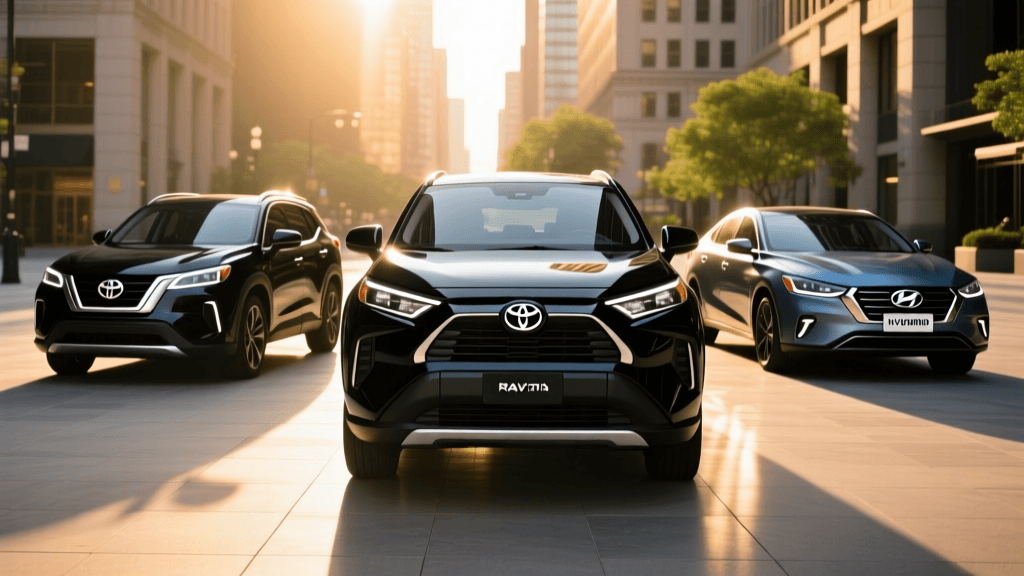
To demystify the engineering, we are putting the three primary hybrid architectures head-to-head. Instead of relying on abstract engineering diagrams, we are pitting three real-world market leaders against each other: the Nissan X-Trail e-POWER representing the Series Hybrid, the Hyundai Sonata Hybrid representing the Parallel Hybrid, and the Toyota RAV4 Hybrid representing the Series-Parallel (Power-Split) Hybrid.
According to the Environmental Protection Agency (EPA), understanding these distinctions is crucial for matching a vehicle to your specific driving habits, as city and highway efficiencies vary wildly depending on the drivetrain layout.
Round 1: The Series Hybrid — Nissan X-Trail e-POWER
In a pure series hybrid architecture, the internal combustion engine is completely disconnected from the drive wheels. The engine's sole purpose is to act as a generator, producing electricity to feed the battery or directly power the electric traction motors. The wheels are driven 100% by electricity at all times.
The Contender: Nissan X-Trail e-POWER
Nissan’s e-POWER system is a masterclass in series hybrid execution. The X-Trail utilizes a turbocharged 1.5-liter three-cylinder engine with variable compression. Because the engine never mechanically turns the wheels, Nissan can run this engine at its absolute most efficient RPM range, regardless of vehicle speed. When you press the accelerator, the electric motors (up to two, depending on the AWD configuration) deliver instant, linear torque, mimicking the smooth, gearless acceleration of a pure battery-electric vehicle (BEV).
Pros and Cons
- Pros: Exceptional city fuel economy, EV-like smoothness, no transmission shift shock, and no range anxiety since you fuel up at standard gas stations.
- Cons: Energy conversion losses at high speeds. Converting mechanical energy (engine) to electrical energy (generator), and back to mechanical energy (motor) creates thermodynamic losses during sustained highway cruising.
As noted by the Alternative Fuels Data Center (AFDC), series hybrids excel in stop-and-go urban environments where regenerative braking can continuously recapture energy, but they often see a drop in efficiency compared to parallel systems during prolonged highway driving.
Round 2: The Parallel Hybrid — Hyundai Sonata Hybrid
In a parallel hybrid, both the internal combustion engine and the electric motor are physically connected to the transmission and can drive the wheels directly. They can work together to provide maximum acceleration, or the vehicle can rely solely on the gas engine or the electric motor depending on the load.
The Contender: Hyundai Sonata Hybrid
Hyundai employs a traditional 6-speed automatic transmission in the Sonata Hybrid, eschewing the rubber-band feel of continuously variable transmissions (CVTs). The 2.0-liter four-cylinder engine and a 39 kW electric motor are mounted in parallel, utilizing a clutch system to engage and disengage the engine from the drivetrain. When cruising at 70 mph, the clutch locks the engine directly to the wheels, bypassing the electric motor entirely and eliminating the energy conversion losses seen in series hybrids.
Pros and Cons
- Pros: Superior highway fuel efficiency, familiar and engaging driving dynamics with physical gear shifts, and excellent high-speed passing power when the engine and motor combine forces.
- Cons: Less seamless low-speed acceleration compared to series hybrids, and slightly lower city MPG due to the mechanical complexity of shifting gears and managing the engine clutch in heavy traffic.
Round 3: The Series-Parallel Hybrid — Toyota RAV4 Hybrid
The series-parallel (or power-split) hybrid is the most complex and versatile architecture. It uses a planetary gearset to blend power from the engine and electric motors seamlessly. It can operate as a pure electric vehicle, a series hybrid (engine generates power for the motor), or a parallel hybrid (engine and motor turn the wheels together), adjusting in milliseconds based on driving conditions.
The Contender: Toyota RAV4 Hybrid
Toyota’s Hybrid Synergy Drive (now in its fifth generation) is the industry benchmark. The RAV4 Hybrid pairs a 2.5-liter Dynamic Force engine with an e-CVT. At low speeds, the planetary gearset routes all engine power to a generator, which feeds the electric motor (Series mode). As speed increases, the gearset seamlessly shifts to route a portion of the engine's mechanical power directly to the wheels while the electric motor provides supplemental torque (Parallel mode). This allows the RAV4 to achieve the city mileage of a series hybrid and the highway mileage of a parallel hybrid.
Pros and Cons
- Pros: The ultimate compromise, offering top-tier combined fuel economy, proven long-term reliability, and seamless power delivery without traditional gear shifts.
- Cons: The e-CVT can cause the engine to drone at a constant high RPM during hard acceleration (the 'rubber-band' effect), and the system is highly complex to manufacture and repair out of warranty.
Head-to-Head Data Comparison
To visualize how these architectures translate to real-world performance, we have compiled a comparison matrix of our three contenders. Note that exact MPG figures vary by trim and drivetrain (FWD vs. AWD).
| Feature | Nissan X-Trail e-POWER (Series) | Hyundai Sonata Hybrid (Parallel) | Toyota RAV4 Hybrid (Series-Parallel) |
|---|---|---|---|
| Engine Connection to Wheels | None (Generator Only) | Direct Mechanical (via Clutch) | Variable (via Planetary Gearset) |
| Transmission Type | Single-Speed Reduction | 6-Speed Automatic | e-CVT (Power Split Device) |
| Best Driving Scenario | City / Stop-and-Go Traffic | Highway Cruising / Open Roads | Mixed Commuting / Suburban |
| City Efficiency (Est.) | Excellent (Regen Heavy) | Good | Excellent |
| Highway Efficiency (Est.) | Moderate (Conversion Loss) | Excellent (Direct Drive) | Very Good |
| Driving Feel | EV-like, instant torque, smooth | Traditional, stepped gear shifts | Linear, but prone to engine drone |
The Verdict: Which Architecture Wins?
There is no single 'best' hybrid architecture; the winner depends entirely on your daily driving route.
Choose the Series Hybrid (Nissan e-POWER) If:
You are an urban dweller or deal with heavy, congested commutes. The series hybrid's ability to capture regenerative braking energy and keep the engine in its optimal RPM sweet spot makes it unbeatable in the city. Furthermore, if you want the silent, punchy feel of an EV but lack access to reliable home charging infrastructure, the X-Trail e-POWER provides the perfect bridge technology.
Choose the Parallel Hybrid (Hyundai Sonata) If:
Your commute consists primarily of long, high-speed highway stretches. Parallel hybrids bypass the energy conversion penalties of series systems by locking the engine directly to the wheels. Additionally, if you despise the droning sound of CVTs and prefer the mechanical engagement of physical gear shifts, the Sonata Hybrid offers a more traditional, enthusiast-friendly driving experience.
Choose the Series-Parallel Hybrid (Toyota RAV4) If:
You want the ultimate 'set it and forget it' vehicle for mixed driving. The series-parallel system is the master of adaptation. Whether you are crawling through downtown traffic or merging onto a fast-moving interstate, the planetary gearset ensures the vehicle is always operating at peak thermodynamic efficiency. It remains the gold standard for buyers seeking maximum combined MPG and bulletproof long-term reliability.
Ultimately, as automotive engineering continues to evolve, the lines between these architectures are blurring, with modern software allowing vehicles to switch modes more aggressively than ever before. However, understanding the mechanical foundation of your next hybrid purchase ensures you won't just be buying a badge—you'll be buying the right tool for your specific journey.