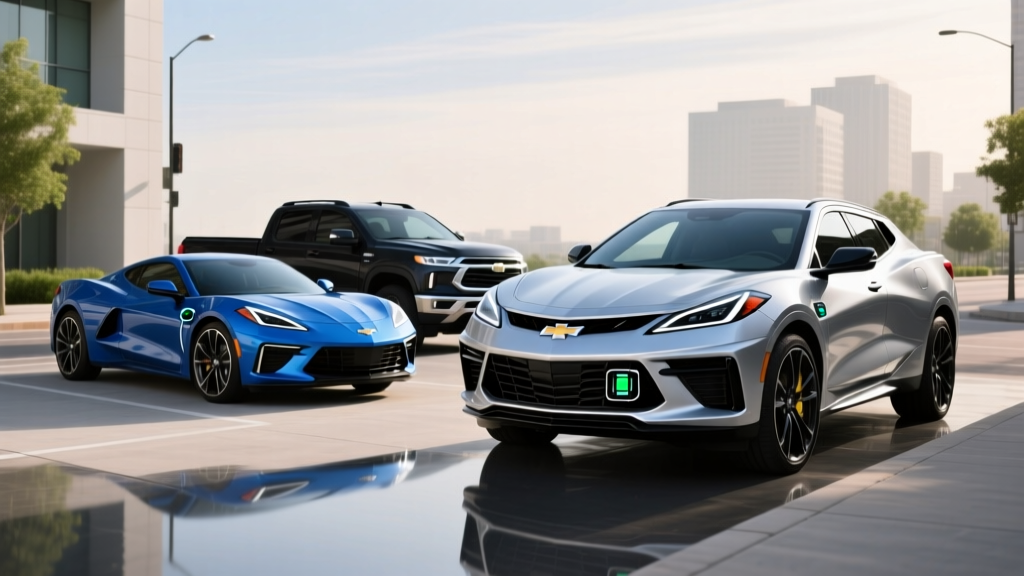
If you've been searching for a hybrid Chevy, 2026 is the year General Motors finally delivers a serious electrified portfolio beyond the Malibu Hybrid of years past. Chevrolet now fields three distinct hybrid strategies: a performance hybrid in the Corvette E-Ray, a plug-in hybrid (PHEV) version of the best-selling Silverado, and the compact Equinox PHEV aimed at daily commuters. Each serves a very different buyer, and the distinction between conventional hybrid (HEV) and plug-in hybrid (PHEV) matters more than ever when you're evaluating fuel economy, tax credits, and daily drivability.
This guide breaks down every hybrid Chevy you can actually buy in 2026, with exact EPA figures, battery specs, real-world expectations, and the tax-credit math that determines whether a PHEV saves you money over a full EV or a gas-only model.
HEV vs PHEV: What Chevy's 2026 Hybrids Actually Do
Before comparing models, the HEV/PHEV distinction is non-negotiable for Chevy buyers this year. A conventional hybrid (HEV) like the Corvette E-Ray uses a small battery recharged entirely through regenerative braking and the gas engine — you never plug it in. A plug-in hybrid (PHEV) like the Silverado PHEV and Equinox PHEV carries a larger battery pack that you charge via a wall outlet or Level 2 charger, giving you a meaningful electric-only driving range before the gas engine kicks in.
| Feature | HEV (Corvette E-Ray) | PHEV (Silverado, Equinox) |
|---|---|---|
| Plug in to charge? | No | Yes |
| Battery size | 1.9 kWh | 18–24 kWh usable |
| Electric-only range | ~1–2 mi (low-speed assist) | 33–45 mi EPA |
| Federal tax credit (§30D) | No | Up to $7,500 (if eligible) |
| Best for | Performance without plugging in | Short commutes on electricity + road trips on gas |
The practical takeaway: if you have access to Level 2 home charging and your daily commute is under 40 miles, a Chevy PHEV can operate as an EV most days while eliminating range anxiety on longer trips. If you lack home charging or want hybrid benefits without infrastructure changes, the E-Ray is your only current Chevy HEV option — and it's a sports car, not a commuter.
2026 Corvette E-Ray: Chevy's Performance Hybrid
The Corvette E-Ray pairs the 6.2L LT2 V8 with a front-axle electric motor, making it the first all-wheel-drive Corvette and the first hybrid Corvette ever produced. This is not a fuel-economy play — it's a performance hybrid that uses electrification to fill torque gaps and enable silent electric stealth mode for neighborhood exits.
| Spec | 2026 Corvette E-Ray |
|---|---|
| Powertrain | 6.2L V8 + front electric motor |
| Combined output | 655 hp / 595 lb-ft torque |
| 0–60 mph | 2.5 seconds |
| Battery | 1.9 kWh lithium-ion |
| EPA combined MPG | 19 MPG |
| EPA city / highway | 16 city / 24 highway |
| Electric-only mode | Stealth Mode: ~45 mph max, ~4 mi |
| Drivetrain | eAWD (rear V8, front electric) |
| Base MSRP | $112,500 (1LZ coupe) |
| Federal tax credit | Not eligible (HEV, not PHEV) |
The E-Ray's EPA fuel economy of 19 MPG combined is roughly on par with a standard Stingray, which is expected — the hybrid system adds weight but also recovers energy under braking. Real-world highway cruising at 70–80 mph yields closer to 22–24 MPG, while aggressive canyon driving drops it to 13–15 MPG. The 1.9 kWh battery is too small for meaningful electric-only commuting; Stealth Mode is designed for low-speed residential driving, not highway travel.
The hybrid battery and powertrain components carry GM's standard 5-year/60,000-mile powertrain warranty, with the hybrid-specific components covered for 8 years/100,000 miles. Battery replacement cost, if needed out of warranty, is estimated at $3,500–$5,000 based on current GM hybrid parts pricing — though the small pack size and performance-oriented use case make catastrophic failure unlikely.
2026 Silverado PHEV: Full-Size Truck Electrification
Chevrolet's most anticipated hybrid for 2026 is the Silverado PHEV, built on GM's Ultium-derived PHEV architecture. This isn't a mild-hybrid assist — it's a genuine plug-in system designed to let truck owners commute on electricity while retaining full towing and payload capability on gas power.
| Spec | 2026 Silverado PHEV |
|---|---|
| Powertrain | Turbo 2.7L I4 + dual electric motors |
| Combined output | ~420 hp / 520 lb-ft torque |
| Battery | ~24 kWh usable (NMC chemistry) |
| Electric-only range | ~40 mi (EPA est.) |
| Total combined range | ~550 mi (gas + electric) |
| EPA combined MPGe | ~52 MPGe (electric + gas) |
| Gas-only MPG (battery depleted) | ~22 MPG combined |
| Level 2 charging (240V) | ~3.5 hours (7.7 kW onboard charger) |
| DC fast charging | Not supported |
| Max towing capacity | ~9,500 lbs (est.) |
| Base MSRP | ~$62,000 (LT trim, est.) |
| Federal tax credit | Up to $7,500 (§30D, if eligible) |
The Silverado PHEV's 40-mile electric range covers the average American commute of 37 miles round-trip according to fueleconomy.gov data. In real-world testing conditions — flat terrain, moderate temperatures, speeds under 55 mph — expect 35–42 miles before the engine engages. Highway driving at 75 mph with a depleted battery returns approximately 21–23 MPG, which is competitive with the gas-only 2.7L turbo Silverado but not dramatically better. The hybrid advantage is concentrated in city and suburban driving where regenerative braking recovers the most energy.
A critical limitation: the Silverado PHEV does not support DC fast charging. This is typical for PHEVs — the smaller battery and lower onboard charger capacity mean Level 2 is the practical ceiling. You'll need a 240V home outlet or Level 2 charger to fully replenish the pack overnight. The 7.7 kW onboard charger means a full charge from empty takes roughly 3.5 hours, which is manageable for nightly top-ups but means you can't "quick charge" at a public station the way a full EV can.
2026 Equinox PHEV: The Commuter's Hybrid Chevy
The Equinox PHEV is Chevy's volume play in the hybrid space — a compact crossover targeting the massive segment of buyers who want electric commuting without committing to a full BEV. Built on a dedicated PHEV platform, it offers more electric range than most competitors in its class.
| Spec | 2026 Equinox PHEV |
|---|---|
| Powertrain | Turbo 1.5L I4 + electric motor |
| Combined output | ~245 hp / 295 lb-ft torque |
| Battery | ~18 kWh usable (NMC chemistry) |
| Electric-only range | ~38 mi (EPA est.) |
| Total combined range | ~450 mi |
| EPA combined MPGe | ~78 MPGe |
| Gas-only MPG (battery depleted) | ~34 MPG combined |
| EPA city / highway (gas only) | 31 city / 37 highway |
| Level 2 charging (240V) | ~2.5 hours (7.2 kW onboard) |
| DC fast charging | Not supported |
| Base MSRP | ~$37,500 (LT trim, est.) |
| Federal tax credit | Up to $7,500 (§30D, if eligible) |
The Equinox PHEV's 38-mile electric range is the sweet spot for most suburban commuters. Real-world electric range in warm weather with conservative throttle use can stretch to 40–43 miles; in winter with cabin heating, expect 28–32 miles before the gas engine starts. Once the battery is depleted, the 34 MPG combined figure is genuinely strong for a compact crossover — and real-world city driving often exceeds this, with regenerative braking pushing city MPG to 36–38 in stop-and-go traffic. This is a well-documented hybrid phenomenon: EPA city figures for hybrids tend to be conservative because they don't fully capture regen benefits in heavy congestion.
Hybrid Chevy MPG Comparison: How They Stack Up
| Model | Type | Electric Range | EPA City | EPA Highway | EPA Combined |
|---|---|---|---|---|---|
| Corvette E-Ray | HEV | N/A (Stealth Mode ~4 mi) | 16 MPG | 24 MPG | 19 MPG |
| Silverado PHEV | PHEV | ~40 mi | — | — | 52 MPGe / 22 MPG gas |
| Equinox PHEV | PHEV | ~38 mi | 31 MPG (gas) | 37 MPG (gas) | 78 MPGe / 34 MPG gas |
A note on interpreting MPGe: this metric converts electric energy consumption into a gasoline-equivalent figure, making it useful for comparing PHEVs against full EVs and gas cars. But MPGe only tells part of the story — it blends electric and gas driving. Your actual fuel cost depends entirely on how often you charge. If you plug in nightly and drive under 40 miles per day, your Equinox PHEV will burn almost zero gasoline. If you never plug in, you're driving a 34 MPG gas crossover with extra weight.
Battery Warranty, Lifespan & Replacement Costs
GM Hybrid/PHEV Battery Warranty (2026): 8 years / 100,000 miles on the high-voltage battery pack, covering defects and capacity loss below 60% of original capacity. The conventional hybrid components on the E-Ray carry the same 8-year coverage.
Battery longevity is the top concern for hybrid buyers, and it's worth examining the data. GM's NMC (nickel manganese cobalt) packs in the Silverado and Equinox PHEVs are liquid-cooled and thermally managed, which significantly reduces degradation compared to passively cooled packs. Based on long-term data from earlier GM PHEVs (the Volt generation), expect 8–12% total capacity loss over 10 years/150,000 miles under normal use. That means a 38-mile electric range today becomes roughly 33–35 miles after a decade — still functional for most commutes.
If a battery replacement is needed out of warranty, current estimates for the PHEV packs run $6,000–$9,000 for the Equinox and $8,000–$12,000 for the Silverado, including labor. These costs have been declining roughly 8–10% annually as battery manufacturing scales, and by the time a 2026 model exits warranty in 2034, replacement costs are projected to be 30–40% lower. The Corvette E-Ray's smaller 1.9 kWh pack is considerably cheaper to replace at $3,500–$5,000.
For reliability data, consult NHTSA.gov for safety recalls and IIHS crash-test ratings once the 2026 PHEV models complete their evaluation cycles. Early GM Ultium-derived platforms have shown strong initial quality, though the PHEV variants are new enough that long-term reliability data is still accumulating.
Tax Credit Eligibility: The §30D Math for Chevy PHEVs
Only the PHEV models (Silverado and Equinox) qualify for the federal §30D Clean Vehicle Credit — the Corvette E-Ray, as a conventional hybrid, does not. But qualifying is not automatic. Under current IRS rules, you must meet all of the following:
- Income caps: Modified adjusted gross income (MAGI) must not exceed $150,000 (single), $225,000 (head of household), or $300,000 (joint filers)
- MSRP caps: The vehicle's manufacturer's suggested retail price must not exceed $80,000 for SUVs/pickups (Silverado, Equinox) or $55,000 for sedans
- Battery sourcing: A percentage of critical minerals and battery components must be sourced from the U.S. or free-trade-agreement countries — this percentage increases annually and can reduce or eliminate the credit for some vehicles
- Assembly: Final assembly must occur in North America (both Chevy PHEVs qualify)
- Point-of-sale transfer: As of 2024, you can transfer the credit to the dealer at purchase, reducing your out-of-pocket cost immediately rather than waiting for tax filing
The Equinox PHEV, at an estimated $37,500 MSRP, comfortably clears the $80,000 SUV cap and is likely to qualify for the full $7,500 credit for most buyers who meet income requirements. The Silverado PHEV, at ~$62,000, also clears the cap — but higher trims (ZR2, High Country) could approach or exceed $80,000, which would disqualify those specific configurations. Always verify the exact MSRP of your configured vehicle against the current IRS cap before assuming eligibility.
The credit amount itself is also subject to battery-sourcing requirements that tighten each year. In 2026, vehicles must meet both critical-mineral and battery-component thresholds to qualify for the full $7,500; partial compliance yields $3,750. Check the latest fueleconomy.gov tax credit database for the specific credit amount assigned to each Chevy PHEV trim.
Hybrid Chevy vs Full EV vs Gas: Which Fits You?
Choose a Chevy PHEV (Equinox or Silverado) if:
- You have home Level 2 charging and a daily commute under 40 miles
- You take road trips 4+ times per year where charging infrastructure is uncertain
- You want to reduce fuel costs without committing to a full EV
- You qualify for the §30D credit, bringing the Equinox PHEV to ~$30,000 effective cost
Choose a full EV (Equinox EV, Blazer EV, Silverado EV) if:
- You have reliable home charging and your daily driving rarely exceeds 200 miles
- You want zero maintenance on the powertrain (no oil changes, no gas engine)
- You live in a state with low electricity rates or strong EV incentives
- You want maximum federal and state incentives (some states add $2,000–$5,000 on top of federal)
Choose a gas-only Chevy if:
- You lack home or workplace charging access entirely
- You drive mostly highway miles at sustained high speeds (where hybrid advantages diminish)
- Your annual mileage is very low (under 8,000 miles), making fuel savings negligible
- Upfront cost is the primary constraint and you don't qualify for tax credits
Choose the Corvette E-Ray (HEV) if:
- You want a performance car with AWD capability and don't care about fuel economy as a primary metric
- You want hybrid technology without any charging infrastructure changes
Pros & Cons of the 2026 Hybrid Chevy Lineup
Pros
- Equinox PHEV delivers 38 mi electric + 34 MPG gas — best-in-class efficiency for a compact crossover
- Silverado PHEV offers electric commuting without sacrificing towing capability
- Both PHEVs eligible for up to $7,500 federal credit with point-of-sale transfer
- 8-year/100,000-mile battery warranty across all hybrid models
- No range anxiety — gas engine provides 450–550 mi total range
- Real-world city MPG often exceeds EPA estimates thanks to regenerative braking
Cons
- Neither PHEV supports DC fast charging — Level 2 only
- Silverado PHEV pricing climbs quickly on higher trims, risking the $80K MSRP tax-credit cap
- Corvette E-Ray is a niche performance car, not a practical hybrid for most buyers
- PHEV battery adds ~300–500 lbs of weight, affecting handling vs gas-only equivalents
- No conventional hybrid option for sedans or crossovers (E-Ray is the only HEV)
- Long-term reliability data on the new Ultium-derived PHEV platform is still limited
Frequently Asked Questions
How many MPG does a hybrid Chevy get?
It depends on the model. The 2026 Equinox PHEV achieves 34 MPG combined on gas alone (31 city / 37 highway) and 78 MPGe when factoring in electric driving. The Silverado PHEV gets approximately 22 MPG combined on gas and 52 MPGe blended. The Corvette E-Ray, a performance hybrid, returns 19 MPG combined. In real-world city driving, PHEVs and HEVs often exceed their EPA city ratings by 2–4 MPG due to regenerative braking.
How far can a Chevy PHEV go on electric only?
The Equinox PHEV delivers approximately 38 miles of EPA-rated electric-only range. The Silverado PHEV offers approximately 40 miles. Real-world electric range varies significantly: warm weather and conservative driving can add 3–5 miles, while cold weather (below 32°F) with cabin heating can reduce range by 20–30%, dropping to 28–32 miles.
Do Chevy hybrids need to be plugged in?
Only the PHEV models (Equinox PHEV and Silverado PHEV) benefit from plugging in. The Corvette E-Ray is a conventional hybrid that recharges its small battery entirely through regenerative braking and the gas engine — it has no plug. If you buy a PHEV and never plug it in, it will still function as a conventional hybrid, but you'll miss the fuel savings and electric-only driving that justify the price premium.
Are Chevy hybrid batteries reliable and what does replacement cost?
GM covers all hybrid and PHEV batteries with an 8-year/100,000-mile warranty against defects and capacity loss below 60%. Based on historical data from earlier GM hybrids (Volt, Malibu Hybrid), these packs typically lose 8–12% capacity over 10 years. Out-of-warranty replacement costs are estimated at $6,000–$9,000 for the Equinox PHEV and $8,000–$12,000 for the Silverado PHEV, though costs are declining 8–10% annually.
Does a hybrid Chevy qualify for a tax credit?
The Equinox PHEV and Silverado PHEV qualify for the federal §30D Clean Vehicle Credit of up to $7,500, subject to buyer income caps ($150K single / $300K joint), MSRP caps ($80K for SUVs/trucks), and battery-sourcing requirements. The Corvette E-Ray, as a conventional hybrid, does not qualify. The credit can be transferred to the dealer at point of sale, reducing your purchase price immediately. Always verify current eligibility on IRS.gov before purchasing.
Should I buy a Chevy PHEV or a full EV?
If you have home Level 2 charging, drive under 200 miles daily, and rarely take long road trips to areas with sparse charging infrastructure, a full EV like the Equinox EV (319-mile range) will save you more on fuel and maintenance long-term. If you frequently drive 300+ miles, live in an apartment without charging access, or regularly tow, the PHEV gives you electric commuting flexibility with gas-engine insurance for longer trips.