What Does 'Hybrid Caterpillar' Actually Mean?
When buyers search for a hybrid Caterpillar, they're usually looking for one of two things: fuel-efficient heavy equipment from Caterpillar Inc. that uses diesel-electric hybrid powertrains, or a passenger vehicle with rugged, work-truck capability that happens to be a hybrid. Caterpillar as a manufacturer does not produce consumer cars or pickup trucks — they build excavators, wheel loaders, dozers, and mining equipment. However, the heavy-equipment industry has been quietly electrifying, and Cat's diesel-electric hybrid systems are part of that shift.
This guide breaks down what hybrid technology means in the heavy-equipment space, how it parallels the hybrid passenger vehicles you may be cross-shopping, and what the real fuel savings look like — whether you're running a job site or just looking for a tough, efficient daily driver.
Hybrid Heavy Equipment vs. Hybrid Passenger Vehicles
The word "hybrid" means different things depending on the machine. In a Toyota RAV4 Hybrid, it means a gasoline engine paired with an electric motor and a small battery that recharges through regenerative braking. In a Caterpillar wheel loader or excavator, it typically means a diesel engine paired with an electric drivetrain or hydraulic energy-recovery system.
HEV vs. PHEV vs. Diesel-Electric Hybrid
| Type | Energy Source | Plug-In? | Typical Use Case |
|---|---|---|---|
| Conventional Hybrid (HEV) | Gasoline + electric motor | No | Passenger cars, SUVs, light trucks |
| Plug-In Hybrid (PHEV) | Gasoline + larger battery | Yes (Level 1/2) | Passenger cars, SUVs, some commercial vans |
| Diesel-Electric Hybrid | Diesel + electric drivetrain | No (self-charging) | Heavy equipment, locomotives, mining trucks |
| Battery-Electric (BEV) | Electricity only | Yes (Level 2/DC) | Passenger EVs, emerging electric work trucks |
The key distinction: conventional hybrids (HEVs) never plug in. They recover energy during braking and deceleration to recharge a small battery. Plug-in hybrids (PHEVs) have a larger battery you charge from the grid, giving you 20–50 miles of electric-only driving before the gas engine kicks in. Diesel-electric hybrids in heavy equipment operate similarly to HEVs — they capture energy during swing braking or boom-lowering and reuse it, but they don't plug into a charger.
Caterpillar's Electrification Strategy: What Exists Today
Caterpillar has been investing in electrified and hybrid-adjacent technology across several product lines. Here's where the company stands as of 2026:
Diesel-Electric Drive Systems
Cat's large mining trucks (like the 7944 AC and 797F series) have used AC electric drive systems for years. These aren't hybrids in the passenger-car sense — they use a diesel engine to generate electricity, which then powers electric wheel motors. This setup provides massive torque at low speeds, exactly what you need hauling 400-ton payloads up a mine ramp. The efficiency gain over a mechanical drivetrain is significant: Caterpillar reports fuel savings of 10–15% on certain AC-drive haul trucks compared to equivalent mechanical-drive models.
Hydraulic Hybrid and Energy Recovery
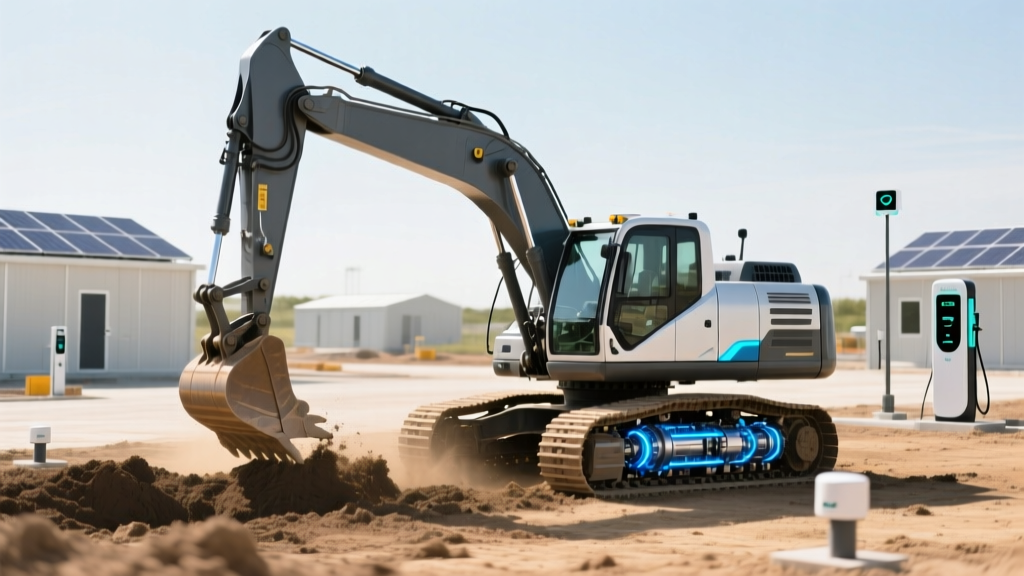
For excavators and wheel loaders, Cat has deployed hydraulic hybrid systems that capture energy during boom-down and swing-deceleration, storing it in hydraulic accumulators. The Cat M323F wheeled excavator, for example, uses an intelligent hydraulic system that reduces fuel consumption by up to 25% compared to prior-generation models, according to Caterpillar's published specifications.
Battery-Electric Prototypes and Partnerships
Caterpillar has announced battery-electric prototypes for underground mining equipment and has partnered with companies like Luck Stone to deploy electric off-highway trucks. The Cat 725 articulated dump truck concept and the 26-ton battery-electric underground loader represent the company's push toward zero-emission heavy equipment. However, these are largely in pilot or early-production phases as of 2026 — not yet widely available at dealerships.
Fuel Economy: How Hybrid Work Machines Compare
Heavy equipment doesn't use MPG the way passenger vehicles do. Instead, efficiency is measured in gallons per hour (GPH) or liters per hour under specific work cycles. Here's how the fuel consumption breaks down:
| Equipment Type | Conventional (GPH) | Hybrid/Electric-Drive (GPH) | Estimated Savings |
|---|---|---|---|
| Large Mining Truck (400-ton class) | 55–75 GPH | 47–64 GPH | 10–15% |
| Wheeled Excavator (medium) | 6–10 GPH | 4.5–7.5 GPH | 15–25% |
| Wheel Loader (medium) | 5–8 GPH | 4–6.5 GPH | 10–20% |
| Backhoe Loader | 2–4 GPH | 1.8–3.5 GPH | 5–15% |
For comparison, if you're shopping a passenger hybrid truck like the Ford F-150 PowerBoost Hybrid (a full hybrid, not a Cat product), the EPA rates it at 24 MPG combined (city 25 / highway 24), which represents a 20–30% improvement over the non-hybrid F-150 with the same engine.
If You Want a Hybrid Work Truck: Passenger Options in 2026
Since Caterpillar doesn't make road-going vehicles, here are the best hybrid trucks and SUVs for buyers who need work capability with hybrid efficiency:
| Vehicle | Type | EPA MPG (City/Hwy/Combined) | Combined HP | Towing (lbs) | Starting MSRP |
|---|---|---|---|---|---|
| Ford F-150 PowerBoost Hybrid | HEV | 25 / 24 / 24 | 430 hp | 12,700 | $59,995 |
| Toyota Tundra i-FORCE MAX | HEV | 22 / 24 / 22 | 437 hp | 12,000 | $57,605 |
| Chevrolet Silverado 1500 Hybrid (2026) | HEV | 23 / 24 / 23 | 395 hp | 9,500 | $55,400 |
| Jeep Wrangler 4xe | PHEV | 49 MPGe (elec+gas) / 20 gas-only | 375 hp | 3,500 | $54,995 |
| Toyota RAV4 Prime | PHEV | 94 MPGe (elec+gas) / 38 gas-only | 302 hp | 1,500 | $44,560 |
PHEV Electric-Only Range
For plug-in hybrid trucks and SUVs:
- Jeep Wrangler 4xe: 21 miles electric-only range, 370 miles total combined range
- Toyota RAV4 Prime: 42 miles electric-only range, 600+ miles total combined range
- Ford F-150 Lightning: Not a hybrid — full BEV with 240–320 miles EPA range, $54,995 starting MSRP
Battery Warranty and Reliability: What to Expect
Hybrid Battery Warranty Standards
Federal law mandates that hybrid and EV battery packs carry a minimum warranty of 8 years / 100,000 miles (10 years / 150,000 miles in CARB states including California, New York, Massachusetts, and others). Here's what major manufacturers offer:
- Toyota: 10 years / 150,000 miles on hybrid battery
- Ford: 8 years / 100,000 miles on hybrid/PHEV battery
- Jeep (Stellantis): 8 years / 100,000 miles on 4xe battery
- Caterpillar (heavy equipment): Varies by model; typically 1–2 year base machine warranty with extended powertrain coverage available
Replacement cost for a passenger hybrid battery ranges from $2,000–$6,000 depending on the vehicle. PHEV batteries are larger and more expensive: the Wrangler 4xe battery replacement runs approximately $7,000–$10,000 out of warranty. Real-world data from Consumer Reports shows that modern hybrid batteries routinely last 150,000–200,000 miles before significant degradation.
For Caterpillar heavy equipment, the electric-drive components are maintained under Cat's Customer Support Agreements (CSAs), and the company reports that AC electric drive systems in mining trucks have demonstrated over 20,000-hour service intervals — roughly equivalent to 10+ years of single-shift operation.
Tax Credits and Incentives for Hybrids
The federal tax credit landscape under IRS §30D draws a hard line between vehicle types:
- Full BEVs and qualifying PHEVs may be eligible for up to $7,500 in federal tax credits, subject to MSRP caps ($80,000 for SUVs/trucks, $55,000 for sedans), buyer income limits ($300K joint / $150K single), and critical-mineral/battery-sourcing requirements.
- Conventional hybrids (HEVs) do NOT qualify for the §30D federal credit. The F-150 PowerBoost and Tundra i-FORCE MAX are not eligible.
- PHEVs with sufficient battery capacity (at least 7 kWh) can qualify, but must meet all sourcing and income requirements. The Jeep Wrangler 4xe (17 kWh battery) has historically qualified for partial credits, but 2026 eligibility depends on current battery-sourcing compliance — check the EPA's qualifying vehicle list before purchasing.
- Heavy equipment (Caterpillar machinery) does not qualify for §30D consumer credits. However, commercial fleet electrification incentives under §45W (Commercial Clean Vehicle Credit) and various state-level programs may apply to electric off-highway equipment.
Always verify current-year eligibility with a tax professional. Credit rules, sourcing requirements, and qualifying vehicle lists change frequently.
Hybrid vs. PHEV vs. Full EV: Which Fits Your Needs?
Decision Framework
Choose a conventional hybrid (HEV) if:
- You need a work truck with maximum towing and no charging hassle
- You drive in mixed city/highway conditions and want 20–30% fuel savings
- You don't have access to home or workplace charging
- You want proven reliability with minimal new-technology risk
Choose a plug-in hybrid (PHEV) if:
- You have reliable home Level 2 charging and a commute under 40 miles
- You want electric-only daily driving but need gas-engine range for weekend trips or towing
- You want to reduce fuel consumption by 50–80% on typical weekday driving
- You're willing to pay a $5,000–$10,000 premium over an equivalent HEV
Choose a full EV (BEV) if:
- You have home charging and your daily driving is under 250 miles
- You want the lowest per-mile fuel cost (electricity at $0.04–$0.12/mile vs. gas at $0.12–$0.20/mile)
- You want maximum torque for towing (instant electric torque beats any hybrid)
- You're ready to plan around DC fast-charging on road trips
Stick with diesel/heavy equipment hybrid systems if:
- You operate commercial heavy machinery and need 10–25% fuel savings at scale
- Full battery-electric equipment isn't yet available in your machine class
- You need continuous high-power operation that current battery tech can't sustain for a full shift
Pros and Cons: Hybrid Work Vehicles at a Glance
Pros
- 10–30% fuel savings over conventional powertrains without changing your refueling habits (HEVs)
- Massive low-end torque from electric motors — ideal for towing and heavy loads
- 8–10 year battery warranties provide long-term peace of mind
- PHEVs offer the best of both worlds: electric commuting + gas road trips
- Hybrid heavy equipment delivers real cost savings at commercial scale (thousands of gallons/year)
- Regenerative braking reduces brake wear significantly
Cons
- HEVs do not qualify for federal §30D tax credits
- PHEVs add complexity: two powertrains, two fluid systems, more potential failure points
- Hybrid trucks carry a $3,000–$8,000 price premium over gas-only equivalents
- Heavy-equipment hybrids (Cat diesel-electric) are expensive and have limited dealer availability
- Battery-electric heavy equipment is still in early adoption — limited model selection
- PHEV electric range drops significantly in cold weather (expect 20–30% loss below freezing)
Frequently Asked Questions
Does Caterpillar make hybrid cars or trucks?
No. Caterpillar manufactures heavy construction and mining equipment — excavators, wheel loaders, dozers, and haul trucks. They do not produce consumer passenger vehicles. If you're looking for a hybrid work truck, consider the Ford F-150 PowerBoost Hybrid, Toyota Tundra i-FORCE MAX, or Chevrolet Silverado Hybrid.
How much fuel does a hybrid Caterpillar excavator save?
Cat's hydraulic hybrid and intelligent hydraulic systems in wheeled excavators and wheel loaders deliver 15–25% fuel savings compared to prior-generation conventional machines. On a medium excavator burning 6–10 gallons per hour, that translates to 1–2.5 gallons saved per hour — or roughly $5,000–$15,000 in annual fuel savings for a machine running 2,000 hours per year at $3.50/gallon diesel.
Do hybrid trucks get better MPG in the city or on the highway?
Hybrids almost always achieve better fuel economy in city driving. Regenerative braking recovers energy during stop-and-go traffic, and the electric motor handles low-speed operation where gas engines are least efficient. The Ford F-150 PowerBoost, for example, gets 25 MPG city but only 24 MPG highway — the opposite of a conventional gas truck. Real-world city driving in a hybrid often exceeds the EPA estimate by 1–3 MPG.
What is the battery replacement cost for a hybrid truck?
Passenger hybrid truck battery replacement costs range from approximately $2,000 (Toyota Tundra) to $4,500 (Ford F-150 PowerBoost) for the battery pack itself, plus $500–$1,500 in labor. PHEV batteries are larger and more expensive: the Jeep Wrangler 4xe battery replacement runs $7,000–$10,000. Most hybrid batteries last 150,000–200,000 miles based on long-term fleet data.
Can I plug in a Caterpillar hybrid machine to charge it?
No. Caterpillar's current hybrid and energy-recovery systems are self-charging — they capture energy during machine operation (boom lowering, swing deceleration, braking) and store it in hydraulic accumulators or small battery packs. They do not plug into an external power source. Cat's battery-electric prototypes (underground loaders, electric haul trucks) do require external charging, but these are separate from the hybrid product line.
Is a hybrid work truck worth the extra cost?
It depends on your mileage and use case. If you drive 15,000+ miles per year in mixed conditions, the fuel savings from a hybrid truck (roughly $400–$800/year vs. a gas equivalent) can pay back the $3,000–$5,000 price premium in 5–8 years. If you primarily drive highway miles or tow heavy loads constantly, the hybrid advantage shrinks — hybrids shine in stop-and-go work-site and city driving. For fleet operators, the math is even more favorable due to higher annual mileage.
Does a hybrid truck qualify for any tax credit?
Conventional hybrids (HEVs) like the F-150 PowerBoost and Tundra i-FORCE MAX do not qualify for the federal §30D clean vehicle credit. Only plug-in hybrids (PHEVs) and full electric vehicles (BEVs) with sufficient battery capacity are eligible, and even then, they must meet MSRP caps, buyer income limits, and battery-sourcing requirements. Check IRS.gov for current rules.