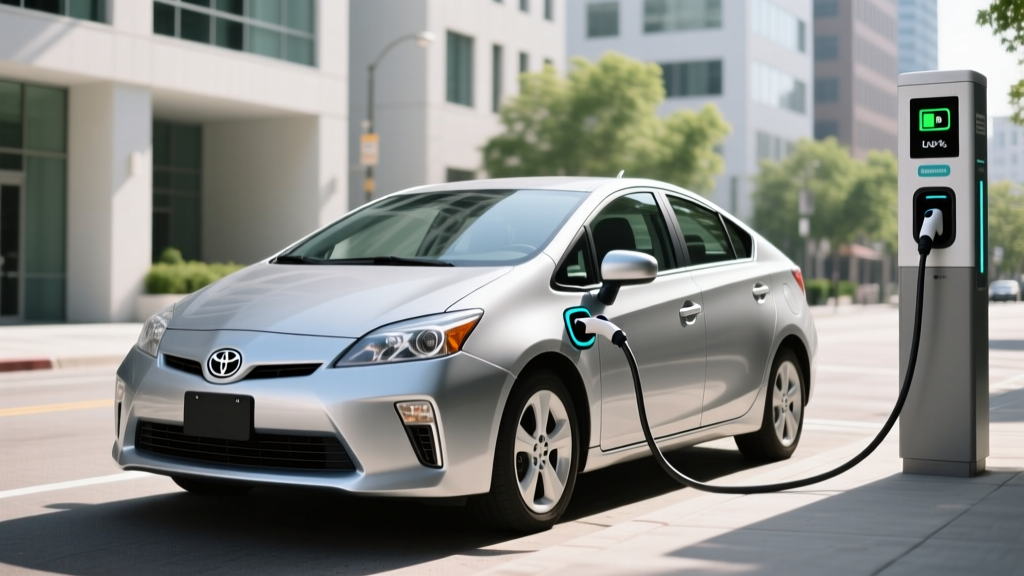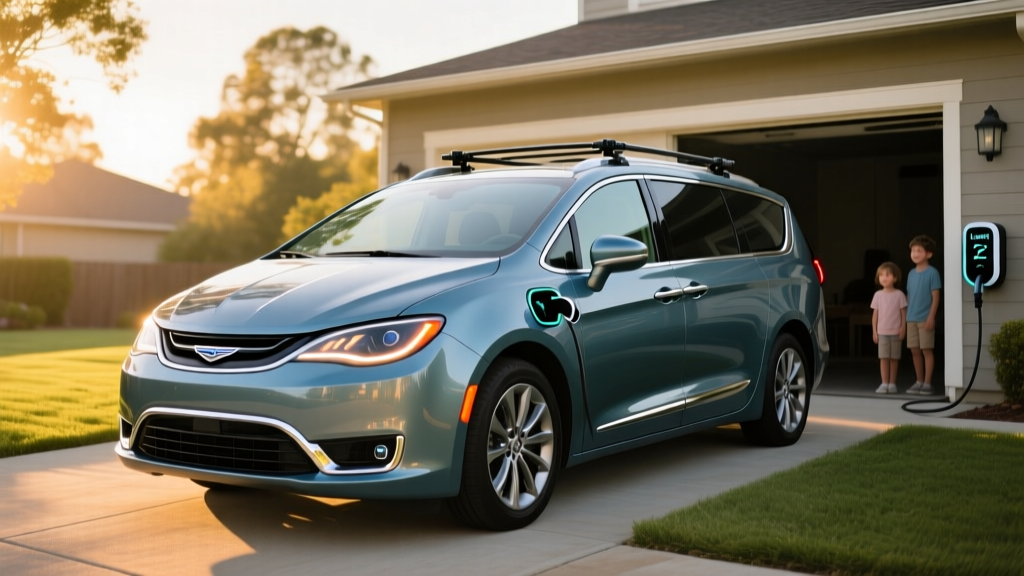
If you've been searching for "hybrid cars what is" and finding conflicting answers, you're not alone. The term hybrid now covers two fundamentally different vehicle architectures — the conventional hybrid (HEV) and the plug-in hybrid (PHEV) — and confusing them is one of the most common mistakes car shoppers make. One never plugs in and sips gas at 50+ MPG in the city. The other gives you 30–45 miles of pure electric driving before its gas engine kicks in, but only if you charge it. Choosing the wrong one for your lifestyle can cost you thousands in missed fuel savings or wasted charging infrastructure.
This guide cuts through the marketing to explain exactly what each type does, the real-world numbers behind them, and which one actually fits your daily driving. We'll use current 2026 models as benchmarks — the Toyota Prius for HEVs and the Toyota RAV4 Prime for PHEVs — because they're segment leaders with extensive EPA and ownership data.
Hybrid Cars: What Is the Core Concept?
At its simplest, a hybrid car pairs a gasoline internal combustion engine with one or more electric motors and a battery pack. The electric motor assists the engine during acceleration, captures energy during braking (regenerative braking), and in some cases can drive the vehicle on electricity alone at low speeds. The result: significantly better fuel economy than a gas-only car, especially in stop-and-go city driving where the electric motor does the most work.
But here's where the split matters. A conventional hybrid (HEV) generates all its electricity internally — through the engine and regenerative braking. You never plug it in. A plug-in hybrid (PHEV) has a larger battery that you can charge from an external source (a wall outlet or charging station), enabling extended electric-only driving before the gas engine ever starts.
HEV vs PHEV at a Glance
| Feature | Conventional Hybrid (HEV) | Plug-in Hybrid (PHEV) |
|---|---|---|
| Plugs in? | No — self-charging | Yes — external charging required for EV mode |
| Battery size | 0.5–2.0 kWh (small) | 10–25 kWh (large) |
| Electric-only range | ~1 mile at low speed | 20–45+ miles (EPA rated) |
| Fuel economy (gas mode) | 40–57 MPG combined | 35–42 MPG combined (after battery depleted) |
| Upfront price premium | $1,500–$3,500 over gas equivalent | $5,000–$10,000 over gas equivalent |
| Federal tax credit | No | Up to $7,500 (if eligible under §30D) |
| Home charging needed? | No | Strongly recommended for full benefit |
How Many MPG Does a Hybrid Get? Real Numbers for 2026
Fuel economy is the number one reason buyers choose hybrids. But the EPA sticker only tells part of the story — especially because hybrids frequently exceed their EPA city rating in real-world driving thanks to aggressive regenerative braking in traffic. Highway MPG, however, tends to run slightly below the EPA estimate because the electric motor provides less benefit at sustained high speeds.
| 2026 Model | City MPG | Highway MPG | Combined MPG | Type |
|---|---|---|---|---|
| Toyota Prius LE | 57 | 56 | 57 | HEV |
| Toyota Prius XLE/Limited | 52 | 52 | 52 | HEV |
| Honda Accord Hybrid | 51 | 44 | 48 | HEV |
| Toyota RAV4 Hybrid | 41 | 38 | 40 | HEV |
| Toyota RAV4 Prime (PHEV) | 40 | 36 | 38 | PHEV |
| Ford Escape PHEV | 42 | 36 | 39 | PHEV |
| Hyundai Tucson PHEV | 38 | 38 | 38 | PHEV |
Source: fueleconomy.gov — EPA estimates. Real-world results vary by driving style, temperature, and terrain.
Plug-in Hybrids: How Far Can They Go on Electric Only?
The defining feature of a PHEV is its electric-only range — the distance it can travel on battery power alone before the gasoline engine starts. For 2026 models, this ranges from about 20 miles on smaller PHEVs to over 40 miles on the class leaders. If your daily commute falls within this range and you charge at home, a PHEV effectively operates as an EV for daily driving while retaining gas-engine range for road trips.
| 2026 PHEV Model | EV Range (EPA) | Battery (kWh) | Total Range | Combined HP | 0-60 MPH |
|---|---|---|---|---|---|
| Toyota RAV4 Prime | 42 mi | 18.1 kWh | 600 mi | 302 hp | 5.7 sec |
| Ford Escape PHEV | 37 mi | 14.4 kWh | 520 mi | 210 hp | 7.8 sec |
| Hyundai Tucson PHEV | 33 mi | 13.8 kWh | 440 mi | 261 hp | 7.0 sec |
| Toyota Prius Prime | 44 mi | 13.6 kWh | 510 mi | 220 hp | 6.6 sec |
| Jeep Wrangler 4xe | 22 mi | 17.3 kWh | 370 mi | 375 hp | 6.0 sec |
PHEV Charging: What You Need to Know
PHEVs charge much like full EVs, but their smaller batteries mean shorter charge times. Most PHEVs support Level 2 (240V) AC charging at 3.3–7.2 kW, filling the battery in 2–5 hours. DC fast charging remains rare on PHEVs — only a handful of models (such as the Mitsubishi Outlander PHEV) support it, and even then at modest rates around 22–38 kW. For most PHEV owners, overnight Level 2 charging at home is the standard routine.
- Level 1 (120V standard outlet): 8–12 hours for a full charge — adequate for low-mileage drivers who plug in nightly.
- Level 2 (240V home charger): 2–5 hours — recommended for anyone driving more than 30 miles daily.
- DC Fast Charging: Most PHEVs do not support DC fast charging. Do not assume CCS/NACS compatibility.
Powertrain Specs: Engine Meets Electric Motor
Hybrid powertrains vary significantly in architecture. Toyota's Hybrid Synergy Drive uses a planetary gearset (power-split device) to seamlessly blend engine and motor power. Honda's two-motor system in the Accord Hybrid operates primarily as a series hybrid at lower speeds, with the engine generating electricity for the drive motor, then switches to direct engine drive at highway cruising. Hyundai/Kia use a conventional 6-speed automatic with a motor sandwiched between the engine and transmission.
The key specification for buyers is combined net horsepower — the system output when the engine and motor(s) work together. This figure is often substantially higher than the gas engine alone, which is why many hybrids feel surprisingly quick off the line:
- 2026 Toyota Prius: 2.0L 4-cylinder + 2 electric motors = 194 hp (HEV); 220 hp (Prime PHEV)
- 2026 Honda Accord Hybrid: 2.0L 4-cylinder + 2 electric motors = 204 hp
- 2026 Toyota RAV4 Hybrid: 2.5L 4-cylinder + 3 electric motors = 219 hp (HEV); 302 hp (Prime PHEV)
- 2026 Hyundai Tucson PHEV: 1.6L turbo 4-cylinder + electric motor = 261 hp
The RAV4 Prime's 302 hp combined output makes it Toyota's quickest SUV — a fact that surprises many buyers who assume hybrids are slow. Electric motors deliver instant torque from zero RPM, giving hybrids strong initial acceleration even when total horsepower is modest.
Pricing, Tax Credits, and Total Cost
Hybrid pricing has become increasingly competitive. Many 2026 HEVs carry a premium of only $1,500–$3,500 over their gas-only equivalents, a gap that fuel savings can close in 2–4 years for typical drivers. PHEVs carry a larger upfront premium ($5,000–$10,000) but may qualify for the federal §30D Clean Vehicle Credit of up to $7,500 — which, as of 2024, can be transferred to the dealer as a point-of-sale discount.
- Vehicle must have ≥7 kWh battery capacity (most PHEVs qualify)
- MSRP cap: $80,000 for SUVs/pickups/vans; $55,000 for sedans
- Buyer income cap: $150,000 single / $300,000 joint (modified AGI)
- Battery components and critical minerals must meet phased sourcing requirements (stricter each year through 2032)
- Credit is now available as a point-of-sale price reduction at participating dealers
- Conventional hybrids (HEVs) do not qualify for §30D
Always verify current eligibility on irs.gov or with a tax professional. Sourcing requirements tighten annually and may disqualify some models mid-year.
| 2026 Model (Base Trim) | MSRP | Est. §30D Credit | Net Price |
|---|---|---|---|
| Toyota Prius LE (HEV) | $29,445 | $0 | $29,445 |
| Toyota Prius Prime SE (PHEV) | $34,045 | Up to $7,500* | ~$26,545* |
| Toyota RAV4 Hybrid LE | $33,425 | $0 | $33,425 |
| Toyota RAV4 Prime SE | $44,565 | Up to $7,500* | ~$37,065* |
| Ford Escape PHEV | $39,995 | Up to $7,500* | ~$32,495* |
*Credit eligibility depends on buyer income, battery sourcing compliance, and MSRP caps. Verify at point of sale.
Battery Warranty, Reliability, and Replacement Costs
Battery longevity is the top concern for hybrid buyers — and the data is reassuring. Federal law mandates that hybrid and EV battery packs carry a minimum warranty of 8 years/100,000 miles. In California and states that follow CARB (California Air Resources Board) emissions standards, that extends to 10 years/150,000 miles. Many manufacturers match or exceed these minimums.
- Toyota (all hybrids): 10 years / 150,000 miles (nationwide as of 2020+)
- Honda: 8 years / 100,000 miles (10/150k in CARB states)
- Hyundai/Kia: 10 years / 100,000 miles
- Ford: 8 years / 100,000 miles
Warranty covers battery capacity dropping below ~60–70% of original (varies by manufacturer). This is a capacity retention threshold, not a total-failure warranty.
Real-World Battery Lifespan
Conventional hybrid batteries (1–2 kWh) are remarkably durable because they operate in a narrow state-of-charge window — typically between 40% and 80%. This shallow cycling dramatically reduces degradation. Toyota Prius taxis routinely exceed 300,000 miles on the original hybrid battery. PHEV batteries (10–18 kWh) experience deeper cycles but still benefit from active thermal management and conservative buffer zones.
If a replacement is needed out of warranty:
- HEV battery replacement: $2,000–$4,500 (parts + labor) for most models. Refurbished packs are available for $1,000–$2,500.
- PHEV battery replacement: $6,000–$12,000 depending on capacity and model.
For context, a conventional automatic transmission replacement on a gas car often costs $3,500–$7,000 — a component hybrids don't have in the traditional sense (most use e-CVT power-split devices with no friction clutches or bands to wear out).
Hybrid vs PHEV vs EV: Which Should You Choose?
The right choice depends on three variables: your daily mileage, your access to charging, and your willingness to adapt your routine. Here's a practical decision framework:
Choose a Conventional Hybrid (HEV) If:
- You cannot charge at home (apartment, street parking, no garage)
- Your commute is long (50+ miles daily) and mostly highway
- You want maximum fuel savings with zero behavior change
- You want the lowest upfront cost among electrified options
- You drive in extreme cold regularly (hybrids handle cold better than EVs)
Choose a Plug-in Hybrid (PHEV) If:
- You can install a Level 2 charger at home
- Your daily round-trip commute is under 40 miles
- You want EV-like daily driving but need gas-engine range for road trips
- You qualify for the §30D tax credit (significantly narrows the price gap)
- You're not ready to rely on public charging infrastructure
Choose a Full EV (BEV) If:
- You have reliable home charging and your daily drive is under 250 miles
- You want zero tailpipe emissions and the lowest per-mile "fuel" cost
- You want minimal maintenance (no oil changes, no engine, no exhaust system)
- You qualify for the full $7,500 §30D credit on a qualifying BEV
- You have a second gas car for long road trips, or are comfortable planning DC fast-charge stops
Advantages of Hybrids
- 40–57 MPG combined — 40–80% better fuel economy than gas equivalents
- No range anxiety — gas stations everywhere
- Proven reliability with decades of real-world data
- Lower purchase price than PHEVs and EVs
- No home charging installation required (HEV)
- Strong resale value, especially Toyota/Honda hybrids
Limitations of Hybrids
- HEVs do not qualify for federal §30D tax credit
- Cannot drive on electricity alone for meaningful distances (HEV)
- Still require oil changes, spark plugs, and exhaust maintenance
- PHEVs only deliver value if you actually charge them regularly
- Some hybrids use CVT-like powertrains that lack the direct feel of geared transmissions
- PHEV cargo space sometimes reduced by larger battery placement
Frequently Asked Questions
Do hybrid cars need to be plugged in?
No. Conventional hybrids (HEVs) never plug in — they generate all electricity through the gas engine and regenerative braking. Only plug-in hybrids (PHEVs) benefit from external charging. If you buy an HEV, your only "fueling" stop is a regular gas station.
How many MPG does a hybrid get compared to a gas car?
Most 2026 hybrid sedans achieve 48–57 MPG combined, compared to 28–35 MPG for their gas-only counterparts. Hybrid SUVs typically get 35–42 MPG combined versus 22–28 MPG for gas versions. That's roughly 40–80% better fuel economy, translating to $500–$1,200 in annual fuel savings for a driver covering 15,000 miles per year at $3.20/gallon.
How far can a PHEV go on electric power alone?
Current 2026 PHEVs offer 20–45 miles of EPA-rated electric-only range. The Toyota Prius Prime leads at 44 miles; the RAV4 Prime provides 42 miles. After the battery depletes, the gas engine starts and the vehicle operates as a conventional hybrid, giving total ranges of 440–600 miles.
Is a hybrid reliable long-term? What about battery replacement?
Hybrid powertrains are among the most reliable in the industry. Toyota's hybrid system has over 25 years of proven service. The hybrid battery is warranted for 8–10 years / 100,000–150,000 miles depending on manufacturer and state. Real-world data shows many hybrid batteries lasting 200,000+ miles. If replacement is needed, HEV batteries cost $2,000–$4,500; PHEV batteries cost $6,000–$12,000.
Does a hybrid qualify for a tax credit?
Conventional hybrids (HEVs) do not qualify for the federal §30D Clean Vehicle Credit. Only plug-in hybrids (PHEVs) and full EVs with ≥7 kWh battery capacity are eligible — and only if the vehicle meets MSRP caps, buyer income limits, and battery sourcing requirements. Some states offer additional incentives for PHEVs. Check irs.gov for current rules.
What's the difference between MPGe and MPG?
MPG measures fuel economy when running on gasoline. MPGe (miles per gallon equivalent) measures efficiency when a PHEV or EV runs on electricity, converting electrical energy into a gasoline-equivalent figure (33.7 kWh = 1 gallon of gas). A PHEV like the Prius Prime achieves 127 MPGe in electric mode but 52 MPG in hybrid mode. For comparing total operating costs, focus on the MPG figure for gas-mode driving and the kWh/100-mile figure for electric-mode driving.
Can I tow with a hybrid?
Yes, but capacity varies widely. The Toyota RAV4 Hybrid can tow up to 1,750 lbs; the RAV4 Prime, up to 1,500 lbs. The Grand Highlander Hybrid tows up to 5,000 lbs. Always check the manufacturer's rated towing capacity for your specific trim, as hybrid battery weight and powertrain tuning can reduce towing limits compared to gas-only versions.
Data sourced from fueleconomy.gov, manufacturer specification sheets, and irs.gov. Pricing reflects MSRP at time of publication and excludes destination charges. Tax credit eligibility is subject to change — always verify with the IRS or a qualified tax professional before purchasing.