What Is a Hybrid Car Motor and Why Does It Matter?
Every hybrid on the road in 2026 uses at least one electric motor alongside a gasoline engine, but not all hybrid car motors are built the same. The motor's placement, power output, and how it integrates with the engine determine whether a vehicle sips fuel in stop-and-go traffic or delivers 35 miles of silent electric-only commuting. Understanding these differences is the single most important step in choosing between a conventional hybrid (HEV) and a plug-in hybrid (PHEV).
This guide breaks down how hybrid motors work across the two main architectures, compares real-world efficiency data from top-selling 2026 models, and gives you a decision framework based on your daily driving, charging access, and budget.
HEV vs PHEV at a Glance
Conventional Hybrid (HEV): Small battery (1–2 kWh), motor assists the engine and captures regenerative braking energy. Never plugs in. Typical combined MPG: 48–57.
Plug-in Hybrid (PHEV): Larger battery (13–25 kWh), more powerful motor, can drive on electricity alone for 25–48 miles. Plugs into a wall outlet or Level 2 charger. Typical combined MPG (after battery depletes): 35–48, plus 84–120 MPGe in electric mode.
How the Hybrid Car Motor Cooperates With the Gas Engine
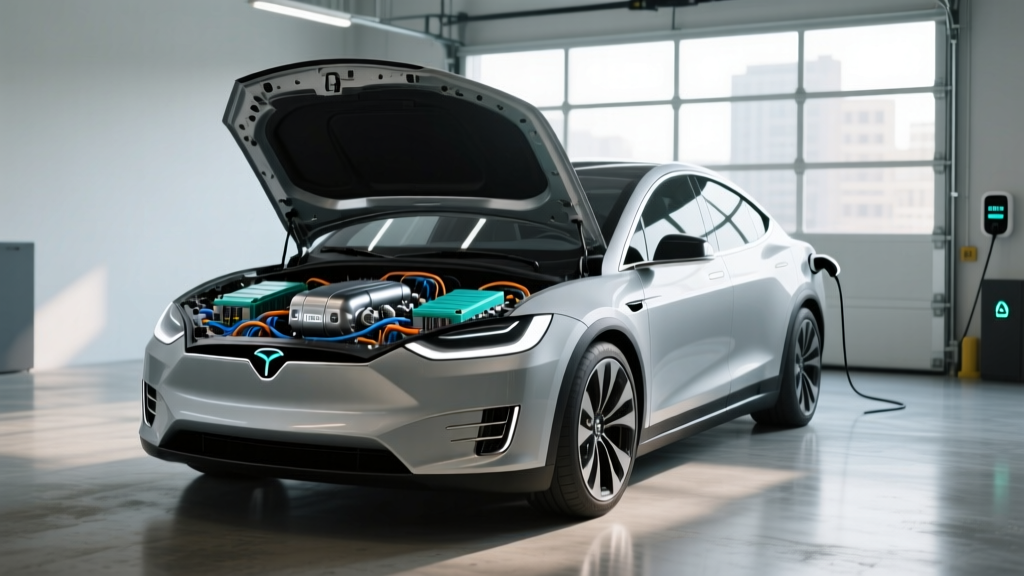
In a conventional HEV like the 2026 Toyota Prius, the electric motor is rated at roughly 83 kW (111 hp) and sits between or beside the 2.0-liter four-cylinder engine. Together they produce a combined 196 hp on front-wheel-drive trims. The motor handles three jobs: launching the car from a stop (where electric torque is instant), filling in torque during gear transitions, and acting as a generator during regenerative braking.
The power-split device — Toyota's planetary gearset — blends motor and engine output seamlessly. At low speeds and light loads, the car runs on the motor alone. When you press the accelerator harder or exceed roughly 40 mph, the engine engages. Under heavy acceleration, both power sources push together. During deceleration, the motor reverses role and feeds energy back into the 1.3 kWh nickel-metal-hydride battery.
In a PHEV such as the 2026 Toyota RAV4 Prime, the electric motor is substantially larger — 134 kW (180 hp) on the front axle alone, with an additional 40 kW motor on the rear axle for electronic all-wheel drive. Combined system output reaches 302 hp. The 18.1 kWh lithium-ion battery gives it an EPA-rated 42 miles of electric-only range before the 2.5-liter engine takes over, at which point it operates as a conventional hybrid returning an EPA-estimated 38 MPG combined.
HEV vs PHEV: Spec-by-Spec Powertrain Comparison
The table below compares two benchmark 2026 models to show how motor size, battery capacity, and powertrain output diverge between HEV and PHEV architectures.
| Specification | 2026 Toyota Prius (HEV) | 2026 Toyota RAV4 Prime (PHEV) |
|---|---|---|
| Architecture | Conventional Hybrid (HEV) | Plug-in Hybrid (PHEV) |
| Engine | 2.0L 4-cyl (150 hp) | 2.5L 4-cyl (177 hp) |
| Electric Motor (front) | 83 kW / 111 hp | 134 kW / 180 hp |
| Combined System Output | 196 hp | 302 hp |
| Battery Capacity | 1.3 kWh (NiMH) | 18.1 kWh (Li-ion) |
| Electric-Only Range | N/A (motor assist only) | 42 mi (EPA) |
| EPA Combined MPG | 57 MPG (LE FWD) | 38 MPG (charge-sustaining) / 94 MPGe |
| Plugs In? | No | Yes — Level 1 (~5.5 hr) or Level 2 (~2.5 hr) |
| DC Fast Charging | N/A | Not available |
| 0–60 mph | 7.0 sec | 6.8 sec |
| Base MSRP | $29,450 | $44,560 |
Sources: fueleconomy.gov, Toyota Motor Corporation 2026 specifications.
How Many MPG Does a Hybrid Really Get?
The EPA sticker is the starting point, but hybrids have a well-documented quirk: they frequently exceed their EPA city rating in real-world stop-and-go driving because the electric motor handles low-speed propulsion where gasoline engines are least efficient.
| 2026 Model | EPA City | EPA Highway | EPA Combined | Real-World Observed |
|---|---|---|---|---|
| Toyota Prius LE (HEV) | 57 | 56 | 57 | 52–60 (city-heavy routes trend higher) |
| Honda Accord Hybrid | 51 | 44 | 48 | 44–50 |
| Hyundai Tucson Hybrid | 38 | 38 | 38 | 34–39 |
| RAV4 Prime (PHEV, gas-only mode) | 40 | 36 | 38 | 35–40 |
Real-world figures aggregated from owner-reported data on Fuelly and independent testing. Highway-heavy commutes reduce MPG for all hybrids because the engine runs more continuously and regenerative braking opportunities diminish.
For PHEVs, the MPG number only tells half the story. A RAV4 Prime owner with a 30-mile round-trip commute and nightly Level 2 charging may burn zero gasoline on weekdays, using the engine only for longer weekend trips. Over a year, that driver's effective fuel consumption could drop to the equivalent of 70+ MPGe — far above the charge-sustaining 38 MPG figure.
Electric-Only Range and Charging for PHEV Motors
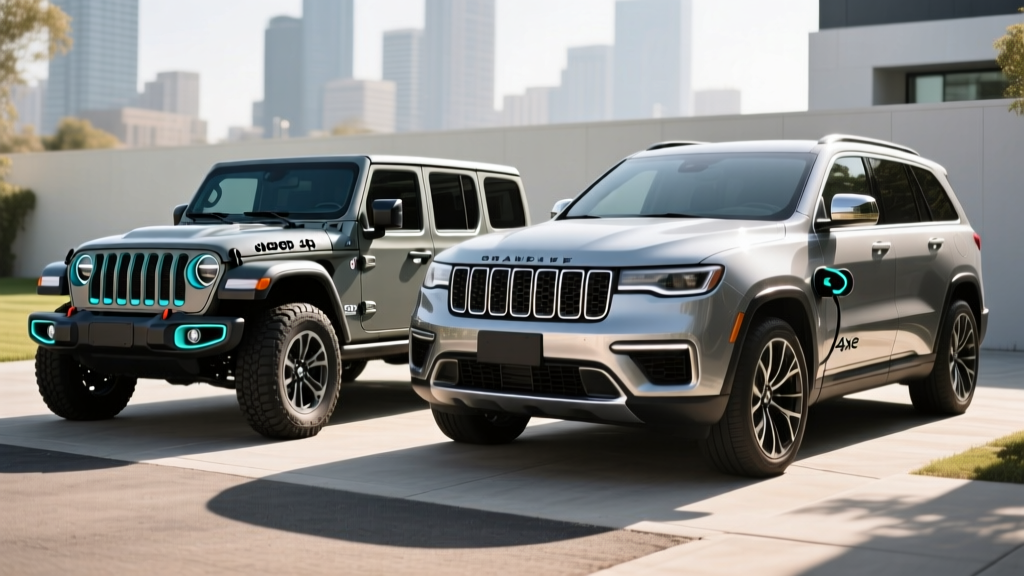
The electric motor in a PHEV is powerful enough to serve as the sole propulsion source at highway speeds, which is a major leap from early-generation PHEVs that limited electric driving to 25 mph or less. The 2026 RAV4 Prime can sustain 75 mph on electric power alone; the 2026 Jeep Wrangler 4xe manages roughly 22 miles electric at mixed speeds.
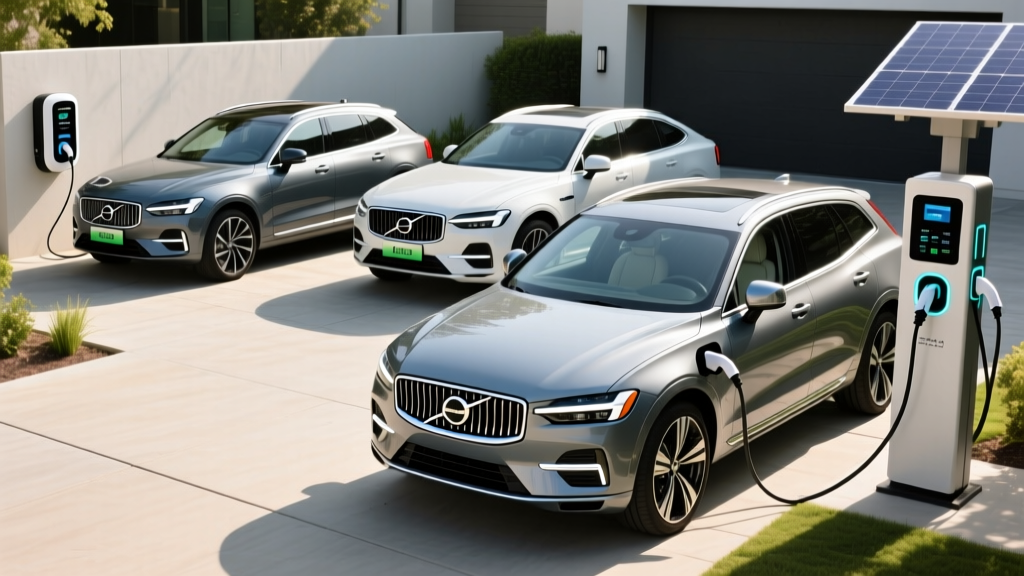
Charging times depend on the onboard charger and your power source:
- Level 1 (120V household outlet): Adds roughly 4–5 miles of electric range per hour. A full charge on an 18 kWh battery takes 5–6 hours.
- Level 2 (240V, 32A): Adds 12–15 miles of range per hour. Full charge in approximately 2–2.5 hours.
- DC Fast Charging: Most 2026 PHEVs — including the RAV4 Prime, Hyundai Tucson PHEV, and Kia Sportage PHEV — do not support DC fast charging. The Mitsubishi Outlander PHEV is a notable exception, supporting CHAdeMO DC charging at up to 22 kW, reaching 80% in roughly 38 minutes.
If your daily driving stays under 35 miles and you can install a Level 2 charger at home, a PHEV effectively operates as an EV for daily use with a gas-engine safety net for road trips. If you cannot charge at home or at work, a PHEV's larger battery becomes dead weight — you'll pay a $5,000–$10,000 premium over an equivalent HEV and see minimal efficiency benefit.
Battery Longevity, Warranty, and Replacement Cost
Hybrid Battery Warranty — What Federal Law Requires
Under federal emissions warranty regulations, hybrid battery packs must be covered for a minimum of 8 years / 100,000 miles. In California Air Resources Board (CARB) states — including California, New York, Massachusetts, Washington, and others — that extends to 10 years / 150,000 miles.
Toyota, Honda, and Hyundai all match or exceed these minimums on 2026 models. Toyota covers its hybrid batteries for 10 years / 150,000 miles nationwide on all 2026 trims.
Real-world degradation data is reassuring. A Consumer Reports analysis of Prius taxis showed battery packs routinely exceeding 200,000 miles before significant capacity loss. Nickel-metal-hydride packs in conventional HEVs are less energy-dense but extremely cycle-durable because they operate in a shallow state-of-charge window — typically between 40% and 80% — which dramatically reduces chemical stress.
If you do need an out-of-warranty replacement, costs in 2026 break down roughly as follows:
- HEV battery (1–2 kWh): $2,000–$4,000 installed
- PHEV battery (13–25 kWh): $6,000–$12,000 installed
Refurbished and aftermarket options are increasingly available and can cut these figures by 30–40%.
Tax Credits and Pricing: What You'll Actually Pay
Federal tax credit eligibility under IRS §30D applies only to plug-in hybrids and battery-electric vehicles — conventional HEVs do not qualify. For 2026, the key PHEV requirements are:
- Battery capacity: At least 7 kWh (all current PHEVs meet this)
- MSRP cap: Vans, SUVs, and pickups ≤ $80,000; sedans ≤ $55,000
- Buyer income cap: Modified AGI ≤ $150,000 (single) / $300,000 (joint)
- Battery sourcing and critical minerals: Must meet phased-in domestic-content thresholds — this disqualifies some PHEVs whose cells are sourced entirely from non-FTA countries
- Point-of-sale transfer: Eligible buyers can apply the credit as a dealer discount at purchase rather than waiting to claim it on their tax return
As of early 2026, the RAV4 Prime qualifies for up to $3,750 of the federal credit (meeting the critical-minerals threshold but not the full battery-component requirement). The Chrysler Pacifica PHEV qualifies for the full $7,500. Always verify current eligibility on the IRS clean vehicle credit page before purchasing, as sourcing rules tighten annually.
Conventional HEVs receive no federal credit, though some states (Colorado, for instance) offer modest rebates for high-efficiency hybrids. Check your state energy office for local programs.
Hybrid vs PHEV vs EV — Which Powertrain Fits You?
Decision Framework
Choose a conventional HEV if: You cannot charge at home, drive more than 50 miles daily, want the lowest purchase price, and prioritize simplicity. The hybrid car motor assists the engine without any change to your fueling habits.
Choose a PHEV if: You have home or workplace Level 2 charging, your daily commute is under 40 miles round-trip, you take 3+ road trips per year where charging infrastructure is sparse, and you want EV-like daily driving without range anxiety.
Choose a full BEV if: You have reliable home charging, your longest regular trip is under 250 miles (or you're willing to plan DC fast-charge stops), and you want to eliminate gasoline entirely. Models like the Hyundai Ioniq 5 (318 mi EPA, $42,600) and Tesla Model Y (320 mi, ~$44,990) now cover most use cases.
The hybrid car motor has matured from a novelty to the default powertrain for cost-conscious commuters. In 2026, the HEV is the pragmatic baseline; the PHEV is the bridge for drivers with charging access who aren't ready to commit fully to electric; and the BEV is the destination for those who are.
Pros and Cons at a Glance
✓ Pros of Hybrid Car Motors
- Regenerative braking extends brake pad life significantly
- HEVs require zero behavior change — fuel and go
- City MPG often exceeds EPA sticker in stop-and-go traffic
- PHEV motors deliver EV-like quietness for daily commuting
- Hybrid batteries carry 8–10 year warranties and often outlast the vehicle
- No dependence on public charging infrastructure (HEV)
✗ Cons of Hybrid Car Motors
- HEVs offer no electric-only driving — always burning fuel
- PHEVs carry a $5,000–$10,000 price premium over HEV equivalents
- Most PHEVs lack DC fast charging, limiting road-trip electric driving
- Highway MPG can fall below EPA due to reduced regen opportunities
- PHEV battery replacement costs $6,000–$12,000 out of warranty
- Federal tax credit eligibility is complex and subject to sourcing rules
Frequently Asked Questions
How many MPG does a hybrid car motor deliver in real driving?
A conventional HEV like the 2026 Prius LE returns 57 MPG combined per the EPA, and real-world city driving often pushes that to 58–62 MPG thanks to frequent regenerative braking. Highway-only driving drops it to roughly 50–53 MPG. PHEVs return 35–40 MPG in charge-sustaining mode after the battery depletes, but daily electric commuting can reduce annual gasoline use by 60–80%.
How far can a PHEV go on electric-only power?
Current 2026 PHEVs range from 22 miles (Jeep Wrangler 4xe) to 48 miles (Toyota Prius Prime) on electric-only power. The RAV4 Prime achieves 42 miles. Real-world electric range drops roughly 15–25% in freezing temperatures due to cabin heating demands and increased battery internal resistance.
Do conventional hybrids need to be plugged in?
No. A conventional HEV charges its small battery entirely through regenerative braking and engine-driven generation. You never plug it in. Only PHEVs require (or benefit from) plug-in charging.
Is a hybrid car motor reliable long-term?
Yes. Hybrid powertrains from Toyota, Honda, and Hyundai have two decades of field data showing excellent longevity. The electric motor itself has far fewer moving parts than a gasoline engine and rarely fails. The battery is the wear component, but shallow cycling and robust thermal management push most packs past 150,000 miles without significant degradation. Federal warranty mandates cover at least 8 years / 100,000 miles.
Does a hybrid qualify for any tax credit?
Conventional HEVs do not qualify for the federal §30D clean vehicle credit. PHEVs with at least 7 kWh of battery capacity may qualify for up to $7,500, subject to MSRP caps ($80,000 for SUVs, $55,000 for sedans), buyer income limits, and battery-sourcing requirements. Always verify current eligibility at irs.gov before purchasing.
Hybrid vs PHEV vs EV — which should I buy?
If you can charge at home and commute under 40 miles daily, a PHEV gives you the best of both worlds — electric daily driving with a gas backup for road trips. If you cannot charge at home, a conventional HEV delivers excellent fuel economy with zero infrastructure requirements. If you have home charging and rarely drive over 250 miles without stopping, a full BEV eliminates gasoline entirely and offers the lowest per-mile energy cost.