Hybrid Automobile Definition: What Exactly Qualifies?
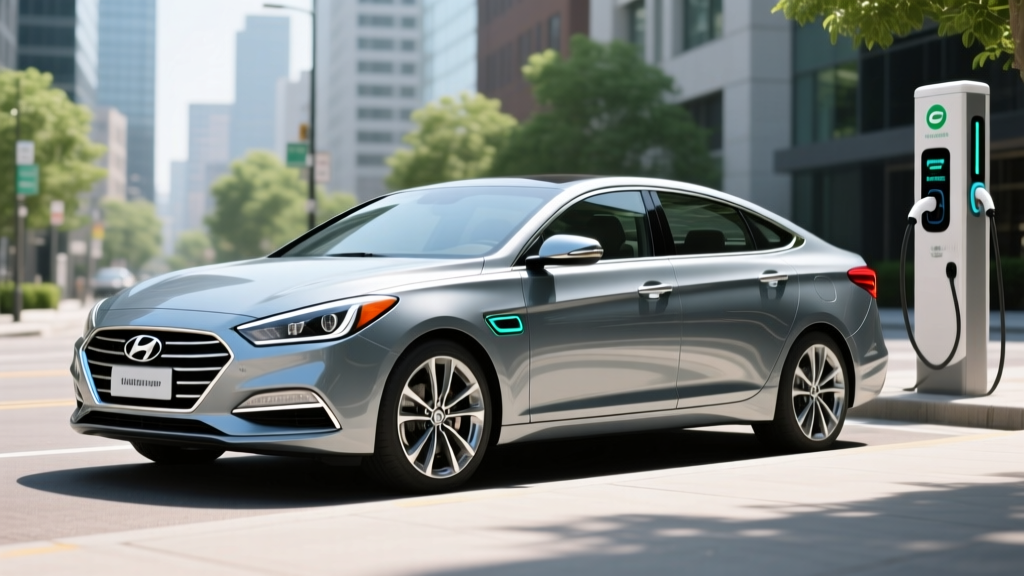
A hybrid automobile is any vehicle that pairs a gasoline internal-combustion engine with at least one electric motor and a battery pack, using both power sources to move the vehicle. The electric motor recovers energy during braking (regenerative braking) and assists the engine during acceleration, reducing fuel consumption compared to a gas-only equivalent. That is the core hybrid automobile definition — but in 2026, the term covers two fundamentally different architectures that buyers frequently confuse: the conventional hybrid electric vehicle (HEV) and the plug-in hybrid electric vehicle (PHEV).
The distinction matters enormously for your wallet, your daily routine, and your tax-credit eligibility. Below, we dissect both types with exact numbers, real-world expectations, and a decision framework so you can determine which — if either — fits your driving life better than a full battery-electric vehicle (BEV).
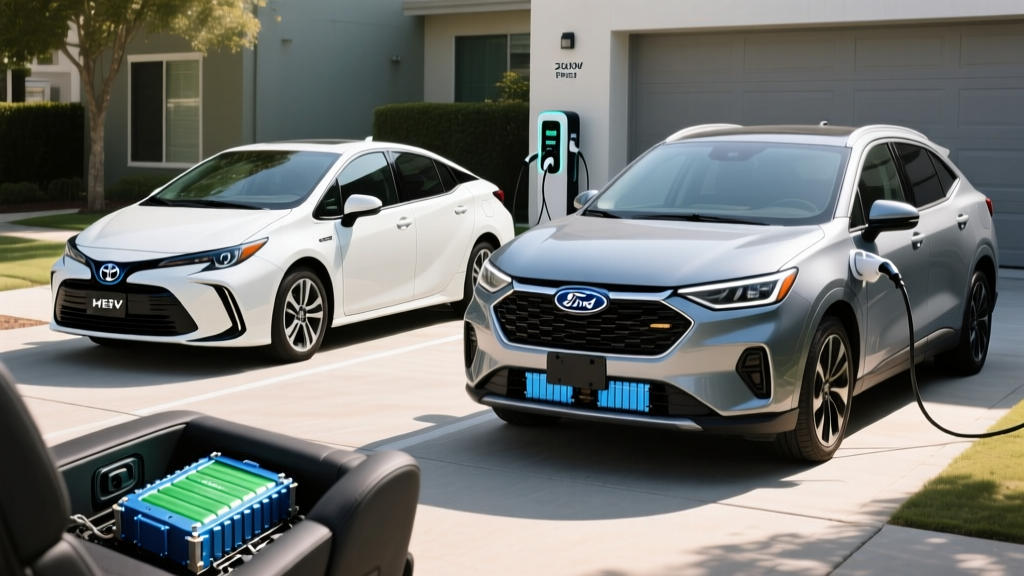
- HEV (Conventional Hybrid): Small battery (1–2 kWh), charges only via regenerative braking and the engine. Never plugs in. Examples: Toyota Prius, Honda Accord Hybrid.
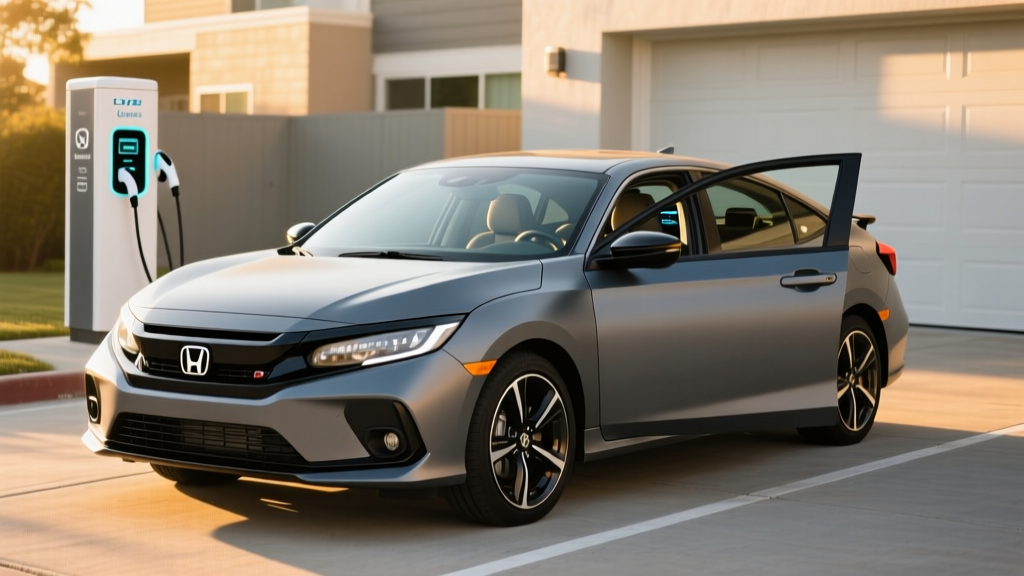
- PHEV (Plug-In Hybrid): Larger battery (12–25+ kWh), plugs into a wall outlet or charger for 25–50 miles of electric-only driving before the gas engine takes over. Examples: Toyota RAV4 Prime, Jeep Wrangler 4xe.
How Many MPG Does a Hybrid Get? EPA vs Real-World Numbers
Fuel economy is the primary reason most buyers consider a hybrid. Below is a comparison of several popular 2025–2026 model-year HEVs and PHEVs with their official EPA figures. Data sourced from fueleconomy.gov.
| Vehicle | Type | City MPG | Hwy MPG | Combined MPG | EV Range (mi) |
|---|---|---|---|---|---|
| Toyota Prius (LE AWD) | HEV | 53 | 54 | 54 | — |
| Honda Accord Hybrid (Sport) | HEV | 51 | 44 | 48 | — |
| Hyundai Tucson Hybrid (SEL) | HEV | 38 | 38 | 38 | — |
| Toyota RAV4 Prime (SE) | PHEV | 94 MPGe | 84 MPGe | 94 MPGe | 42 |
| Jeep Wrangler 4xe (Willys) | PHEV | — | — | 49 MPGe | 22 |
| Ford Escape PHEV | PHEV | 105 MPGe | 93 MPGe | 102 MPGe | 37 |
Real-world MPG note: Conventional hybrids routinely exceed their EPA city rating in stop-and-go traffic because regenerative braking recovers more energy at low speeds. The Toyota Prius LE, for example, often delivers 56–60 MPG in dense urban driving. Highway mileage tends to track closer to — or slightly below — the EPA sticker because the engine bears a larger share of the load at sustained speed. PHEVs show a wide range: if you charge nightly and your commute is under the EV-only range, you may burn zero gasoline for weeks. Once the battery depletes, PHEVs revert to their "charge-sustaining" MPG, which is typically 30–40 MPG combined depending on the model.
Powertrain Deep Dive: Engine + Motor + Battery Specs
Understanding the powertrain is essential to evaluating any hybrid automobile. Here is a spec table comparing two benchmark vehicles — one HEV, one PHEV — that illustrate the architecture gap.
| Spec | 2025 Toyota Prius (HEV) | 2025 Toyota RAV4 Prime (PHEV) |
|---|---|---|
| Engine | 2.0L 4-cyl | 2.5L 4-cyl |
| Combined Horsepower | 196 hp | 302 hp |
| Battery Capacity | ~1.0 kWh (Li-ion) | 18.1 kWh (Li-ion) |
| EV-Only Range | N/A | 42 mi (EPA) |
| Total Range (gas + electric) | ~620 mi | ~600 mi |
| 0–60 mph | 7.2 sec | 5.7 sec |
| Level 2 Charge Time (0–100%) | N/A (no plug) | ~2.5 hr (6.6 kW onboard) |
| DC Fast Charge | No | No |
| Base MSRP | $29,445 | $44,465 |
A few critical takeaways from these numbers:
- Battery size determines everything. The Prius's ~1 kWh pack exists solely to buffer regenerative energy and assist the engine in short bursts. The RAV4 Prime's 18.1 kWh pack stores enough energy for 42 miles of genuine zero-emission driving.
- PHEVs are significantly more powerful. The RAV4 Prime's dual-motor AWD system produces 302 hp — making it the quickest RAV4 Toyota sells. That performance advantage is a direct result of the larger electric motor and battery.
- DC fast charging is rare on PHEVs. Most PHEVs use a 6.6 kW or 7.2 kW onboard charger for Level 2 AC charging and do not support DC fast charging. The Mitsubishi Outlander PHEV is a notable exception with CHAdeMO DC capability (up to ~22 kW), but the vast majority of PHEV owners charge exclusively at home overnight.
- kW vs kWh reminder: kW (kilowatts) measures power — the rate of energy flow, like water pressure from a hose. kWh (kilowatt-hours) measures energy capacity — the total amount stored, like the size of a bucket. A 6.6 kW charger delivers 6.6 kWh of energy per hour into an 18.1 kWh battery.
Hybrid Battery Reliability, Warranty, and Replacement Costs
Battery longevity is the single most common concern we hear from hybrid shoppers. The good news: two decades of real-world data show that hybrid batteries are remarkably durable, and federal law mandates substantial warranty coverage.
Under EPA emissions regulations, hybrid battery packs are classified as "specified major emission control components" and must carry a minimum warranty of 8 years / 80,000 miles. In California Air Resources Board (CARB) states — which include CA, CO, CT, ME, MA, NJ, NY, OR, RI, VT, and WA — the mandate extends to 10 years / 150,000 miles. Many manufacturers exceed these minimums voluntarily.
Real-world degradation data: Toyota's nickel-metal-hydride (NiMH) and lithium-ion hybrid batteries have an extensive track record. Prius taxis in cities like Vancouver and New York have logged 300,000+ miles on original battery packs. Consumer Reports data indicates that hybrid battery failure rates for Toyota and Honda are below 1% within the first 10 years. Hyundai/Kia and Ford hybrid batteries show similarly low failure rates in the first 8 years.
Replacement cost if out of warranty:
- Toyota Prius HEV battery: $2,000–$3,500 (remanufactured), $3,500–$5,000 (new OEM)
- Toyota RAV4 Prime PHEV battery: $6,000–$9,000 (new OEM)
- Ford Escape PHEV battery: $5,500–$8,000
- Hyundai Tucson Hybrid battery: $3,000–$5,500
For context, a full EV battery replacement (e.g., Tesla Model Y or Ford F-150 Lightning) runs $10,000–$20,000+. Hybrid battery replacement costs are substantially lower because the packs are much smaller.
Tax Credits and Incentives: Which Hybrids Qualify?
This is where the HEV vs PHEV distinction has major financial consequences. Under the IRS §30D Clean Vehicle Credit, conventional hybrids (HEVs) do not qualify for any federal tax credit. Only plug-in hybrids (PHEVs) and full battery-electric vehicles (BEVs) are eligible — and even then, eligibility depends on a complex set of rules.
- Vehicle requirements: Must have a battery capacity of at least 7 kWh, be assembled in North America, and meet critical-mineral and battery-component sourcing thresholds (these thresholds tighten annually through 2032).
- MSRP caps: Vans, SUVs, and pickup trucks: $80,000 max. Sedans and other vehicles: $55,000 max.
- Buyer income caps: Modified AGI must not exceed $150,000 (single), $225,000 (head of household), or $300,000 (joint filing).
- Credit amount: Up to $7,500, split between $3,750 for critical-mineral compliance and $3,750 for battery-component compliance. Many PHEVs qualify for only $3,750 because they fail one of the two sourcing tests.
- Point-of-sale transfer: As of 2024, buyers can transfer the credit to the dealer for an immediate price reduction at purchase, rather than waiting to claim it on their tax return.
2025–2026 PHEVs that currently qualify (partial or full credit — verify on fueleconomy.gov before purchasing, as eligibility changes frequently):
- Toyota RAV4 Prime — $3,750 (battery component sourcing)
- Jeep Wrangler 4xe — up to $3,750–$7,500 depending on trim and sourcing updates
- Ford Escape PHEV — $3,750
- Chrysler Pacifica PHEV — up to $7,500 (subject to MSRP cap compliance)
Note: State incentives vary widely. California's CVRP, Colorado's Innovative Motor Vehicle Credit, and New York's Drive Clean Rebate offer additional savings for PHEVs. Consult your state's energy office or a tax professional for current amounts.
Hybrid vs PHEV vs EV: Which Fits Your Driving Life?
The decision between an HEV, a PHEV, and a full BEV comes down to three variables: your daily mileage, your charging access, and your road-trip tolerance.
- Choose an HEV if: You cannot charge at home (apartment, street parking, no garage), your budget is under $35,000, and you want maximum fuel savings with zero lifestyle change. You'll get 45–57 MPG combined without ever plugging in.
- Choose a PHEV if: You can install a Level 2 charger at home, your daily round-trip commute is under 40 miles, and you take road trips of 300+ miles several times a year where charging infrastructure is sparse or unreliable. A PHEV gives you EV commuting with gas-engine road-trip freedom.
- Choose a full BEV if: You have reliable home charging, your daily driving is under 250 miles, you want zero tailpipe emissions, and you're comfortable planning DC fast-charge stops on long trips. You'll get the lowest per-mile fuel cost and minimal maintenance.
For many households, a PHEV is the pragmatic bridge. The U.S. Department of Energy notes that PHEV owners who charge regularly can reduce gasoline consumption by 30–60% compared to a conventional car, while retaining the flexibility to drive cross-country without route-planning anxiety.
Pros and Cons: Hybrid Ownership at a Glance
- 30–100% better fuel economy vs gas-only equivalent
- No charging infrastructure required (HEV)
- Proven reliability — 20+ years of real-world data
- Lower total cost of ownership in most scenarios
- No range anxiety — gas stations everywhere
- Strong resale value (Prius, RAV4 Hybrid/Prime)
- Regenerative braking reduces brake wear
- Higher upfront cost vs gas-only equivalent ($1,500–$8,000 more)
- HEVs: no federal tax credit
- PHEVs: require home charging to realize full savings
- Two powertrains mean two systems to maintain long-term
- Less cargo space in some models (battery placement)
- EV-only range on PHEVs drops 20–30% in cold weather
- Insurance premiums 5–15% higher on some models
Real-World Ownership Economics: 5-Year Cost Snapshot
Below is a simplified 5-year / 75,000-mile total-cost comparison for three powertrains in the compact SUV segment, assuming $3.50/gal gasoline, $0.14/kWh electricity, and 12,000 miles/year for the PHEV with 80% of driving on electric.
| Cost Factor | Gas SUV (28 MPG) | HEV SUV (38 MPG) | PHEV SUV (102 MPGe / 35 MPG gas) |
|---|---|---|---|
| Fuel / Electricity (5 yr) | $9,375 | $6,908 | $3,150 |
| Maintenance (5 yr) | $4,500 | $3,800 | $3,500 |
| Federal Tax Credit | $0 | $0 | –$3,750 |
| Purchase Premium vs Gas | — | +$2,500 | +$7,000 |
| Net 5-Year Cost vs Gas | Baseline | –$3,167 savings | –$5,975 savings |
The PHEV delivers the strongest savings if you charge regularly. Without home charging, a PHEV's advantage erodes rapidly because you're carrying a heavy, depleted battery on gasoline alone. The HEV provides reliable, predictable savings with zero infrastructure investment — making it the default choice for renters and apartment dwellers.
Frequently Asked Questions
Do conventional hybrids need to be plugged in?
No. A conventional hybrid (HEV) charges its battery entirely through regenerative braking and the gasoline engine. There is no plug, no charging cable, and no need for any electrical infrastructure. You fuel it at a gas station like any other car.
How far can a PHEV drive on electric power alone?
Current 2025–2026 PHEVs offer 22–48 miles of EPA-rated electric-only range, depending on the model. The Toyota RAV4 Prime leads the segment at 42 miles. The Ford Escape PHEV achieves 37 miles. Expect 20–30% less range in freezing temperatures due to cabin heating demands and reduced battery efficiency.
Is a hybrid more reliable than a gas car?
Yes, in most cases. Consumer Reports reliability data consistently ranks Toyota and Lexus hybrids among the most reliable vehicles sold. The electric motor has far fewer moving parts than a conventional transmission, and regenerative braking reduces wear on friction brakes. Hybrid battery failure within the warranty period is statistically rare (under 1%).
What happens when a PHEV battery runs out of charge?
The vehicle seamlessly transitions to hybrid mode, operating like a conventional HEV. The gas engine and regenerative braking keep the battery at a minimum state of charge. You do not get stranded — you simply lose the electric-only driving benefit until you plug in again. Charge-sustaining MPG for most PHEVs is 30–40 combined.
Does a hybrid qualify for the $7,500 federal tax credit?
Conventional hybrids (HEVs) do not qualify for the federal §30D Clean Vehicle Credit. Only plug-in hybrids (PHEVs) and battery-electric vehicles (BEVs) are eligible, and even then, the vehicle must meet MSRP caps, buyer income limits, battery-sourcing requirements, and North American assembly rules. Many PHEVs qualify for $3,750 rather than the full $7,500. Always verify current eligibility at irs.gov before purchasing.
How long does a hybrid battery last?
Most hybrid batteries last the life of the vehicle — 150,000 to 200,000+ miles — without replacement. Toyota, Honda, Hyundai, and Ford all warrant their hybrid batteries for at least 8 years / 100,000 miles (10 years / 150,000 miles in CARB states). Real-world data from fleet vehicles and high-mileage owners confirms that catastrophic battery failure before 150,000 miles is uncommon.