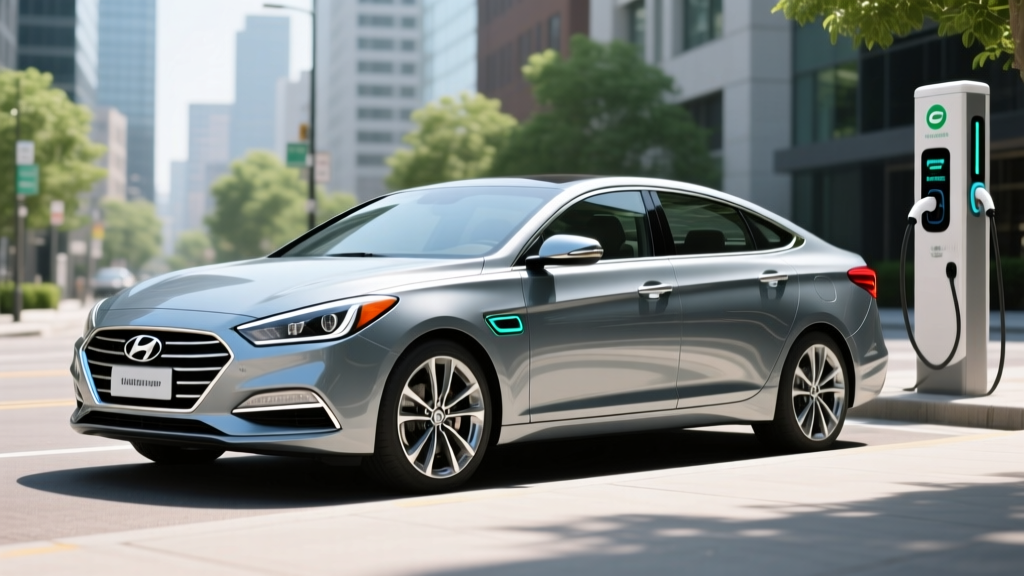
The 2016 Hyundai Sonata Plug-In Hybrid was one of the first mainstream midsize sedans to offer a meaningful electric-only commute paired with a gasoline engine for longer trips. Now appearing on the used market at bargain prices, this PHEV remains relevant for buyers who want electric driving without range anxiety. But with a decade of battery aging behind it, is the 2016 Hyundai plug-in Sonata still a smart buy in 2026? Here is every spec, cost, and ownership reality you need to know.
2016 Hyundai Sonata PHEV: Key Specs at a Glance
| Spec | Value |
|---|---|
| EPA Electric-Only Range | 27 miles |
| EPA MPGe (electric + gas) | 99 MPGe |
| EPA MPG (gas-only, combined) | 39 MPG combined |
| EPA MPG City / Highway (gas) | 38 city / 40 highway |
| Total Combined Range | ~590 miles |
| Battery Capacity (gross / usable) | 9.8 kWh gross / ~7.6 kWh usable |
| Battery Chemistry | Lithium Polymer (Li-Poly) |
| Combined System Horsepower | 202 HP |
| Engine | 2.0L GDI 4-cyl (154 HP) + 50 kW electric motor |
| Transmission | 6-speed automatic |
| Level 1 Charging (120V) | ~9 hours (full) |
| Level 2 Charging (240V) | ~2.5 hours (full) |
| DC Fast Charging | Not supported |
| 0-60 mph | ~7.8 seconds |
| Original MSRP (base) | $34,600 |
| 2026 Used Price Range (est.) | $9,000 – $15,000 |
| Hybrid Battery Warranty (original) | 10 years / 100,000 miles |
HEV vs PHEV: What the 2016 Hyundai Plug-In Actually Is
A conventional hybrid (HEV) like the standard 2016 Sonata Hybrid uses a small battery recharged solely by regenerative braking and the gas engine. You never plug it in. It delivers strong MPG but zero electric-only driving beyond brief low-speed assist.
A plug-in hybrid (PHEV) like the 2016 Sonata Plug-In carries a much larger battery (9.8 kWh vs ~1.6 kWh in the HEV) and can be plugged into a wall outlet or Level 2 charger. It drives on pure electricity for a meaningful distance (27 miles EPA) before the gas engine engages, functioning as a regular hybrid afterward.
Hyundai sold both versions in 2016. The Sonata Hybrid (HEV) was rated at 41 MPG combined with no plug and no electric-only range. The Sonata Plug-In (PHEV) traded some trunk space for that 9.8 kWh battery and the ability to commute electrically. If you see a listing for a "2016 Hyundai plug in," it refers specifically to the PHEV variant — always verify the charge port on the driver-side front fender to confirm.
Electric-Only Range and Real-World MPG
EPA rates the 2016 Sonata PHEV at 27 miles electric-only. In real-world use, expect 20–24 miles on a full charge in moderate temperatures with mixed driving. Highway speeds above 65 mph and cold weather (below 40°F) can reduce electric range to 15–18 miles. The gasoline engine may engage prematurely under hard acceleration or when cabin heating is demanded in winter.
Once the battery is depleted, the Sonata PHEV operates as a conventional hybrid. The EPA rates it at 39 MPG combined (38 city / 40 highway) in gas-only mode. Real-world owners frequently report 41–44 MPG in city driving where regenerative braking is most effective, while highway-only trips at 75+ mph may yield 35–37 MPG. This city-better-than-highway behavior is characteristic of all hybrids and is the inverse of what gas-only cars deliver.
| Mode | EPA Rating | Real-World Expectation |
|---|---|---|
| Electric-Only Range | 27 miles | 20–24 mi (15–18 mi cold/highway) |
| MPGe (blended) | 99 MPGe | Varies with charge frequency |
| Gas-Only City | 38 MPG | 41–44 MPG (regen-rich city driving) |
| Gas-Only Highway | 40 MPG | 35–37 MPG at 75+ mph |
| Gas-Only Combined | 39 MPG | 38–41 MPG typical mixed |
| Total Range | ~590 miles | ~520–560 miles real-world |
For context on EPA efficiency data, see the official fueleconomy.gov comparison for the 2016 Sonata PHEV and HEV variants.
Charging: Level 1, Level 2, and What to Expect
The 2016 Sonata Plug-In uses a standard J1772 connector for AC charging. It does not support DC fast charging — there is no CCS or CHAdeMO port. This is typical for PHEVs of this era, whose smaller batteries do not justify the cost and weight of DC fast-charge hardware.
| Level | Power (kW) | Time (Empty to Full) | Miles of EV Range per Hour |
|---|---|---|---|
| Level 1 (120V / 12A) | ~1.4 kW | ~9 hours | ~3 miles/hr |
| Level 2 (240V / 16A) | ~3.3 kW | ~2.5 hours | ~11 miles/hr |
| DC Fast Charge | N/A | N/A | N/A |
The included Level 1 portable cordset works with any standard 120V household outlet and will fully recharge the battery overnight — adequate for most daily commuters who drive under 25 miles. For faster turnaround, a Level 2 home station (240V) cuts the time to roughly 2.5 hours. A basic Level 2 unit (16A–32A) costs $250–$500 for the hardware, with professional installation running $500–$1,500 depending on panel proximity and local permit requirements. Because the Sonata PHEV's onboard charger maxes out at 3.3 kW, there is no benefit to installing a 48A charger — any 16A Level 2 unit will saturate its capability.
Powertrain, Performance, and Driving Impressions
The 2016 Sonata PHEV pairs a 2.0-liter GDI four-cylinder engine (154 HP) with a 50 kW (67 HP) electric motor integrated into the transmission housing. Combined system output is 202 HP. Unlike Toyota's planetary-gear hybrid system, Hyundai used a traditional 6-speed automatic transmission, which gives the Sonata PHEV a more conventional driving feel — shifts are perceptible, and there is no rubber-band CVV sensation.
The 0-60 mph time of roughly 7.8 seconds is adequate for merging and passing but not quick by modern EV standards. In EV mode, acceleration is limited and the gas engine will engage if you floor the throttle. The transition between electric and gas power is generally smooth, though the engine can be audible under hard acceleration. Regenerative braking is moderate — it does not enable true one-pedal driving, but it does slow the car noticeably when lifting off the accelerator.
Battery Health, Warranty, and Replacement Cost
Hyundai's original hybrid battery warranty was 10 years / 100,000 miles for the first registered owner. For subsequent owners, coverage typically drops to the powertrain standard of 5 years / 60,000 miles unless the vehicle was certified pre-owned (CPO) through a Hyundai dealer, which may extend coverage.
As of 2026, most 2016 Sonata PHEVs are at or beyond the 10-year mark. If the original owner's warranty has not been voided and the vehicle is under 100,000 miles, remaining coverage may still apply — but verify with a Hyundai dealer using the VIN.
Lithium polymer batteries in Hyundai-Kia PHEVs of this generation have demonstrated reasonable longevity. Based on owner reports and industry data, expect 10–20% capacity degradation after 8–10 years depending on climate exposure and charging habits. A 15% loss on a 9.8 kWh pack means roughly 22–23 miles of electric range instead of 27 — still usable for short commutes but noticeably reduced.
If the battery fails or degrades beyond acceptable levels, replacement costs for the 2016 Sonata PHEV traction battery typically range from $2,500 to $4,500 including parts and labor at an independent hybrid specialist, or $4,000 to $6,500 at a Hyundai dealership. Refurbished or salvaged packs may be available for $1,500–$2,500 but carry unknown remaining life. Before purchasing, request a State of Health (SoH) reading from a dealer scan tool — this reports remaining battery capacity as a percentage and is the single most important diagnostic for a used PHEV.
Tax Credits and Incentives (2026 Used-Buyer Reality)
When new, the 2016 Sonata Plug-In Hybrid qualified for a federal tax credit under the old IRC §30D structure — but Hyundai's credit was phased out after the brand hit 200,000 qualifying vehicle sales. The original federal incentive is no longer relevant for new purchases of this discontinued model.
For 2026 used buyers, the Used Clean Vehicle Credit (IRC §25E) may apply. This credit offers 30% of the sale price, up to $4,000, for qualifying pre-owned plug-in vehicles. Key requirements include:
- Sale price must be $25,000 or less (virtually all 2016 Sonata PHEVs qualify at current used prices)
- Buyer's adjusted gross income must not exceed $75,000 (single), $112,500 (head of household), or $150,000 (joint filers)
- The vehicle must be purchased from a licensed dealer (private-party sales do not qualify)
- The credit can be transferred to the dealer at point of sale as an immediate price reduction
- The vehicle must be at least two model years old (2016 easily qualifies)
At a typical used price of $12,000, the 30% credit would yield $3,600 off — bringing effective cost to around $8,400. Always confirm eligibility with a tax professional and check current rules at IRS.gov, as incentive structures are subject to legislative change.
Some states offer additional used-EV or PHEV rebates. California's CVRP program, Colorado's innovative motor vehicle credit, and various utility-company rebates may stack on top of the federal credit. Check your state energy office or utility provider for current programs.
Who Should Buy the 2016 Hyundai Plug-In Sonata?
Choose the 2016 Sonata PHEV if:
- Your daily commute is under 25 miles round-trip and you can charge at home
- You want electric commuting but need a gas engine for occasional 300+ mile road trips
- You're on a budget and want a midsize sedan under $15,000 (effectively under $11,000 with the used-EV credit)
- You value a spacious trunk, rear seat room, and a comfortable highway ride
Choose a full BEV instead if:
- Your daily driving is consistently under 30 miles and you rarely take long road trips
- You want minimal maintenance (no oil changes, no engine, no transmission fluid)
- You have reliable home or workplace charging and access to DC fast chargers for trips
Choose the conventional Sonata Hybrid (HEV) instead if:
- You cannot charge at home or at work
- You want the simplest ownership experience with no plug-in routine
- You prioritize trunk space (the HEV has a larger trunk without the PHEV battery intrusion)
Pros, Cons, and Common Issues
- 27-mile EV range covers most commutes
- 39+ MPG combined even without charging
- Comfortable midsize sedan with good rear-seat room
- Eligible for up to $4,000 used-EV federal credit
- Conventional 6-speed auto feels natural
- Low used-market pricing ($9K–$15K)
- No DC fast charging capability
- Reduced trunk space vs. gas Sonata (battery intrusion)
- 3.3 kW onboard charger is slow for Level 2
- EV range drops significantly in cold weather
- Original 10-yr battery warranty expiring/expired
- Infotainment is dated by 2026 standards
- Discontinued model — parts availability may narrow
Common issues reported by owners include occasional hesitation during the EV-to-gas transition, a 12V auxiliary battery that drains if the car sits unplugged for extended periods, and tire wear that accelerates due to the extra weight of the battery pack. The NHTSA recall database should be checked by VIN before purchase for any open safety campaigns.
Frequently Asked Questions
How many MPG does the 2016 Hyundai Sonata Plug-In get?
The EPA rates it at 99 MPGe when factoring in electric driving and 39 MPG combined (38 city / 40 highway) once the battery is depleted. In real-world city driving, many owners see 41–44 MPG in gas-only mode thanks to regenerative braking. Highway driving at sustained high speeds typically yields 35–37 MPG.
How far can the 2016 Sonata PHEV go on electric only?
The EPA rates it at 27 miles electric-only. Real-world range is typically 20–24 miles in moderate conditions, dropping to 15–18 miles in cold weather or at sustained highway speeds. After the battery is depleted, the gas engine provides an additional ~560 miles of range for a total of roughly 520–590 miles.
Is the 2016 Sonata Plug-In Hybrid reliable?
The powertrain has proven generally reliable, with the 2.0L GDI engine and 6-speed automatic being well-established components. The lithium polymer battery has held up reasonably well, though 10-year-old packs will show some degradation. The main risk is battery replacement cost ($2,500–$6,500) if the pack fails out of warranty. Always get a pre-purchase inspection that includes a battery State of Health check.
Does the 2016 Sonata PHEV qualify for any tax credit in 2026?
It does not qualify for the new-vehicle §30D credit (discontinued model, and Hyundai's credit was phased out). However, it may qualify for the Used Clean Vehicle Credit (§25E), which provides 30% of the sale price up to $4,000 for income-eligible buyers purchasing from a dealer. At typical used prices, this can mean $3,000–$3,600 in savings. Consult a tax professional and review current rules at IRS.gov.
Can I DC fast charge the 2016 Hyundai Sonata Plug-In?
No. The 2016 Sonata PHEV only supports AC charging via a J1772 connector — Level 1 (120V, ~9 hours) or Level 2 (240V, ~2.5 hours). There is no DC fast-charge port. This is standard for PHEVs of this era, whose smaller batteries are designed for overnight home charging rather than highway fast-charging stops.
Hybrid vs PHEV vs EV — which should I choose?
If you can charge at home and your commute is under 25 miles, the PHEV gives you electric daily driving with gas-engine flexibility for road trips. If you cannot charge at home, a conventional HEV (like the 2016 Sonata Hybrid at 41 MPG) is simpler and avoids battery-degradation concerns. If you have home charging, rarely drive over 250 miles in a day, and want the lowest operating cost with no gas engine maintenance, a full BEV is the better long-term choice — but it will cost more upfront on the used market.