Why Understanding Hybrid Architecture Matters Before You Buy
If you've searched "how to build a hybrid" you're likely trying to understand what makes these vehicles tick — whether you're an engineering enthusiast, a prospective buyer comparing powertrains, or someone weighing a hybrid against a full battery-electric vehicle (BEV). The term "build hybrid" can mean two things: how automakers engineer a hybrid system, or how a buyer assembles the right hybrid configuration for their lifestyle. This guide covers both.
The hybrid market in 2026 is more diverse than ever. Toyota, Hyundai, Kia, Honda, Ford, and Stellantis all offer multiple hybrid and plug-in hybrid models with distinctly different engineering approaches. Understanding the architecture helps you predict real-world fuel economy, maintenance costs, and whether a given hybrid will actually deliver the savings its sticker promises.
HEV vs PHEV: Two Fundamentally Different Builds
Conventional Hybrid (HEV)
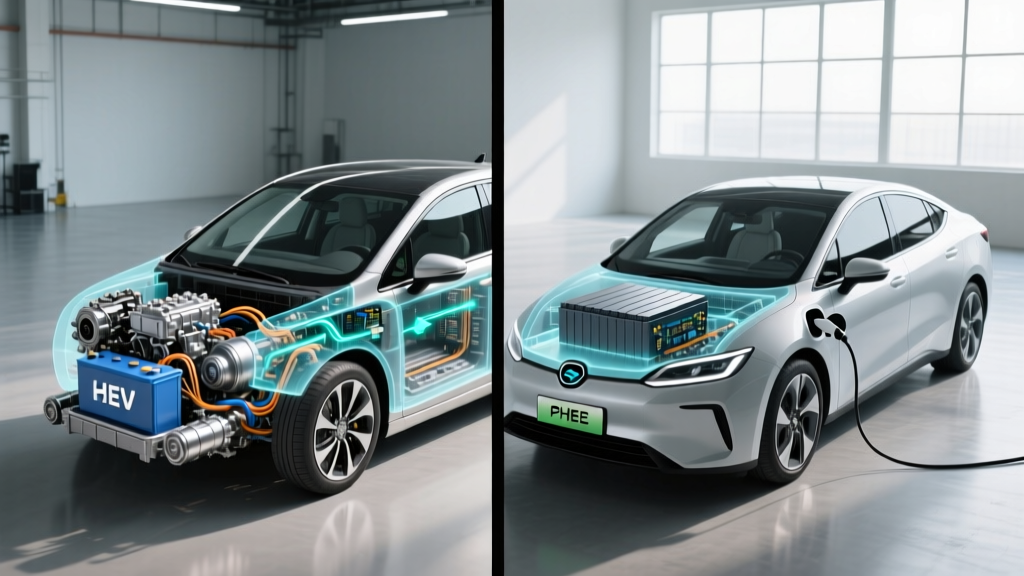
A conventional hybrid pairs a gasoline engine with a small electric motor and a compact battery (typically 1.0–1.8 kWh). The system captures energy through regenerative braking and engine excess — you never plug it in. The electric motor assists during acceleration and enables low-speed electric-only driving for brief distances (usually under 1 mile). Examples: Toyota Prius, Honda CR-V Hybrid, Hyundai Tucson Hybrid.
Plug-In Hybrid (PHEV)
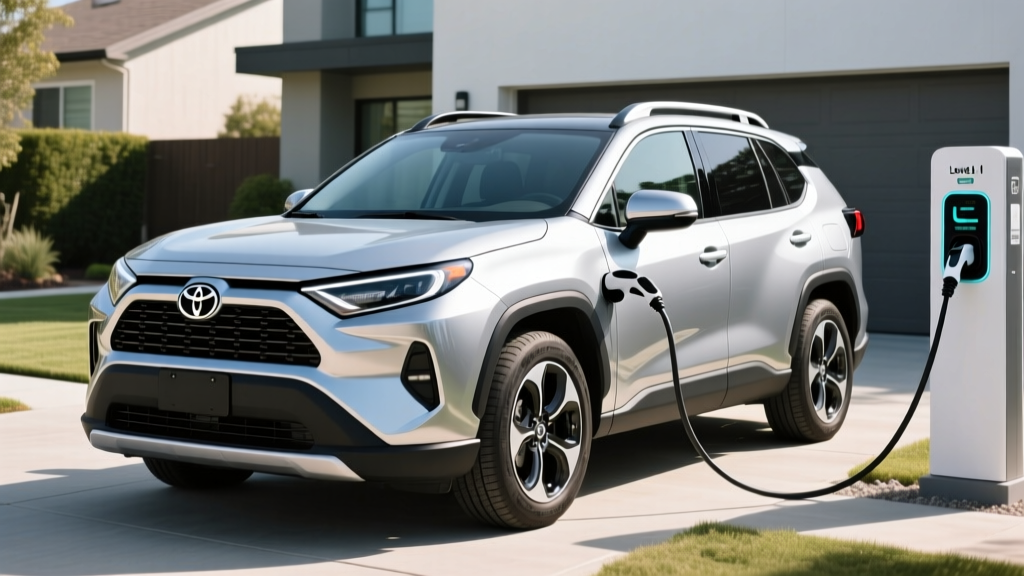
A PHEV uses a substantially larger battery (12–25+ kWh) and a more powerful electric motor, enabling 25–50+ miles of true electric-only driving at highway speeds. You plug it in to recharge (Level 1 or Level 2 AC charging; a few models support DC fast charging). Once the battery depletes, it operates as a conventional hybrid. Examples: Toyota RAV4 Prime, Jeep Wrangler 4xe, Hyundai Tucson PHEV.
The engineering divergence is significant. An HEV's battery is sized for power buffering — short, high-current bursts to assist the engine. A PHEV's battery is sized for energy delivery — sustained discharge over 30+ miles. This affects chemistry choices, thermal management complexity, packaging, and ultimately the vehicle's price and weight.
How Automakers Build a Hybrid Drivetrain: The Core Components
Every hybrid system — HEV or PHEV — requires five core subsystems working in concert:
- Internal combustion engine (ICE): Typically an Atkinson-cycle four-cylinder optimized for efficiency over peak power. The Atkinson cycle delays intake valve closing, effectively reducing the compression stroke and improving thermal efficiency at the cost of some low-end torque — which the electric motor compensates for.
- Electric motor/generator(s): Most modern hybrids use at least two motor/generators — one to drive the wheels and one to start the engine and generate electricity. Toyota's Hybrid Synergy Drive (now called Toyota Hybrid System) uses a planetary gearset to blend power from both sources seamlessly.
- Traction battery: HEVs use nickel-metal hydride (NiMH) or small lithium-ion (Li-ion) packs around 1.0–1.8 kWh. PHEVs use larger Li-ion packs (NMC chemistry is dominant) ranging from 12 kWh to over 25 kWh usable capacity.
- Power control unit (PCU) / inverter: Converts DC battery power to AC for the motor(s) and manages energy flow between all components. This is where the real engineering magic happens — deciding millisecond-by-millisecond whether to draw from the battery, the engine, or both.
- Regenerative braking system: Recovers kinetic energy during deceleration, converting it back into electrical energy stored in the battery. Hybrid brake blending — the transition between regen and friction brakes — is a key differentiator in driving feel.
Series vs Parallel vs Series-Parallel Hybrid Configurations
Not all hybrids are built the same way. The three primary architectures are:
| Architecture | How It Works | Example Vehicles |
|---|---|---|
| Parallel | Engine and motor both mechanically drive the wheels | Honda e:HEV (i-MMD in engine-drive mode), Hyundai/Kia TMED |
| Series | Engine only generates electricity; motor always drives wheels | Nissan e-POWER (not sold in US currently) |
| Series-Parallel | Can operate in either mode via power-split device | Toyota Hybrid System (Prius, RAV4 Hybrid, Camry Hybrid) |
Toyota's series-parallel design remains the most widely deployed and arguably the most flexible, allowing the system to optimize for efficiency across the widest range of driving conditions. Honda's newer two-motor system (used in the CR-V Hybrid and Accord Hybrid) operates primarily as a series hybrid at lower speeds and engages a direct mechanical connection at highway cruising speeds.
Fuel Economy: Real-World MPG vs EPA Stickers
Hybrids have a unique characteristic that surprises many first-time owners: they often exceed their EPA combined rating in real-world city driving. This is the opposite of most gas cars, which tend to fall short of EPA estimates in stop-and-go traffic. The reason is straightforward — city driving provides constant regenerative braking opportunities, and the engine shuts off entirely at stops and during low-load coasting.
| Model | Type | City MPG | Highway MPG | Combined MPG | Real-World Note |
|---|---|---|---|---|---|
| Toyota Prius LE | HEV | 57 | 56 | 57 | Owners report 52–62 combined; exceeds EPA in city |
| Hyundai Sonata Hybrid | HEV | 44 | 51 | 47 | Highway-biased; strong real-world highway MPG |
| Honda CR-V Hybrid | HEV | 43 | 36 | 40 | City-dominant; expect 35–38 hwy in real driving |
| Toyota RAV4 Prime | PHEV | 94 MPGe | 84 MPGe | 94 MPGe | 42 mi electric-only; 36 MPG after depletion |
| Jeep Wrangler 4xe | PHEV | 49 MPGe | 45 MPGe | 47 MPGe | 22 mi electric-only; 20 MPG gas-only (heavy vehicle) |
| Hyundai Tucson PHEV | PHEV | 80 MPGe | 74 MPGe | 77 MPGe | 33 mi electric-only; 35 MPG after depletion |
Source: fueleconomy.gov — EPA estimates. Real-world figures based on owner reports and independent testing. MPGe (miles per gallon equivalent) measures energy consumption during electric-only operation; 33.7 kWh = 1 gallon gasoline equivalent.
What Is MPGe and How Should You Read It?
MPGe converts electrical energy consumption into a gasoline-equivalent number so you can compare PHEVs and BEVs against gas cars. One gallon of gasoline contains approximately 33.7 kWh of energy, so a vehicle using 33.7 kWh to travel 100 miles earns a 100 MPGe rating. For PHEVs, the MPGe figure only applies during electric-only driving. Once the battery depletes, the standard MPG rating takes over. Always check both numbers — a PHEV with 90 MPGe but only 25 MPG after depletion may not save you much if you can't charge regularly.
PHEV Electric-Only Range, Battery Capacity, and Charging
For PHEV buyers, electric-only range is the single most important specification. It determines how much of your daily driving can be done without burning any gasoline. Here's what the current PHEV landscape looks like:
| Model | Battery (kWh usable) | Electric Range (mi) | Total Range (mi) | Level 2 Charge Time | DC Fast Charge |
|---|---|---|---|---|---|
| Toyota RAV4 Prime | 14.9 | 42 | ~600 | ~2.5 hrs (240V/16A) | No |
| Toyota Prius Prime | 10.9 | 44 | ~440 | ~4 hrs (240V/12A) | No |
| Hyundai Tucson PHEV | 11.2 | 33 | ~400 | ~2.75 hrs (240V/16A) | No |
| Jeep Wrangler 4xe | 15.3 | 22 | ~370 | ~2.5 hrs (240V/16A) | No |
| Jeep Grand Cherokee 4xe | 14.3 | 26 | ~440 | ~2 hrs (240V/32A) | No |
| Ford Escape PHEV | 11.2 | 37 | ~490 | ~3.5 hrs (240V/12A) | No |
A critical observation: nearly no PHEVs currently sold in the US support DC fast charging. The battery packs are small enough that manufacturers have not invested in the added cost, weight, and thermal management complexity of DC charging hardware. Level 2 home charging (240V) is the primary refueling method for PHEVs. If you can install a Level 2 charger at home or have one at work, a PHEV with 30–40 miles of electric range can cover the vast majority of daily commutes on electricity alone.
Charging a PHEV from a standard 120V household outlet (Level 1) is viable but slow — expect 8–12 hours for a full charge depending on battery size. For most owners, this means plugging in overnight is sufficient.
Powertrain Output: Combined Horsepower and Performance
One of the most underappreciated advantages of hybrid systems is the torque fill provided by the electric motor. Electric motors produce maximum torque from zero RPM, eliminating the lag inherent in turbocharged and naturally aspirated engines. The combined system horsepower is not simply the engine HP plus the motor HP — the power control unit blends these sources, and the combined figure is typically lower than the arithmetic sum.
| Model | Engine | Engine HP | Combined System HP | 0–60 mph (sec) |
|---|---|---|---|---|
| Toyota Prius | 2.0L I4 | 150 | 194 | 7.2 |
| Toyota RAV4 Prime (PHEV) | 2.5L I4 | 177 | 302 | 5.7 |
| Honda CR-V Hybrid | 2.0L I4 | 145 | 204 | 7.6 |
| Hyundai Tucson Hybrid | 1.6L Turbo I4 | 180 | 226 | 7.1 |
| Jeep Wrangler 4xe (PHEV) | 2.0L Turbo I4 | 270 | 375 | 6.0 |
| Ford Maverick Hybrid | 2.5L I4 | 162 | 191 | 7.9 |
The RAV4 Prime's 302 combined horsepower and 5.7-second 0–60 time make it one of the quickest compact SUVs on the market — hybrid or otherwise. This performance comes directly from the PHEV architecture: the larger battery can sustain higher power output to the electric motor, and the combined system can draw from both the engine and motor simultaneously at full output.
Pricing and Tax Credit Eligibility for Hybrids and PHEVs
Hybrids carry a price premium over their gas-only counterparts, typically $1,500–$4,000 for HEVs and $4,000–$8,000 for PHEVs. The question is whether fuel savings justify the premium over your ownership period.
| Model | Type | Base MSRP | Federal Tax Credit Eligibility |
|---|---|---|---|
| Toyota Prius LE | HEV | $29,445 | No — HEVs do not qualify for §30D credit |
| Toyota Prius Prime SE | PHEV | $34,395 | Potentially up to $3,750 (see below) |
| Toyota RAV4 Prime SE | PHEV | $45,050 | Currently $0 — critical minerals/battery sourcing requirements |
| Honda CR-V Hybrid Sport | HEV | $37,695 | No — HEVs do not qualify for §30D credit |
| Hyundai Tucson PHEV SEL | PHEV | $39,440 | Potentially up to $3,750 (see below) |
| Jeep Wrangler 4xe Sport S | PHEV | $51,790 | Currently $0 — MSRP exceeds $80,000 SUV cap for some trims |
| Ford Escape PHEV | PHEV | $41,400 | Currently $0 — battery sourcing requirements not met |
§30D Federal Tax Credit Rules for PHEVs (2026)
The federal plug-in vehicle tax credit under IRS §30D applies to PHEVs (not conventional HEVs) that meet strict requirements. As of 2026, the key rules are:
- Battery capacity: Minimum 7 kWh (all current PHEVs meet this)
- MSRP cap: Vans/SUVs/pickups ≤ $80,000; sedans/other ≤ $55,000
- Buyer income cap: AGI ≤ $150,000 (single), $225,000 (head of household), $300,000 (joint)
- Critical minerals requirement: Specified percentage must be sourced from US or FTA partners — currently eliminates many models ($3,750 partial credit if met)
- Battery component requirement: Must be manufactured in North America — currently eliminates many models ($3,750 partial credit if met)
- FEOC exclusion: No battery components from a "foreign entity of concern" (primarily targeting Chinese supply chains)
- Point-of-sale transfer: Eligible buyers can transfer the credit to the dealer for an immediate price reduction
Due to tightening battery sourcing and component manufacturing rules, many PHEVs that previously qualified for the full $7,500 credit now qualify for $0 or $3,750. Always verify current eligibility on fueleconomy.gov and consult a tax professional. IRS guidance on clean vehicle credits provides the definitive rules.
Battery Longevity, Warranty, and Replacement Cost
Battery durability is consistently the top concern among prospective hybrid buyers. The good news: modern hybrid batteries have proven remarkably durable, with many Toyota hybrids logging 200,000+ miles on original battery packs.
Hybrid Battery Warranty Coverage (2026 Models)
| Manufacturer | Hybrid Battery Warranty | Capacity Retention Threshold |
|---|---|---|
| Toyota | 10 years / 150,000 miles | Not publicly specified; replacement if significant loss |
| Hyundai / Kia | 10 years / 100,000 miles | Not publicly specified |
| Honda | 8 years / 100,000 miles (10/150k in CARB states) | Not publicly specified |
| Ford | 8 years / 100,000 miles | Not publicly specified |
| Stellantis (Jeep) | 8 years / 100,000 miles | Not publicly specified |
Hybrid battery degradation is fundamentally different from BEV battery degradation. HEV batteries operate within a narrow state-of-charge window (typically 40–80% SoC), managed by the power control unit. This shallow cycling dramatically reduces wear compared to a BEV that regularly charges to 100% and discharges to 10%. As a result, HEV battery replacement is uncommon before 150,000+ miles.
Replacement costs when out of warranty:
- Toyota Prius HEV battery: $2,500–$4,000 (OEM); refurbished units available for $1,200–$2,000
- Toyota RAV4 Prime PHEV battery: $6,000–$9,000 (larger pack, higher cost)
- Honda CR-V Hybrid battery: $3,000–$5,000
- Individual cell/module replacement (where available): $500–$1,500 — some independent shops can replace degraded modules rather than the entire pack
For most buyers, the 8–10 year warranty coverage means battery replacement during typical ownership is extremely unlikely. Consumer Reports reliability data consistently ranks conventional hybrids among the most reliable vehicle types, largely because the hybrid system reduces wear on the engine, brakes (via regen), and transmission.
Hybrid vs PHEV vs EV: Which Build Fits Your Life?
The Hybrid Decision Framework
Choose a conventional hybrid (HEV) if:
- You cannot charge at home or at work (apartment, street parking, no garage)
- You want maximum simplicity — no plug, no charging routine, no range planning
- You drive 15,000+ miles/year with mixed city/highway and want consistently low fuel costs
- You want the lowest purchase price premium over a gas car ($1,500–$3,000 typical)
- You plan to keep the car 8–10+ years and value proven long-term reliability
Choose a plug-in hybrid (PHEV) if:
- You can install a Level 2 charger at home (garage or driveway with 240V access)
- Your daily commute is under 35 miles round-trip (enabling mostly electric daily driving)
- You take regular road trips and don't want to rely on public charging infrastructure
- You want EV-like operating costs for daily driving with gas-car flexibility for long trips
- You want the strongest acceleration (PHEV systems typically produce the most combined HP)
Choose a full battery-electric vehicle (BEV) if:
- You can charge at home and have access to reliable DC fast charging for road trips
- Your daily driving is under 250 miles and you want zero tailpipe emissions
- You want the lowest per-mile energy cost (electricity is cheaper than gasoline in nearly every US market)
- You want minimal maintenance — no oil changes, no spark plugs, fewer moving parts
- You qualify for the full $7,500 federal tax credit on an eligible BEV (which has broader model eligibility than PHEVs in 2026)
Pros and Cons of the Hybrid Approach
Pros
- Significantly better fuel economy than gas equivalents (30–60% improvement in city driving)
- No range anxiety — gas stations everywhere, refuel in 3 minutes
- HEVs require no charging infrastructure or behavior change
- Strong resale value — Toyota hybrids consistently retain value well
- Reduced brake wear from regenerative braking (pads can last 80,000+ miles)
- Lower engine wear — the ICE runs fewer hours and under less load
- Proven reliability with 20+ years of real-world data (Prius launched in 1997 in Japan)
Cons
- Higher purchase price than gas equivalents ($1,500–$8,000 premium depending on HEV/PHEV)
- HEVs do not qualify for any federal tax credit
- PHEVs add weight and complexity (two complete powertrains to maintain)
- PHEV electric range is limited (22–44 miles) — less useful for long commutes
- Battery replacement cost is significant when out of warranty ($2,500–$9,000)
- PHEVs require charging discipline to realize fuel savings — if you never plug in, you're carrying dead weight
- Cargo space can be reduced by battery packaging (especially in smaller vehicles)
Frequently Asked Questions
How many MPG does a hybrid actually get in real driving?
Most conventional hybrids achieve or exceed their EPA combined rating in real-world city driving, where regenerative braking is maximized. The Toyota Prius (EPA 57 combined) regularly delivers 52–62 MPG in owner-reported data. Highway MPG tends to be slightly below EPA because the engine carries more of the load at sustained speeds. PHEVs deliver dramatically different numbers depending on whether you charge: electric-only driving yields 80–100+ MPGe, while gas-only driving after battery depletion typically returns 30–36 MPG in compact SUVs.
How far can a PHEV go on electric power only?
Current 2026 PHEVs offer 22–44 miles of electric-only range, depending on the model and battery size. The Toyota Prius Prime leads at 44 miles on its 10.9 kWh battery, while the RAV4 Prime delivers 42 miles on its larger 14.9 kWh pack (the heavier SUV uses more energy per mile). Cold weather reduces electric range by 15–30% due to cabin heating demands and reduced battery efficiency.
Do conventional hybrids need to be plugged in?
No. Conventional hybrids (HEVs) charge their battery entirely through regenerative braking and excess engine power. You fuel them exactly like a gas car — at a gas station. Only plug-in hybrids (PHEVs) require or benefit from being plugged in.
Is a hybrid more reliable than a gas car?
Data from Consumer Reports and long-term ownership surveys consistently rank conventional hybrids as among the most reliable vehicle types. The hybrid system actually reduces wear on the engine (it runs fewer hours), the brakes (regenerative braking handles much of the deceleration), and the transmission (many hybrids use eCVTs with no traditional gear shifts). Toyota's hybrid system in particular has over 25 years of proven durability.
What is the battery replacement cost for a hybrid?
HEV battery replacement costs range from $2,500–$5,000 for OEM packs, with refurbished units available for $1,200–$2,000. PHEV batteries are larger and more expensive, typically $5,000–$9,000. However, most hybrid batteries last 150,000–200,000+ miles, and all are covered by 8–10 year / 100,000–150,000 mile warranties. Battery replacement during normal ownership periods is uncommon.
Does a hybrid qualify for any tax credit?
Conventional hybrids (HEVs) do not qualify for the federal §30D clean vehicle tax credit — that credit applies only to plug-in vehicles (PHEVs and BEVs). Some PHEVs qualify for up to $3,750 (partial credit) or $7,500 (full credit) depending on battery sourcing and component manufacturing requirements. As of 2026, many PHEVs have lost eligibility due to tightening FEOC (foreign entity of concern) and critical minerals rules. Check fueleconomy.gov for the most current eligibility list before purchasing.
How long does it take to charge a PHEV at home?
On a standard 120V household outlet (Level 1), expect 8–12 hours for a full charge. On a 240V Level 2 charger, most PHEVs charge fully in 2–4 hours. Since PHEV batteries are small (11–15 kWh), even a basic Level 2 charger provides more than enough speed for overnight charging. DC fast charging is generally not available on PHEVs — the small battery size makes the added hardware cost unjustifiable for manufacturers.
Should I buy a hybrid or a full EV in 2026?
If you can charge at home and your daily driving is under 250 miles, a BEV offers lower operating costs, less maintenance, and a smoother driving experience. If you can't charge at home, take frequent long road trips through areas with sparse charging infrastructure, or want the lowest upfront cost, a conventional hybrid is the pragmatic choice. PHEVs occupy the middle ground — ideal for home-chargers with sub-35-mile commutes who also want road-trip flexibility without charging-station dependence.
Always verify current pricing, specifications, and tax credit eligibility directly with the manufacturer and IRS.gov. Rules change frequently and individual eligibility depends on income, vehicle sourcing, and point-of-sale requirements.